Key Takeaways:
- Abdul El-Sayed’s Senate campaign was marked by repeated confrontations with journalists questioning his record, Muslim Brotherhood-related controversies and political associations.
- Across five contentious media encounters, El-Sayed repeatedly challenged reporters’ motives, deflected questions and turned scrutiny of his record into arguments with the journalists questioning him.
- Just weeks before clashing with a Sky News journalist on Election Day, El-Sayed condemned politicians who were “too cowardly” to answer reporters’ questions. Now elected to the US Senate, he faces even greater demands for accountability.
On November 3, Abdul El-Sayed won Michigan’s fiercely contested Senate race, defeating Republican Mike Rogers and becoming the first Muslim elected to the United States Senate.
But his journey to Washington was anything but controversy-free.
From his past statements concerning the Muslim Brotherhood to allegations involving his family’s connections to the Islamist movement and a bitter feud with his former Democratic primary opponent, El-Sayed faced legitimate questions about his record, associations and conduct.
And throughout it all, a pattern emerged in his encounters with journalists: challenge the questions, question the journalists’ motives, and deflect or obfuscate when pressed for answers.
Here are five confrontations that illustrate how America’s newest senator handled the scrutiny that comes with seeking public office.
1. Sky News: The Election Day Confrontation
Perhaps the most extraordinary encounter occurred on Election Day itself.
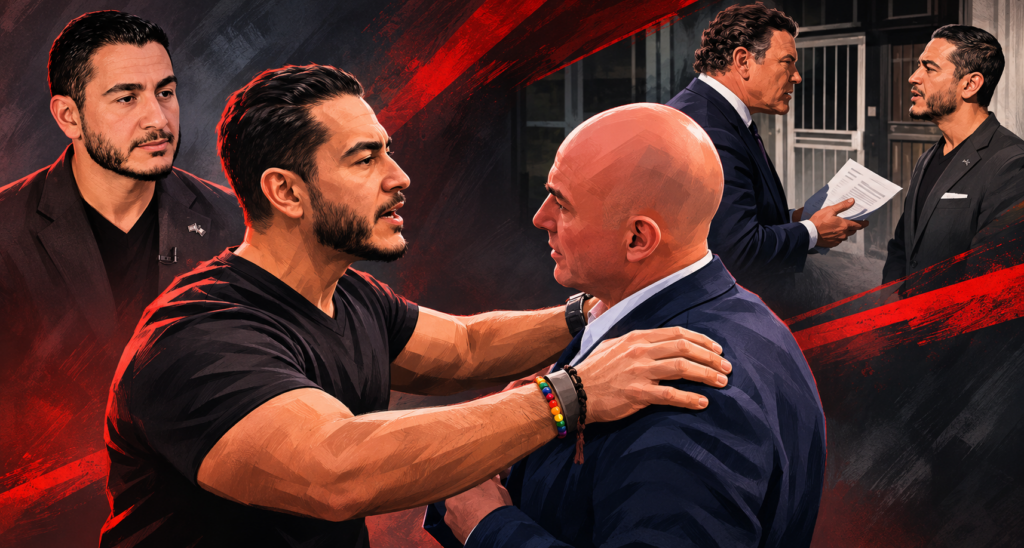
As Sky News correspondent James Matthews attempted to question El-Sayed outside a Detroit polling station, the candidate demanded to know whether the British journalist was registered to vote in Michigan.
When Matthews said he wasn’t, El-Sayed questioned why he should speak to him at all.
He then physically accosted Matthews, placing his hands on the correspondent’s shoulders, while declaring that he wanted “zero” votes in the UK and refusing to answer his questions.
It made for uncomfortable viewing.
But perhaps more striking was El-Sayed’s suggestion that the journalist’s nationality somehow undermined the legitimacy of his questions, particularly given that El-Sayed himself had spent months discussing Israel, Iran and American foreign policy.
As a US senator, he will have a vote on military assistance to Israel, sanctions legislation against Iran, legislation affecting NATO and US-UK defense cooperation, and the confirmation of the American ambassador to Britain.
His decisions will have consequences far beyond Michigan.
2. Pressed by the Press on Haley Stevens
Just two days before the election, El-Sayed faced another contentious exchange with reporters after his former Democratic primary rival, Rep. Haley Stevens, endorsed Republican Mike Rogers, citing concerns about his association with streamer Hasan Piker, a campaign ad featuring Tucker Carlson and an ad by a pro-El-Sayed PAC blaming US support for Israel for Americans’ rising grocery bills.
Stevens, who condemned the latter ad as antisemitic, declared that she had concluded El-Sayed was “not fit to serve in the United States Senate.”
It was an extraordinary political rupture, particularly in one of the country’s most closely watched Senate races.
Yet when reporters attempted to question El-Sayed about the defection, he made clear that he had no interest in discussing it, accusing journalists of chasing clicks and political intrigue rather than focusing on the issues facing Michigan families.
When one reporter persisted in asking about Stevens, El-Sayed snapped that the journalist apparently hadn’t heard his previous answer.
He insisted that he didn’t spend his time thinking about Stevens, preferring instead to focus on Michigan’s other residents.
As he continued dismissing the questions, one reporter interjected: “Answering questions does matter.”
El-Sayed responded by reiterating that the controversy was a distraction from the concerns of ordinary families.
Of course, voters care about grocery prices, healthcare and education.
But El-Sayed had hardly confined his own campaign to those issues. He had spent months discussing Israel, the war with Iran, Donald Trump and American foreign policy, while courting controversy over his association with Hasan Piker.
And a prominent Democrat crossing party lines to endorse his Republican opponent just 48 hours before Election Day was hardly irrelevant to Michigan voters.
It was a legitimate story, whether El-Sayed wanted to discuss it or not.
3. Fox News: “Be a Journalist”
On October 23, Fox News anchor Bret Baier confronted El-Sayed over a 2012 statement supporting Mohamed Morsi, Egypt’s Muslim Brotherhood president.
The statement had become a campaign controversy because it endorsed Morsi’s authoritarian power grab, which placed his presidential decisions beyond judicial review, and called on him to “purge the media and the police.”
Morsi himself had a history of virulently antisemitic rhetoric, including describing Jews and Zionists as “bloodsuckers” and “descendants of apes and pigs” – remarks later condemned by the Obama administration.
Rather than addressing the substance of the document, El-Sayed repeatedly interrupted Baier and accused him of suggesting that he held divided loyalties.
Baier explained that he was examining allegations raised during the campaign.
El-Sayed instead attacked Baier’s journalistic integrity, claiming the host was acting as an extension of Rogers’ campaign rather than behaving like a journalist.
Baier replied that he was doing precisely that.
But the original subject was a published statement bearing El-Sayed’s name.
Was asking him to explain that statement an accusation of divided loyalties?
It was a question about a documented political position. The exchange became an argument over whether the journalist should have asked it at all.
4. NBC News: The Family Denials
The controversy surrounding El-Sayed’s family connections to the Muslim Brotherhood produced another tense encounter with NBC.
On October 11, Meet the Press moderator Kristen Welker asked whether El-Sayed or his family had ties to the organization.
He answered no.
Welker clarified that she was asking about both him and his family.
Again, he answered no.
Three days later, NBC’s Tom Llamas confronted him with archived social media posts attributed to his half-sister, Eman Abdelhadi.
The posts described their mother’s involvement in Brotherhood activism in Egypt during the 1970s and referred to other relatives supporting the organization.
El-Sayed responded by suggesting that questions about events in Egypt decades before his political career were illegitimate.
He insisted that he had no personal ties and said he had never discussed the subject with his mother, who had not raised him, while dismissing the social media posts as hearsay.
When Llamas continued pressing him on whether his earlier denial had been accurate, El-Sayed challenged the implication that he had lied.
But subsequent reporting raised further questions about the family relationship El-Sayed had invoked in his defense.
On October 29, CBS News revealed that in a 2021 Substack column, El-Sayed himself had written that he was heading to Columbia, Missouri, to visit his mother for Thanksgiving.
The New York Post had also reported that his mother attended his medical school graduation in 2014, while El-Sayed described her in his 2020 book as “smart, warm and charismatic.”
His campaign maintained that he was estranged from her.
5. Martha MacCallum: The Terrorist Designation Question
On October 5, Fox News host Martha MacCallum pressed El-Sayed about US terrorist designations involving Muslim Brotherhood organizations in Egypt, Jordan and Lebanon.
She wanted to know whether he supported those existing designations.
El-Sayed said he would support designating any organization engaged in political violence or advocating it.
But when MacCallum asked about the specific Brotherhood organizations, he deflected, demanding evidence of their involvement.
MacCallum cited allegations concerning support for violence and threats against American interests.
El-Sayed then shifted the discussion toward America’s military interventions in the Middle East, questioning the results of previous wars and challenging the assumption that military force made Americans safer.
MacCallum’s question had been straightforward: Did he support the existing terrorist designations?
El-Sayed’s response was to obfuscate, never directly stating whether he supported the designations of the organizations she had named.
Once again, a specific question had become a wider political argument, with the original question left unanswered.
The Standard El-Sayed Set for Others
There is a final irony to these confrontations.
During a September campaign appearance alongside Kamala Harris, El-Sayed welcomed reporters from CNN and MS NOW and criticized politicians who were “too cowardly” to answer media questions.
The mask slips. Watch Abdul El-Sayed physically accost @SkyNews journalist @jamesmatthewsky and refuse to answer his questions because he wants “zero votes” in the UK. Just weeks ago, El-Sayed called politicians who dodge journalists’ questions “cowardly.” And the irony is that El-Sayed himself has spent months discussing Israel, Iran and American foreign policy. He’s running for the US Senate. He’d have a vote on military aid to Israel, sanctions against Iran, legislation affecting US-UK defense cooperation and NATO funding, and the confirmation of the US ambassador to the UK.
— HonestReporting (@HonestReporting) November 4, 2026
It was an unambiguous statement about the importance of public officials facing scrutiny from the press.
Yet his own encounters with the media tell a different story: a politician who repeatedly resists answering legitimate questions, snaps at reporters, questions their motives and turns the focus from his record to the journalists examining it.
As a US senator, El-Sayed will help shape American legislation, spending and foreign policy. His public statements, political positions and past associations will matter more than ever.
And journalists have every right to demand answers, whether El-Sayed likes their questions or not.
Liked this article? Follow HonestReporting on Twitter, Facebook, Instagram and TikTok to see even more posts and videos debunking news bias and smears, as well as other content explaining what’s really going on in Israel and the region. Get updates direct to your phone. Join our WhatsApp and Telegram channels!
© Divuach Ne’eman R”A, 2025