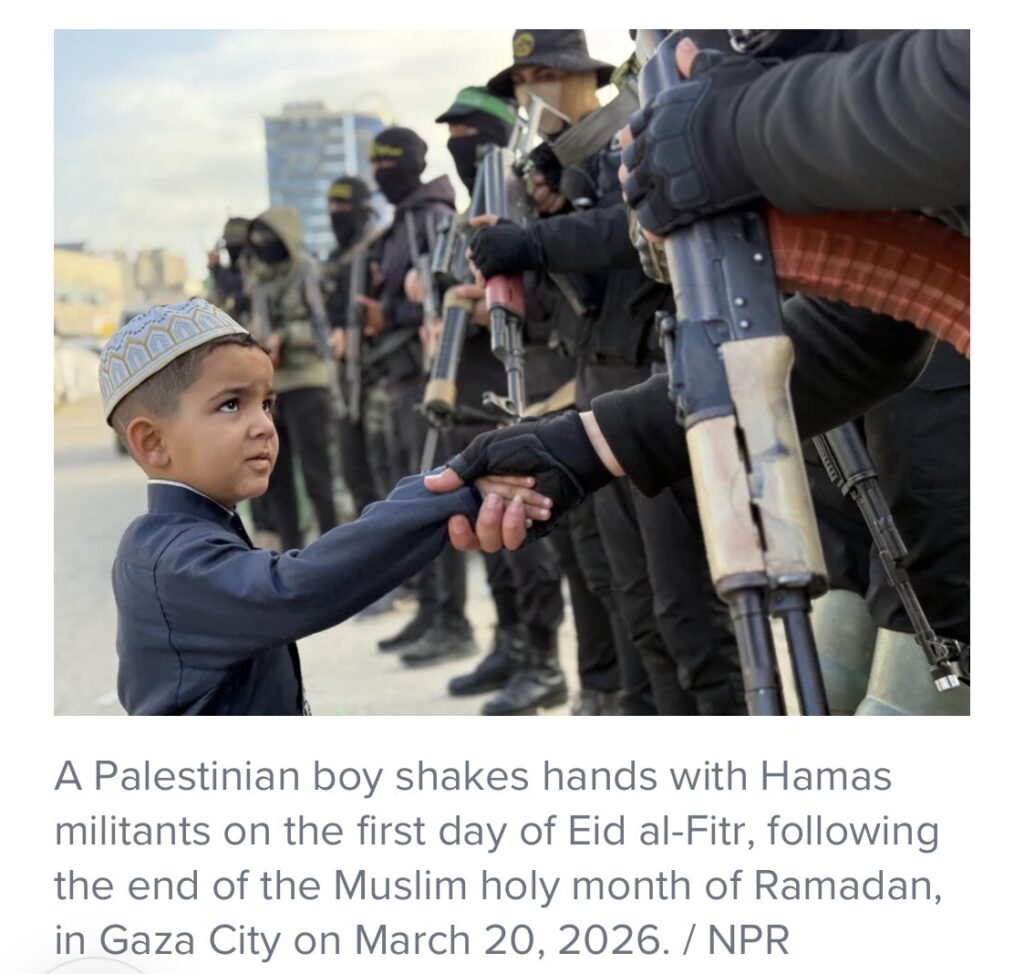
“A Palestinian boy shakes hands with Hamas militants during Eid al-Fitr celebrations in Gaza City on March 20, 2026.” The photograph was taken by NPR’s Gaza reporter, Anas Baba, and published as part of the broadcaster’s October 10 retrospective, “A Year of Ceasefire in Gaza Through the Lens of NPR’s Reporter.”
NPR, National Public Radio, is a major U.S. public radio network whose journalism reaches audiences across the United States and internationally through its digital platforms.
It is an interesting photograph, particularly because NPR identifies the men as Hamas militants without qualification. Look more closely at the image itself, and the contrast becomes difficult to miss: a child reaches out to shake hands with an armed, masked terrorist. The civilian celebration and the armed presence of Hamas occupy the same frame.
There is no dispute about what NPR says its own reporter photographed.
Yet the accompanying article gives considerably more attention to Israel’s continuing military operations, Palestinian casualties and the lack of reconstruction than to Hamas’ activities during the same period.
NPR acknowledges that Israel has continued targeting Hamas throughout the ceasefire. It also reports that more than 1,400 Palestinians have been killed during the preceding year, citing Gaza’s Hamas-run Health Ministry. What receives considerably less attention is the organization Israel says it is targeting, despite NPR having photographic evidence of Hamas terrorists appearing publicly during the ceasefire.
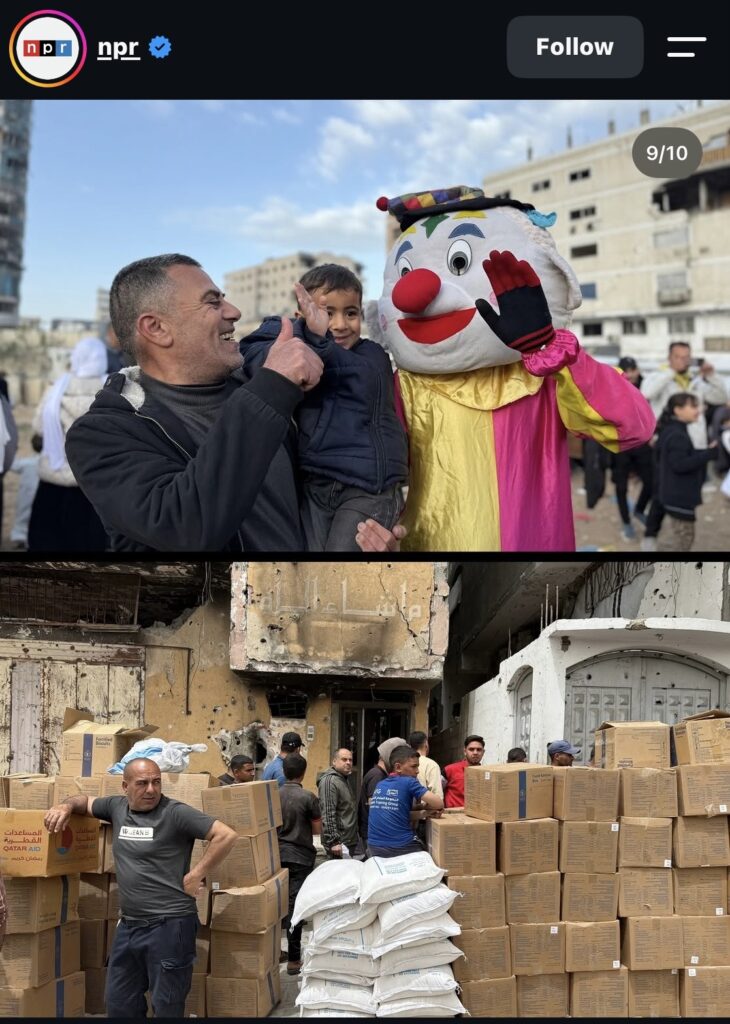
The photograph is particularly revealing because of its setting. It was taken during Eid celebrations, when families and children were gathering in public spaces. The encounter between the boy and the terrorists appears among other photographs documenting ordinary civilian activities, including religious celebrations and moments of recreation.
For a picture editor, the question is what happens to the significance of an image when it becomes one photograph among many. NPR has published evidence of Hamas’ continued public presence, but the accompanying reporting offers little examination of what that presence means for Gaza’s civilians or the prospects for a lasting ceasefire. The photograph itself contains a substantial story: a child, a public religious celebration and armed Hamas terrorists sharing the same civilian space.
The photograph does not establish whether the terrorists were involved in subsequent attacks or any particular military activity. Nevertheless, their appearance during a public celebration is a legitimate subject for further reporting, especially in a retrospective examining why the ceasefire has failed to produce lasting stability.
There is also an interesting background to the photographer.
Anas Baba is the son of veteran AFP photographer Mohammed Abed, also known professionally as Mohammed Baba. The family relationship was documented in a March 2025 Washington Post profile, which described how Anas accompanied his father on photographic assignments while growing up in Gaza.
In September 2024, HonestReporting investigated the participation of foreign media journalists in promotional material associated with Hamas’ Government Media Office. Among those identified was Mohammed Baba, who recorded a message for a video connected to the office’s 2021 “Day of Loyalty to the Palestinian Journalist.”
AFP subsequently confirmed that Mohammed Baba and Mohammed Abed were the same photographer. The agency defended his participation, explaining that he had not attended the event and had recorded the message because the Hamas-controlled government press office regulated journalists’ work in Gaza.
That history provides background to the professional environment in which Gaza’s photographers operate. It does not establish improper conduct by Anas Baba, whose photographs must be assessed independently. NPR, meanwhile, is responsible for the editorial decisions governing their presentation.
And those decisions bring us back to the boy shaking hands with Hamas terrorists.
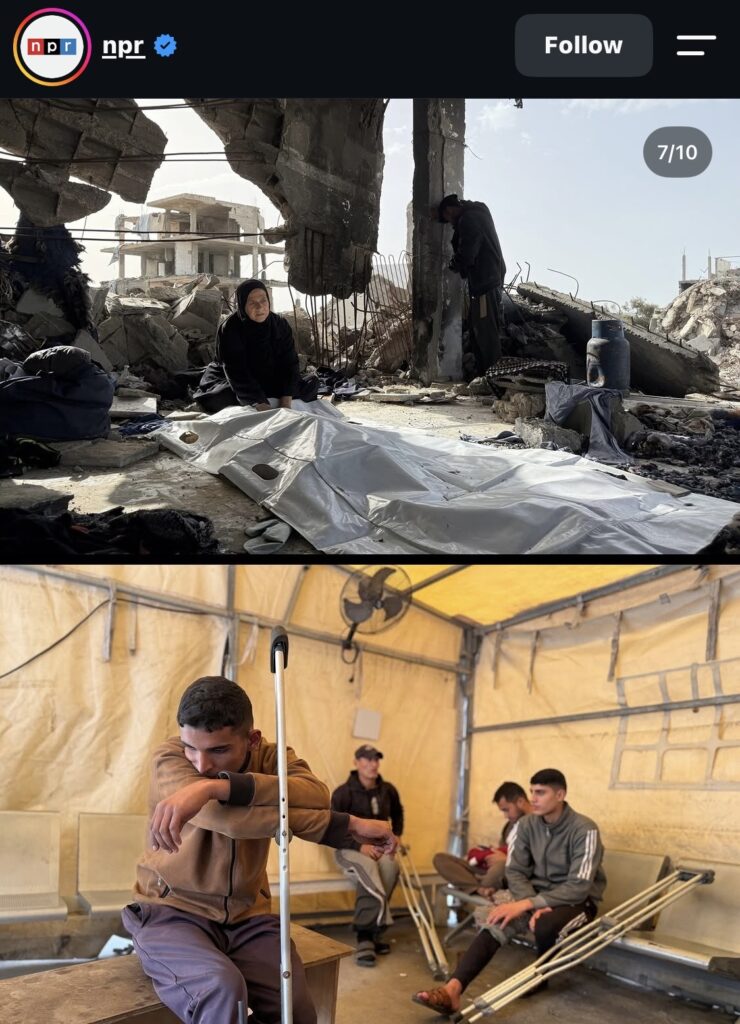
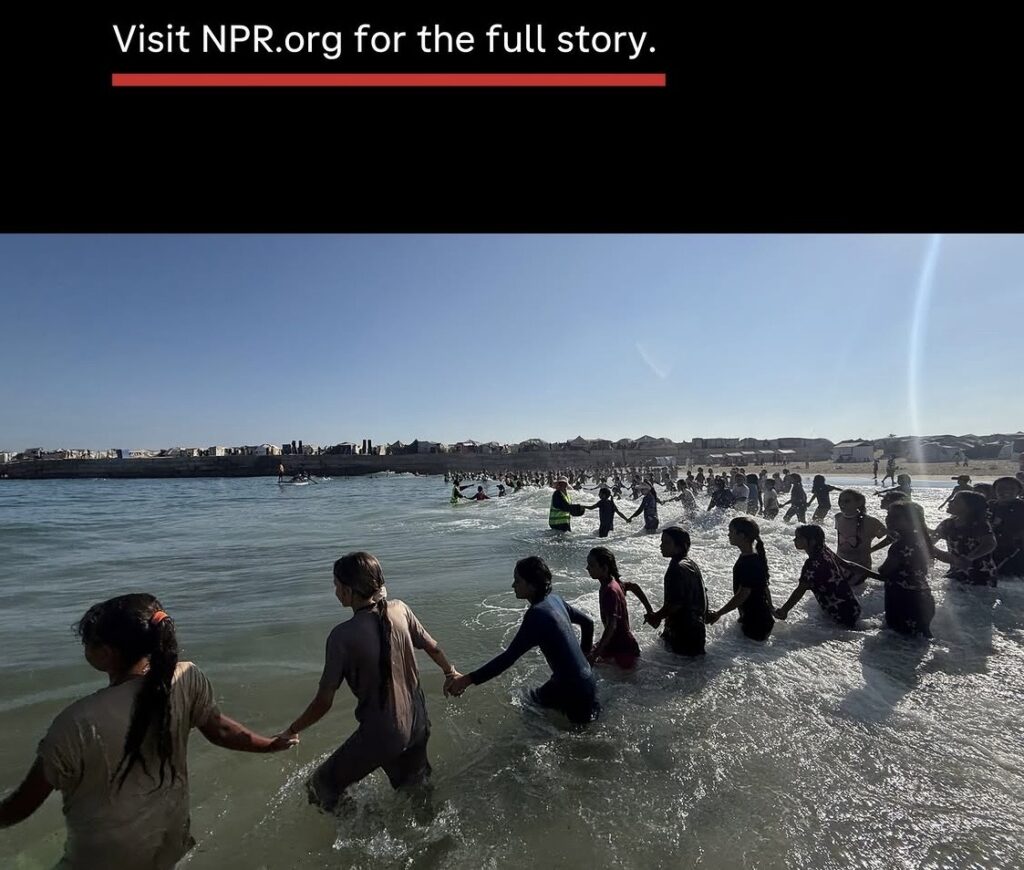
NPR’s retrospective includes photographs of destruction, grieving families, injured children and Palestinians attempting to rebuild their lives. These are legitimate subjects for photojournalism, and the suffering they document deserves attention. But a photographic account of Gaza’s first year of ceasefire also offers an opportunity to examine the armed organization that continues to operate within the territory.
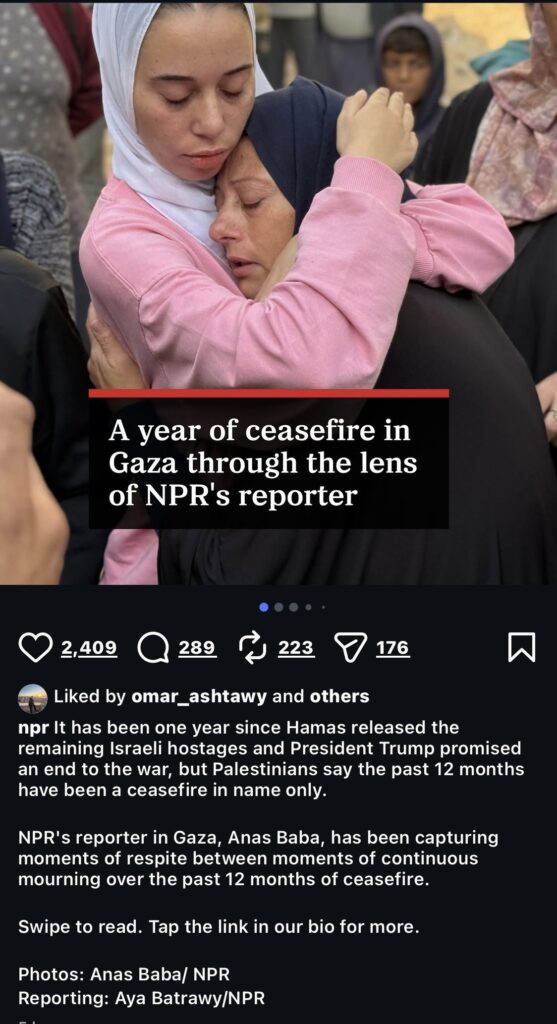
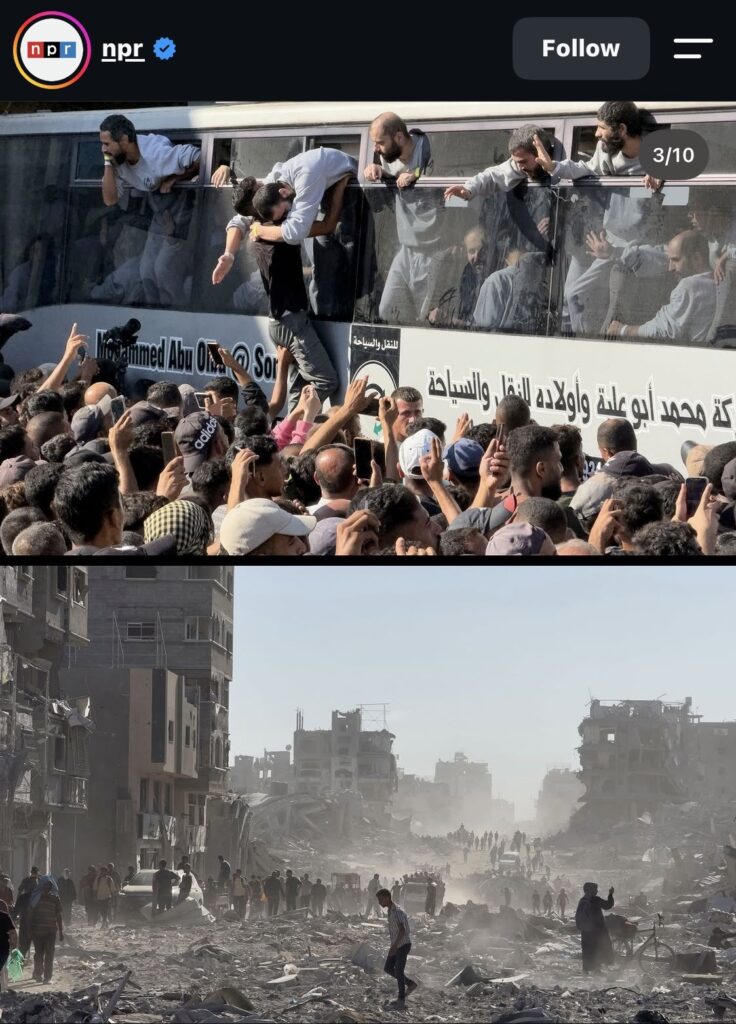
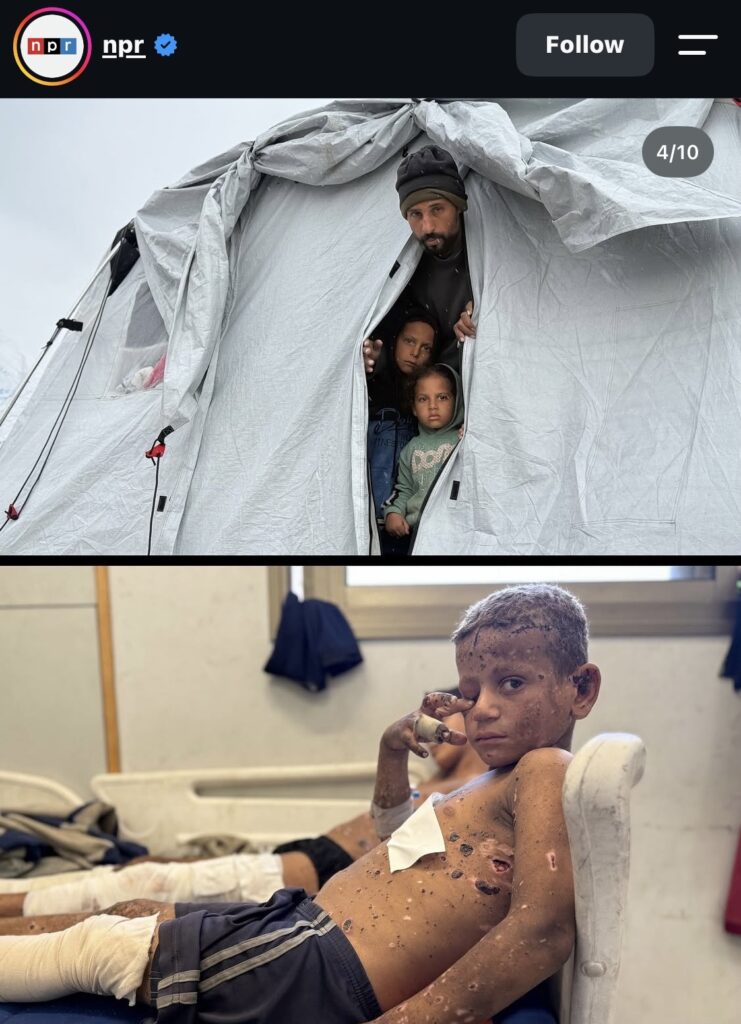
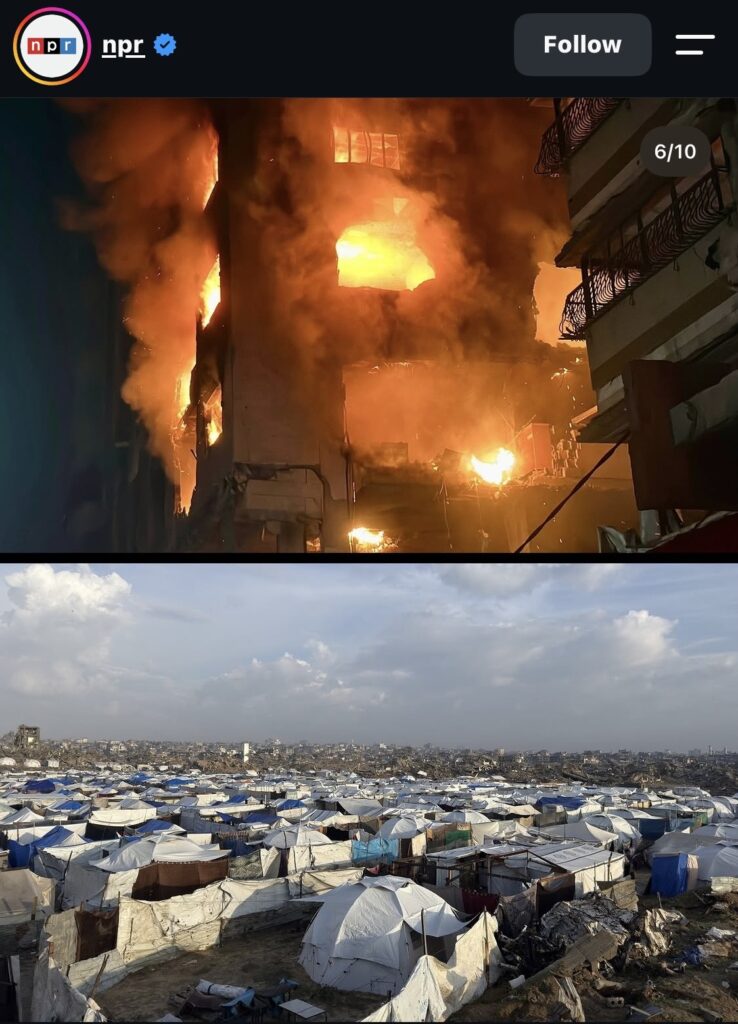
NPR’s own photographer provided an image that could have opened that discussion. The broadcaster published it, correctly identified the terrorists and moved on.
The photographer did his job. He showed NPR’s audience that Hamas terrorists were publicly present during the ceasefire. The question is why NPR’s editors did so little with what his camera had shown them.
Liked this article? Follow HonestReporting on Twitter, Facebook, Instagram and TikTok to see even more posts and videos debunking news bias and smears, as well as other content explaining what’s really going on in Israel and the region. Get updates direct to your phone. Join our WhatsApp and Telegram channels!
© Divuach Ne’eman R”A, 2025