Key Takeaways:
-
Terror threats from the West Bank are severe and ongoing, with thousands of attacks and attempted attacks each year despite minimal media attention.
-
Israel’s counterterrorism efforts – such as Operation Five Stones, recently launched in the northern West Bank – are essential and effective, dramatically reducing successful attacks by targeting hotspots like Jenin, Tulkarm, and Tubas.
-
Major outlets routinely distort or omit key facts, downplaying that eliminated individuals were terrorists and echoing propaganda from Hamas and Islamic Jihad, thereby misinforming global audiences about the scale of the threat Israel faces.
Compared to the terror threats emanating from numerous fronts, including Gaza, Lebanon, Syria, Yemen, and Iran, the international media often downplays or dismisses the dangers Israel faces from the West Bank.
After the October 7 massacre, Hamas made no effort to hide its intentions to open a front in the West Bank, calling on Palestinians to take up arms against Israel.
In 2024, Israel faced over 18,000 incidents of terrorism, according to the National Public Diplomacy Directorate. The Shin Bet, Israel’s internal security agency, thwarted 1,040 incidents in the West Bank and Jerusalem in 2024, with an additional 231 significant terror incidents reported.
In 2025, the threat persisted. In February 2025, a terrorist from the Nablus area of the West Bank triggered a series of explosions on buses in the Tel Aviv area. Fortunately, the explosives detonated when the buses were empty, causing no injuries.
In September, a deadly terror attack at the Ramot Junction in Jerusalem killed six innocent people and injured twenty-one others. The terrorists came from the West Bank.
This week, on November 29, a terrorist hurled an iron rod at the windshield of a car on Route 5, a highway in the northern West Bank. Miraculously, no one was physically injured, but the incident underscores the threat targeting Israelis.
An iron rod was thrown at an Israeli vehicle on Highway 5 near Mas’ha in the northern West Bank, piercing the windshield in front of the driver. Authorities say the attack appears terrorist in nature.https://t.co/cZTUfqPahA
— The Jerusalem Post (@Jerusalem_Post) November 29, 2025
The security challenge is real and ongoing. It targets Israelis, no matter where in the country they are.
After the ceasefire went into effect in the Gaza Strip in October, analysts found that Hamas and other terrorist organizations began reorganizing their operations in the West Bank as a way to continue their so-called “resistance.”
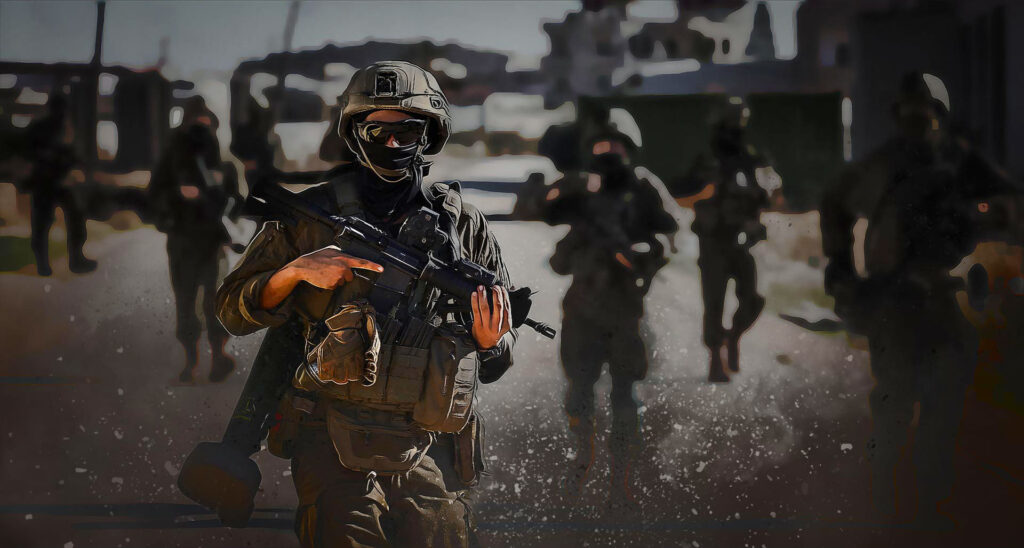
For these reasons, on November 26, the IDF launched Operation Five Stones, a counterterrorism operation specifically aimed at countering threats in the northern West Bank.
Naturally, terrorist groups condemned the operation. That didn’t stop AFP from reiterating the press releases from Hamas and Islamic Jihad.
Terrorists condemn Israeli anti-terror operation.
Cutting-edge reporting from @AFP & @France24_en. pic.twitter.com/eDLNA4IU2R
— HonestReporting (@HonestReporting) November 27, 2025
Counter-terrorism efforts by the IDF have proven successful. In the first nine months of 2025, 22 terrorism incidents were carried out by Palestinian terrorists from the West Bank, in comparison to 90 in 2024. With the launch of the new operation, the IDF is strategically operating in specific locations in the West Bank that have become hotspots tied to previous terror attacks, including Jenin, Tulkarm, Nur Shams, Tubas, and Tammun. These cities and villages have become operational hubs for Hamas, Islamic Jihad, and other Iranian-backed groups, producing everything from roadside bombs to shooting cells to coordinated plots targeting Israeli civilians across the country.
Me’ata, a Palestinian media center, claimed that in October 2025, there were 356 “popular resistance actions” in the West Bank and eastern Jerusalem, including 16 incidents of planting and detonating explosive devices, mainly in the Jenin and Tubas areas. One of those explosions in Tubas left two IDF soldiers injured.
Jenin is perhaps the media’s favorite West Bank location to cover, consistently referring to it as the “martyrs’ capital.” What most outlets leave out, however, is that the name reflects the city’s role as the origin for more than one-third of terrorist attacks during the Second Intifada. The next time you read “martyrs’ capital,” know that the journalist is really referring to terrorism.
The Jenin refugee camp is the terror capital of the West Bank – the source of multiple acts of terrorist violence against Israeli civilians going back many years.
But to @latimes? It’s a “symbol of Palestinian resistance.” pic.twitter.com/ZIRw5dZIeD
— HonestReporting (@HonestReporting) November 26, 2025
The IDF began intensively operating in Jenin in January 2025, following a terrorist attack carried out by terrorists from the Jenin area that left three Israelis dead.
Recommended Reading: Jenin: The Palestinian Terror Capital & Its Threat to the Region
During the current operation in Jenin, the IDF eliminated two terrorists claimed by Islamic Jihad. The shooting was documented on film, and an investigation into whether the officers took the correct action to mitigate harm to themselves has been launched, as is proper in a case where there are questions over whether individuals violated the IDF’s rules of engagement and code of conduct.
.@piersmorgan does it again. Even @Reuters, which posted one of the first versions of this video, reported that the Israeli military and police have already opened an investigation into the shooting.
Piers’s rush to judgment and his use of a massive platform to declare a verdict… https://t.co/VmCZUswNzO
— John Spencer (@SpencerGuard) November 29, 2025
Several major outlets, including CNN, The Guardian, and The Washington Post, however, reported the incident without stating in the headline that the two individuals killed were not ordinary Palestinian civilians but terrorists. This omission leaves readers with a distorted impression of the event and obscures the context of ongoing terrorist activity in Jenin.
Sky News went so far as to suggest the two were not terrorists at all.
There’s nothing “invariably” about it. They were claimed by Islamic Jihad – a terrorist org – as two of their own.
Invariably biased courtesy of @adamparsons at @SkyNews. pic.twitter.com/T1ZJUL0TUa
— HonestReporting (@HonestReporting) November 30, 2025
The terrorist threat Israel faces from the West Bank is not theoretical or isolated, nor did it disappear after the October 7 terrorist attacks. Had the IDF not continuously acted to prevent further attacks, Israelis would be facing a far deadlier and more coordinated terrorism campaign today.
After October 7, Israel vowed never again to let the country or the Jewish people face such devastation and insecurity. A secure Israel after that massacre means dismantling terror networks before they can carry out mass-casualty attacks, not after. It means denying Hamas and Islamic Jihad the ability to embed in civilian areas, build explosives factories, or dispatch terrorists into Israeli cities. In a post-October 7 reality, counterterrorism is not optional. It is the prerequisite for any genuine stability, security, or peace.
Liked this article? Follow HonestReporting on Twitter, Facebook, Instagram and TikTok to see even more posts and videos debunking news bias and smears, as well as other content explaining what’s really going on in Israel and the region. Get updates direct to your phone. Join our WhatsApp and Telegram channels!
© Divuach Ne’eman R”A, 2025