Key Takeaways:
- In 1948, Iraq had 150,000 Jews. Today it has three. Libya had 38,000. Today it has zero. Approximately 850,000 Jews were displaced from the Arab world in 30 years, and yet almost no one knows the story.
- Dr. Henry Green’s Sephardi Voices project went looking for their testimonies in Spielberg’s archive of 52,000 Holocaust interviews and found fewer than 100. He spent the next 15 years recording hundreds himself — and the archive is now at the National Library of Israel, free and open.
- Dr. Green has taken his case to Congress and the United Nations to argue that the refugee crisis of 1948 needs to be a two-part story: that of Palestinians, and the Jews of the Middle East and North Africa.
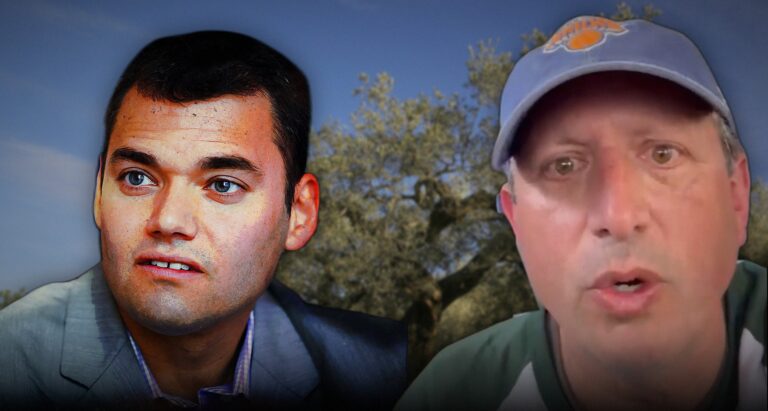
In 2009, Dr. Henry Green was between projects. He had stepped away from directing Jewish studies at the University of Miami and was casting around for what came next. He knew he was interested in Sephardic Jews — the Jews of the Arab world — but hadn’t landed on a focus. So he did what any researcher would do: he went looking for what already existed.
He found almost nothing.
The USC Shoah Foundation, where Steven Spielberg had deposited 52,000 Holocaust testimonies, contained fewer than 100 interviews with Jews from the Arab world. A civilization that had produced the Talmud in Babylon and the Zohar in Moorish Spain had fewer than 100 recorded testimonies in the largest oral history collection in the world.
So he made a decision borrowed from Pirkei Avot: if not now, when. He started recording.
The Civilization Nobody is Taught About
The Jews of the Arab world were not a marginal community; they were indigenous. In some cases, they were among the oldest continuously functioning Jewish civilizations in human history. The Jewish community in Baghdad traced its roots to the Babylonian exile, 2,500 years ago. Those Jews didn’t call themselves Iraqis, they called themselves Babylonians.
By the 1920s, Jews made up roughly 35 to 40 percent of Baghdad’s population and played pivotal roles in society. The Zilkha family established banking in Iraq and spread it across the Middle East. Jewish musicians fused Arab music with Western music. The city’s cultural, economic, and political life ran in significant part through Jewish hands. In the 1920s, the finance minister of Iraq was a Sephardic Jew.
The same was true across North Africa and the Levant. In Cairo, Jews were among the pioneers of the cinema industry. In Casablanca and Marrakesh, educated Jewish families were at the center of cosmopolitan life. The community shared traditions, names, and family ties stretching from Morocco all the way to Baghdad — a unified civilization that happened to be scattered across a dozen countries.
One man who appears in the Sephardi Voices archive captured it simply. Asked, after 60 years in England, how he identified himself, he gave two answers. He said he was British — he had lived there for six decades. Then he said he couldn’t deny that he was Iraqi — his family had been there for 3,000 years.
Three Things That Broke It
For centuries, the relationship between Jewish communities and the Islamic world was not the same as the relationship between Jews and Christian Europe. There was no Inquisition, no theological doctrine that Jews had killed Jesus Christ. Jews were considered dhimmi — protected, though second-class, citizens — which meant real constraints and periodic hardship, but also genuine coexistence.
When the Spanish Inquisition came in 1492, the majority of expelled Jews did not go to Catholic Italy. They went to the Muslim Ottoman Empire and North Africa. “You don’t go to an Islamic state for safety, unless you have good reason to believe you’ll be safer there,” Green argues.
“There were bad times and good times. In the good times, you’re the merchants. You can be an advisor. Bad times were different, but it wasn’t ever a policy that said Jews were bad.”
What dismantled that world came in three waves.
The first was the collapse of the Ottoman Empire and the artificial drawing of borders by Britain and France after World War I. The Sykes-Picot Agreement promised the same territories to different parties. The Balfour Declaration promised a Jewish homeland in Mandatory Palestine one year after promising those same lands to Arab tribes who had helped the British fight the Ottomans. The resulting nation states — handed to single families who often had no organic connection to the populations they now governed — were inherently unstable.
The second was Zionism itself, or rather the way it was perceived. As Jewish immigration to the British Mandate of Palestine accelerated after World War I and especially after World War II, Jewish communities across the Arab world found themselves recast. They had not been Zionists; they had been Baghdadis and Cairenes and Casablancans. But the establishment of the State of Israel in 1948 made that distinction politically irrelevant in the countries where they lived.
The third was European colonialism’s specific legacy in the region. As France controlled Algeria and Morocco and Italy controlled Libya, the Jews — more urban, more educated, more connected to European languages and institutions — positioned themselves to take advantage of the colonial framework. When independence movements rose, that positioning became a liability. In Algeria, the question put to Jewish families was blunt: are you with us or against us? Since Algerian Jews had French citizenship and wanted to keep it, the answer was effectively against. They became a fifth column in the eyes of the revolution.
What Happened on the Ground
Green is careful not to paint the expulsions with a single brush. What happened in Iraq was not what happened in Morocco. What happened in Libya was not what happened in Lebanon. The timeline spans from the early 1950s to the 1980s, and the texture of each country’s expulsion was different.
What was consistent was the mechanism: denationalization, asset seizure, synagogues taken, cemeteries converted into parking lots, community centers dissolved. Jews were stripped of citizenship, of property, of any legal standing.
In Iraq, the crisis came quickly. After Israel’s founding in 1948, Iraq joined the Arab coalition and immediately recast its Jewish population as an internal enemy. Operation Ezra and Nehemiah, a Mossad operation that flew roughly 135,000 Iraqi Jews to Cyprus and then to Israel, took place in the early 1950s. Jews were told to list their assets on a form before departure, and the Iraqi government promised to hold those assets in trust until they returned. When they left, the assets were confiscated. They never returned.
Those who stayed longer faced choices that are almost impossible to imagine from the outside. One woman in the Sephardi Voices archive, a university student in Baghdad in 1967, found herself stranded on campus when the Six-Day War broke out. Her phone lines were cut. She couldn’t reach her family. She dressed as a Muslim woman, made her way north to the Kurdish region, and escaped to Iran.
The departures were not always orderly. One woman’s family left Libya with almost nothing — no suitcases, no belongings. Her father managed to hide the family’s jewelry inside an oil can, covered in grease so no one would touch it. That oily can was the only thing they carried out.
The Silence Inside the Community
Among 52,000 Holocaust testimonies, there are fewer than 100 from Jews of the Arab world. In Jewish schools across America, almost none of the curriculum teaches of the Sephardi experience. In Diaspora communities, a holiday called Yom HaPlitim, Refugee Day, passed by the Israeli Knesset in 2014 to mark the Jewish exodus from Arab lands, is almost entirely uncelebrated outside Israel.
Green has a term for it: Ashkenormativity. The Jewish diaspora in America is roughly 90 percent Ashkenazi and 10 percent Sephardic. The educational infrastructure, the cultural institutions, and the organizational leadership were built by and for the Ashkenazi community. The story of Jews in Eastern Europe, under the czars, or in Germany, is the story Jewish communities know how to tell. The Sephardi are always a minority within a minority.
“Why are our communities not having it? And my view on this is, gee, how hard is this? You bring a Holocaust survivor to class for a Holocaust day. Why can’t you bring a person who survived and became a member of your community. And the child or the grandchild will take such pride in hearing their parents or grandparents speak. You can show some video and then have this event to honor the people who left the Arab world.”
Israel’s own role in the silence is more complicated. In 1948, the new state was overwhelmed. It needed to house a massive influx of immigrants while simultaneously fighting a war. The policy response was to build new cities in the periphery — Dimona in the south, Kiryat Shmona in the north — and send the new arrivals there. But there were no schools, no teachers, no infrastructure. When employers came to the camps looking for workers, they spoke to the Ashkenazi immigrants who spoke Yiddish. The Sephardi immigrants spoke Arabic, Ladino, or other languages. The average Ashkenazi immigrant spent six months in a camp. The average Sephardi spent 18 months.
The policy response to that discrimination — an attempt to forge a unified Israeli identity — overcorrected. The answer to discrimination was assimilation: everyone would be the new Israeli. The Sephardi history was not suppressed so much as simply not taught, not passed down, not celebrated. Children born in Israel in the 1970s asked their parents who they were and got the answer: Israeli. The grandparents had to fill in the rest.
A second and third generation changed this. Intermarriage between Ashkenazi and Sephardi families in Israel created children who wanted to hear both stories. The Oslo Accords opened a political space in which a larger history felt possible to address. And scholars like Green started recording interviews before the last witnesses were gone.
Taking the Case to Washington and Geneva
In 2007, Green testified before the Congressional Human Rights Caucus, organized by the advocacy group JJAC — Justice for Jews from Arab Countries. The goal was to get the American government to formally recognize the expulsion and to prevent thousands of documents recovered during the Iraq War from being returned to Baghdad. Those documents — including Torah scrolls found in an intelligence building — had been brought to the United States and represented some of the last physical remnants of Iraqi Jewish life. Green and his colleagues wanted them to stay stateside.
That effort found support particularly from Ileana Ros-Lehtinen, then chair of the House Foreign Relations Committee, who as a Cuban refugee understood firsthand what it meant to be displaced by a hostile state. But it did not produce federal action.
In September 2025, Green returned to the international stage, this time at the United Nations Human Rights Council in Geneva. The argument he brought was one he has been making for years: you cannot talk about the Palestinian refugee story of 1948 without telling the Jewish refugee story of the same period. Not to erase one, but to require both.
His forthcoming book puts a forensic dollar figure on what was lost across all ten countries: assets, properties, synagogues, businesses, cemeteries. The sum is approximately $250 to $260 billion. That figure is intended as the evidentiary foundation for any future discussion of reparations. His framework, borrowed from his mentor Irwin Cotler, is truth and justice: first acknowledgment, then process, with reparations ultimately running in both directions.
Planting Seeds Before the Witnesses are Gone
Green is not optimistic about the United Nations in the short term. Arab countries make up roughly a quarter of the member states, and the political winds don’t favor his argument there yet. But he is not discouraged.
He points to the arc of Holocaust remembrance: Elie Wiesel published Night in 1960, fifteen years after the war ended. Schindler’s List came in 1993. Fifty thousand oral testimonies followed from that single film. It took two generations for Holocaust memory to reach its current institutional depth. The Sephardi story is still at the first stage.
His archive is at the National Library of Israel, free to access. It contains hundreds of interviews, portraits, and documents. He finishes with an anecdote of a former student, the president of her campus Hillel, who was scrolling through the site while killing time before an event and found a photograph of her great-aunt. Then her grandparents. She had never seen their faces. She started to cry.
Green called it the kesher, the connection. He said her tears were the seeds that needed to be replanted.
Dr. Henry Green is the founder of Sephardi Voices and a professor at the University of Miami. His archive is free and open at the National Library of Israel. This interview was conducted by Ben Chertoff for The Honest Take, available on Spotify, Apple Podcasts, and all major podcast streaming platforms. [https://thehonesttake.transistor.fm/episodes/exodus-erased-850-000-jews-were-erased-from-the-arab-world-heres-what-really-happened-dr-henry-green]
Liked this article? Follow HonestReporting on Twitter, Facebook, Instagram and TikTok to see even more posts and videos debunking news bias and smears, as well as other content explaining what’s really going on in Israel and the region. Get updates direct to your phone. Join our WhatsApp and Telegram channels!
© Divuach Ne’eman R”A, 2025