Key Takeaways:
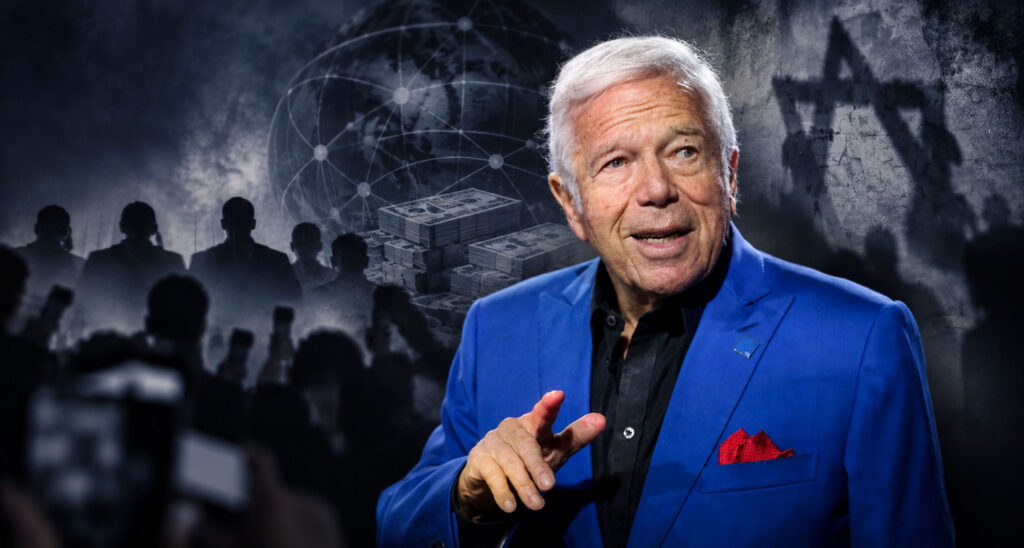
- Robert Kraft objected to Macklemore performing at Gillette Stadium in Foxborough, Massachusetts, over what he described as the rapper’s “broader history of antisemitic rhetoric and imagery” – only to then be branded a shadowy Zionist power broker.
- Claims about Jewish or “Zionist” money, coordinated power, media influence and child-killing draw on a long antisemitic history that cannot be scrubbed clean simply by changing the vocabulary.
- Kraft pledged $2 million in humanitarian aid, yet coverage still focused heavily on his wealth and alleged personal scandals while paying little attention to the antisemitism that prompted the controversy.
There is something deeply ironic about the high-profile controversy surrounding Robert Kraft, Ed Sheeran, and Macklemore.
As HonestReporting noted previously, New England Patriots and Gillette Stadium owner Robert Kraft objected to rapper Macklemore performing at his stadium in part because of what he called the American rapper’s “broader history of antisemitic rhetoric and imagery.”
The response?
Beyond reducing the controversy to Macklemore’s “Free Palestine” advocacy, a growing chorus has portrayed Kraft, one of America’s most prominent Jewish businessmen, as a fabulously wealthy Zionist using his money, connections and influence to silence critics of Israel.
This has continued even after he pledged $2 million to aid Palestinians in the region.
In other words, Kraft raised concerns about antisemitism and was promptly subjected to rhetoric bearing an uncomfortable resemblance to some of antisemitism’s oldest tropes.
It’s About Context
There is, of course, nothing inherently antisemitic about criticizing Robert Kraft. Nobody is above scrutiny.
None of those facts is inherently antisemitic: Kraft is a billionaire, owns Gillette Stadium, has donated extensively to pro-Israel causes and used his influence as the venue’s owner to oppose Macklemore’s appearance.
But context matters. The International Holocaust Remembrance Alliance’s (IHRA) working definition of antisemitism identifies stereotypical claims about Jewish collective power, including the myth of a “world Jewish conspiracy” or of Jews controlling the media, economy, government or other societal institutions,” as an examples of antisemitism.
The ADL likewise identifies the idea that Jews wield extraordinary power and secretly manipulate governments, banks, the media and other institutions as a longstanding antisemitic conspiracy theory.
So what happens when a controversy involving a figure like Robert Kraft suddenly becomes a story about money, “Zionist lobbies,” powerful elites, coordinated pressure, censorship and retribution?
That’s where the criticism crossed the line into antisemitism.
The “Zionist Lobby” and the “Elites”
Irish band Beoga, which withdrew from Ed Sheeran’s tour in solidarity with Macklemore, did not simply criticize Kraft’s decision.
“We have made the decision to depart as Ed Sheeran’s band on the remaining US Loop tour, following the silencing of Macklemore by Zionist lobbies…
“It’s important that everyone knows that the real enemy is the Zionist lobby. They have worked tirelessly to silence artists who want to speak freely about a genocide happening before our eyes, for fear of retribution.”
Fellow Irish artist Aaron Rowe arguably added another antisemitic trope to the mix when announcing his withdrawal: the image of Jews as the killers of children, echoing the centuries-old blood libel referenced in the IHRA working definition:
“I cannot stand by and allow billionaires to use their position of power to silence the rightful voices of those who speak up against Israeli genocide and who highlight the savage murder of children.”
Meanwhile, U.S. House Representative Alexandria Ocasio-Cortez referred to “just a handful of stadium owners and the elites” threatening free speech:
Chatter about so-called “elites” is, of course, standard political rhetoric. But when applied to a Jewish owner accused of using his wealth and influence to silence an artist over “Palestine,” it takes a very different resonance, functioning as an antisemitic “dog whistle.”
That does not mean AOC intended it in this way. But in this context, there is little doubt many will hear it that way.
Media Malpractice: Amplifying the Frame
All of this context should have prompted journalists to scrutinize the rhetoric surrounding the controversy. Instead, some media coverage has helped reinforce it.
Take the LA Times. In a piece titled Breaking down the Ed Sheeran tour debacle, writers August Brown and Mikael Wood devote remarkably little attention to Kraft’s allegation of Macklemore’s history of antisemitism. They mention Macklemore’s infamous 2014 costume resembling an antisemitic caricature, but then immediately note his apology. Meanwhile, Beoga’s claim that Macklemore was silenced by “Zionist lobbies” is reproduced without any reflection on the language itself.
And how do they characterize what actually happened? One writer describes Macklemore’s comments as “measured” and concludes that Sheeran’s decision looks like a “capitulation to a rich and powerful friend.” The other argues that Sheeran should have defied Kraft, adding:
“billionaires shouldn’t have a veto over an artist’s human rights advocacy onstage.”
The article ultimately turns a controversy Kraft explicitly framed around antisemitism into a morality tale about a “rich and powerful” Jewish billionaire suppressing Palestinian advocacy, while the allegation that “Zionist lobbies” were working behind the scenes to silence artists passes essentially without scrutiny.
The Nation went considerably further. In a piece titled Justice for Macklemore, Dave Zirin declares Kraft himself to be “the true antisemite in this drama.” His reasoning? Kraft “uses his billions” to equate Jewishness with support for Israel.
From there, Zirin portrays Kraft as a wealthy political operator deploying his fortune to shield Israel from criticism. Then the rhetoric takes an uglier turn:
“But Kraft – when not sexually exploiting young immigrant laborers or showing up in the Epstein files – really stepped up his defense of Israel once the genocide got underway.”
Zirin goes on to attack Kraft’s Foundation to Combat Antisemitism for spending tens of millions of dollars on advertising against antisemitism, before concluding:
“The real hate, in Kraft and Pink’s mind, is not the tens of thousands of murdered children.”
The ingredients are by now familiar: the Jewish billionaire, his billions, his political influence, his pro-Israel philanthropy, Epstein and murdered children. And somehow, at the end of it all, Kraft is cast as the “true antisemite.”
More striking is Zirin’s decision to invoke the Epstein files at all. It adds an explosive association to the portrayal of Kraft without establishing any relevance to the controversy at hand.
ABC News Australia was less overt, but its framing was revealing in a different way. In an article ostensibly about Kraft’s $2 million humanitarian-aid pledge, the coverage still manages to cast him as the central antagonist in the affair:
In its report on Robert Kraft’s $2 million Gaza-aid pledge, Australia’s @abcnews describes @Macklemore as having been dropped from Ed Sheeran’s tour over his “pro-Palestinian comments.”
— HonestReporting (@HonestReporting) September 17, 2026
But Kraft gave a different rationale: Macklemore’s “broader history of antisemitic rhetoric… pic.twitter.com/KcnJuVbKcG
And Then Social Media Took the Gloves Off (Naturally)
Social media quickly dispensed with even the limited nuance found in the mainstream coverage.
Here are some of the most blatant examples that went viral:
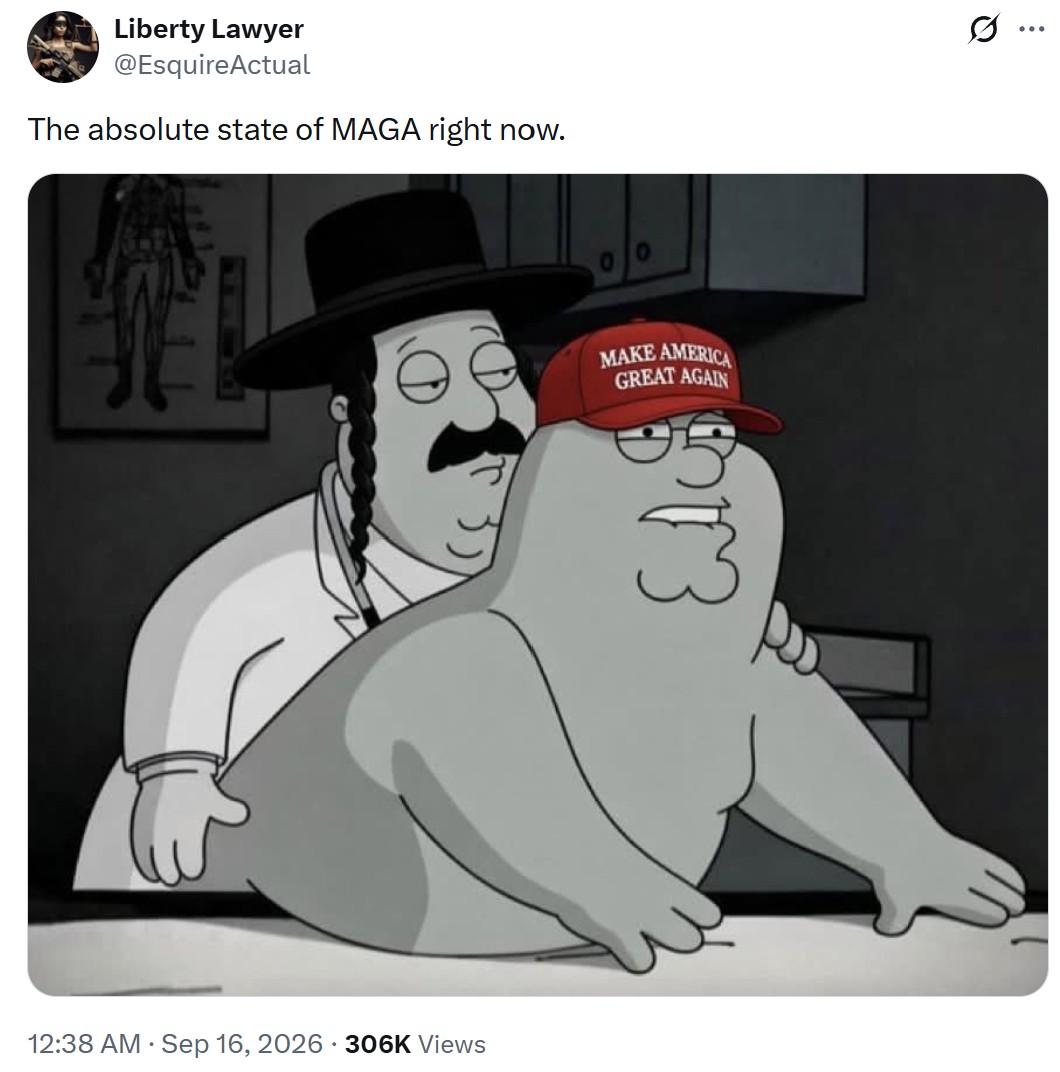
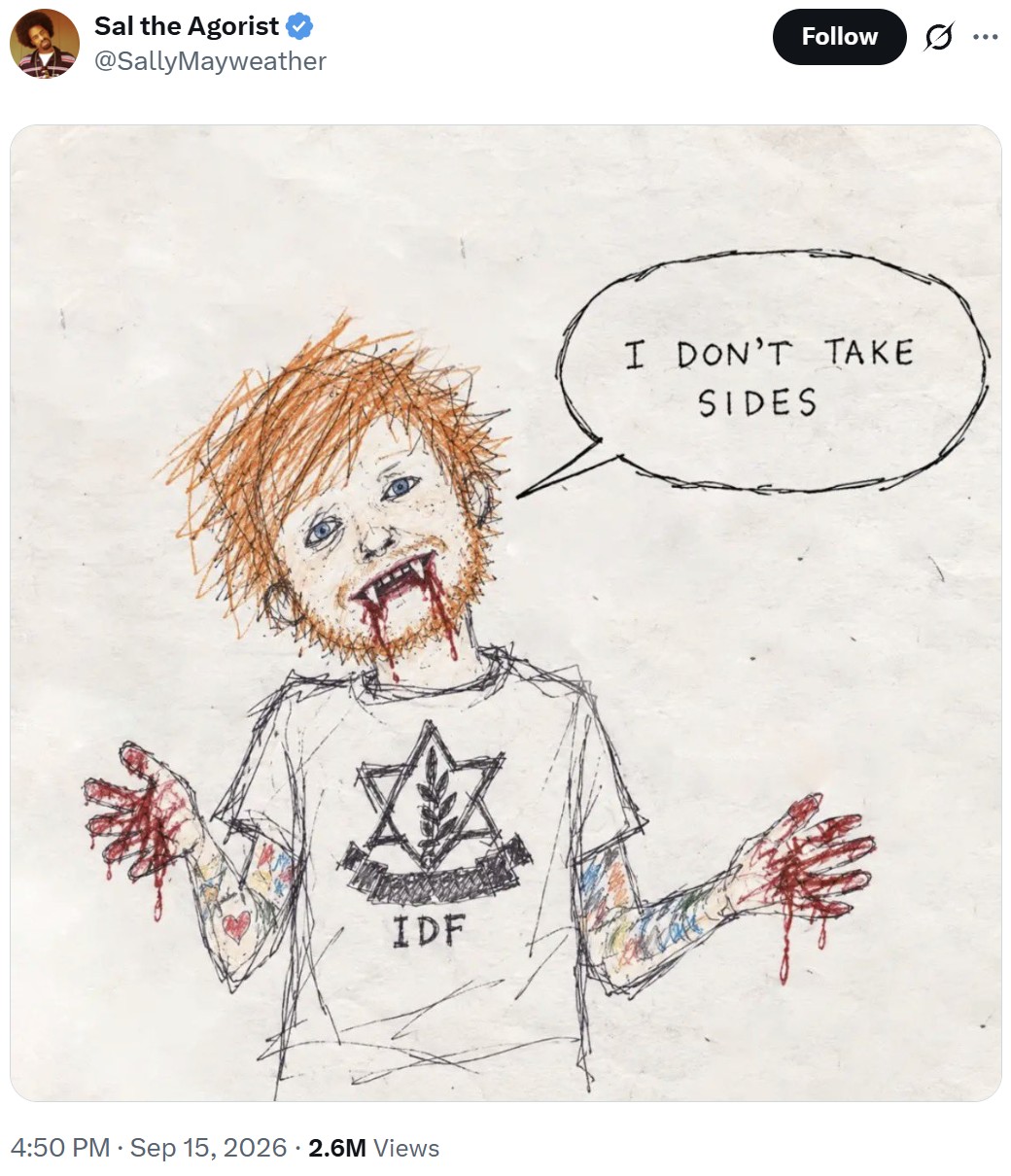
Max Blumenthal portrayed a public initiative that tracks online antisemitism and hate speech as some kind of shadowy “Zionist” propaganda operation:
Robert Kraft runs a massive Zionist surveillance and propaganda center inside Gillette Stadium pic.twitter.com/A8oApqHeaY https://t.co/7RQ15ePIuy
— Max Blumenthal (@MaxBlumenthal) September 14, 2026
Eventually, the rhetoric moved beyond the internet altogether:
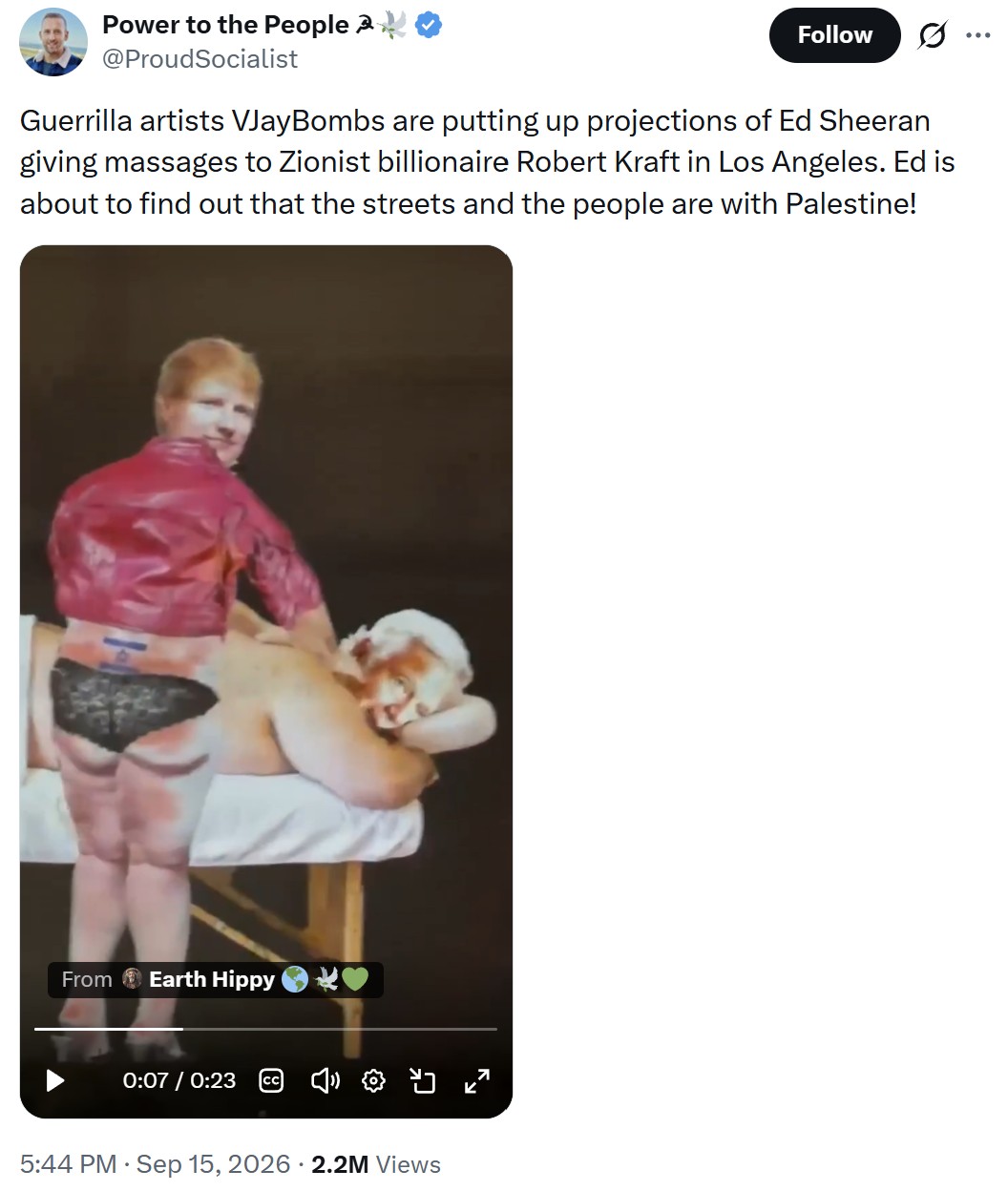
The Tropes Hiding in Plain Sight
Robert Kraft is not beyond criticism. Nor is Israel.
It is entirely legitimate to scrutinize Kraft’s decision, his influence as a venue owner and the consequences for the artists involved.
But criticism does not exist in a historical vacuum.
When a Jewish businessman raises concerns about antisemitism and the response shifts to talk of the “real enemy” being the “Zionist lobby”; of money determining who may speak; of coordinated retaliation by wealthy interests; of pro-Israel figures using their connections to silence dissent; and of the Jewish state “murdering children,” the historical echoes become difficult to ignore.
That context matters all the more when Kraft has also pledged $2 million toward humanitarian relief and explicitly stated that supporting Palestinians and opposing antisemitism are not mutually exclusive.
Liked this article? Follow HonestReporting on Twitter, Facebook, Instagram and TikTok to see even more posts and videos debunking news bias and smears, as well as other content explaining what’s really going on in Israel and the region. Get updates direct to your phone. Join our WhatsApp and Telegram channels!
© Divuach Ne’eman R”A, 2025