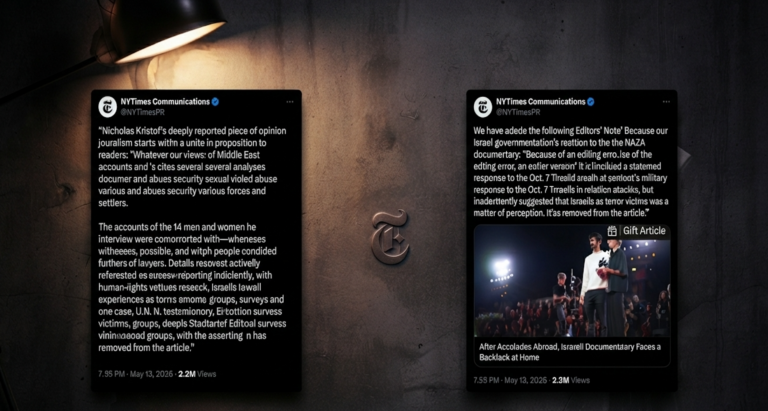
The news that Israeli President Isaac Herzog has pardoned former IDF soldier Elor Azaria is unquestionably controversial.
Azaria was convicted of manslaughter after shooting Palestinian terrorist Abdel Fattah al-Sharif in Hebron in March 2016. Al-Sharif had stabbed an Israeli soldier before being shot and left injured on the ground. Around 11 minutes later, Azaria, then serving as a combat medic, shot him in the head. An Israeli military court subsequently found that al-Sharif no longer posed a threat and that Azaria’s actions were unjustified and violated military rules.
Azaria was originally sentenced to 18 months – later reduced to 14 months – in prison, and was was released after serving nine months.
The case divided Israelis then, and Herzog’s decision has reopened that argument now. Defense Minister Israel Katz recommended the pardon; IDF Chief of Staff Eyal Zamir reportedly opposed it. Herzog’s office cited, among other considerations, the passage of time and Azaria’s expression of sorrow.
But one part of the story should not be complicated at all: what happened before Azaria pulled the trigger.
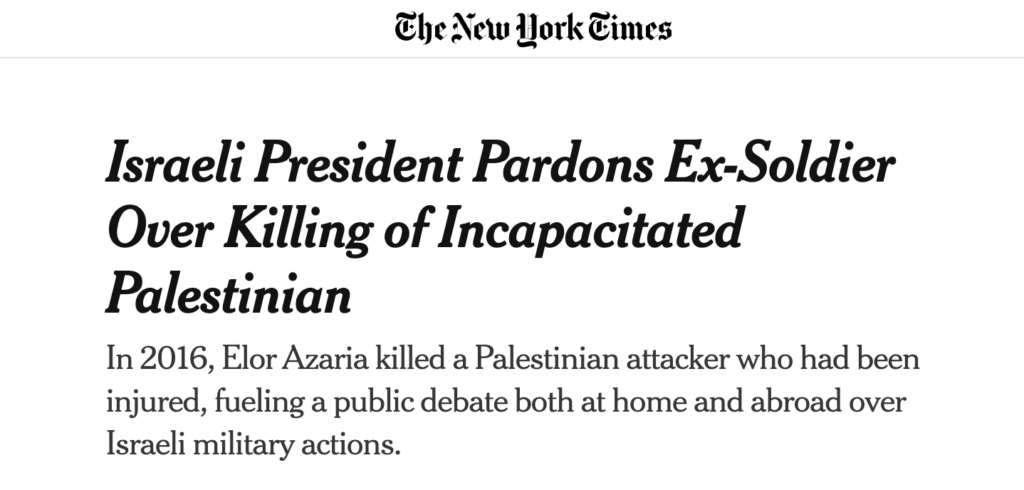
The New York Times chose this headline:
The Los Angeles Times went with:
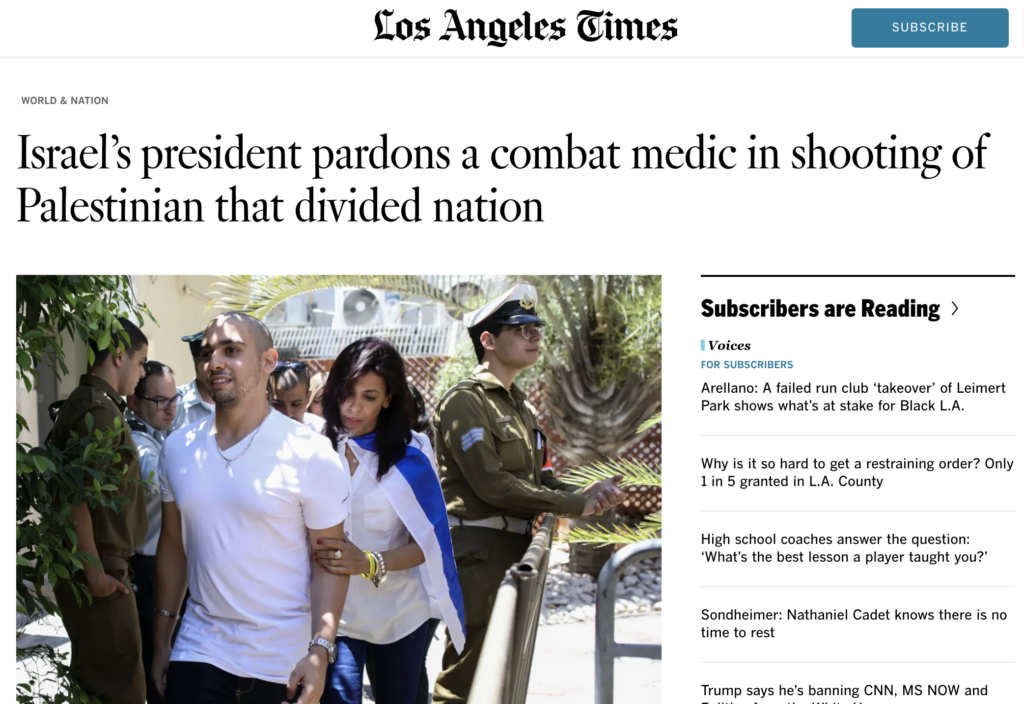
Both formulations manage to remove a rather consequential fact from the headline. A fact that is critical to understanding the story at all: the “Palestinian” in question had just carried out a stabbing attack against an Israeli soldier.
The New York Times does identify al-Sharif as a “Palestinian attacker” in its subheadline, while the Los Angeles Times supplies the same essential context once readers reach the article itself. But headlines critical. They establish the frame through which readers first encounter a story, and for the many who never click through, they may be the only frame they see.
Perhaps most revealingly, even the Guardian – hardly known for its sympathetic coverage of Israel – managed to preserve precisely the context that the other headlines omitted:
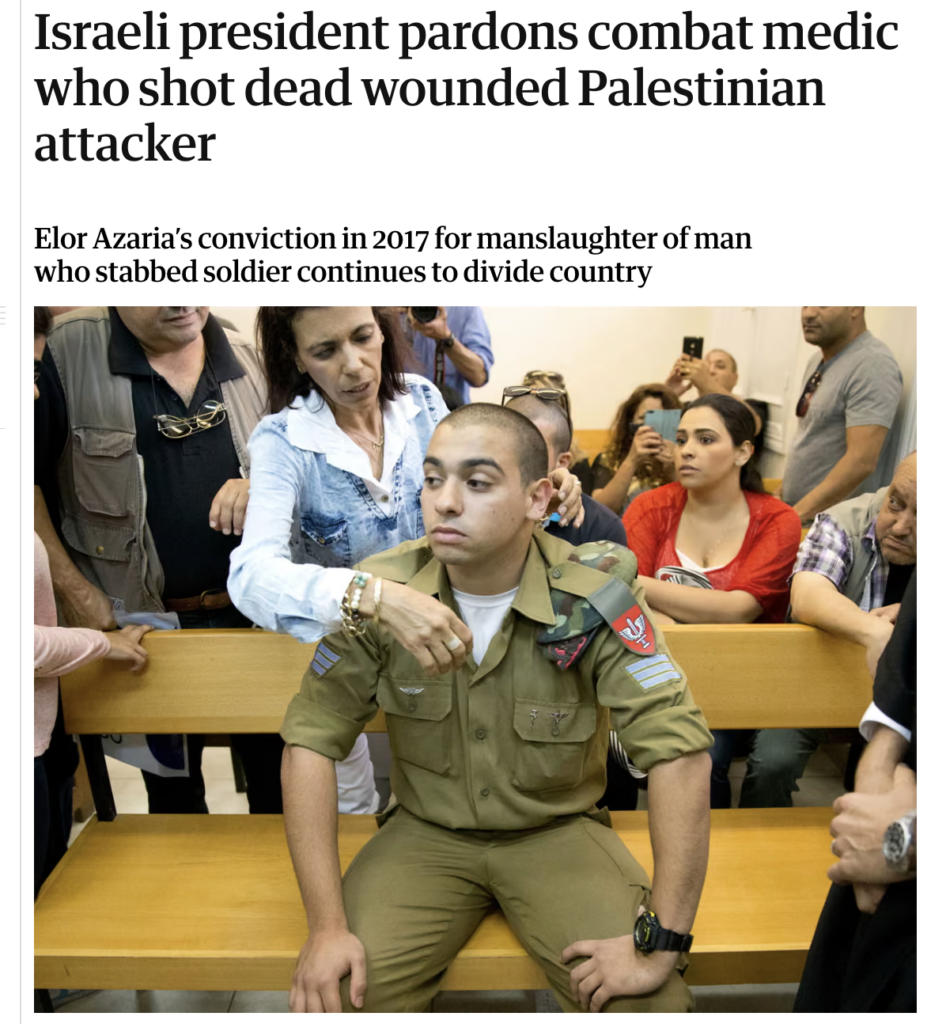
Whatever one thinks of Azaria’s actions or Herzog’s decision to pardon him, one basic fact is not in dispute: the man Azaria shot had just carried out a stabbing attack.
Including that fact does not excuse what happened next. Nor does it endorse the pardon. It simply gives readers the information they need to understand what actually happened.
Liked this article? Follow HonestReporting on Twitter, Facebook, Instagram and TikTok to see even more posts and videos debunking news bias and smears, as well as other content explaining what’s really going on in Israel and the region. Get updates direct to your phone. Join our WhatsApp and Telegram channels!
© Divuach Ne’eman R”A, 2025