I grew up in London knowing what a poppy meant long before anyone needed to explain it to me.
You saw them every November. On coats, on uniforms, outside stations, at the Cenotaph. They were small, red and instantly understood. They remembered people who went to war and did not come home.
Now that history has been usurped.
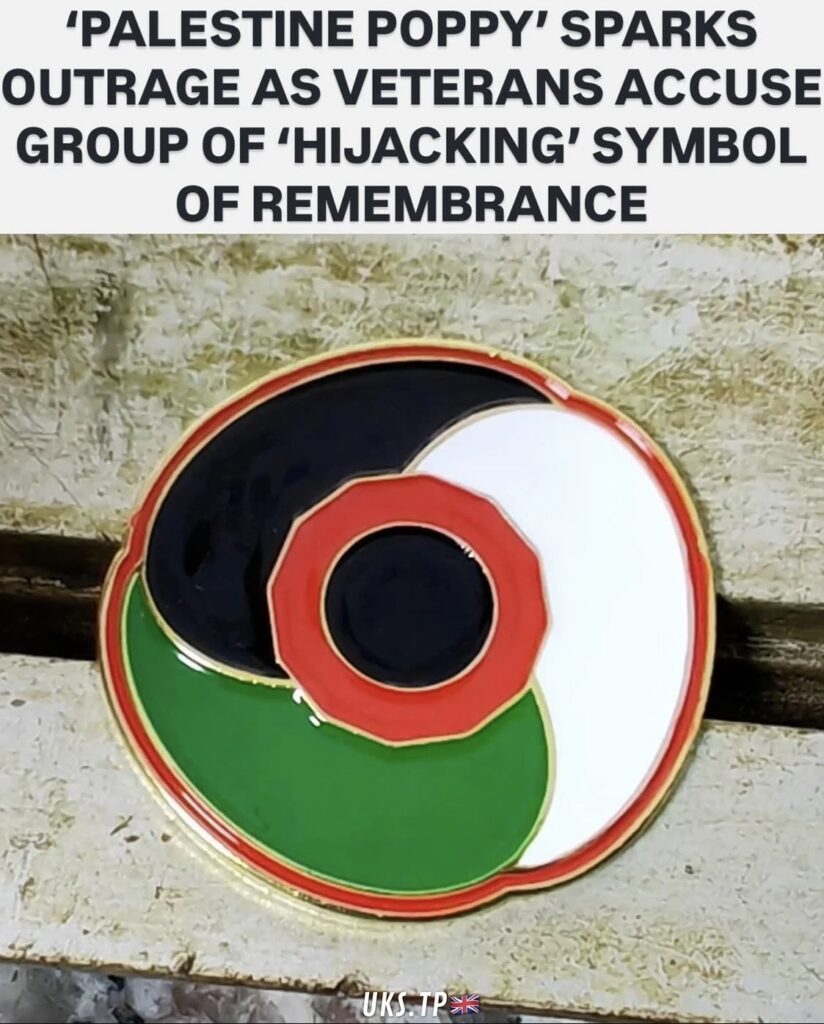
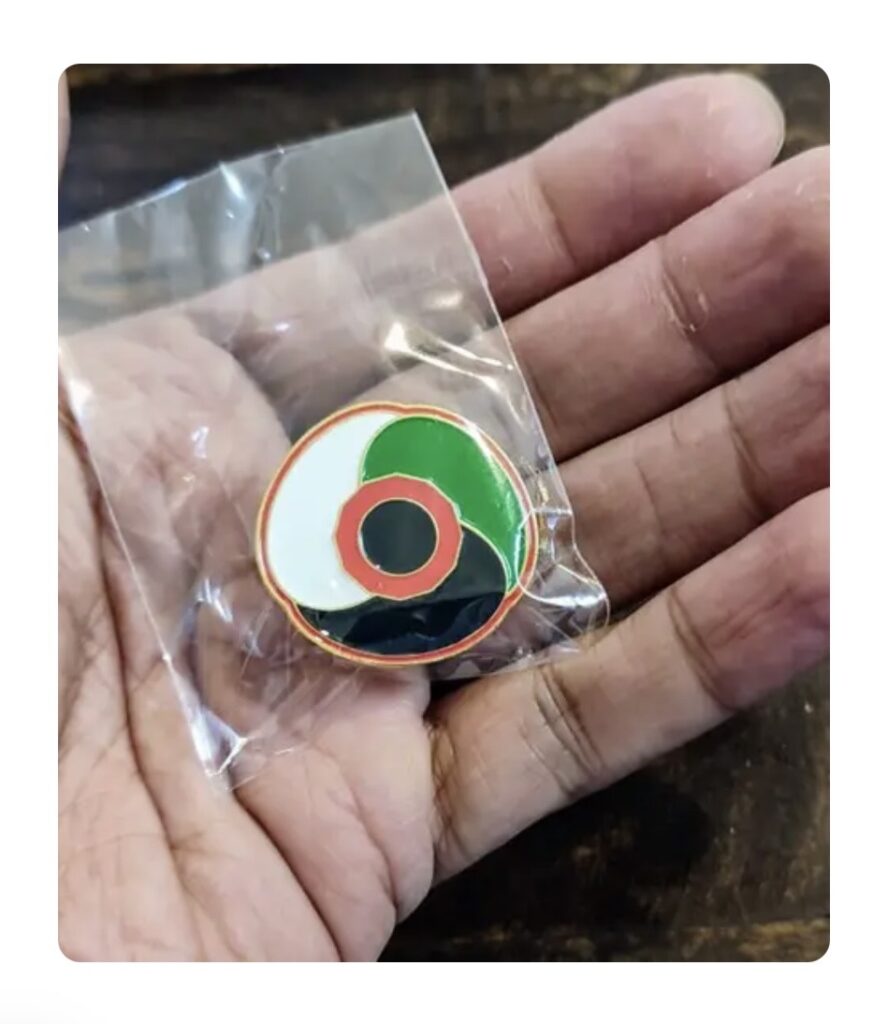
The red remembrance poppy has been redesigned in the colors of the Palestinian flag and is being sold as the “Palestine Poppy.”
This isn’t somebody on social media giving an innocent flower an unfortunate nickname. There is a website selling the badge and explaining exactly what its creator intends it to represent.
The site describes it as a symbol of “solidarity and remembrance” for the Palestinian struggle and says the creator wants it to become an “anti-apartheid symbol,” comparable to the raised fist, worn in support of Palestinian political objectives. It also says some of the money raised goes to organizations including Friends of Al-Aqsa and the International Centre of Justice for Palestinians.
That is an explicitly political purpose.
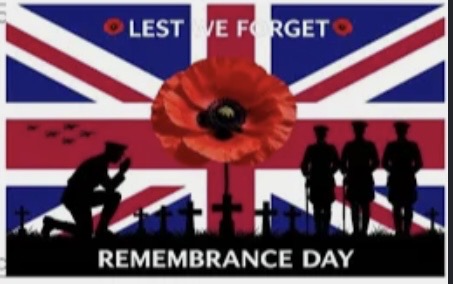
The contrast with the original could hardly be clearer. The Royal British Legion says the remembrance poppy commemorates the service and sacrifice of the Armed Forces community, including those who died on active service from the First World War onwards. It also supports veterans, serving personnel, and their families. Crucially, the Legion describes the poppy as a symbol of remembrance and hope that is not a reflection of politics or religion.
Yet the people behind the Palestine Poppy clearly know the history of the symbol they have chosen to redesign. Their own website tells the story of John McCrae’s In Flanders Fields, Moina Michael and Anna Guérin and the origins of the remembrance poppy.
In other words, the resemblance isn’t accidental. The history is acknowledged before the symbol is repurposed.
There is another curious detail. The Palestine Poppy website says the poppy is the “official and national flower of Palestine.” Palestinian environmental sources say otherwise. The Palestine Wildlife Society records that the Palestinian Council of Ministers designated the Faqqua iris, Iris haynei, as the national flower of the State of Palestine in 2016.
British veterans have objected to the new badge. Former Royal Navy officer Stuart Fawcett described it as “hijacking our national symbol of remembrance.” The Royal British Legion took a more restrained position, saying that while it promotes the red poppy, people are free to choose whether to wear a poppy and what kind.
Of course people are free to wear it, but freedom to wear something doesn’t require the rest of us to pretend we cannot see what has been done to it.
There is a historical irony here that makes the image even more uncomfortable. British Empire forces fought a bloody campaign through Gaza, Beersheba, Jerusalem and Palestine during the First World War. Two assaults on Gaza failed in 1917 before British Empire forces eventually broke the Ottoman line, captured Beersheba and Gaza and advanced towards Jerusalem. British, Australian, New Zealand, Indian and other Commonwealth servicemen fought in that campaign, as the National Army Museum’s history of the Egypt and Palestine campaign documents.
The poppy that emerged from the First World War eventually became Britain’s symbol for remembering servicemen like them.
I have no objection to Palestinians having symbols of their own. Nor do I object to people remembering Palestinian dead. Every people has the right to remember its dead. But why take this symbol?
Perhaps that’s what bothers me most about the photograph. Growing up in London, the poppy was one of those rare symbols that didn’t require a political argument attached to it. For a few days each November, you wore it and remembered the dead.
Britain held its first national Poppy Day in 1921. More than a century later, that little red flower is still worn by millions for essentially the same reason. In the Palestinian poppy badge, the red has been broken apart. The Palestinian flag has been wrapped around it. A symbol deliberately intended to stand outside politics has been redesigned for an explicitly political cause.
There are plenty of symbols in this conflict.
The poppy didn’t need to become another one.
Liked this article? Follow HonestReporting on Twitter, Facebook, Instagram and TikTok to see even more posts and videos debunking news bias and smears, as well as other content explaining what’s really going on in Israel and the region. Get updates direct to your phone. Join our WhatsApp and Telegram channels!
© Divuach Ne’eman R”A, 2025