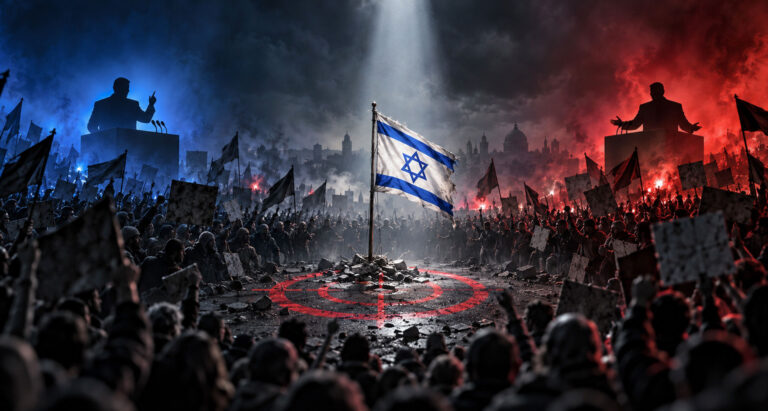
Prime Minister Netanyahu and Defense Minister Katz have warned that Iran and its proxies could attack Israel to disrupt the elections. Netanyahu said two days before the October 27 vote that intelligence pointed to that possibility. But this raises an important question: what would Tehran stand to gain by attacking specifically to disrupt the election? It seems that such an attack would carry significant military and political risks for Iran.
Iran and Israel’s conflict has escalated into direct exchanges, and Tehran has demonstrated its ability to strike Israel directly and alongside regional allies. But Israeli operations have weakened Hamas and Hezbollah, while Iran is working to rebuild its missile and drone capabilities. Those efforts buy the regime time.
Foreign Minister Abbas Araghchi recently warned that renewed attacks on Iran “will put civilian lives and the well-being of all regional states and the global economy at great risk.” But threatening retaliation is not the same as seeking a confrontation. Tehran may calculate that waiting serves its interests better than striking now.
Iran and its proxies have also lost leaders: Israeli forces killed Hezbollah leader Hassan Nasrallah and Hamas leader Yahya Sinwar in 2024. The United States and Israel killed Iran’s leader, Ali Khamenei in February 2026. Those losses underscore the cost of another round.
The political calculation is less clear. Iran’s Foreign Ministry has publicly said the election’s outcome makes no difference to Tehran. But its public position does not necessarily reflect which result it might privately prefer. Attacking during the election could help Netanyahu by reinforcing his message that Israelis need his leadership against Iran. It could also invite Israeli retaliation, which he explicitly warned of in response to any attack.
Tehran might calculate differently. Senior Israeli officials have said a major security incident could undermine public confidence and influence voting. Iran could therefore see an attack as a chance to expose security failures rather than strengthen Netanyahu.
None of this rules out an attack. Israeli defense officials have expressed concern that Iran could interpret Israeli warnings as preparations for an imminent attack and respond preemptively. That would be different from an attack specifically aimed at disrupting the election.
Tehran has strong reasons to prioritize rebuilding and avoid another major confrontation. An attack during the election period could serve other objectives, but it could also backfire by strengthening Netanyahu politically and provoking further Israeli strikes. Disrupting the election alone seems unlikely to justify those risks. A renewed conflict could instead arise from the nuclear dispute, fears of an imminent attack, or a miscalculation.
Liked this article? Follow HonestReporting on Twitter, Facebook, Instagram and TikTok to see even more posts and videos debunking news bias and smears, as well as other content explaining what’s really going on in Israel and the region. Get updates direct to your phone. Join our WhatsApp and Telegram channels!
© Divuach Ne’eman R”A, 2025