The photograph that caught my attention from Saturday’s demonstration outside the U.S. Embassy in London shows a gray-haired woman being carried by police. Her mouth is open, officers surround her, and cameras and phones fill the foreground. Other photographers are working from behind her. Almost every direction offers another view of the same arrest.
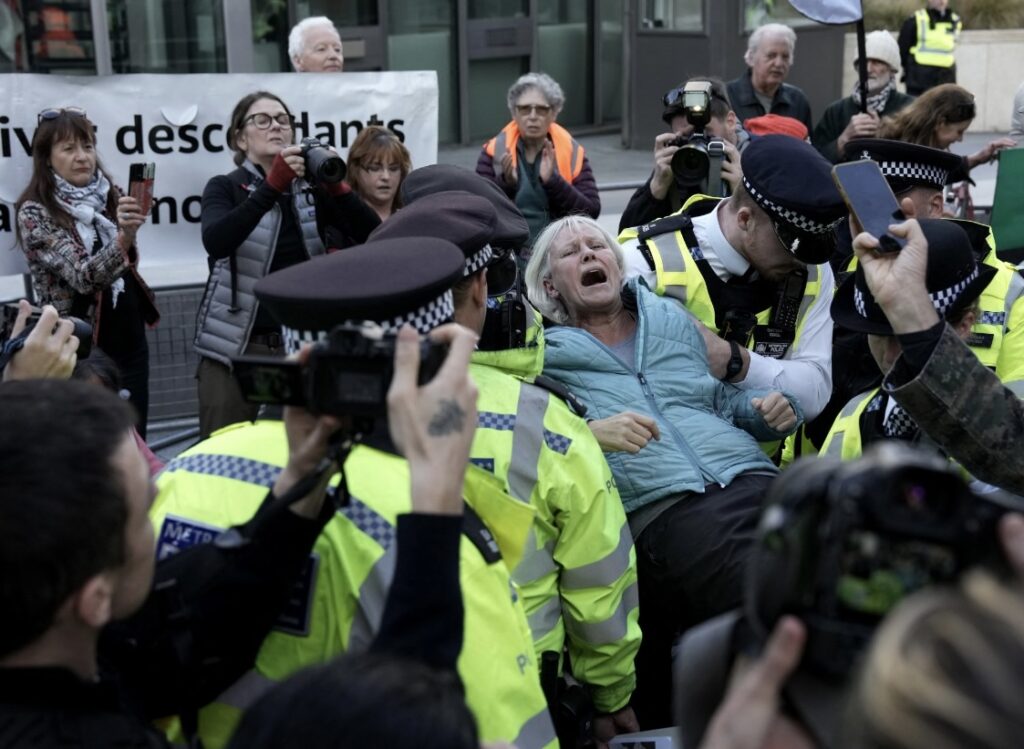
As a photographer, I understand immediately why that picture travels. The woman appears vulnerable, the police physically overwhelming. Before anyone reads a caption, the photograph has already invited a judgment.
The AFP photograph was published by Al Jazeera in its coverage of the October 31 demonstration against the proscription of Palestine Action, which is classified as a terrorist organization under UK law.
There is a document worth reading alongside it. Eight days before the demonstration, its organizer, Defend Our Juries, issued a press release announcing the action. It anticipated more than 400 participants and described “mass defiance, and the mass arrests expected to follow” as a means of exposing what it regarded as an assault on freedom of expression before the Supreme Court hearing on Palestine Action’s ban.
The organizers had explained in advance what they expected the arrests to achieve. That should inform how we look at the pictures afterward.
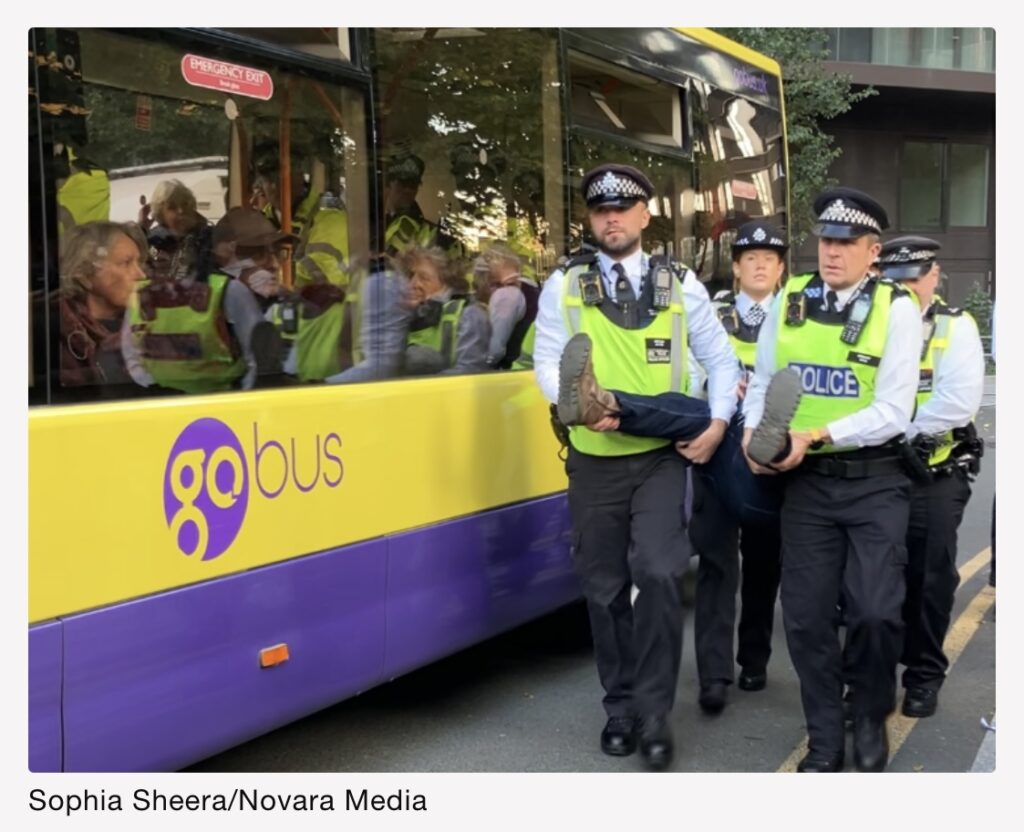
Novara Media’s headline was “Met Police Hire Bus to Help With Mass Arrest of Elderly People Holding Signs.” Its lead photograph shows officers carrying a protester beside a bus, with older people visible through the windows. The headline supplies the interpretation before the reader reaches the account of the demonstration. Age, signs and police transport become the defining elements.
I have encountered that assumption of harmlessness before. Around the turn of the millennium, I was waiting outside a police station in the Whitehall area for the release of a prominent Islamist who had been questioned in connection with terrorism. A group of older demonstrators, white and apparently middle-class, challenged me about photographing them.
They accused me of working for Mossad and sending their pictures to it. I explained that I was a photographer working in a public place and entitled to take photographs. Apparently, doing my job required a more sinister explanation.
I cannot now place the precise date or confidently name the man being questioned. I remember the accusation. The people making it were not less responsible for what they were saying because they were pensioners.
In my recent London blog, I recalled another encounter, days after September 11, 2001. Outside the Israeli Embassy in Kensington, I photographed an Israeli flag being burned. A police officer told me I was “antagonizing them” and threatened me with arrest. Another photographer intervened.
Those experiences have stayed with me because they taught me how readily attention can shift from the conduct being photographed to the person holding the camera. Looking at Saturday’s coverage, I find myself asking how much attention remains on the organization named on the placards.
Palestine Action was not banned because elderly people sat outside an embassy. On June 20, 2025, it claimed responsibility for breaking into RAF Brize Norton and damaging two Voyager aircraft. The defense secretary confirmed the damage to Parliament. The government’s published reasons for proscription also identify earlier attacks on defense businesses in Glasgow, Kent and Bristol, assessing that the group’s campaign of serious property damage had crossed the legal threshold into terrorism.
The ban took effect across the UK on July 5, 2025. It is being challenged through the courts, with a Supreme Court hearing scheduled for November 4–5. People are entitled to argue that the government used the wrong law or imposed a disproportionate restriction. That argument still has to confront the conduct behind the decision.
Nor do I assume that older demonstrators are incapable of making their own decisions. AFP’s reporting included a 79-year-old participant who said she had already been arrested several times. These are people with convictions and, in some cases, considerable experience of precisely this kind of protest. Their accounts deserve to be read, rather than reduced to an impression of bewildered pensioners caught in something they could not understand.
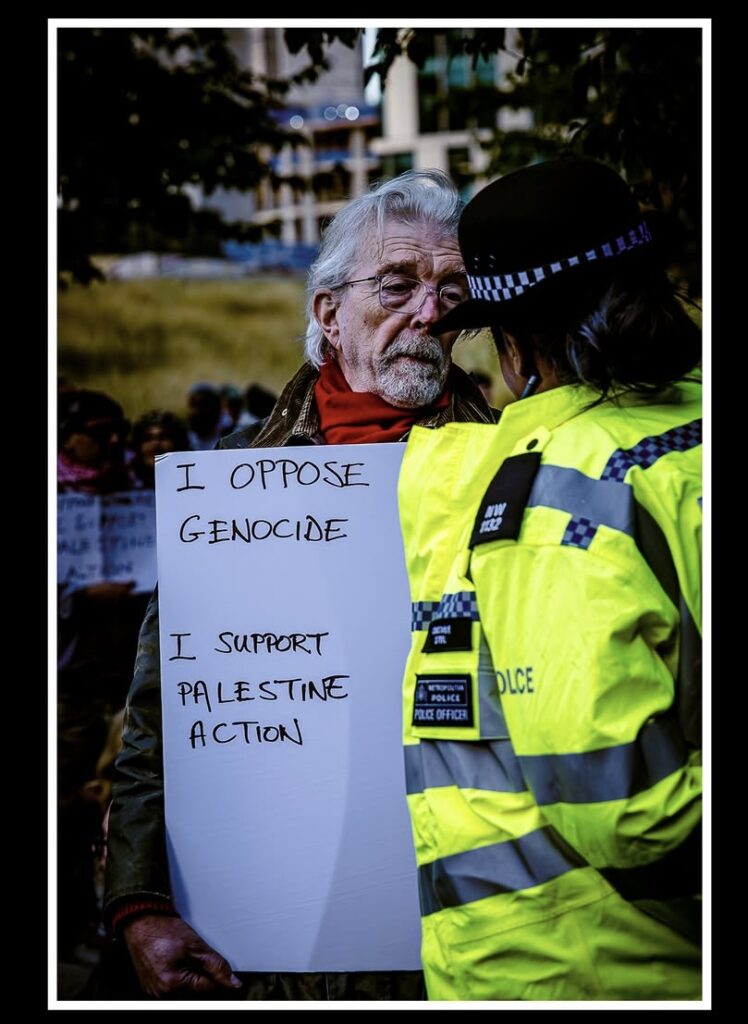
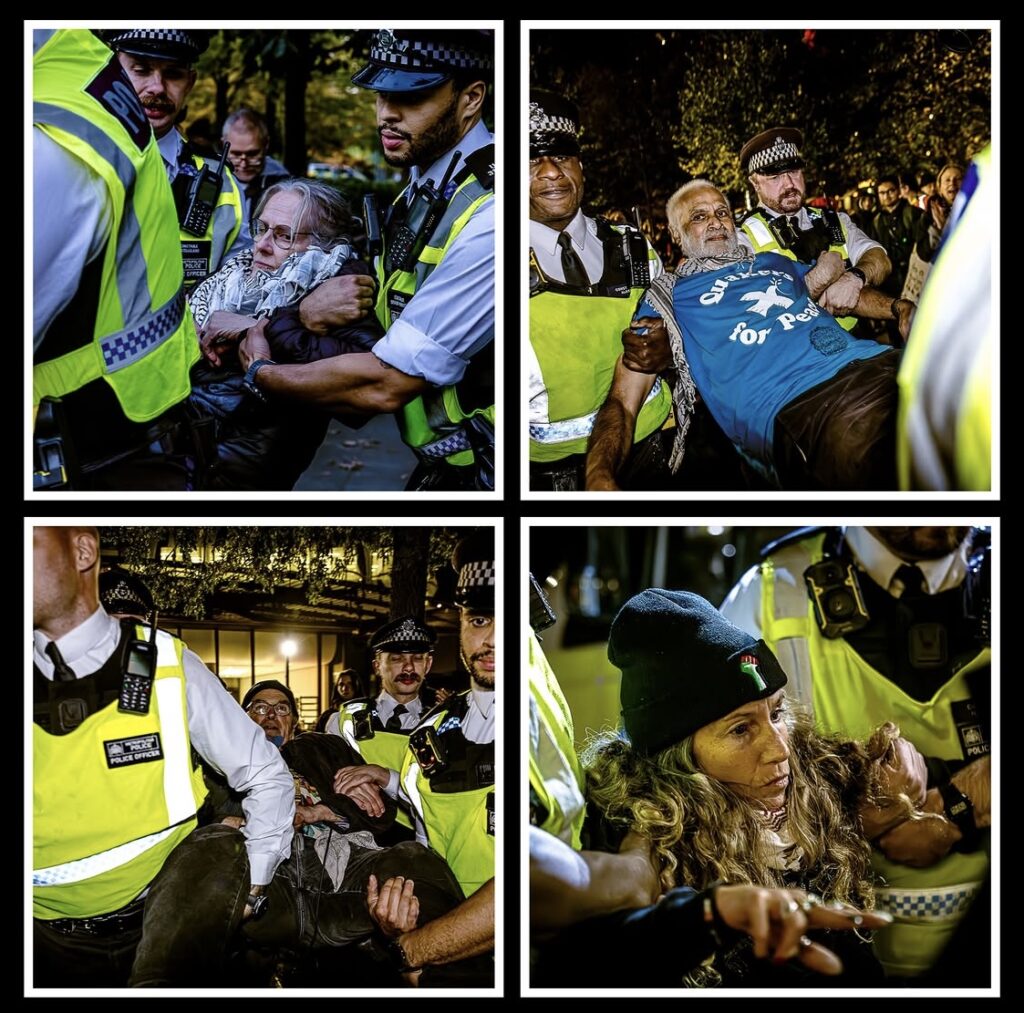
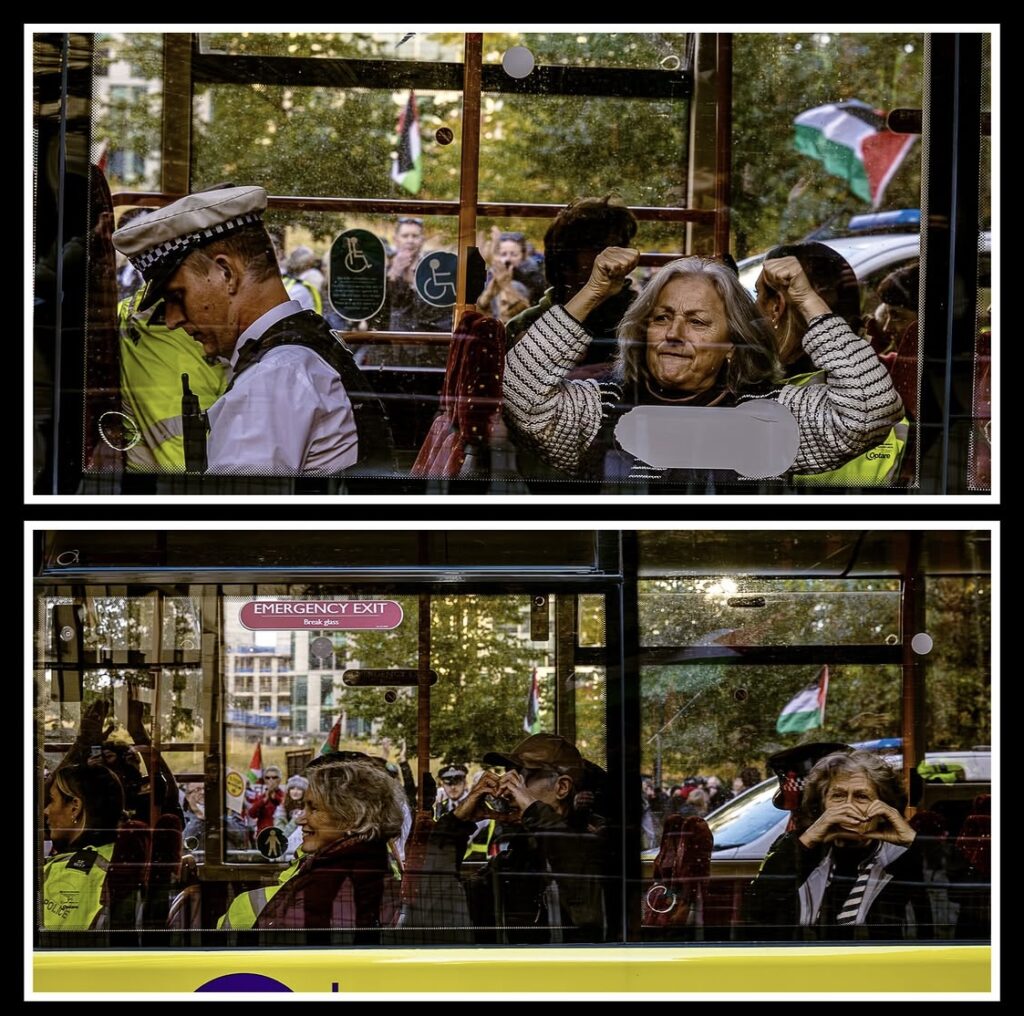
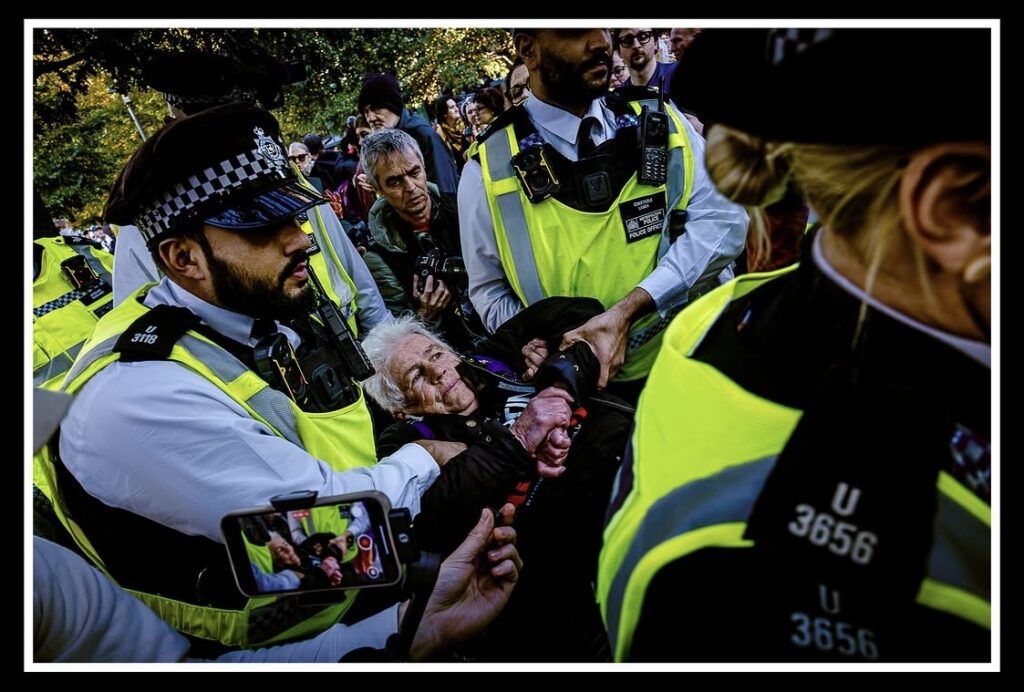
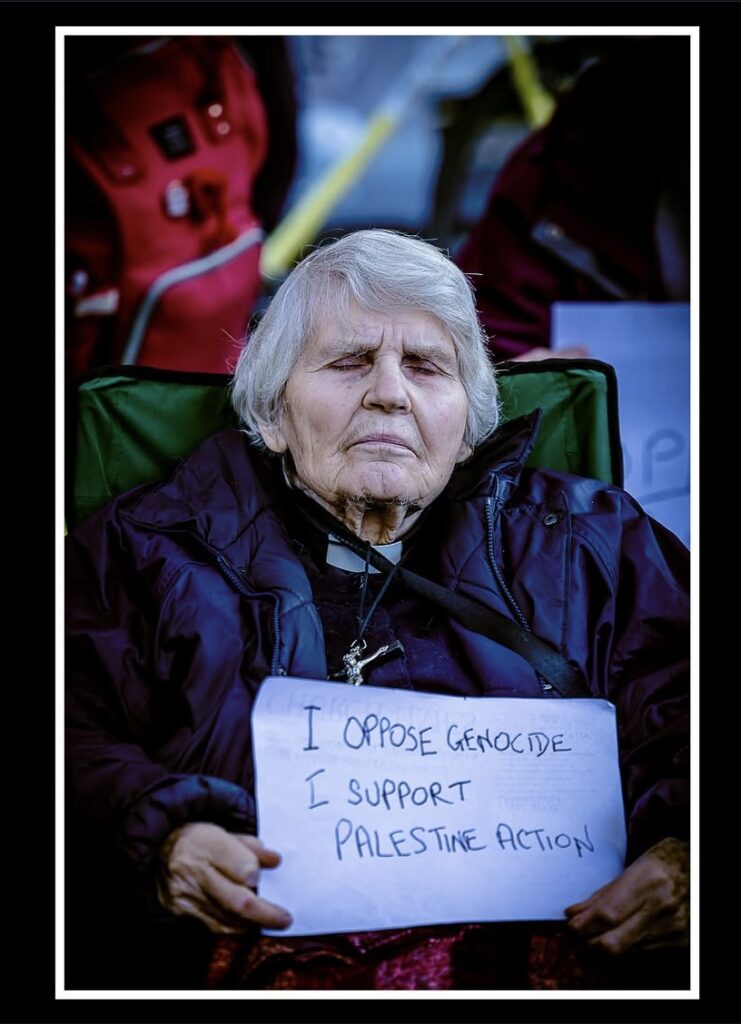
I have not established that the organizers specifically selected older people for particular camera positions. What they did publish was an expectation of mass arrests and an explanation of their intended political effect. A photographer can record a genuine arrest while also producing exactly the publicity a campaign hoped to obtain.
The police remain accountable for how they treat every person they arrest. Photographing their conduct is essential. But when an arrest becomes the public face of a campaign against Israel, the organization being supported deserves at least as much scrutiny as the officers carrying its supporters away.
I would have photographed those arrests too. I would also expect the accompanying journalism to explain why the demonstration was organized, what the placards supported, and why that group was banned. The organizers had already told the press what they expected to gain from the arrests. The least the press can do is tell its readers.
Liked this article? Follow HonestReporting on Twitter, Facebook, Instagram and TikTok to see even more posts and videos debunking news bias and smears, as well as other content explaining what’s really going on in Israel and the region. Get updates direct to your phone. Join our WhatsApp and Telegram channels!
© Divuach Ne’eman R”A, 2025