Key Takeaways:
- Scott Bessent, the U.S. Treasury Secretary at the forefront of America’s sanctions campaign against Iran, has reportedly moved his residence to an American military base after a perceived Iranian threat against his life.
- The U.S. Justice Department unsealed indictments against three Iranian agents. It alleges they organized a network behind nearly 20 attacks and attempted attacks over the past year, including a plot against American military personnel based in the UK.
- Iranian attacks and plots against American officials and civilian targets in North America and Western Europe have increased since the U.S.-Iran war began but existed several years before the conflict.
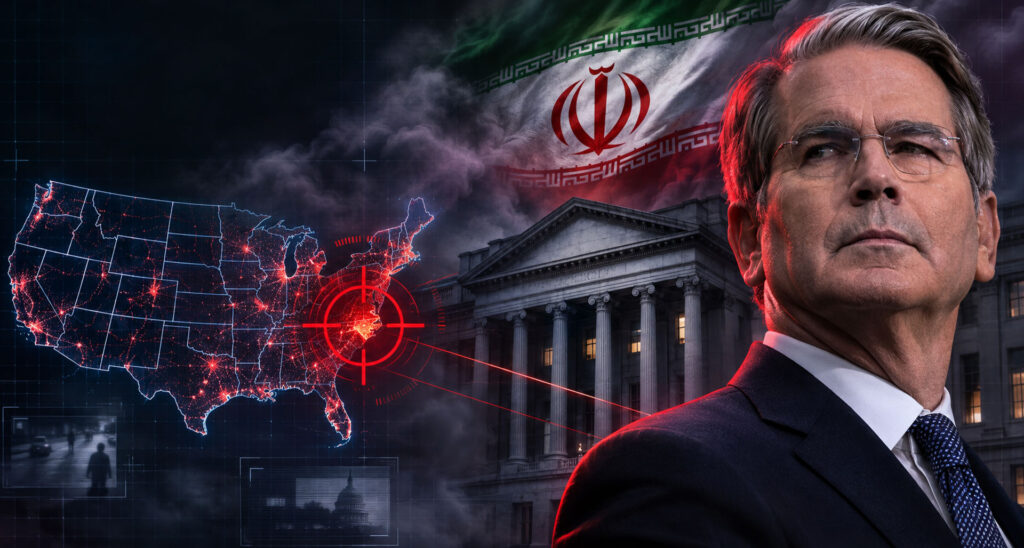
Scott Bessent, the U.S. Treasury Secretary who has been at the forefront of America’s economic sanctions campaign against the Islamic Republic of Iran, has reportedly moved his residence to an American military base following a perceived Iranian threat against his life.
While the idea of a leading member of the American administration being forced to move to a military base for his own safety in the face of Iranian threats is shocking, it is but the latest example of how the Islamic Republic has spread its tentacles of terror out of the Middle East and into the relatively safe havens of Western Europe and North America.
Just prior to the emergence of reports that Secretary Bessent’s life was under threat, the U.S. Justice Department unsealed indictments against three Iranian agents accused of a spree of attacks and plots against civilians and American interests in both Europe and the United States.
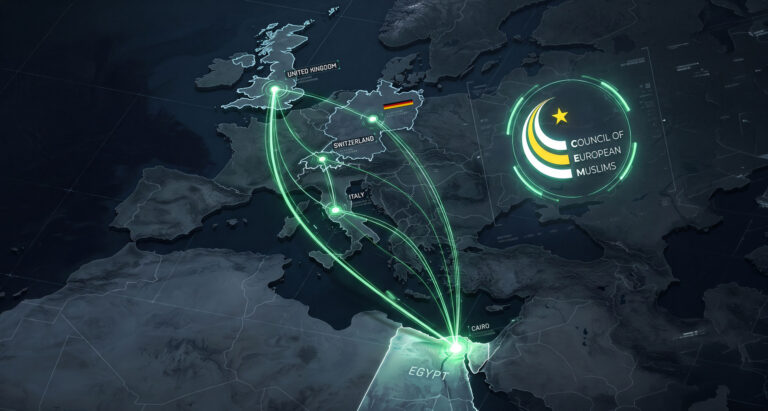
The Justice Department alleged that the three men acted on behalf of the Islamic Revolutionary Guard Corps (IRGC) and Kata’ib Hizballah, an Iran-backed Iraqi militia, and organized a network of terrorists that were behind nearly 20 attacks and attempted attacks over the past year.
Many of these attacks were committed under the guise of the front organization Harakat Ashab Al-Yamin al-Islamiya, which claimed responsibility for the firebombing of synagogues and other Jewish communal sites as well as a stabbing attack in Golders Green, a heavily Jewish neighborhood in northwest London.
One of the three conspirators indicted by the United States was named as Mohammad Baqer Saad Dawood al-Saadi, a senior Katai’b Hizballah operative who was allegedly instrumental in organizing the above-mentioned attacks as well as attacks against two Toronto-area synagogues and the U.S. consulate in Toronto. Al-Saadi is also accused of planning to target a New York City synagogue and two American Jewish community centers.
Even though he was arrested by American authorities in May 2026, al-Saadi allegedly continued to direct operations via third parties. The most recent plot that he allegedly organized from behind bars was an attempted attack on RAF Fairford, a British base that housed “American service members.”
Iran’s desire and willingness to attack sites where American personnel and materiel are based was further established this week when Tehran threatened to expand its retaliation for any U.S. attack against the Islamic Republic to bases outside the Middle East. While this might be construed as saber-rattling and bluster, it appears that the American military is viewing the threat from Iran seriously enough as Air Force planes based in the United Kingdom have been moved to other secure locations due to the threat of an Iranian attack.
A further recent example of Iran’s increasing brazenness in attacking targets in Western Europe and North America is the revelation by French authorities that the Islamic Republic was behind a recent incident where the refrigerators at 700 supermarkets across the country had their temperatures increased so much that the food inside them spoiled and some units even caught fire.
While this incident may be viewed as a simple case of hacking by a foreign country (something that is fairly commonplace these days), it is evidence that the Iranian regime is not adverse to targeting civilian infrastructure and can very easily harm the food supply in Western countries with weak cyber security protections.
The threat from the Iranian regime to Europe and North America has certainly increased since the war between the United States, Israel, and Iran began in late February 2026. However, the Islamic Republic has sought (and sometimes succeeded) to perpetrate attacks on foreign soil long before the war was initiated.
In the last few years, Tehran has been accused of assassinating two Iranian dissidents in the Netherlands (in 2015 and 2017), attempting to bomb a rally of dissident Iranians in 2018, planning to assassinate President Donald Trump prior to his reelection in 2024, plotting to kill former Trump administration National Security Advisor John Bolton, and former Secretary of State Mike Pompeo. There are also indications that the Iranian regime also had plans to assassinate President Joe Biden and former U.S. Ambassador to the UN Nikki Haley.
The Iranian regime is a disruptive force within the Middle East, either through its own security services or through the proxy terror organizations that it uses to destabilize weak countries, threaten the peace and security of the region, and undermine global trade passing through the Persian Gulf and Red Sea.
However, it is become increasingly clear that Iran’s destabilizing influence extends beyond the confines of the Middle East. For years, Iran has shown that its brazen belligerence knows no bounds, targeting Iranian dissidents, Jewish community institutions, and American administration officials (up to and including the U.S. president). The latest hack against French refrigerators is evidence that the Islamic Republic has no qualms about attacking civilian food supplies.
Regardless of whether the current conflict between the United States and Iran reignites or is concluded with an agreement, as long as the Islamic Republic exists, the threat posed by its security services and its terrorist networks will continue to hang as a dark cloud over the relative security and stability of North America and Western Europe.
Liked this article? Follow HonestReporting on Twitter, Facebook, Instagram and TikTok to see even more posts and videos debunking news bias and smears, as well as other content explaining what’s really going on in Israel and the region. Get updates direct to your phone. Join our WhatsApp and Telegram channels!
© Divuach Ne’eman R”A, 2025