Key Takeaways:
- During the 2026 FIFA World Cup, two regional goalkeepers became the focus of dramatically different international reporting despite both stories carrying significant human interest.
- Iranian international Mohammad Rashid Mazaheri’s imprisonment after criticizing Iran’s regime received remarkably little sustained attention from major international media, while the death of Palestinian goalkeeper Saleem Al-Ashqar was rapidly incorporated into an international political campaign directed at FIFA.
- The contrast illustrates not simply differences in coverage but two very different reporting chains through which authentic stories entered the global sports media ecosystem.
Two Goalkeepers
The FIFA World Cup is the world’s biggest sporting event. Every four years, it becomes more than a soccer tournament. It also becomes one of the largest international news platforms, where stories connected to the sport compete for worldwide attention.
This year’s tournament produced two strikingly different examples.
One involved Mohammad Rashid Mazaheri, an Iranian international goalkeeper who represented his country at the 2018 FIFA World Cup before publicly challenging the regime in Tehran.
The other involved Saleem Al-Ashqar, a Palestinian goalkeeper whose death in Gaza quickly became part of an international campaign surrounding FIFA and Israel.
Both stories carried obvious human significance.
Their journeys through the international media could scarcely have been more different.
The Story of Mohammad Rashid Mazaheri
Mohammad Rashid Mazaheri was not an obscure athlete. He spent years playing at the highest level of Iranian soccer and was selected for Iran’s squad at the 2018 FIFA World Cup, representing his country on the sport’s biggest stage.
On February 24, 2026, amid renewed unrest inside Iran, Mazaheri published an Instagram post directly challenging Supreme Leader Ali Khamenei. Alongside an altered image of Iran’s leader, he wrote:
“Khamenei! Know that your command over this holy land has ended.”
Security forces reportedly raided his home the following day.
The Iranian judiciary’s state-controlled news agency, Mizan, presented a different account, claiming Mazaheri had been arrested while attempting to cross the border illegally after altering his appearance.
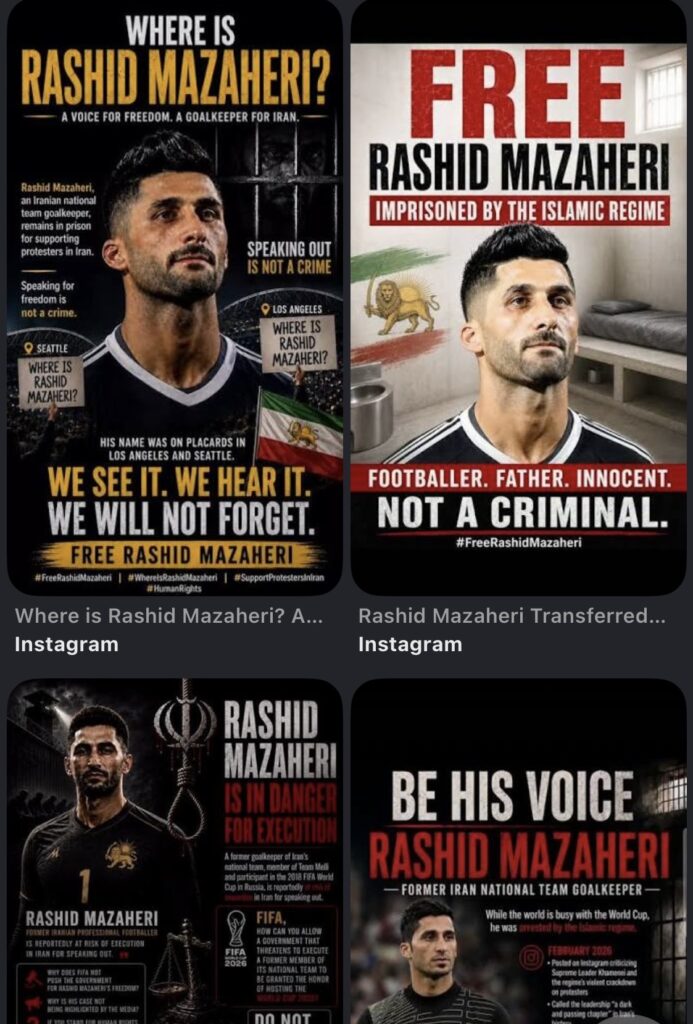
Subsequent reporting by AFP, together with independent regional reporting confirmed through his wife, Maryam Abdollahi, indicated that the former international goalkeeper had instead been transferred to solitary confinement inside Urmia prison in northwestern Iran. His wife appealed publicly for his release, while human rights campaigners urged FIFA and the worldwide representative organization for professional soccer players, FIFPRO, to intervene.
Yet despite involving a former World Cup goalkeeper imprisoned after publicly criticizing an authoritarian regime, the story struggled to reach the international media.
Reuters avoided producing a dedicated standalone report.
Associated Press buried brief references within broader regional coverage rather than treating the detention of a World Cup player as a sports story.
AFP became the principal international wire documenting the case before regional publications carried the report.
BBC Sport, Sky Sports and ESPN FC produced no comparable coverage.
The silence created an unusual vacuum.
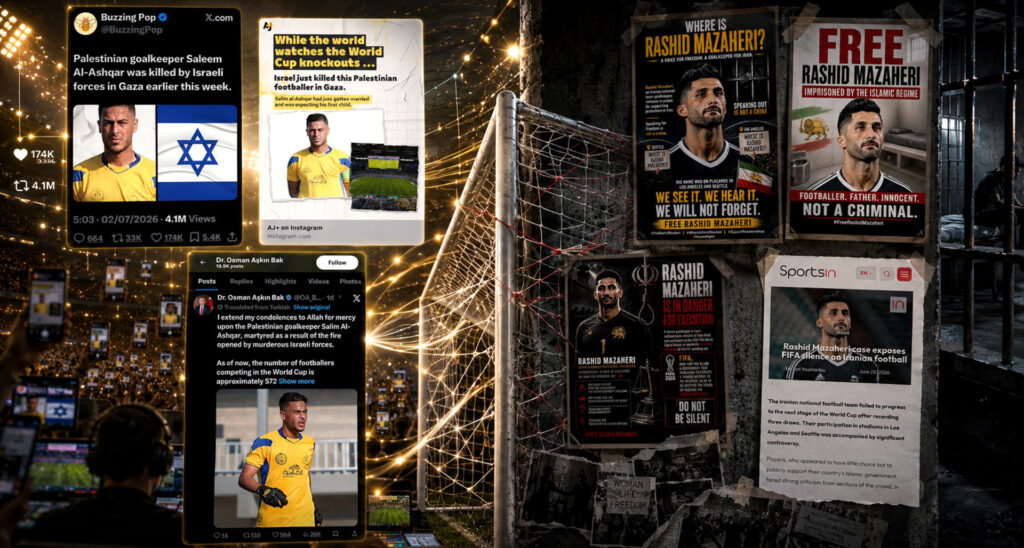
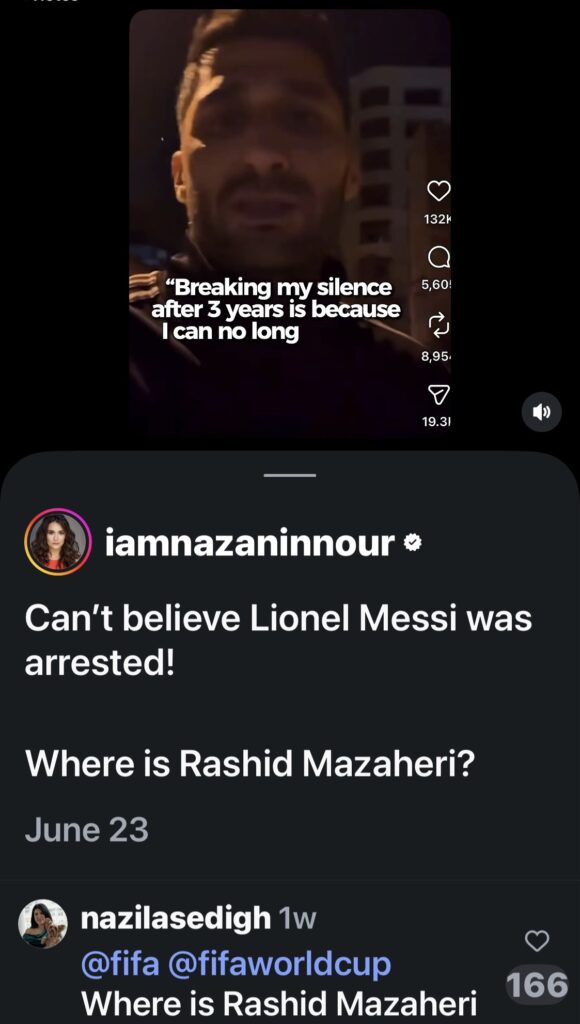
Unable to rely on established sports media, activists turned to social media instead.
One campaign deliberately opened with the words:
“Can’t believe Lionel Messi was arrested!”
Only after capturing viewers’ attention did the real message appear.
“Where is Rashid Mazaheri?”
The tactic itself reflected the campaign’s frustration. Supporters concluded that borrowing the name of the world’s most famous soccer player was the only way to attract attention to an imprisoned Iranian international.
The Story of Saleem Al-Ashqar
Just four months later, another goalkeeper became international news.
Saleem Al-Ashqar, 32, had played across several local Gazan clubs, including Al-Aqsa, Shabab Khan Younis, Al-Masdar, and Khadamat Khan Younis.
On June 29, 2026, he was killed near al-Qarara outside Khan Younis,
According to Palestinian reports carried by Wafa and Al Jazeera, he was shot in the chest while either returning from manual work or searching for a cooking gas cylinder.
The personal circumstances quickly became part of the public narrative.
Al-Ashqar had been married for only five months.
His wife was expecting their first child.
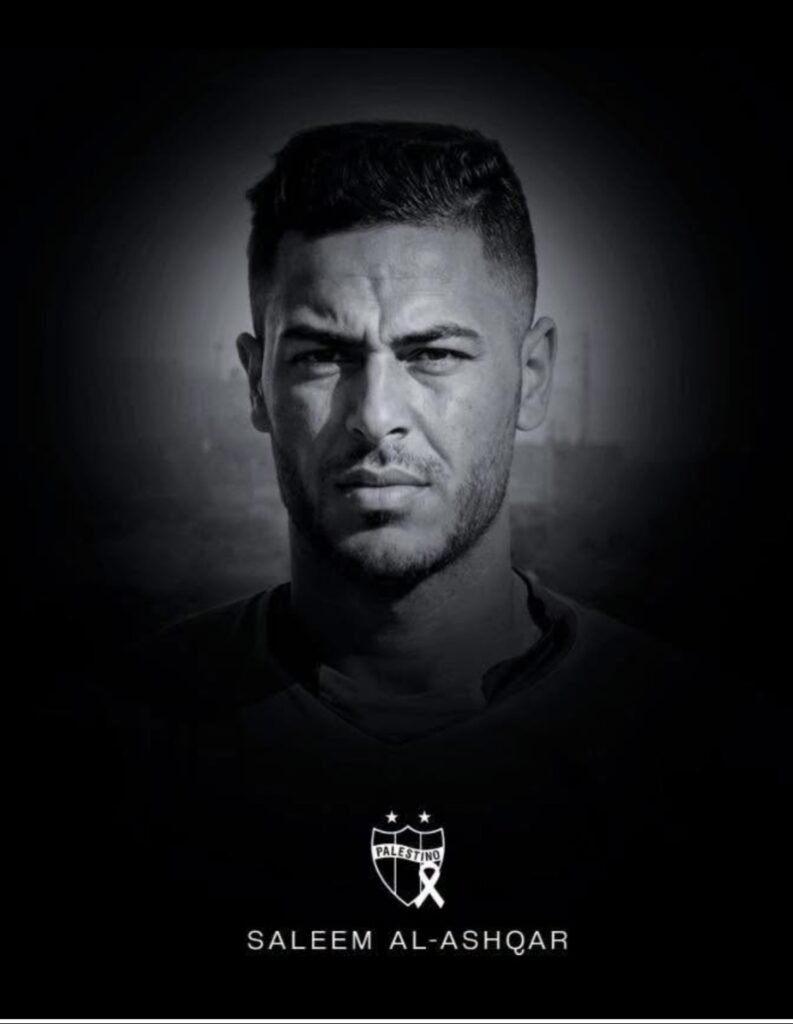
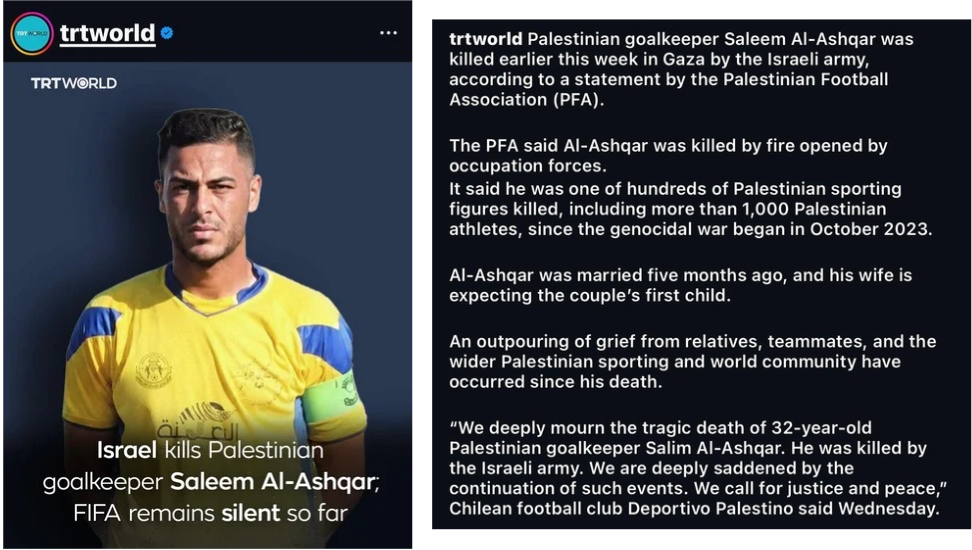
Club Deportivo Palestino, a Chilean first-division club founded by members of the Palestinian diaspora, rapidly published a black-and-white memorial graphic highlighting those details, helping propel the story across international soccer networks.
The Palestinian Football Association simultaneously incorporated Al-Ashqar’s death into updated casualty figures that it has used in its continuing campaign urging FIFA to suspend the Israel Football Association.
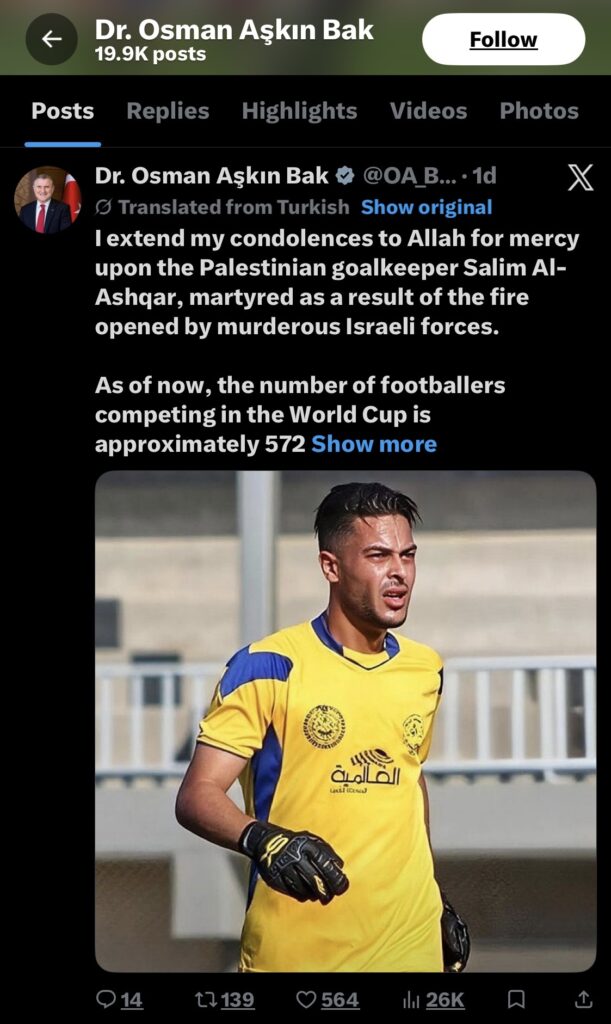
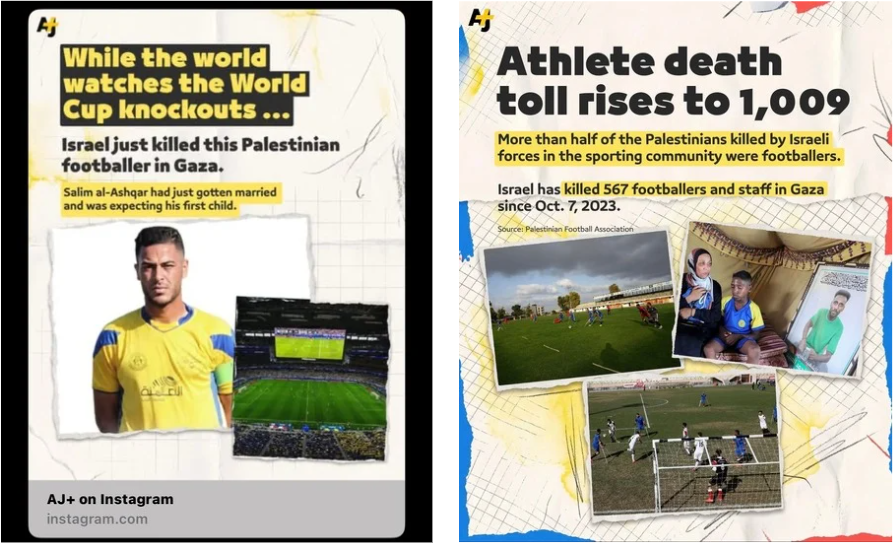
The reporting chain then accelerated. Turkey’s Minister of Youth and Sports, Osman Aşkın Bak, publicly contrasted the 572 players participating in the 2026 FIFA World Cup with Palestinian Football Association figures claiming 567 Palestinian soccer personnel had been killed since October 7, 2023. That numerical comparison quickly became one of the central frames repeated across articles, graphics, and social media campaigns.
Within days, Anadolu Agency, TRT World, AJ+ and Al Jazeera had produced articles, graphics and video reports integrating Al-Ashqar’s death into a wider campaign surrounding Israel, FIFA and the World Cup.
Two Reporting Chains
Viewed side by side, the two cases reveal markedly different reporting chains.
Mazaheri’s story moved from imprisonment to a handful of international reports before relying largely on activists and viral social media campaigns simply to attract attention.
Al-Ashqar’s story moved from local reporting to a memorial campaign by Club Deportivo Palestino, into Palestinian Football Association casualty updates, before being amplified by Turkish government messaging and carried across state-funded international broadcasters including Anadolu Agency, TRT World, AJ+, and Al Jazeera.
The difference extends beyond media volume.
It reflects how stories travel.
One campaign sought international visibility for an imprisoned soccer player.
The other used the death of a soccer player to strengthen an existing international campaign directed toward Israel.
Sport, Politics and FIFA
The institutional context also matters.
The Palestinian Football Association is headed by Jibril Rajoub, a senior Fatah official and former terrorist who was convicted over a grenade attack before later becoming one of the Palestinian Authority’s most influential political figures.
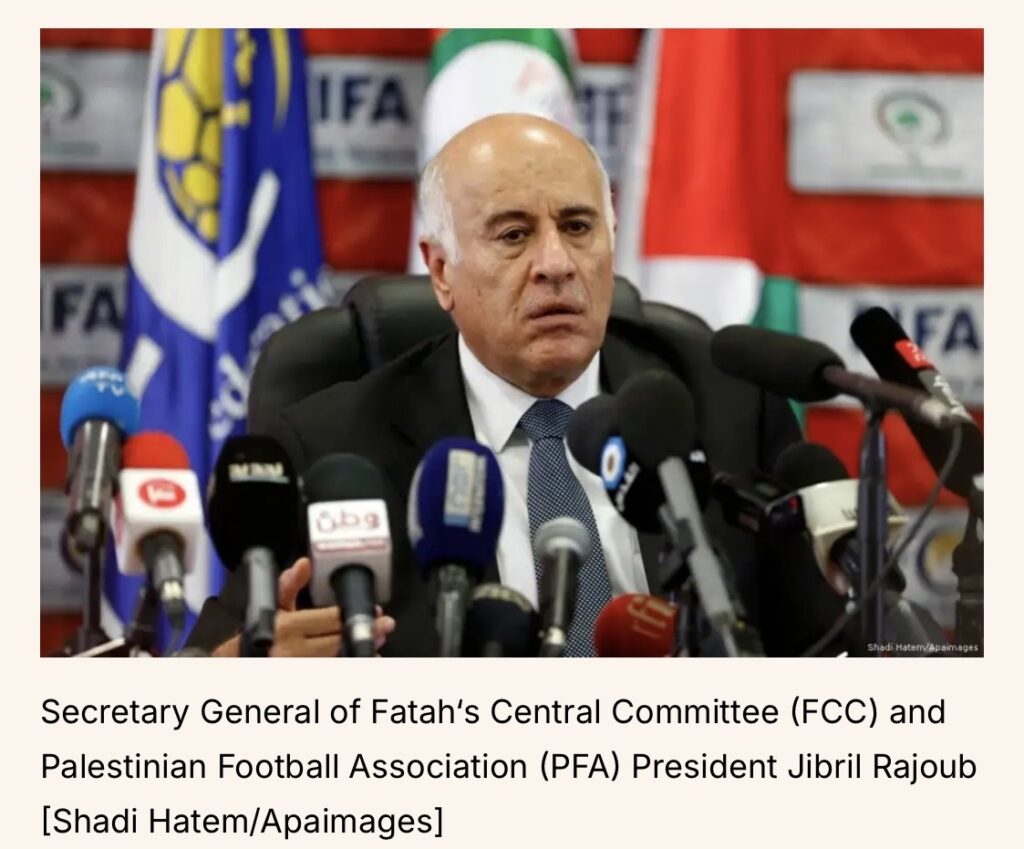
As president of the Palestinian Football Association and the Palestine Olympic Committee, Rajoub has spent years attempting to persuade FIFA to sanction Israel.
In 2018, FIFA suspended him for twelve months after concluding that his public campaign urging supporters to burn Lionel Messi shirts ahead of Argentina’s proposed match against Israel constituted incitement under its disciplinary code. The Court of Arbitration for Sport later upheld the sanction.
Against that background, Al-Ashqar’s death became part of an existing institutional effort that was already directed toward Israel.
Conclusion
Neither goalkeeper chose to become an international symbol.
One story centred on an international soccer player imprisoned after publicly challenging the Iranian regime.
The other centred on a goalkeeper killed during an active war, whose death rapidly became part of an established campaign surrounding Israel and FIFA.
Two goalkeepers.
Two genuine human stories.
Two remarkably different journeys through the international soccer media ecosystem.
Sometimes the most revealing comparison is not between the events themselves, but between the editorial pathways they are allowed to travel.
Liked this article? Follow HonestReporting on Twitter, Facebook, Instagram and TikTok to see even more posts and videos debunking news bias and smears, as well as other content explaining what’s really going on in Israel and the region. Get updates direct to your phone. Join our WhatsApp and Telegram channels!
© Divuach Ne’eman R”A, 2025