Britain has once again turned its attention to Israeli settlements in the West Bank, joining international measures targeting settlement trade.
Which makes these photographs particularly timely.
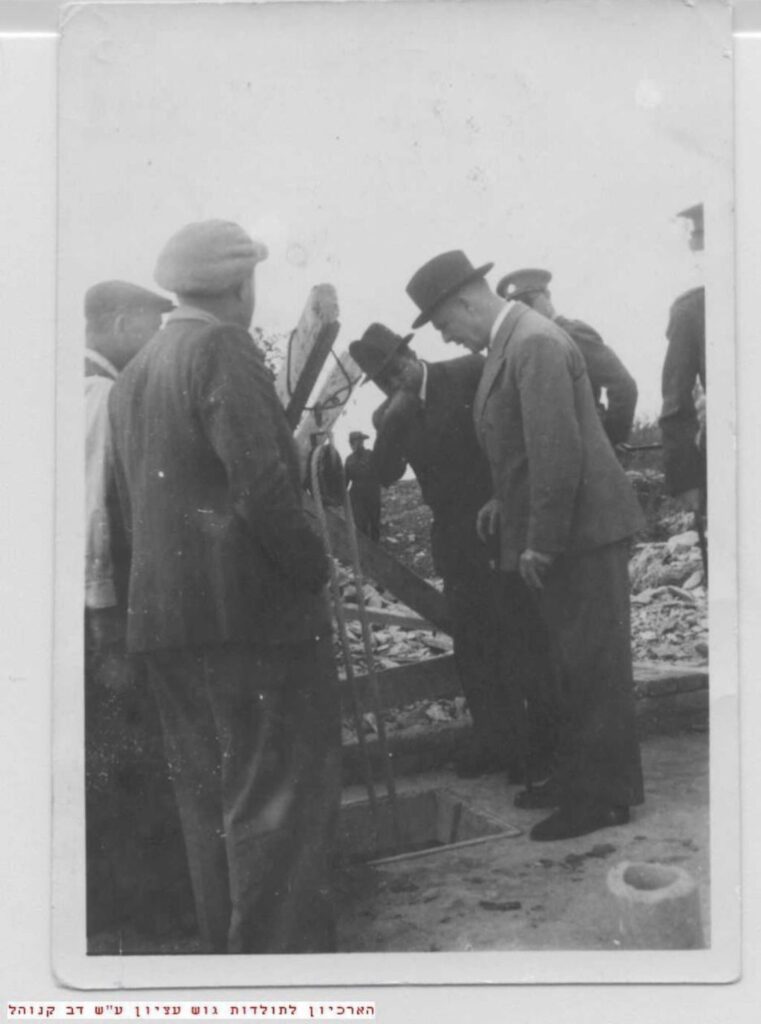
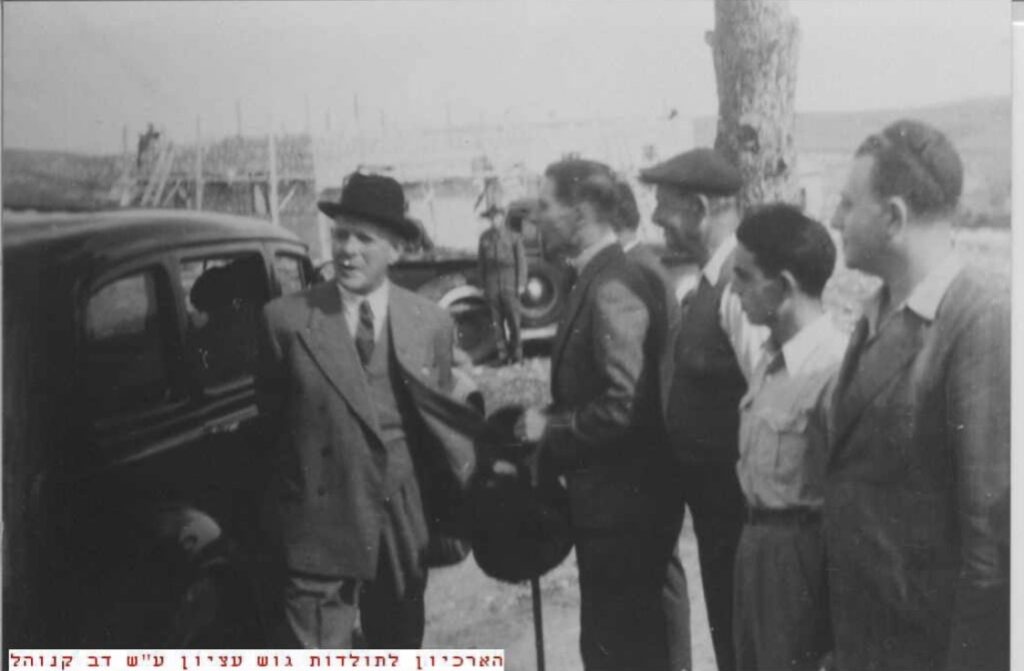
They show Lord Gort, the British High Commissioner for Palestine, visiting Kfar Etzion on November 17, 1944.
Not 1967.
Not after the establishment of Israel.
1944.
The visit is not simply something inferred from an old photograph. It is preserved in the Dov Knohl Gush Etzion Historical Archive, whose catalogue identifies a “Visit of the British High Commissioner, Lord Gort, to Kfar Etzion.”
The National Library of Israel also catalogues archival material connecting Lord Gort, the High Commissioner and Kfar Etzion in 1944. And a contemporary Jewish Telegraphic Agency report from November 17 records Gort visiting the community and inspecting the settlement.
There is an irony here that is difficult to miss.
Today, Britain discusses Israeli communities in the West Bank largely through the vocabulary of “settlements” and occupation.
Yet 82 years ago, Britain’s own representative in Mandatory Palestine was standing in Kfar Etzion, formally visiting a Jewish community there.
The photographs matter because they puncture one of the most persistent simplifications surrounding the West Bank: the impression that Jewish presence there somehow began with Israel’s capture of the territory in 1967.
It didn’t.
Kfar Etzion had been established years earlier. The Jewish communities of the Etzion Bloc were destroyed during the 1948 war and their residents displaced. Jews returned after Israel took control of the area in 1967.
None of that, by itself, resolves the modern political or legal arguments surrounding the West Bank.
But history doesn’t disappear simply because it complicates today’s narrative.
And neither do photographs.
Sometimes an old photograph supplies the context that today’s politics leaves outside the frame.
Liked this article? Follow HonestReporting on Twitter, Facebook, Instagram and TikTok to see even more posts and videos debunking news bias and smears, as well as other content explaining what’s really going on in Israel and the region. Get updates direct to your phone. Join our WhatsApp and Telegram channels!
© Divuach Ne’eman R”A, 2025