Key Takeaways:
-
Middle East Eye markets itself as an independent news source, but ownership records show it is controlled entirely by a former Al Jazeera executive with ties to Al-Quds TV, a channel widely identified as Hamas-affiliated.
-
Despite its opaque funding and leadership background, MEE reaches millions on social media, making it one of the most influential – yet least scrutinized – drivers of anti-Israel narratives for Gen Z audiences.
-
MEE’s editorial pattern consistently aligns with Qatari- and Hamas-friendly messaging, including platforming Hamas leaders and pushing “genocide” accusations, raising urgent questions about whose interests the outlet truly serves.
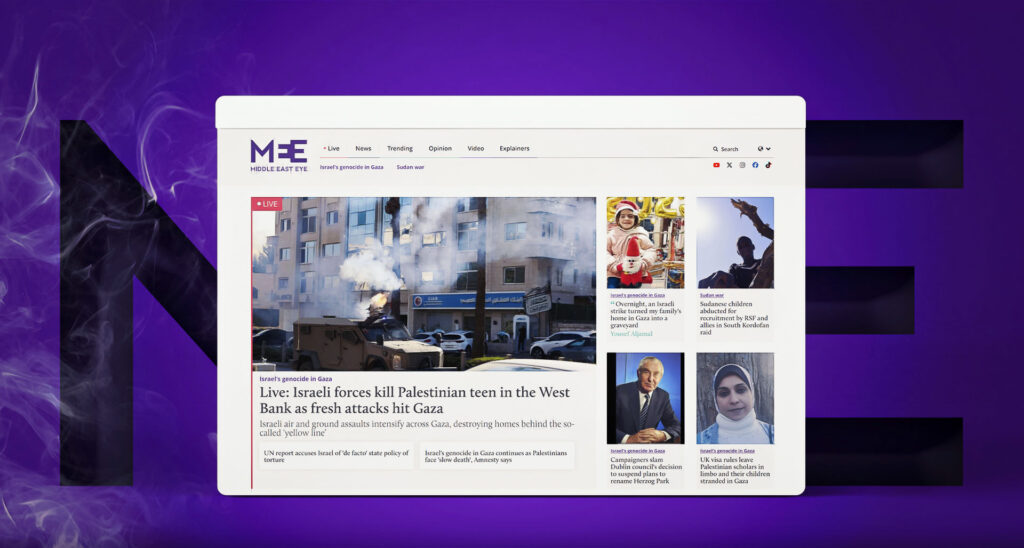
Middle East Eye isn’t just growing. It’s skyrocketing.
The London-based outlet describes itself as “an independently funded digital news organisation covering stories from the Middle East and North Africa, as well as related content from beyond the region.”
It claims that “Its unique coverage offers on-the-ground news, comment and analysis that brings local viewpoints to the fore. Reporters are encouraged to read between the lines and take stories one step further rather than simply follow the official narrative.”
On TikTok, Instagram, YouTube, and Facebook, MEE’s videos now reach millions of young viewers, turning it into one of the most influential narrators of Middle East coverage. Its explainers and emotional reels circulate widely with no disclosure of who funds the outlet, who controls it, or any connections it may have through past leadership roles to extremists or associated groups.
Middle East Eye’s significance today isn’t just about its content. It’s about its sheer reach. On TikTok alone, the outlet’s videos regularly draw hundreds of thousands to millions of views. This makes MEE one of the most influential, yet least scrutinized, narrators of the Israeli–Palestinian conflict on social media. Its ascent mirrors the rise of AJ+, which similarly built enormous online influence while operating largely under the radar of traditional media oversight. Understanding MEE’s impact means recognizing that it isn’t a fringe publication. It is shaping the worldview of a generation.
Because Middle East Eye positions itself as an “independent” authority on Israel and Gaza for a global Gen Z audience, the public deserves to understand the origins, ownership, and ideological infrastructure behind the brand.
And the documents tell a very different story from the outlet’s marketing.
Companies House filings in the UK show that Middle East Eye Limited is controlled by one person: Jamal Awn Jamal Bessasso, a Dutch national of Palestinian origin. He owns more than 75% of the shares, more than 75% of voting rights, and has the power to appoint or remove directors. According to media reports, before creating Middle East Eye, Bessasso served as:
-
Director of planning and human resources at Al Jazeera in Qatar.
-
Director of Samalink TV, a company that broadcast Al-Quds TV, repeatedly identified in research and media investigations as a Hamas-affiliated or Hamas-controlled station.
Despite this, MEE’s editor-in-chief, former Guardian journalist David Hearst, has insisted the outlet does not receive funds from any government. He has never disclosed donors or funders, nor addressed why Bessasso–and only Bessasso–appears in official ownership documents.
And for years, Gulf states have accused MEE of functioning as a Qatari-backed media arm, specifically aligned with the Muslim Brotherhood and Hamas. During the 2017 Gulf crisis, Saudi Arabia, the UAE, Bahrain, and Egypt demanded that Qatar shut down MEE entirely, along with Al Jazeera.
Then there is the editorial pattern — which consistently elevates Hamas voices.
Hearst, who once expressed his fervent wish for “the end of Zionism,” in 2018, penned an op-ed in MEE, in which he raged against what he perceived as “Jewish supremacy” in Israel and ludicrously claimed the country was not a democracy.
In 2020, Hearst personally conducted a full-length interview in Istanbul with Hamas political chief Ismail Haniyeh that MEE published.
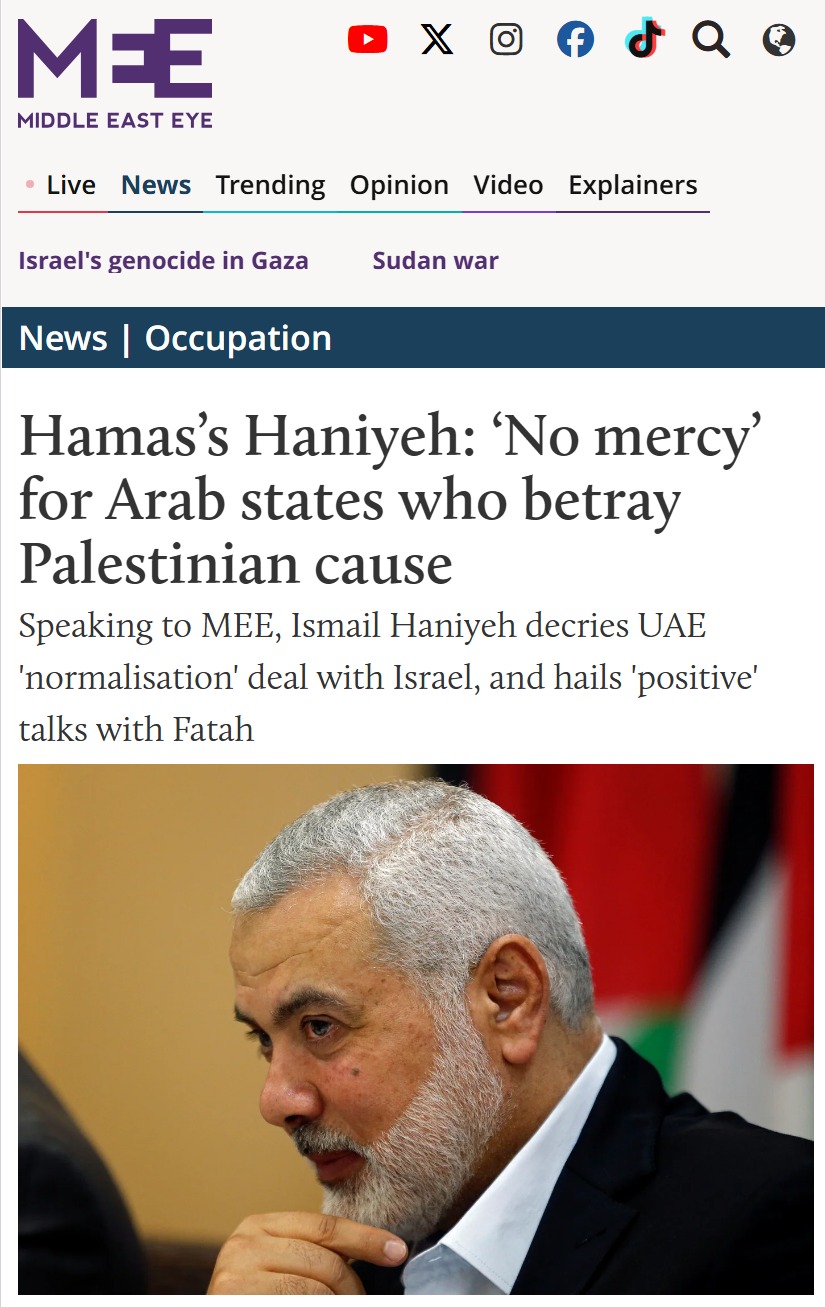
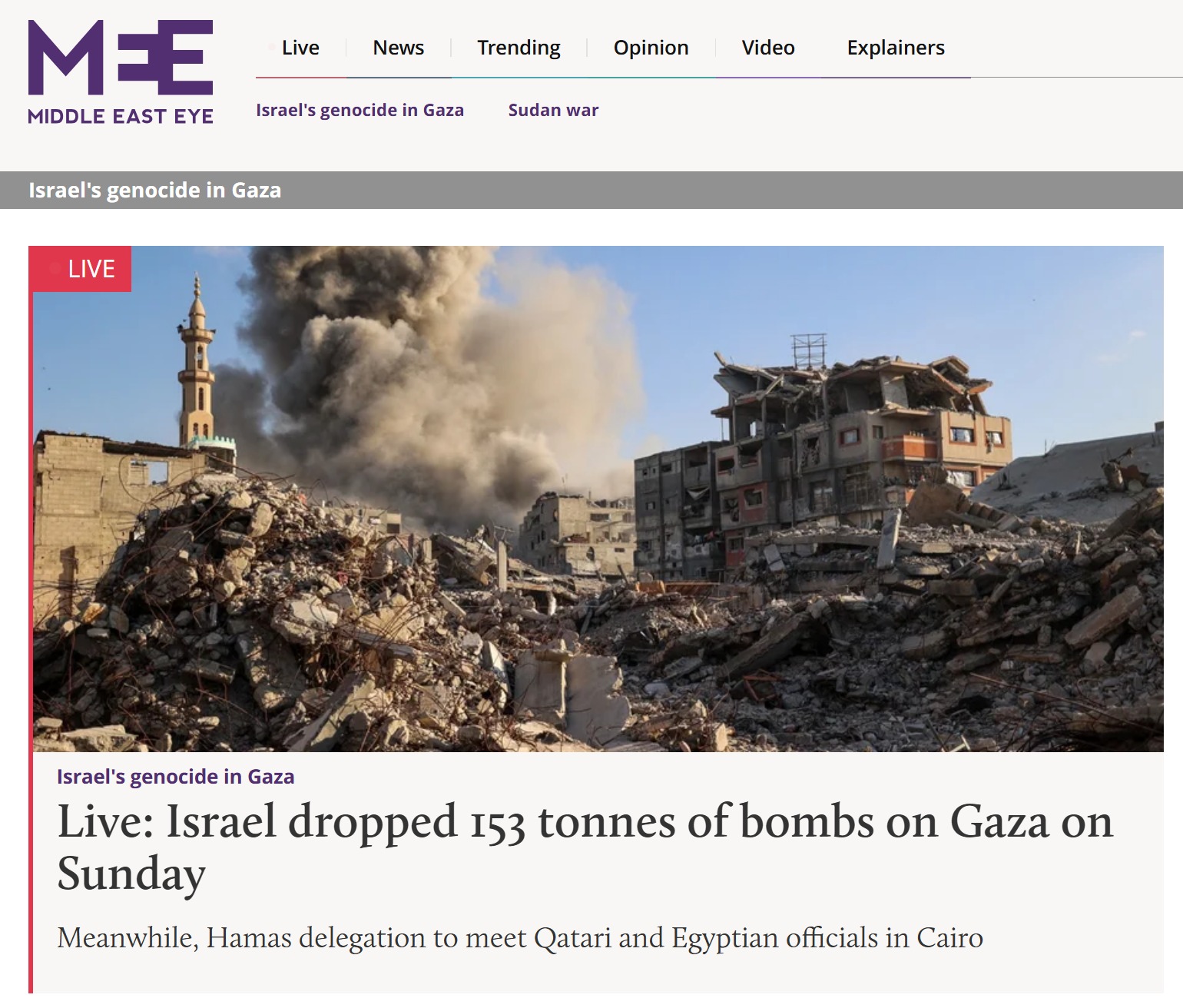
Throughout the most recent Israel-Hamas war, Middle East Eye was among the most prominent outlets amplifying claims of Israeli “genocide,” publishing sympathetic long-form interviews with Hamas leaders and pushing narratives that closely align with Hamas messaging.
This aligns with what some analysts have claimed: Middle East Eye is viewed as operating within a Qatari-aligned media ecosystem that often overlaps with narratives favored by Hamas.
Why This Matters Now
Middle East Eye’s audience is no longer niche or regional. It is shaping the worldview of millions of young Western readers and viewers, many of whom have no idea that the outlet’s founder previously held senior roles in a company that broadcast Al-Quds TV, a channel widely described as Hamas-affiliated, or that Arab states see it as a mouthpiece for Qatar.
In an era when social networks label “state-affiliated media,” MEE has slipped under the radar — presenting itself as a grassroots, progressive, independent voice while operating inside an ecosystem that seems to have problematic ties to Hamas.
This does not mean every article MEE publishes is false. It does mean that transparency is essential, especially when an outlet becomes one of the most influential narrators in Middle East coverage.
If Middle East Eye wants the public to trust it, it should disclose its backers. Until then, journalists, policymakers, and readers must ask a simple question:
Whose story is MEE really telling, and whose war is it helping to fight?
Liked this article? Follow HonestReporting on Twitter, Facebook, Instagram and TikTok to see even more posts and videos debunking news bias and smears, as well as other content explaining what’s really going on in Israel and the region. Get updates direct to your phone. Join our WhatsApp and Telegram channels!
© Divuach Ne’eman R”A, 2025