Watching the coverage from France over the weekend, I kept wondering what Palestinians had to do with any of it. Schools, teachers, wages, the cost of living: these were grievances directed at the French government. Yet in the footage my colleagues and I were watching, Palestinian flags repeatedly stood out. French flags were much harder to spot.
Protesters demonstrating in France about conditions in France had chosen to bring the flag of another people. I wanted to know why, and I wanted the coverage to notice it too.
I have watched a similar pattern in London’s anti-Israel demonstrations, where Palestinian flags dominate the scenes I see. At pro-Israel gatherings, I am accustomed to seeing Israeli flags alongside their British counterparts. That contrast is something I notice as a Londoner who now lives in Israel. A flag tells you something about how people choose to present themselves and their cause.
The French demonstrations gave that question a particular urgency because their stated purpose concerned domestic problems. My colleagues have written about how Palestinian symbolism has spread into protests with otherwise unrelated demands. We have become familiar with the language that accompanies that movement, from “Free Palestine” to “from the river to the sea.” The flag’s appearance across different causes deserves attention, especially when the original grievances seem to disappear beneath it.
Then I began looking through the photographic roundups, and found myself asking where the flags had gone.
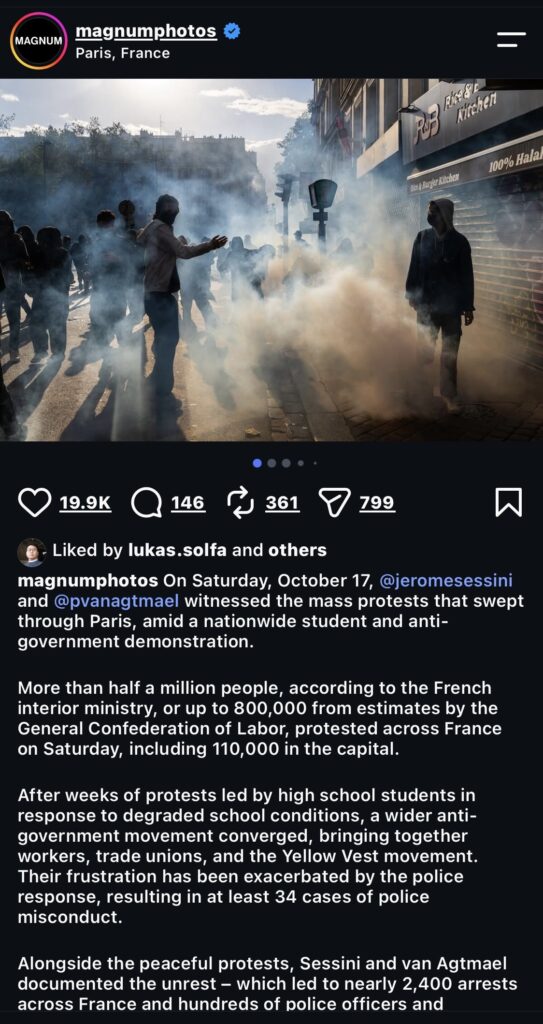
Magnum was the selection that bothered me most. Robert Capa and Henri Cartier-Bresson were photographers I looked up to. Their agency helped establish what serious photojournalism could be, and I still approach its work with that respect. I looked carefully through the Paris photographs that were collected: burning cars, police, smoke, broken windows and the damage left outside a shop. I could not identify a Palestinian flag in them.
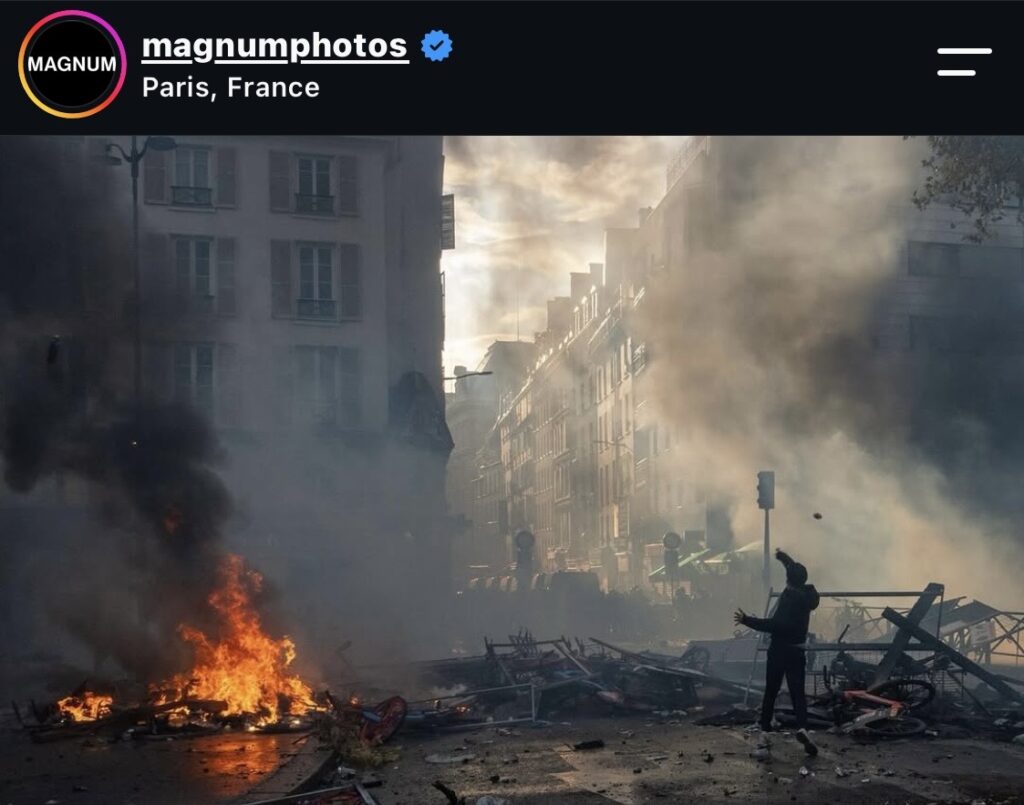
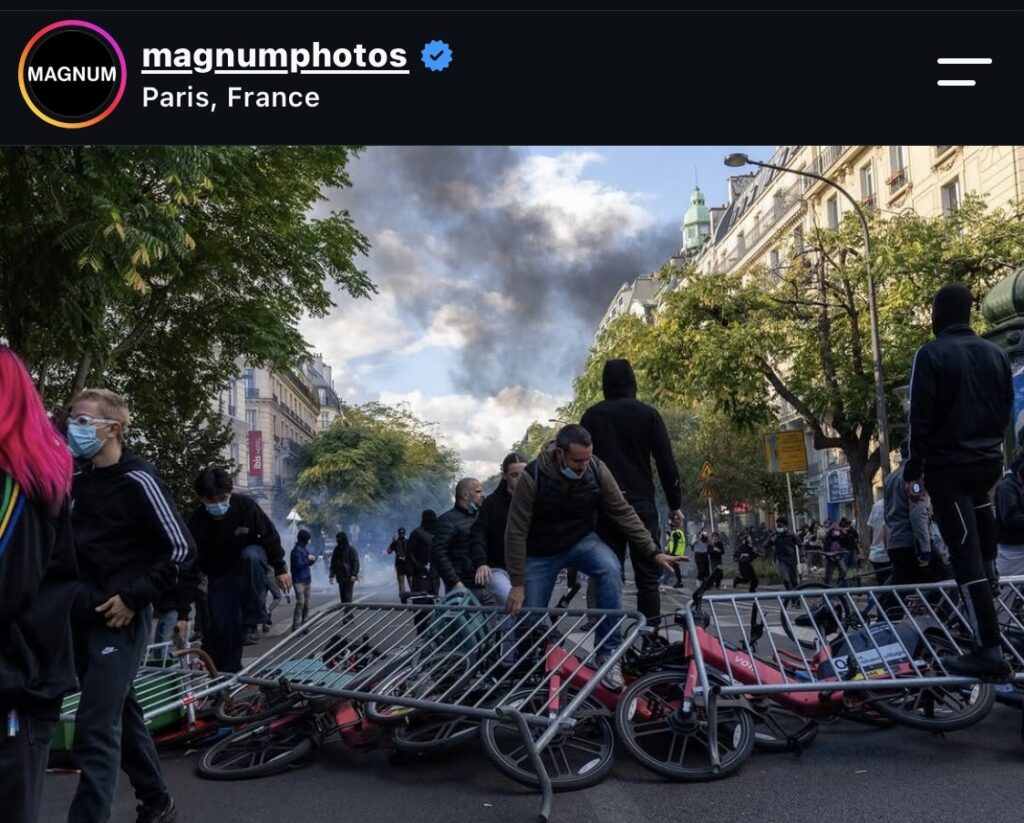
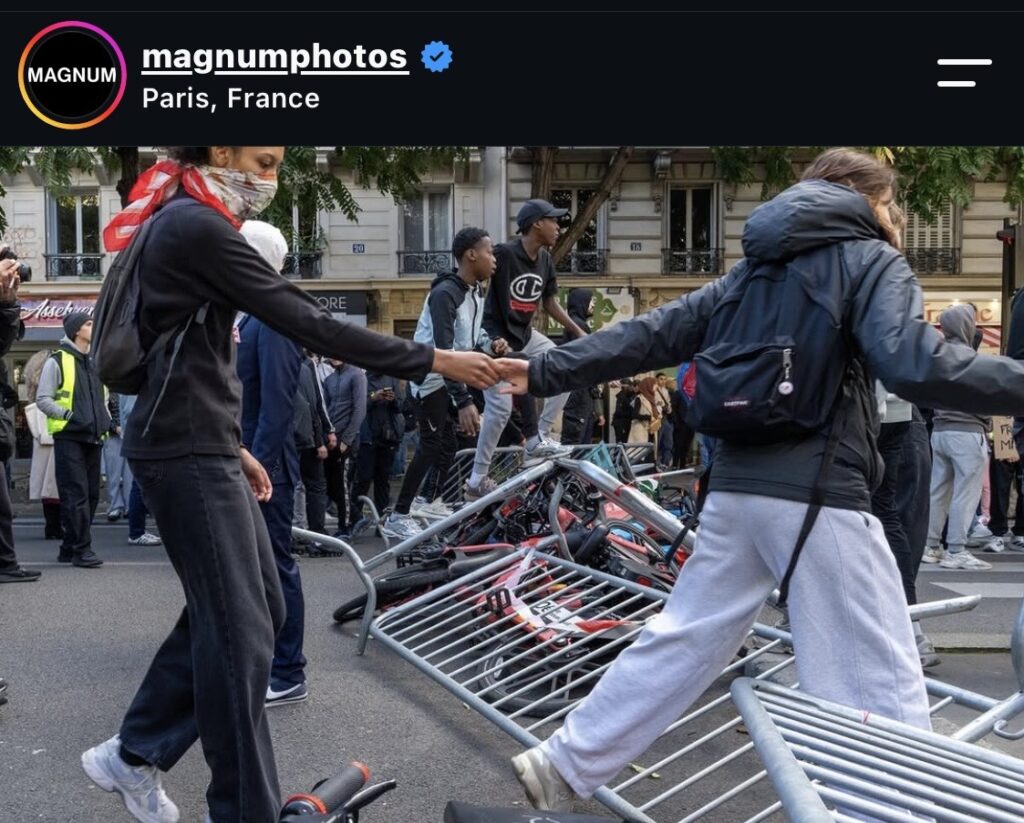
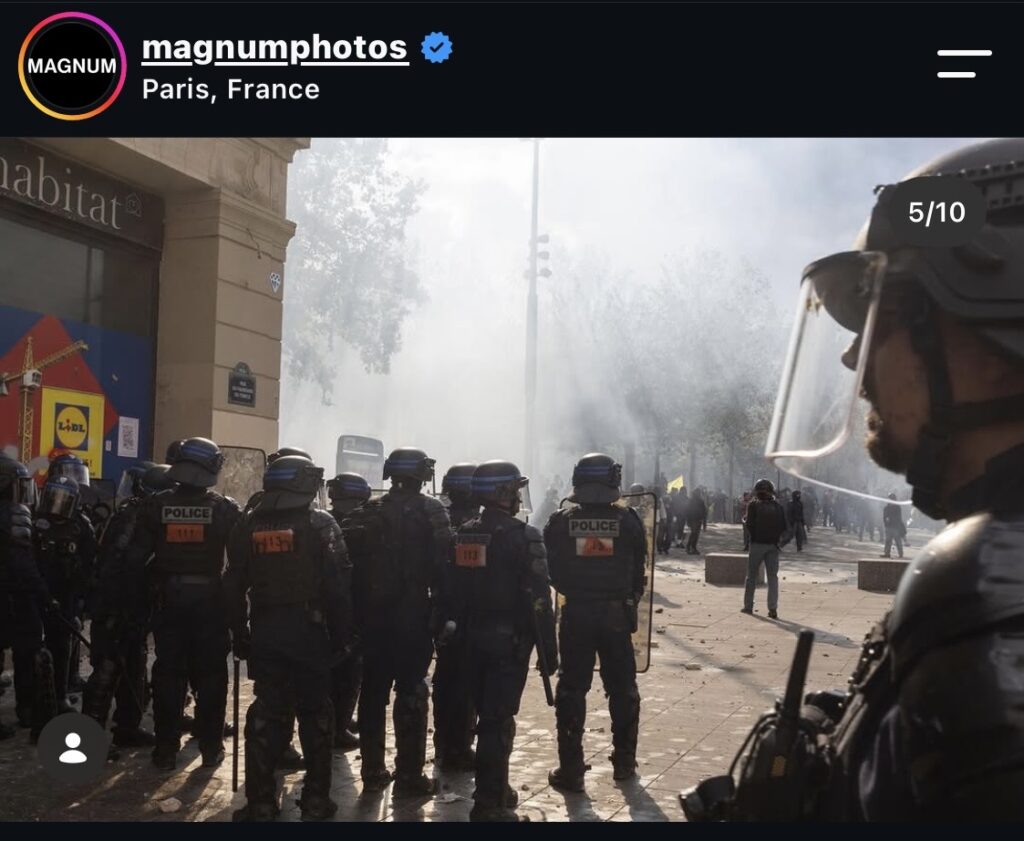
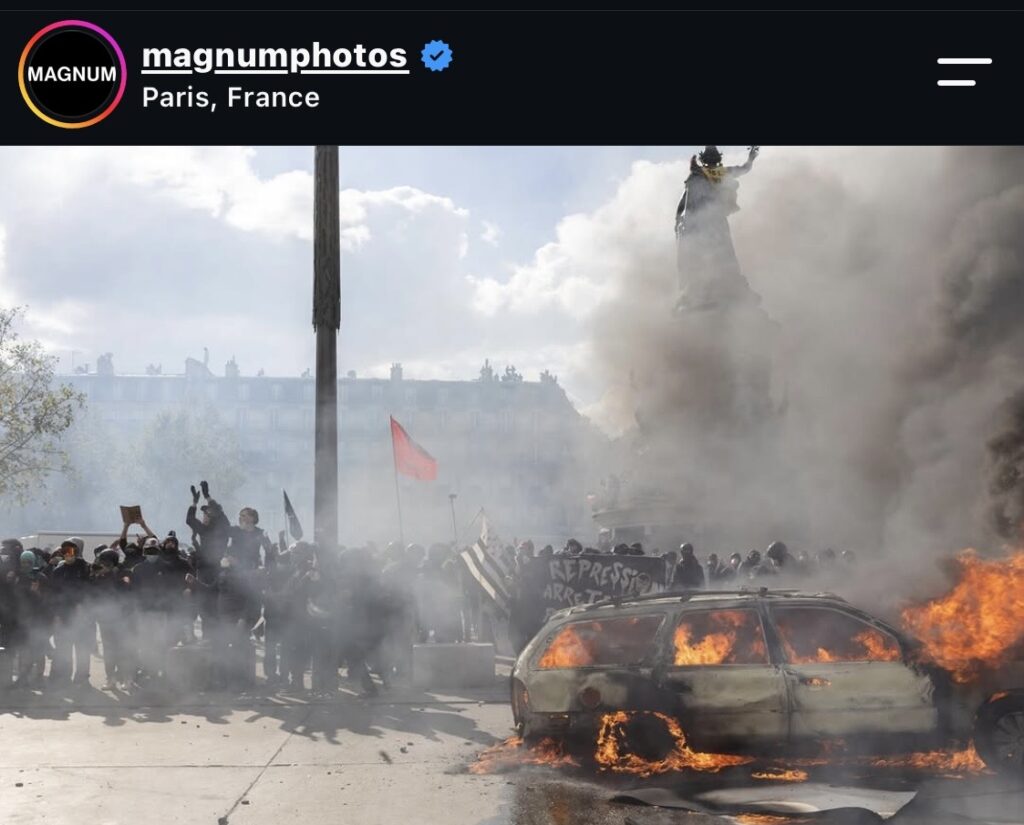
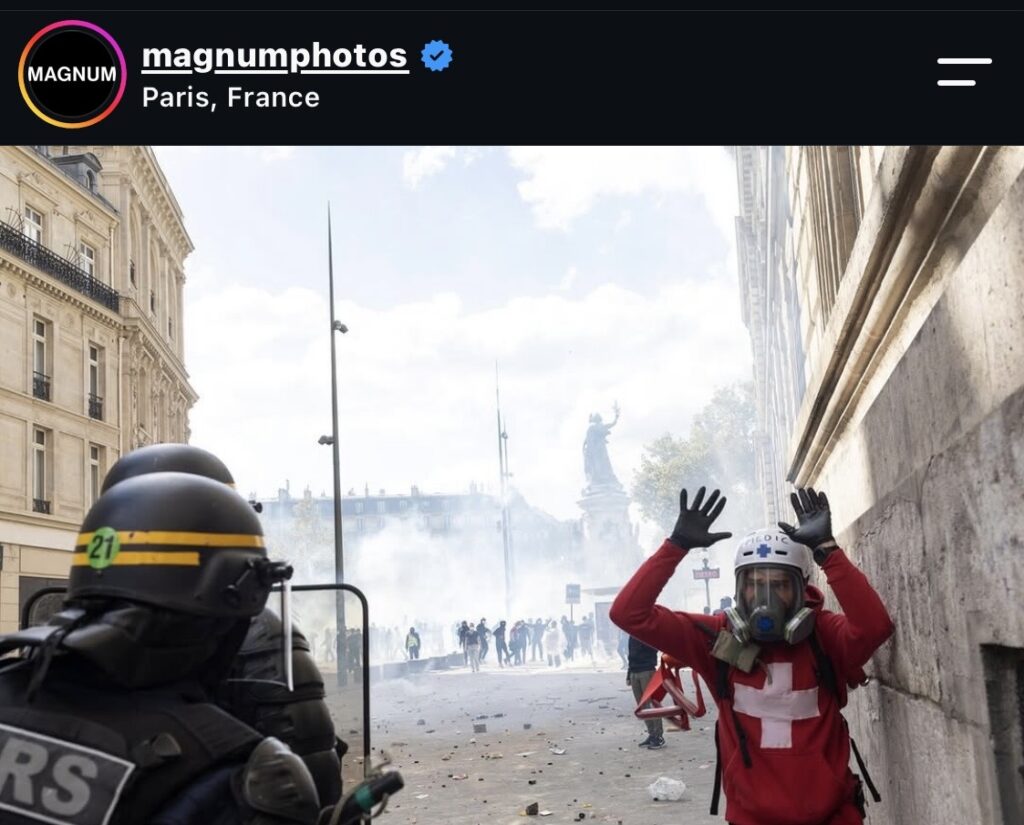
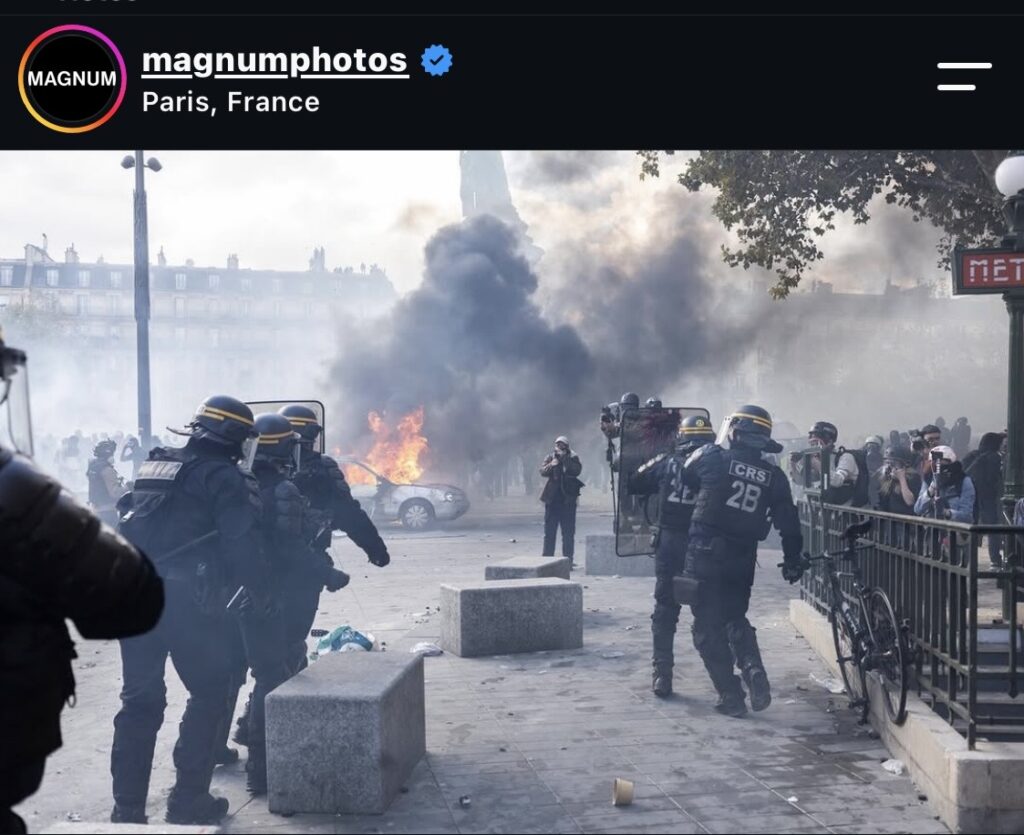
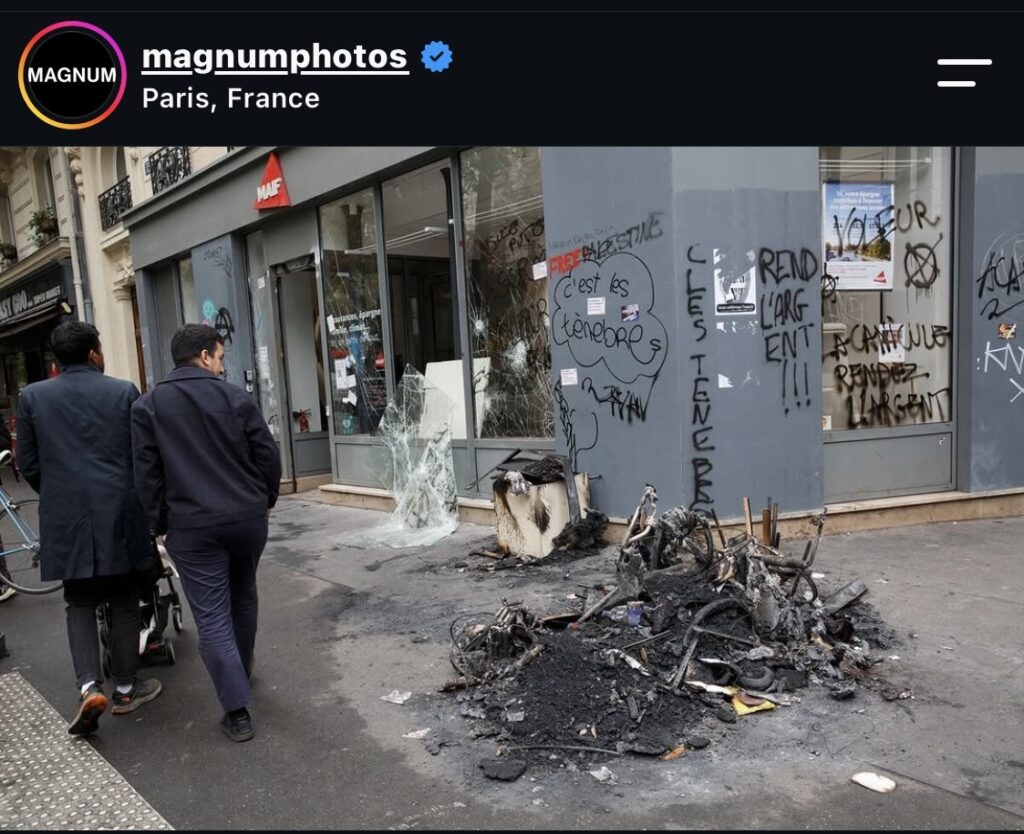
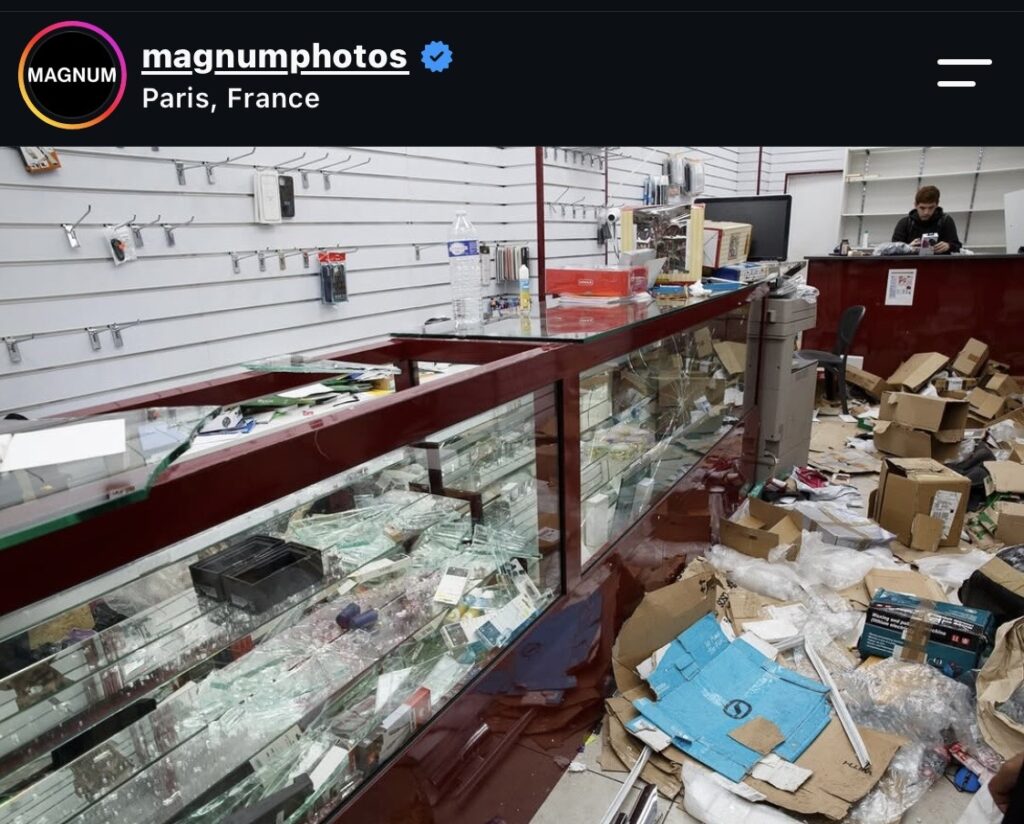
Our team found the same absence in the AFP and TIME carousels we reviewed. AFP’s selection included a man carrying a large wooden cross beside a burning car. It is an extraordinary photograph, and I understand why an editor would choose it. But a roundup has to do more than collect extraordinary pictures. It also leaves readers with an impression of who was there and what they brought into the streets.
View this post on Instagram
AFP had photographed a Palestinian flag. The National published that image in its October 19 gallery, showing it held above a Paris crowd. That gives us something concrete to compare with the agency’s Instagram selection.
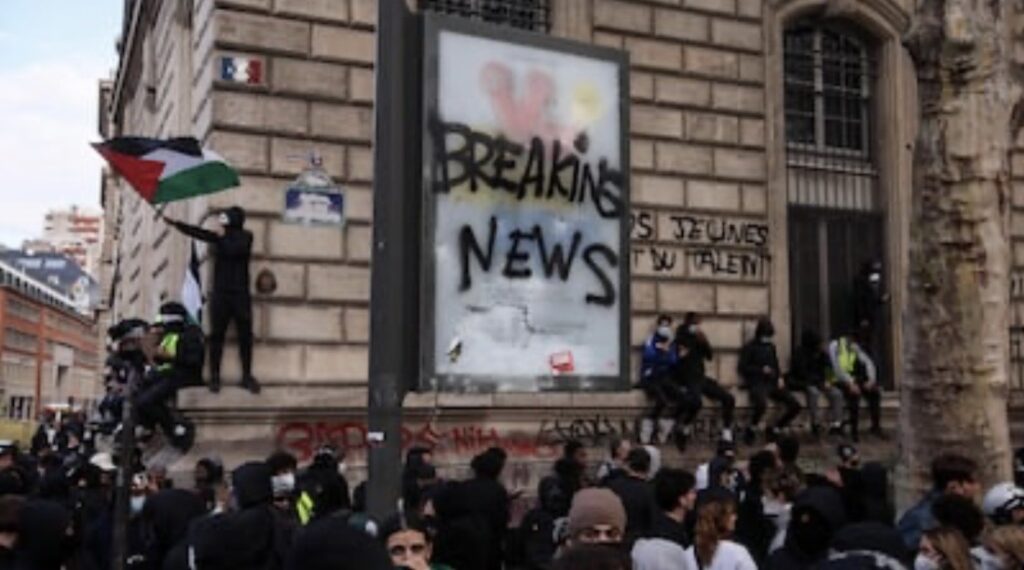
Nobody needs to pretend the roundups concealed the destruction. AFP’s caption described clashes and looting, while TIME referred to rioting and police losing control. The violence was plainly visible. What I missed was the Palestinian political presence that had caught our attention during the coverage.
Carrying a Palestinian flag does not establish why someone attacked police or looted a shop. Equally, the flag does not become irrelevant because the demonstration began over schools and living costs. Its presence raises a question about how those causes became connected, and leaving it out makes that question less likely to occur to a reader.
I cannot know why these editors chose the photographs they did. I can compare the resulting selections with other published images and ask them to explain the difference. With Magnum, an agency whose reputation means something personal to me, I would particularly like an answer.
If Palestinians were relevant enough for demonstrators to bring its flag into a protest about France, it was relevant enough for picture editors to show their readers.
Liked this article? Follow HonestReporting on Twitter, Facebook, Instagram and TikTok to see even more posts and videos debunking news bias and smears, as well as other content explaining what’s really going on in Israel and the region. Get updates direct to your phone. Join our WhatsApp and Telegram channels!
© Divuach Ne’eman R”A, 2025