Key Takeaways:
- Gaza-based photographers have not only shaped famine and humanitarian imagery, but in key cases have been publicly endorsed by state actors aligned with Hamas’ narrative, elevating their images from reporting to geopolitical evidence.
- President Erdoğan’s public commendation of Anadolu photographer Ali Jadallah underscores how Gaza imagery has been actively framed, celebrated, and leveraged at the highest political levels to advance accusations of genocide against Israel, including in international legal forums.
- When the same photographers move seamlessly between Hamas-controlled access, international wire distribution, and state-backed validation, the resulting imagery cannot be treated as neutral documentation but as part of a sustained, narrative-driven ecosystem.
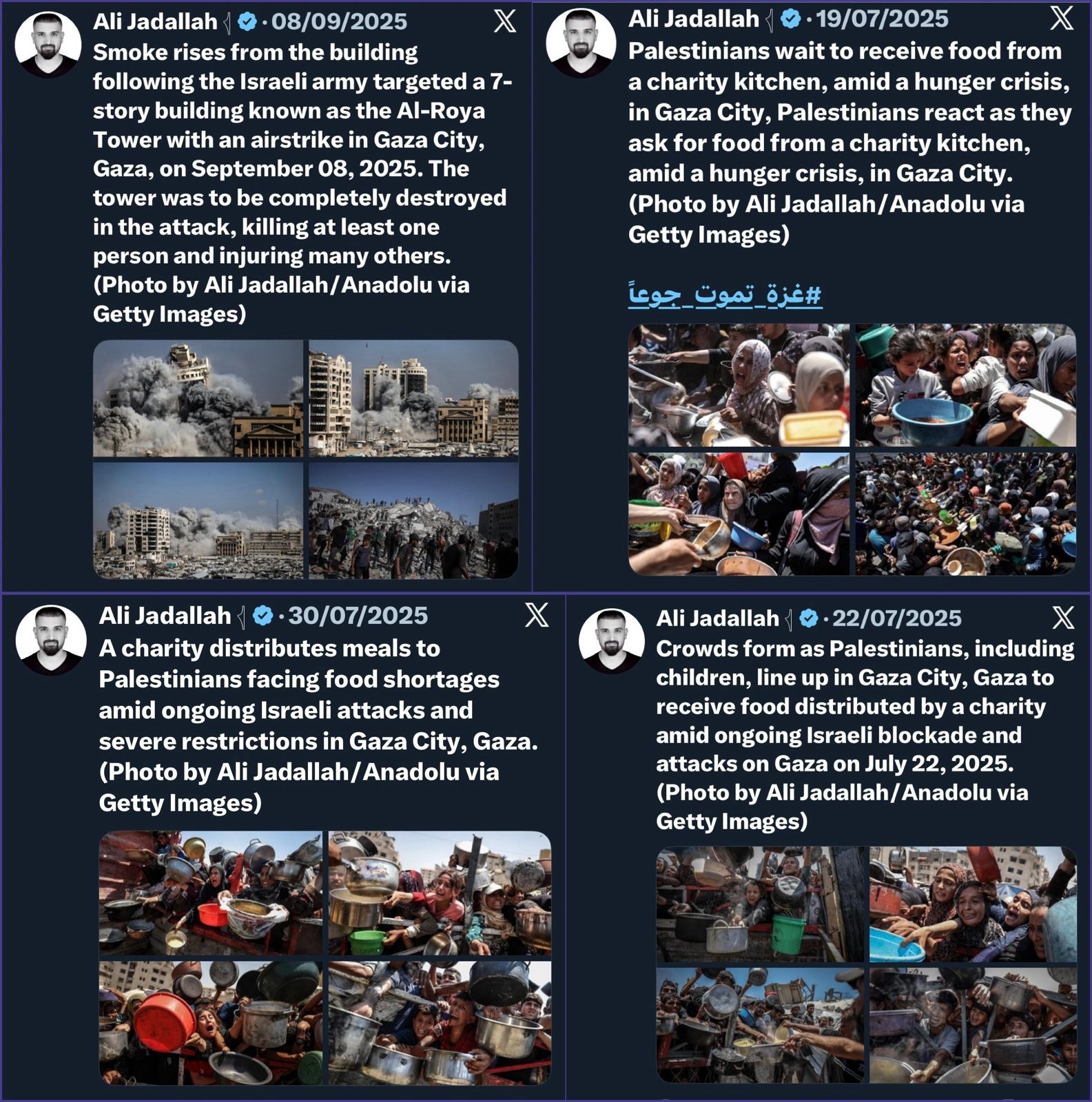
For years, international audiences have been exposed to a relentless stream of imagery from Gaza portraying alleged famine, devastation, and civilian despair. These photographs, widely disseminated by global wire services, significantly influenced public perception and informed diplomatic rhetoric, legal filings, and international opinion. They were presented as unfiltered documentation of reality.
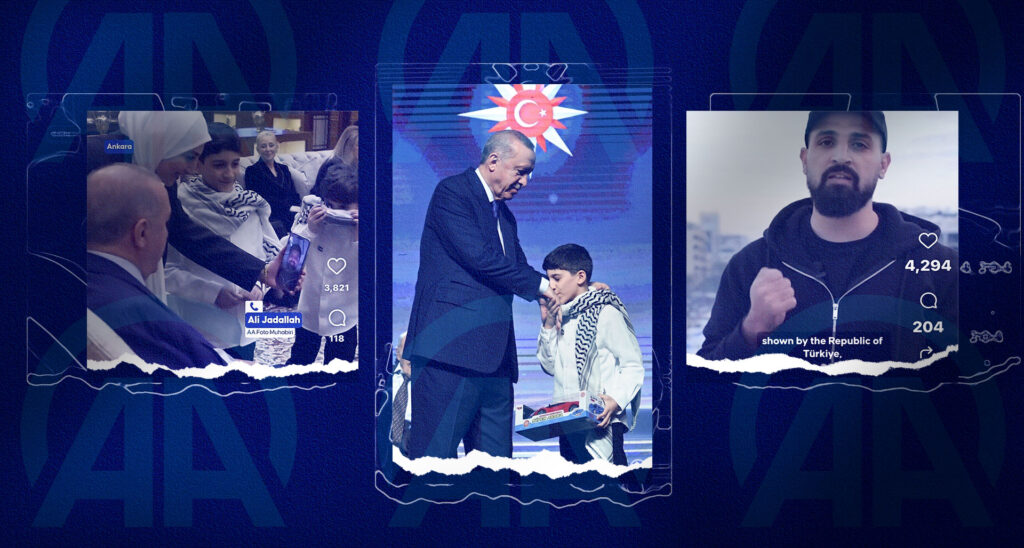
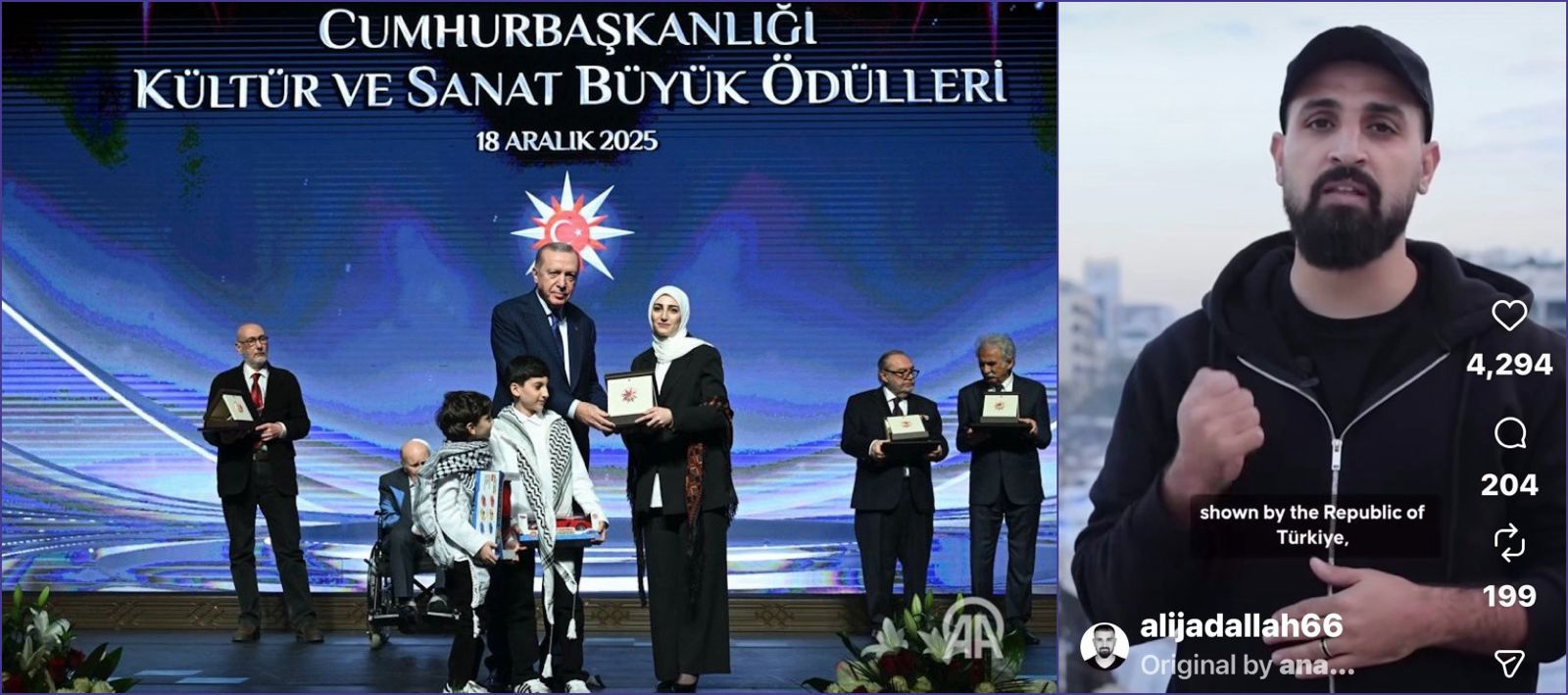
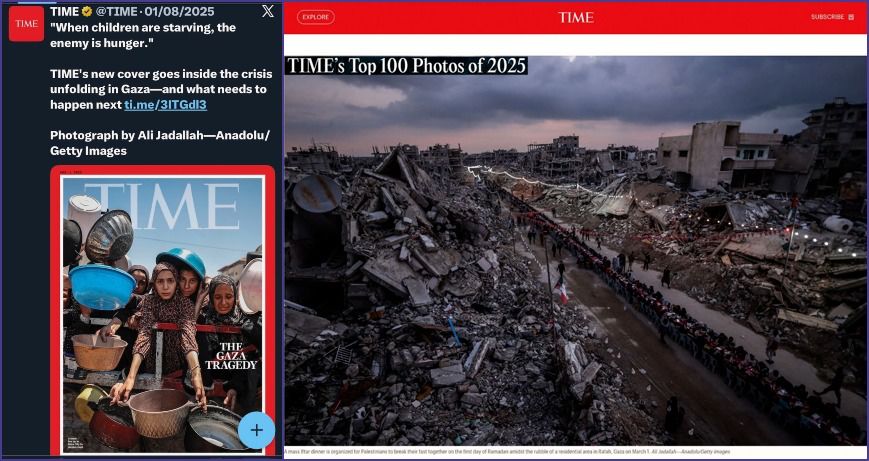
In late December 2025, that imagery received explicit political elevation. During a public ceremony in Ankara, Turkish President Recep Tayyip Erdoğan formally praised Gaza-based photographer Ali Jadallah, describing his work as proof of genocide and citing his photographs as evidentiary material in South Africa’s case against Israel at the International Court of Justice. In that moment, Gaza imagery was no longer simply circulating through news agencies. It was being formally validated, weaponized, and institutionalized at the level of state power.
Understanding how this occurred, and who enabled it, requires examining the photographer, the agency that employs him, the political authority that elevated him, and the media ecosystem that normalized his work without scrutiny.
The Erdoğan-Anadolu Moment
In his address, President Erdoğan introduced Ali Jadallah as a photojournalist for Anadolu Agency and praised his work documenting what he described as Israel’s “wild genocide” in Gaza. Erdoğan explicitly stated that Jadallah’s photographs constituted proof in the genocide case brought against Israel at the International Court of Justice, framing the images not as journalistic output but as legal and moral evidence.
Erdoğan further placed Jadallah within a heroic narrative of resistance, lauding journalists allegedly silenced for exposing atrocities and emphasizing Turkey’s commitment to stand with Gaza across political, cultural, and legal arenas.
This was not a neutral commendation. It was a head of state explicitly endorsing the work of a Gaza-based photographer as juridical evidence, while that photographer was employed by Anadolu Agency, the Turkish government’s state-run news organization, operating inside Hamas-controlled territory.
Contextual Note on Access and Relocation
It is also notable that Ali Jadallah’s immediate family was able to leave Gaza during the early phase of the war. His wife, Dua al-Eisawi, their two children, and his mother were evacuated from Gaza within months of October 7, during a period when civilian departures from the territory were extremely rare and tightly restricted. This remains the case today, more than two years into the conflict, with ordinary Gazans still largely unable to leave due to Hamas control and exit limitations. The relocation of four close family members under these conditions raises legitimate questions about access, protection, and privilege that are central to understanding Jadallah’s position.
That asymmetry became visible at the moment of his public elevation. When Ali Jadallah was honored at the 2025 Presidential Culture and Arts Grand Awards, held on December 18, 2025, at the Presidential Complex in Ankara, he remained in Gaza while his wife accepted the award on his behalf. Dua al-Eisawi, their children, and Jadallah’s mother were present in the hall as President Erdoğan praised Jadallah’s work and cited his photographs as evidence in international legal proceedings. The contrast between the family’s physical presence inside Turkey’s seat of power and the imagery depicting Gaza as a place from which no one can escape underscores the gap between the narrative being promoted and the personal security afforded to those producing it.
Ali Jadallah’s Formal Response
Ali Jadallah responded with a recorded address from Gaza, delivered in formal language and addressed directly to President Erdoğan.
I am Ali Hassan Jadallah, a photojournalist for the Anadolu Agency in Gaza.
Your Excellency, the President of the Republic of Türkiye, Your Excellencies, Ladies and Gentlemen:
It is an honor for me to address you with this recorded message from Gaza, from this prestigious cultural forum. This is a land burdened by suffering, yet it remains steadfast in its commitment to human dignity and the will to live.
I extend my deepest gratitude and immense appreciation to His Excellency, the President of the Republic of Türkiye, for his esteemed patronage of culture and the arts, and for his institutional commitment to preserving the truth and strengthening shared human values, alongside the authentic humanitarian stance shown by the Republic of Türkiye for Gaza and its inhabitants.
In Gaza, events are not merely reported as passing news; they are documented as a living testament to an extraordinary human reality. From this perspective, I express my heartfelt thanks to the Anadolu Agency, its leadership, and my colleagues for their trust and support, and for their belief that an image is not merely a medium of transmission, but a historical responsibility and a living conscience.
This belief is embodied in the Agency’s publications, including The Evidence, The Witness, and The Accused (Anadolu photobooks produced to advance legal-advocacy narratives concerning the Gaza conflict).
How I wish my father and my brothers—the martyrs, may God have mercy on them—were by my side at this moment.
Peace be upon you, and the mercy and blessings of God.
The tone is deferential, ceremonial, and aligned with Erdoğan’s framing. Jadallah presents his work not simply as journalism, but as moral testimony embedded within institutional, national, and ideological affirmation.
Documented Pattern: Hamas and International Media Access
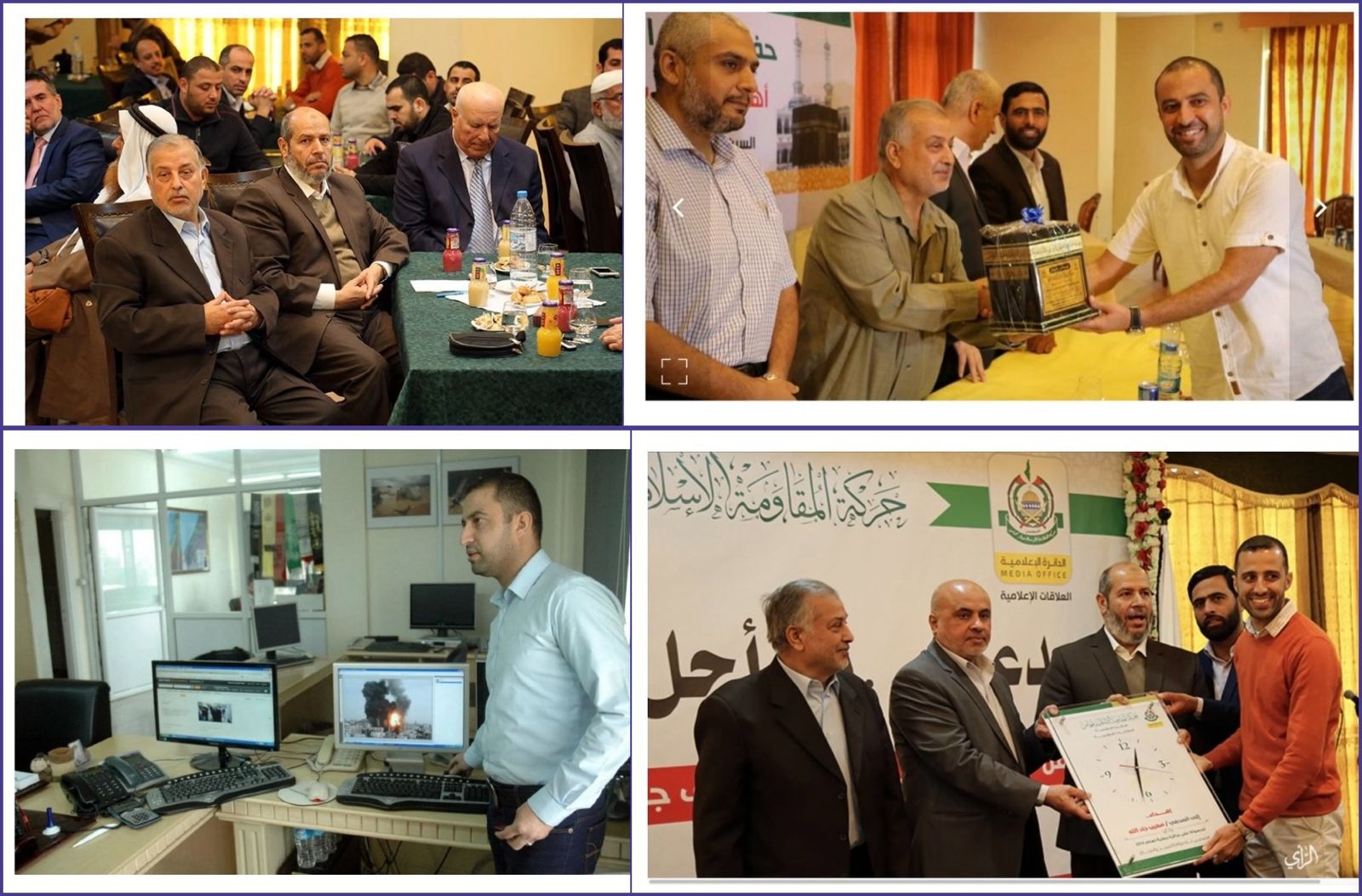
This case does not stand in isolation. Previous investigations have documented how Gaza-based journalists working for major international outlets were formally honored by Hamas for their media work, including public award ceremonies and photographs taken inside international news offices in Gaza. Individuals named in those investigations belong to the same extended Jadallah family network, including Ali Jadallah’s brothers.
In 2017, one of his brothers, Suhaib Jadallah, then head of visuals for Reuters in Gaza, was publicly honored by Hamas at a “Loyalty Day” ceremony for journalists. Another brother, Mohammed Jadallah, was photographed on stage accepting the commendation on Suhaib’s behalf from senior Hamas leaders, including Khalil al-Hayya. Later that year, Suhaib Jadallah personally attended a separate Hamas media office ceremony and was photographed receiving honors from Hamas spokesperson Fawzi Barhoum.
Earlier concerns had already emerged. In 2013, images circulated showing the Reuters office in Gaza decorated with scarves and insignias associated with Hamas and Palestinian Islamic Jihad, highlighting the extent to which international media operations in Gaza functioned within an environment shaped and constrained by armed groups.
This distinction matters. Anadolu is a state-run Turkish media agency. Reuters and AP are international wire services whose imagery is widely republished across Western outlets. When content produced within a Hamas-controlled environment and endorsed by a state-run broadcaster is subsequently distributed through international wires, the effect is a laundering of origin and intent, allowing state-endorsed narratives to enter global media ecosystems under the appearance of neutral documentation.
Taken together, these documented rewards, access privileges, and editorial dependencies demonstrate how Gaza-based imagery repeatedly operates in service of Hamas’ strategic narrative objectives, even when distributed under the bylines of international news agencies.
Historical Context: The 1994 Kidnapping and Murder of Nachshon Wachsman
The Jadallah family’s involvement in the Hamas narrative is not merely professional; it is deeply rooted in the organization’s militant history.
On October 9, 1994, 19-year-old Israeli soldier Nachshon Wachsman was kidnapped by a Hamas cell while hitchhiking at the Bnei Atarot junction. Disguised as religious Jews, the kidnappers transported him to a house in Bir Nabala, where Hamas later released a video showing Wachsman bound and held at gunpoint.
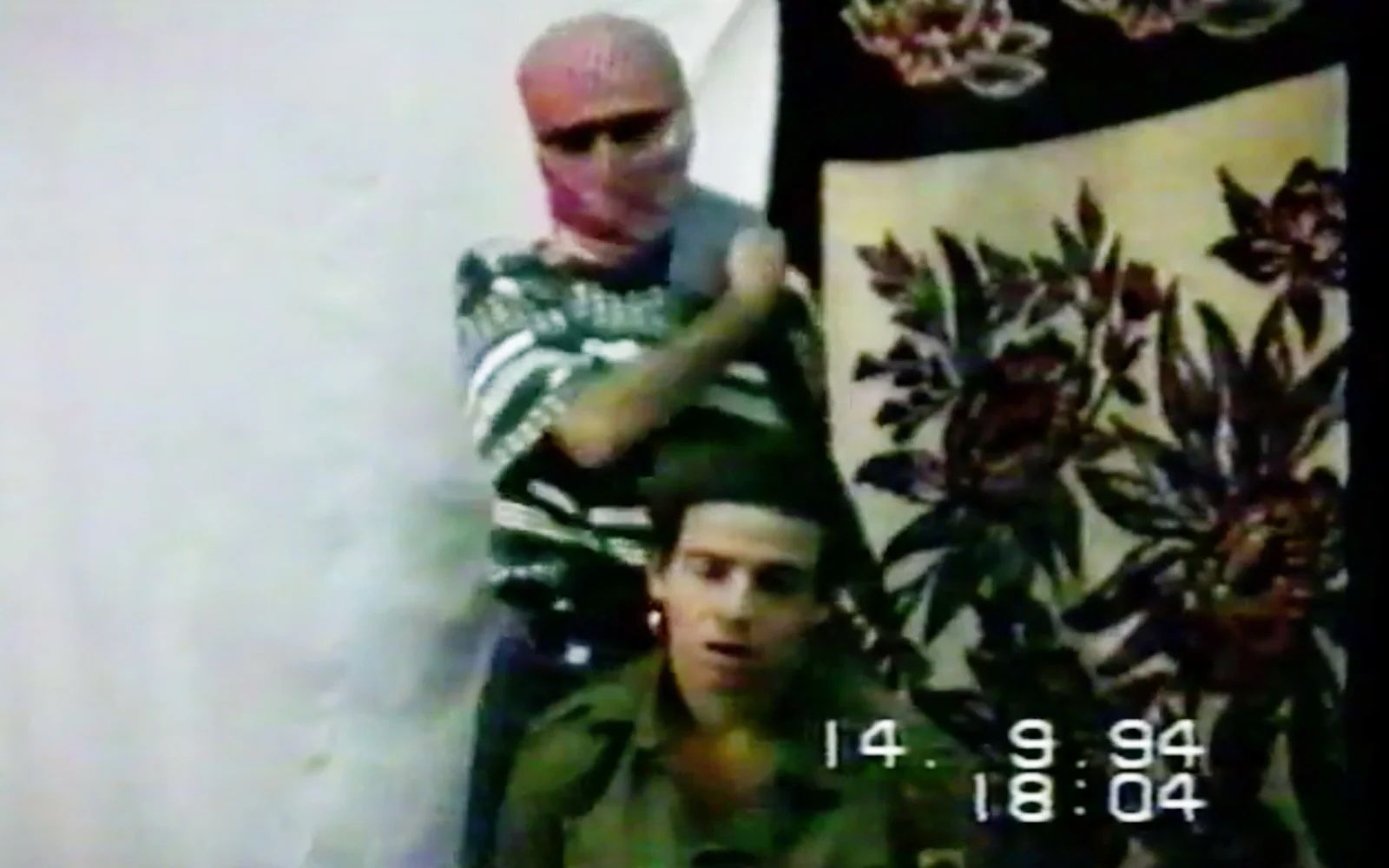
Hamas demanded the release of Sheikh Ahmed Yassin and 200 Palestinian prisoners in exchange for Wachsman’s life. After Israeli intelligence located the hostage, the elite Sayeret Matkal unit launched a rescue operation on October 14, 1994. During the raid, Hamas militants executed Wachsman as Israeli forces breached the room. Wachsman was killed, as was the Israeli officer leading the assault, Major Nir Poraz.
The Hamas cell responsible, known as the Bir Nabala cell, consisted of four militants. One of them was Salah Hassan Jadallah, identified as a brother of photojournalists Ali, Suhaib, and Mohammed Jadallah. Salah Jadallah was killed during the rescue operation, along with two other members of the cell. The fourth kidnapper, Jihad Yarmur, was captured, convicted of murder, and later released in the 2011 Gilad Shalit prisoner exchange.
Continuity and Consequence
The significance of Erdoğan’s endorsement lies not only in what was said, but in what it confirms. Gaza imagery did not drift into international discourse by chance. It traveled through a pipeline of access, validation, amplification, and political deployment. From Hamas-controlled territory, through state-backed media, into international courts, the same images were carried forward with their provenance unquestioned.
This is not an argument about whether suffering exists in Gaza. It is an examination of how imagery is selected, framed, rewarded, and elevated, and how that process collapses the distinction between documentation and advocacy.
Conclusion
From Gaza to Ankara, this is not the story of images circulating by chance. It is the story of how access, institutional backing, personal protection, and political endorsement converge to elevate certain narratives while insulating their origins from scrutiny. When a photographer operating under Hamas authority is honored by a head of state, cited as evidentiary support in international legal proceedings, and celebrated while his own family resides safely abroad, the issue is no longer photography alone. It is power. And until that power, and the systems that sustain it, are examined honestly, global audiences will continue to mistake curated narrative for independent truth.
Liked this article? Follow HonestReporting on Twitter, Facebook, Instagram and TikTok to see even more posts and videos debunking news bias and smears, as well as other content explaining what’s really going on in Israel and the region. Get updates direct to your phone. Join our WhatsApp and Telegram channels!
© Divuach Ne’eman R”A, 2025