Key Takeaways:
- Nihad Khalil Mohammed Abd al-Nabi, a Military Media Unit operative, was killed in May 2024. He previously was wounded while photographing 2018 riots.
- The photographer served as a specialist, acting in a role no different than positions such as marksman or light machine gunner.
- It is no accident that so many Gazan journalists are linked to terrorism; The Hamas Military Media Unit systematically blurs the lines between terrorist and media worker.
Hamas commemorated the death of an operative in its Military Media Unit on September 1, not only providing insight on how the corps operates, but also how the deployment of terrorists under the guise of journalists is a tactic in development since long before the October 7 War.
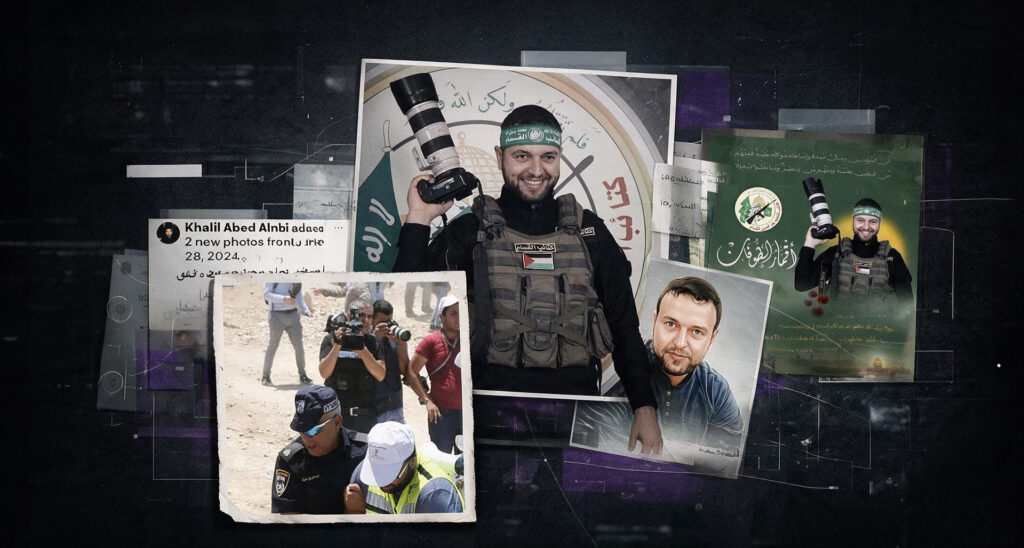
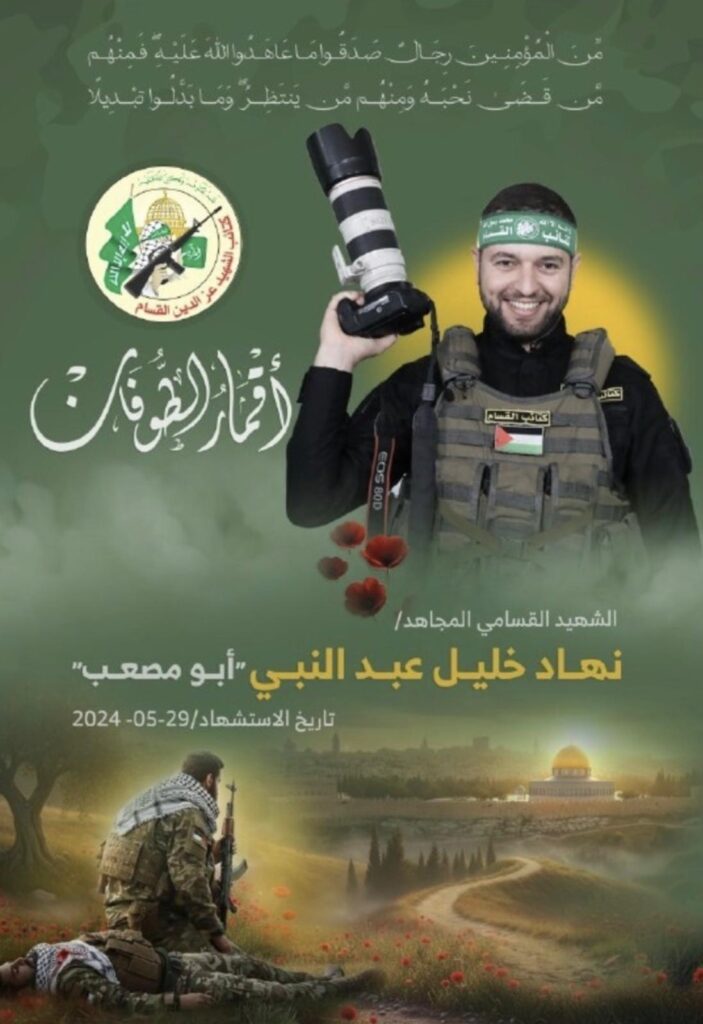
Nihad Khalil Mohammed Abd al-Nabi, who had reportedly been killed in May 2024, was described by an Izz ad-Din al-Qassam martyr poster and video as a member of the Northern Brigade’s Martyr Imad Aqel Battalion. Pictured in military uniform and a camera, he was labeled as a “knight” of “military media.”
Great March of Return
Al-Nabi’s name gained attention several years before his demise in the October 7 War. A photographer with the same name and aligning age was present at the Great March of Return riots along the border with Israel in 2018. Al-Nabi’s family members, who posted his martyr video, also published videos on social media that they took from the scene of the riots as well. On July 13, 2018, he was covering the demonstrations at Abu Safiya Hill, northeast of Jabalia, when he was injured. The Palestinian Center for Development and Media Freedoms, Al-Rai, and the Gaza Government Media Office identified the then-24-year-old as a photographer for the Palestine Live Agency.
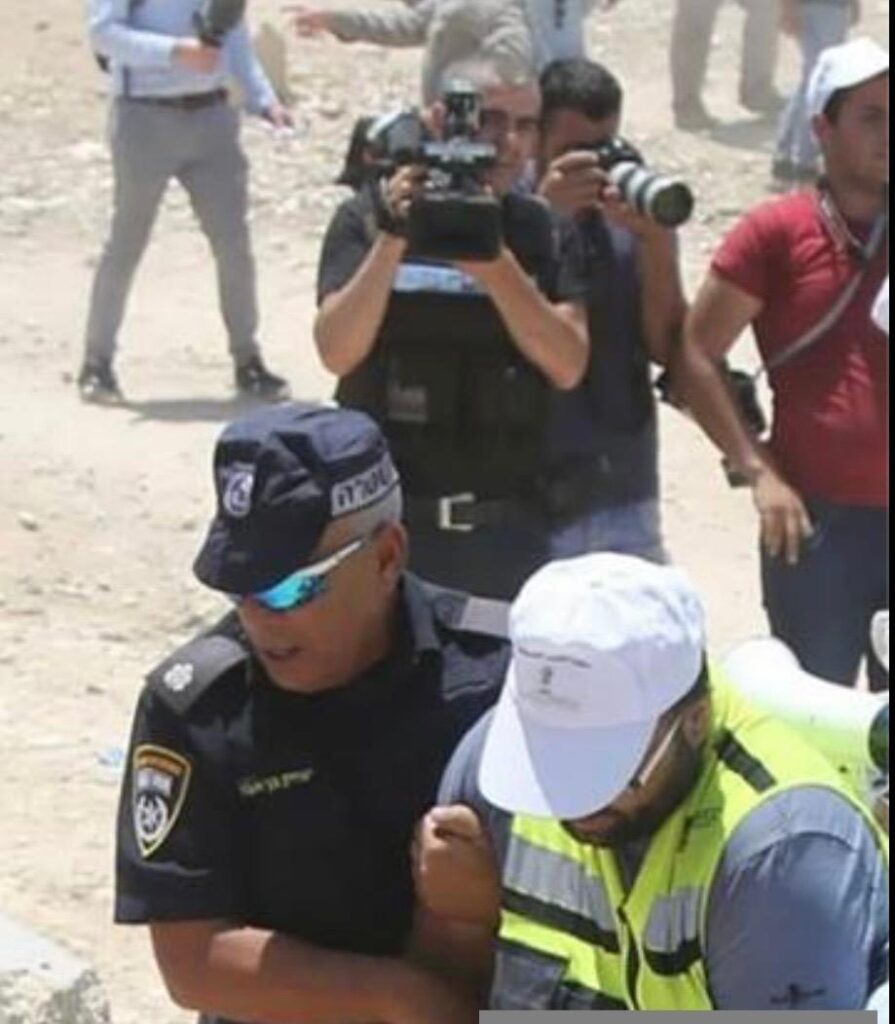
The photographer’s camera screen was reportedly smashed when he fell. His colleague Abdul Karim Hamdouna, who was beside him and was also injured, fell on his own camera, breaking its lens. While no volume of photography work nor international outlet freelancing tied to Al-Nabi could be found, the equipment damaged in 2018 showed that the camera he held in his 2026 martyr poster was not just a prop. Al-Nabi’s appearance with photography equipment in the later Qassam material was rooted in a professional career.
Armed and Ready to Shoot
The equipment in the martyr video is immediately recognizable as professional photojournalistic kit. Al-Nabi is shown using a Canon DSLR with one of the familiar white zoom lenses, most likely in the 70–200mm range. It is top-end equipment of the kind regularly used by news and sports photographers, particularly when they need to work quickly or photograph subjects from a distance. The video also shows drone-control or video-monitoring equipment, head-mounted action cameras, and communications gear. None of this equipment is exclusively military. Action cameras, drones, and long lenses are widely used in journalism, documentary work, sport, and filmmaking. In military hands, however, the same equipment can be used to record training and operations, gather aerial imagery, and produce first-person footage for an armed group’s media output.
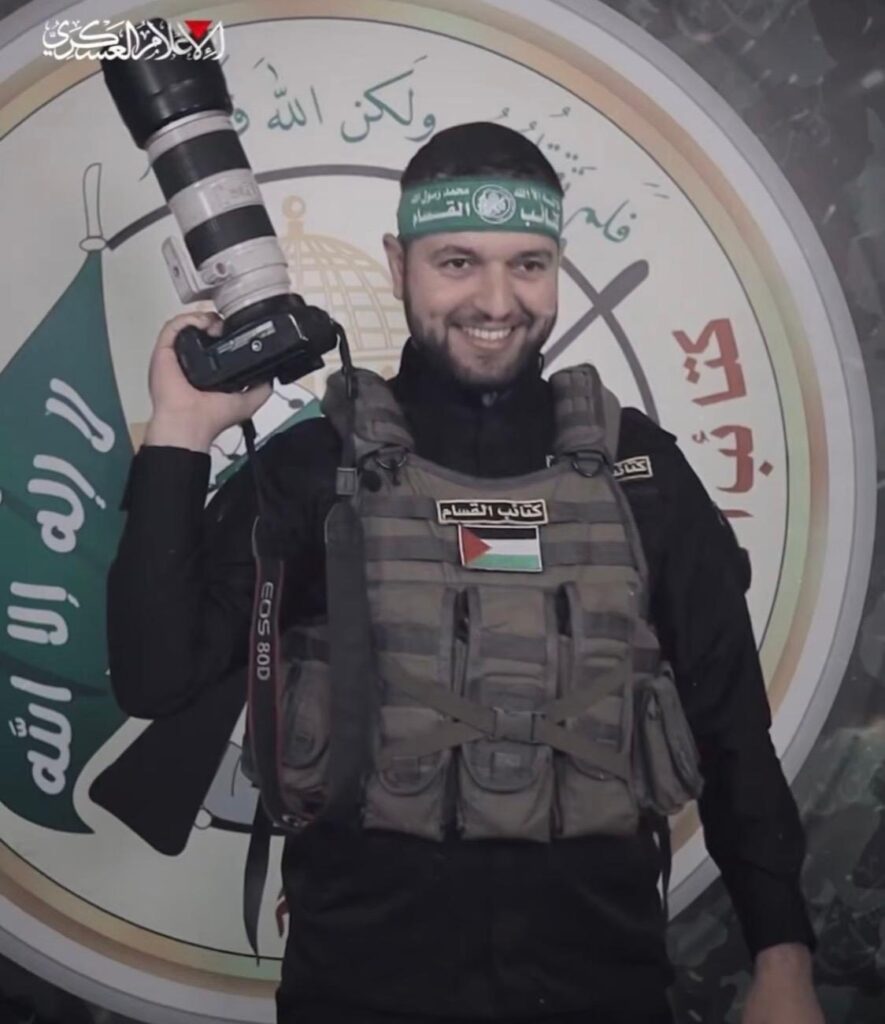
There is no material difference between the Canon equipment seen with al-Nabi and the equipment a civilian photojournalist might carry. The difference is who he was working for and what the pictures were intended to do. Whether Hamas bought the equipment or it belonged to Abd al-Nabi cannot be determined from the video, nor does it alter the central point. Al-Qassam had within its ranks a trained photographer equipped to produce professional-quality images, and it presented that ability as part of his service.
In the video, the narration states, “Do not underestimate your real shots. The world sees the efforts of your brothers only through you. You are the real instrument of jihad in the land of Palestine for spreading the truth.”
The language deliberately closes the distance between shooting with a camera and shooting with a weapon. The images of al-Nabi carrying professional photographic equipment alongside footage of military training, weapons, and terrorist activity does not create any dissonance for those initiated into the system. He filled a specialist role, the visual equivalent of a marksman whose accuracy was measured not by where a bullet landed, but by where an image landed and how far it travelled. His targets were the television screens, news sites, and social media feeds through which al-Qassam wanted the world to see its fighters.
Military Media Unit Blurs Lines
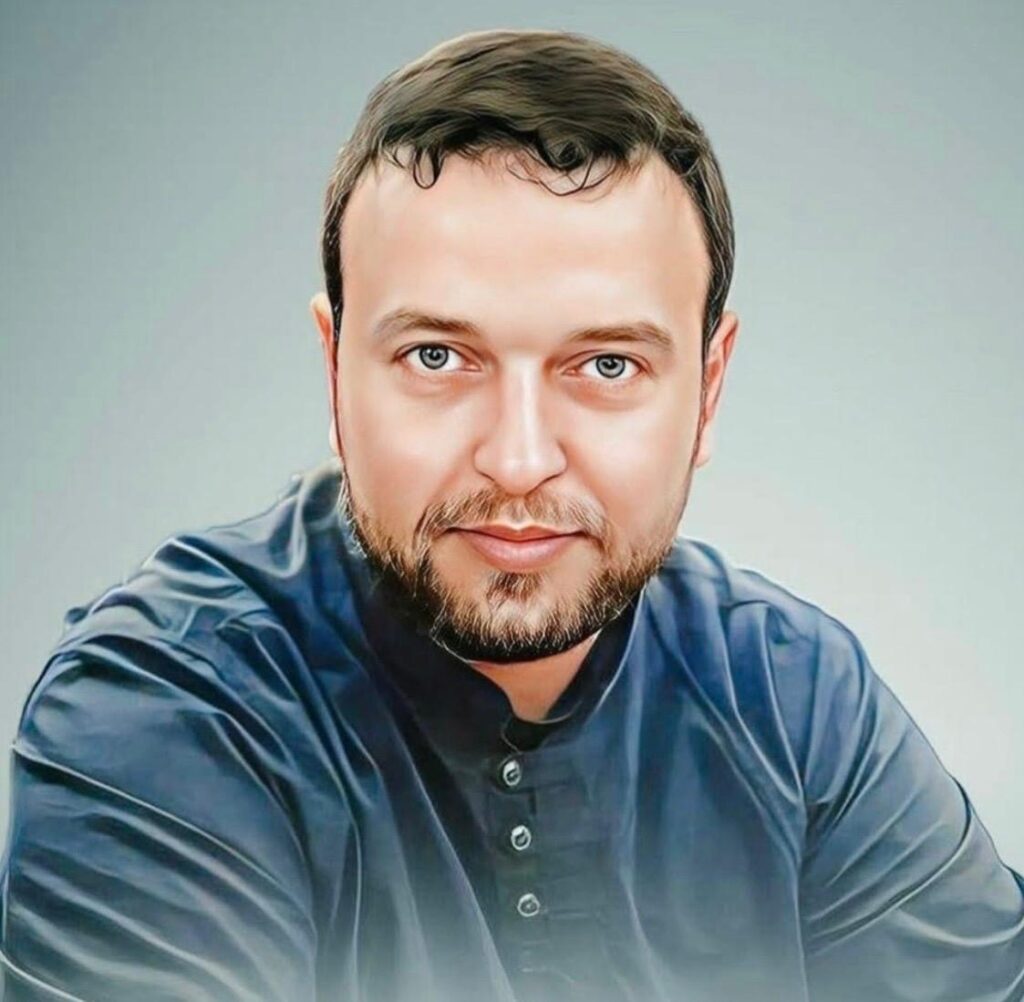
It is not known exactly when al-Nabi joined Hamas, but what is clear is that the type of people who were involved in shaping the narrative as far back as 2018 have been integrated into its military wing’s units. HonestReporting has exposed how over half of the Gazan journalists listed in a Committee to Protect Journalists database were terrorists — but what requires further exploration is that for many of these operatives a press pass was not cover. These men were not just filming with smartphone cameras, they were professionals who had been recruited or trained for journalism with a military purpose. Many of them worked as public facing journalists at Hamas-affiliated outlets such as Al-Aqsa TV, while appearing to have double lives as Military Media Unit members. The overlap between the terrorist affiliated outlets and the military media unit is strong, demonstrating further how Hamas has blurred the lines between civilian journalist and military infrastructure.
Al-Nabi was not a journalist standing outside the organization and documenting it independently. Nor was he an operative simply handed a camera for ad hoc media production. The camera was not separate from his Al-Qassam identity. It was one of the instruments through which he carried out that role.
Liked this article? Follow HonestReporting on Twitter, Facebook, Instagram and TikTok to see even more posts and videos debunking news bias and smears, as well as other content explaining what’s really going on in Israel and the region. Get updates direct to your phone. Join our WhatsApp and Telegram channels!
© Divuach Ne’eman R”A, 2025