Key Takeaways:
- Francesca Albanese’s use of the term “Israelization of Europe” revives an old antisemitic trope that portrays Jewish influence as inherently corrupting and destabilizing to society.
- From early Christian accusations of “Judaizing” to Nazi “Verjudung” and Soviet anti-Zionist propaganda, history shows a recurring pattern of recasting Jews as a corrosive force within civilization.
- Today, Israel is increasingly cast as the “collective Jew” — a symbolic scapegoat blamed for authoritarianism, repression, and democratic decline in a modern repackaging of ancient anti-Jewish conspiracy theories.
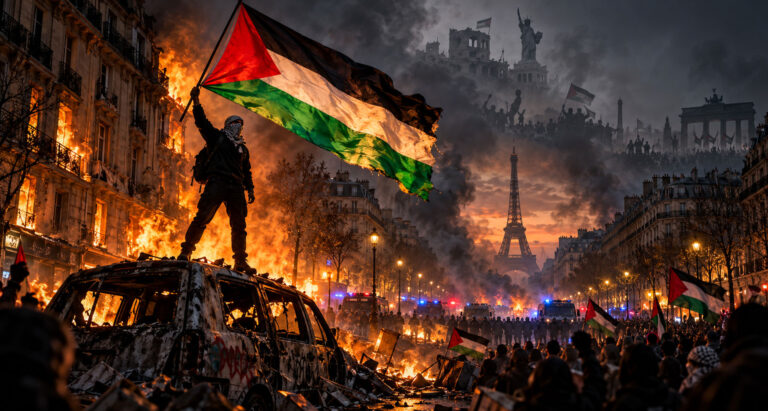
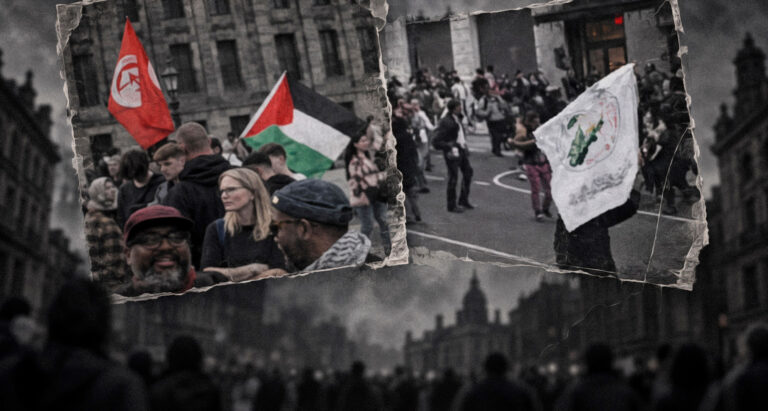
Francesca Albanese, the UN Special Rapporteur on the occupied Palestinian territories, recently spoke on X of the growing “Israelization of Europe.” In her telling, European societies are becoming more authoritarian through their relationship with Israel. Surveillance. Security powers. Policing. Democratic decline. Europe, she believes, is absorbing something corrosive from the Jewish state itself.
The term should set off alarm bells immediately. Because the idea that Jews corrupt societies from within is not new. It is one of the oldest and most enduring political narratives in Western history. What changes across time is the vocabulary. The structure remains almost identical.
The Historic Origins of a Modern Obsession
Already by the fourth century, in the Adversus Judaeos tradition of early Christian polemics, “Judaizing” had become an accusation loaded with panic. The fear was not simply theological disagreement. It was the idea that Jewish influence could infiltrate and weaken Christian society from within. Jews became associated with contamination. Corruption. Deviation from the proper moral order. The accusation of “Judaization” became both an insult and a warning.
That pattern would echo for centuries. In medieval Europe, rulers and clerics repeatedly framed Jews as corrosive outsiders undermining Christian civilization. During the Spanish Inquisition, accusations of “Judaizing” were treated almost like accusations of infection. Even converted Jews were viewed with suspicion, believed to carry hidden loyalties and subversive influence inside Christian society. Jewishness became not merely an identity, but a political pathology. Modern Jew-hate inherited this framework wholesale.
In the nineteenth century, Wilhelm Marr, one of the founding figures of modern racial antisemitism and the man who popularized the term “antisemitism” itself, warned that Germany was being overtaken and transformed by Jewish influence. In his 1879 pamphlet, The Victory of Judaism over Germandom, Marr framed Jewish success and integration not as ordinary social participation, but as a civilizational conquest. Germany, in this worldview, was supposedly being hollowed out and overtaken from within through “Judaization.”
That same conspiratorial framework sat at the heart of The Protocols of the Elders of Zion. The document was an obvious forgery, but that was never really the point. Its power came from the story it told. That Jews were not simply a minority, but a hidden network manipulating nations, governments, economies, revolutions, and media from behind the scenes. It presented Jewish influence as invisible, global, coordinated, and fundamentally corrosive to civilization itself.
From “Verjudung” to “Zionism”: Translating the Conspiracy
By the mid-twentieth century, the Nazis expanded this idea into their total worldview. In the 1930s, Joseph Goebbels warned repeatedly about the Verjudung of Germany, the supposed “Judaization” of German culture, media, law, and politics. The accusation was not merely that Jews held influence. It was that Jewish influence itself was inherently corrupting. Germany, in the Nazi imagination, was being contaminated.
They spoke of “International Jewry.” Not Jews as individual human beings, but as a transnational force poisoning nations from within. Germany’s humiliation in World War One. Economic instability. Cultural decline. Political unrest. Moral collapse. All roads led back to the Jew. Julius Streicher’s Der Stürmer carried the slogan “The Jews are our misfortune” because that phrase captured the essence of antisemitic thinking perfectly: society is sick because Jews exist within it.
The Soviet Union then gave this more traditional anti-Jewish structure a new vocabulary. After 1967, Soviet anti-Zionism increasingly replaced “the Jew” with “the Zionist” as the central villain in its mythology. Soviet propaganda no longer spoke in the language of theology or race. It spoke the language of anti-imperialism and anti-colonialism. But the underlying structure remained the same. The conspiratorial role once occupied by “International Jewry” was now occupied by “World Zionism.” The Jew had become the Zionist. The language changed after 1945. The structure did not.
Israel as the Collective Jew
Jerusalem, the ancient and eternal Jewish capital, is supposedly being “Judaized.” Entire societies are supposedly being “Judaized.” The accusation remains fundamentally the same: Jewish influence transforms and corrupts the surrounding civilization. On parts of the Marxist far-left, the language mutates again. Now it becomes “Jewish supremacy.” Zionism is reframed not as a national movement, but as the hidden force behind racism, colonialism, policing, capitalism, Western power, and global oppression itself.
Different ideological tribes. Same civilizational myth. And now “Israelization” is entering the modern anti-Jewish lexicon as well.
Not only through Albanese. The phrase increasingly appears across activist discourse online. Earlier this year, one large anti-Israel account declared: “The Israelization of the US is almost complete.” The meaning is obvious. America is supposedly becoming more militarized, more authoritarian, more morally corrupted because it is becoming more “Israeli.” Notice what is happening here. Israel is no longer treated simply as a state. It is becoming an idea. A symbolic explanation for authoritarianism, repression, and societal decay itself.
Israel has become what the Jews historically were to the anti-Jewish imagination: the collective Jew. The Jew among nations. The singular source onto which societies project their anxieties, failures, instability, and moral panic. Historically, anti-Jewish racism blamed “the Jew” for capitalism and communism, for war and social decay, for cosmopolitanism and nationalism simultaneously. Today, increasingly, Israel occupies that same symbolic role in international discourse. Militarism becomes Israeli. Surveillance becomes Israeli. Colonialism becomes Israeli. Democratic decline becomes Israeli. The Jewish state becomes the explanatory framework through which broader societal fears are processed.
The language evolves with the moral vocabulary of the age. The accusation remains almost identical. The Jewish collective is portrayed not merely as wrong, but as corrosive. Not simply as an opponent, but as a contaminating force that degrades societies from within. That is the key distinction.
And history has seen this exact pattern before. From Adversus Judaeos to Soviet anti-Zionism to modern rhetoric about “Israelization,” the underlying accusation remains hauntingly familiar. Jewish collective existence itself is framed as socially corrosive. It is an ancient political tradition dressed in modern language.
And people should stop pretending not to recognize it.
Liked this article? Follow HonestReporting on Twitter, Facebook, Instagram and TikTok to see even more posts and videos debunking news bias and smears, as well as other content explaining what’s really going on in Israel and the region. Get updates direct to your phone. Join our WhatsApp and Telegram channels!
© Divuach Ne’eman R”A, 2025