Key Takeaways:
- Children are placed at the front of confrontations with soldiers and barriers to produce images that read instantly as victim and aggressor.
- The claim of “denied education” is not visible in the image. It is attached afterward and carried through global media as fact.
- English signage, camera presence, and repeated visual structure point to a method designed for capture, amplification, and narrative impact.
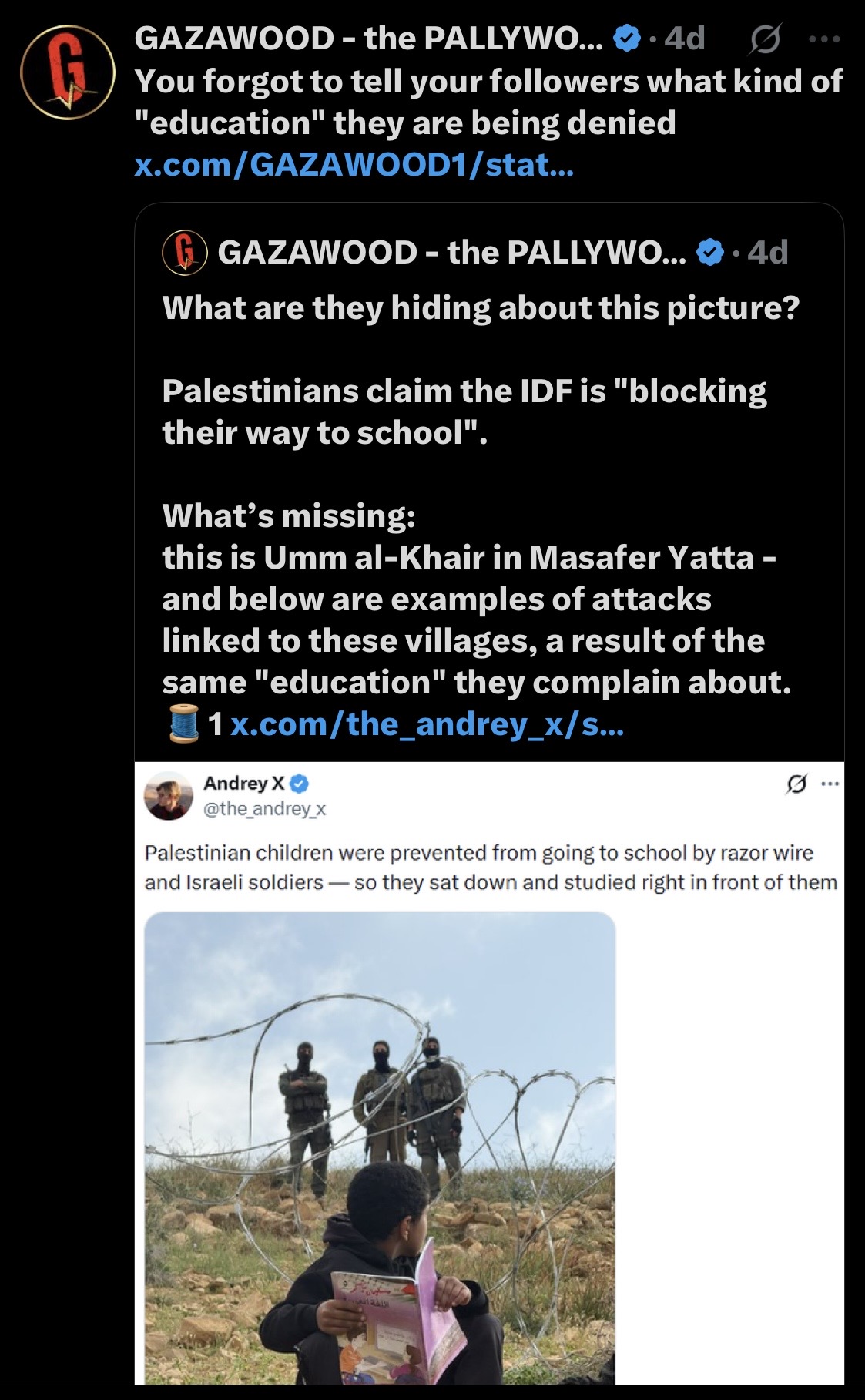
A child sits on the ground with a book. Razor wire cuts across the frame. Soldiers stand behind it.
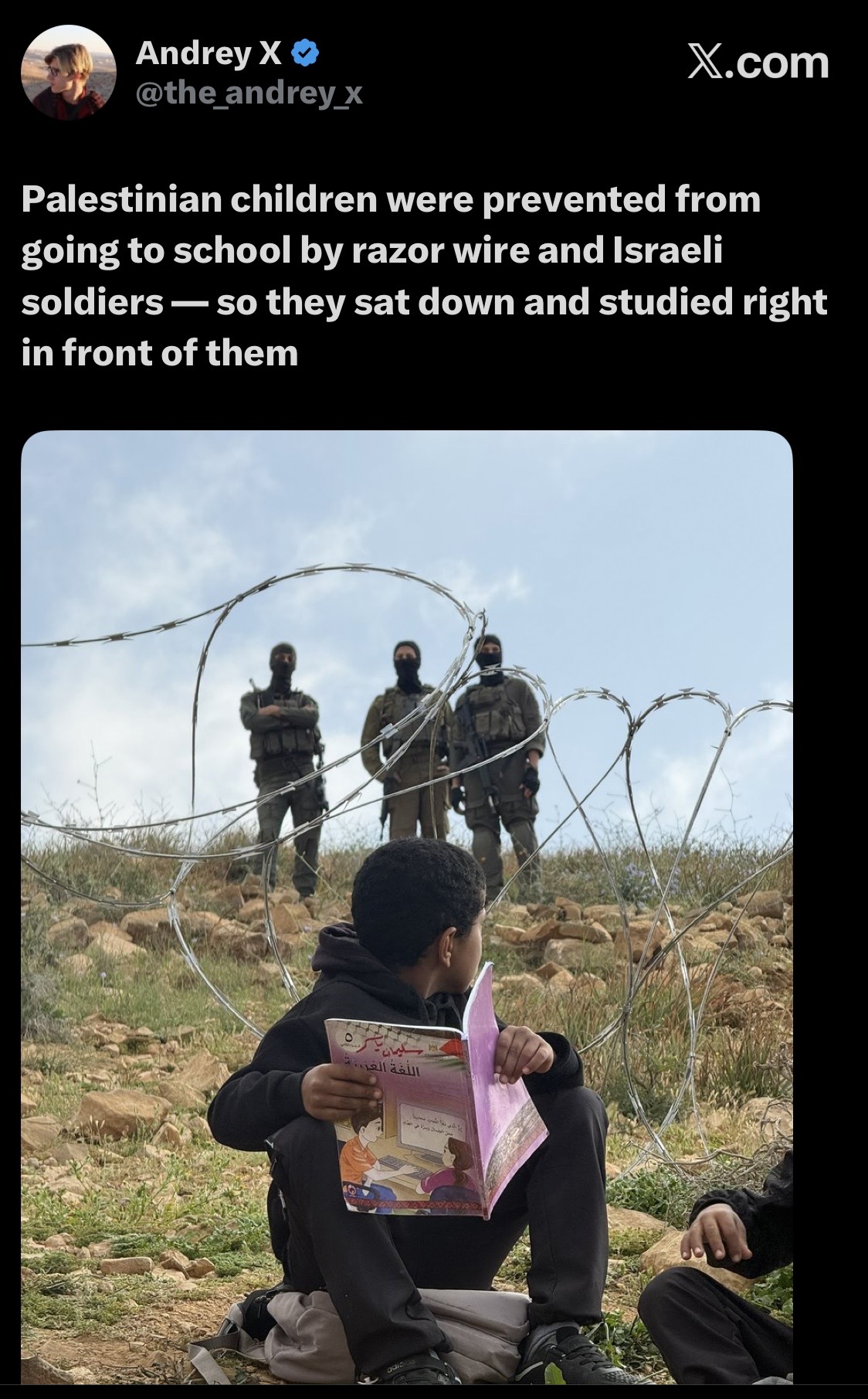
That is the image.
Now look at how it is built.
The child is placed at the front. The barrier is placed between him and the viewer. The soldiers are set back and elevated. The frame is clean. The message is immediate.
This is not a moment that happens to be photographed.
It is a moment that has been arranged to photograph well.
The claim that follows is simple. A child prevented from reaching school sits and studies in front of soldiers.
That claim is not in the image. It is added to it.
Once added, the image stops recording a situation and starts defining it.
The Setup
The surrounding material matters.
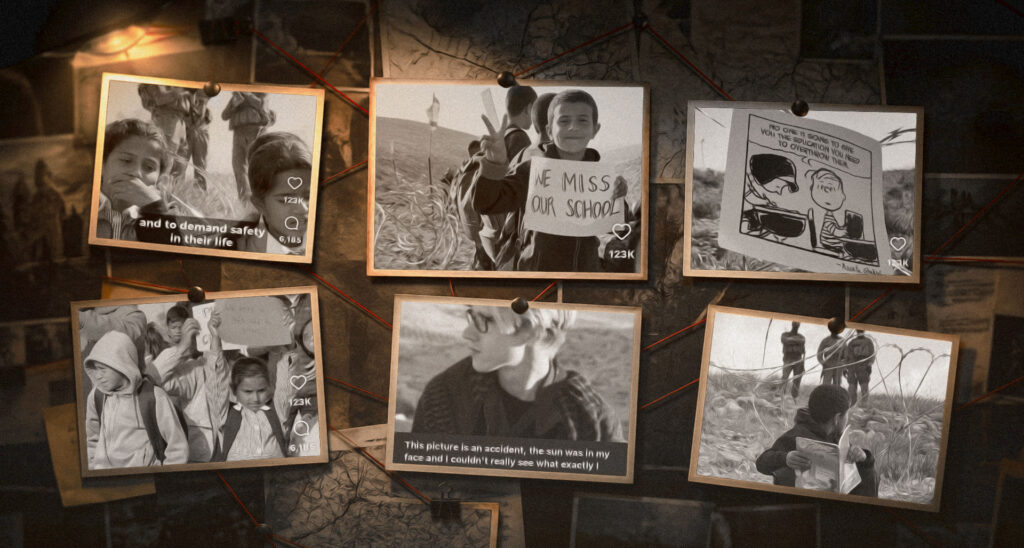
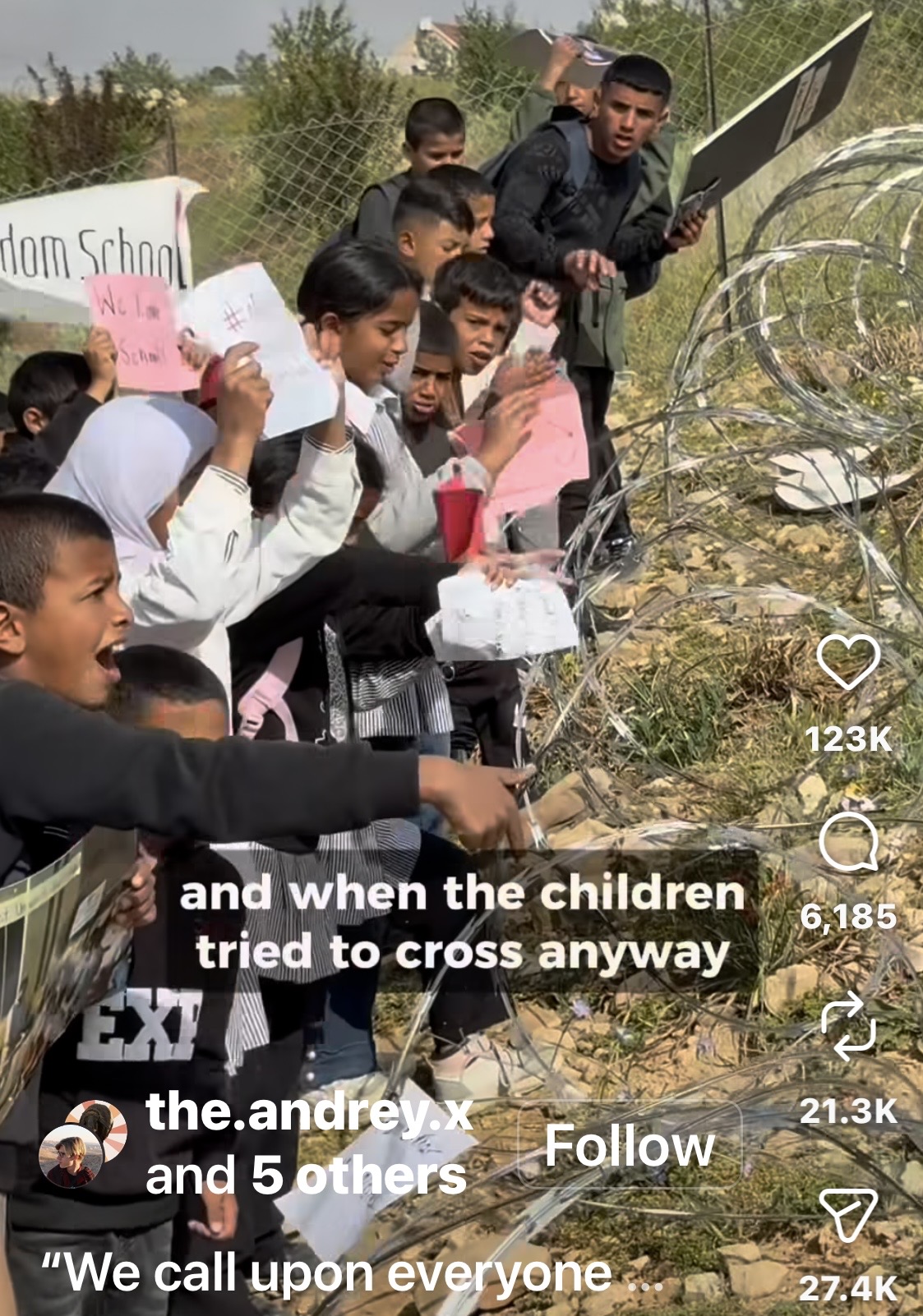
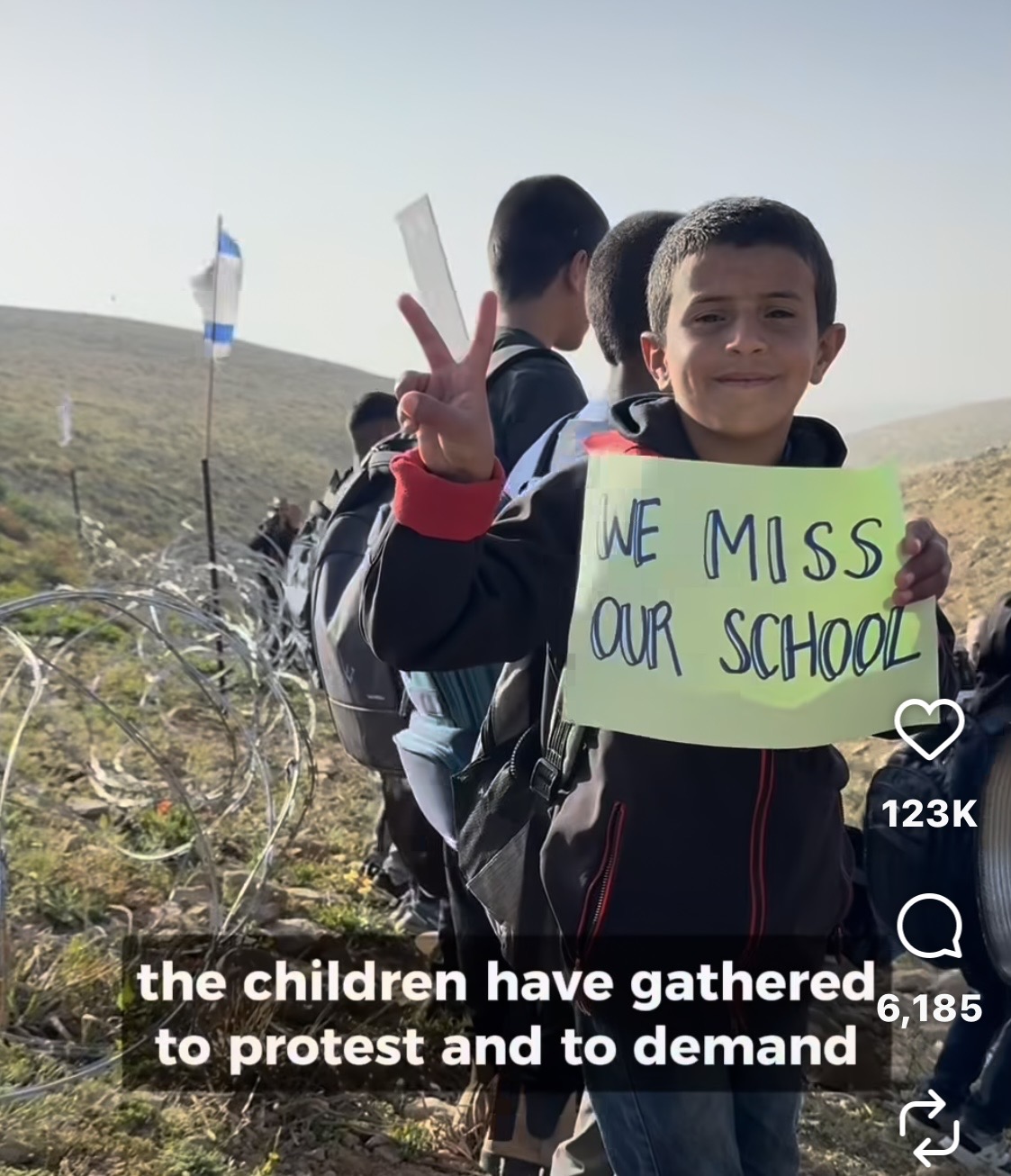
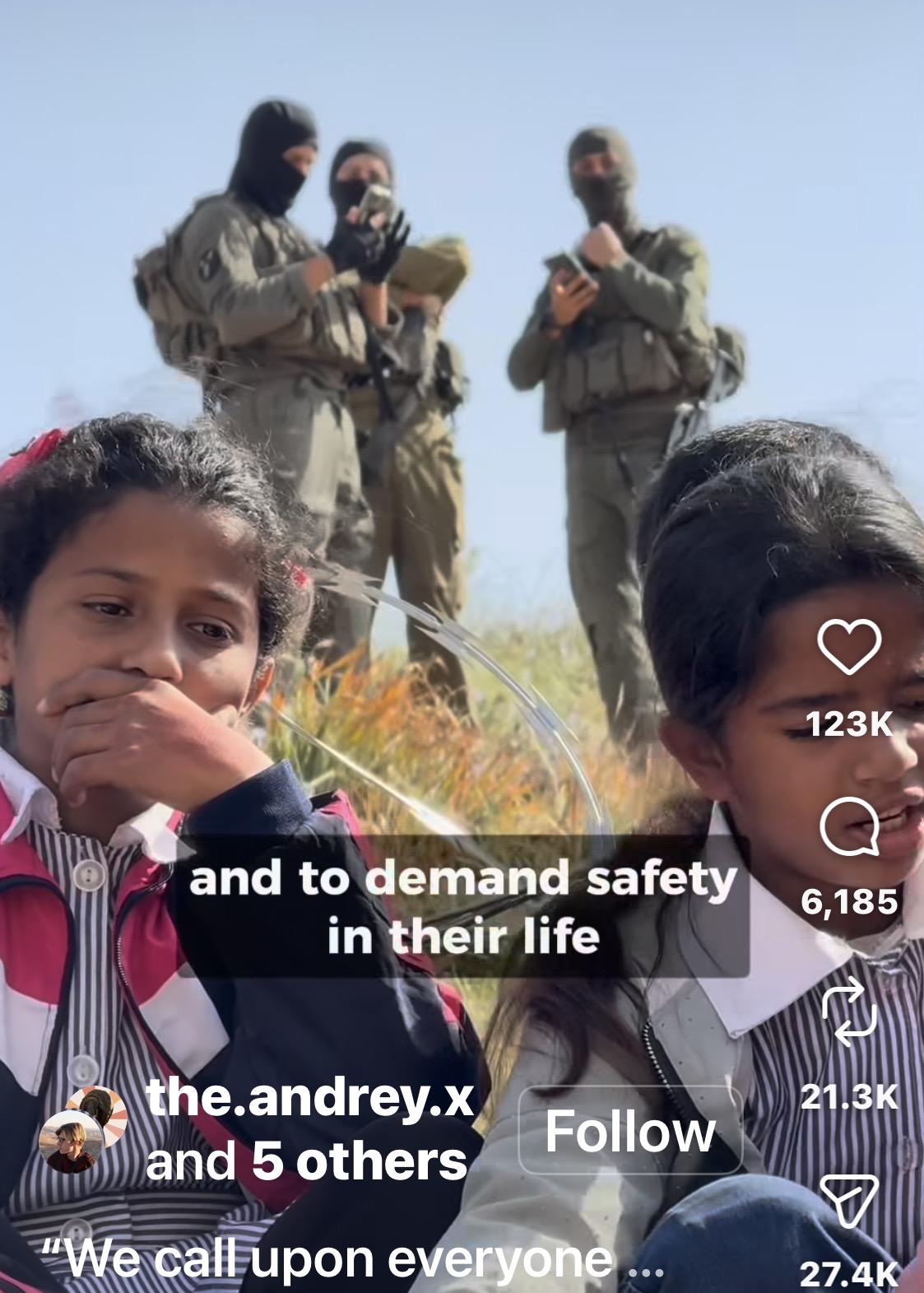
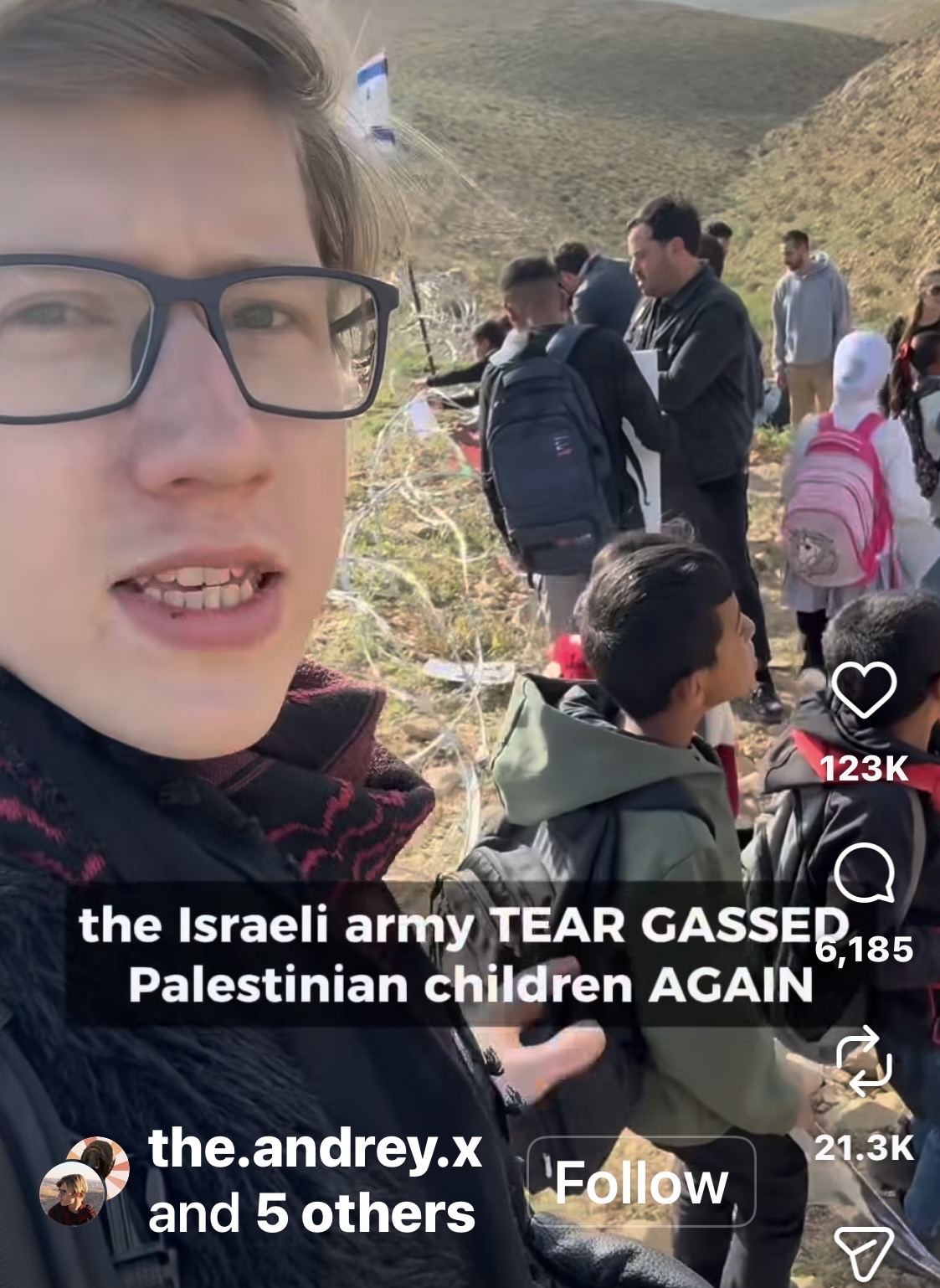
Children are seen moving close to razor wire. They lean toward it. They stand within a confrontation space while cameras are already filming. Signs appear in English, not Arabic.
That choice is not incidental. English is the language of external audiences. It signals that the image is meant to travel.
This is not a closed local interaction. It is a scene built to be understood by viewers who are not there.
The positioning is consistent. Children are foregrounded. Soldiers are held back. The barrier is made visible. The result is a clear visual hierarchy that produces a single reading.
Innocence in front. Force behind.
The Claim
The caption completes the image.
Children were prevented from going to school. They responded by sitting down to study in front of soldiers.
The photograph does not show a school. It does not show a route. It does not show movement being blocked.
It shows a child, a barrier, and soldiers.
Everything else is narrative applied after the fact.
Once that narrative is attached, the image no longer invites interpretation. It directs it.
The Author
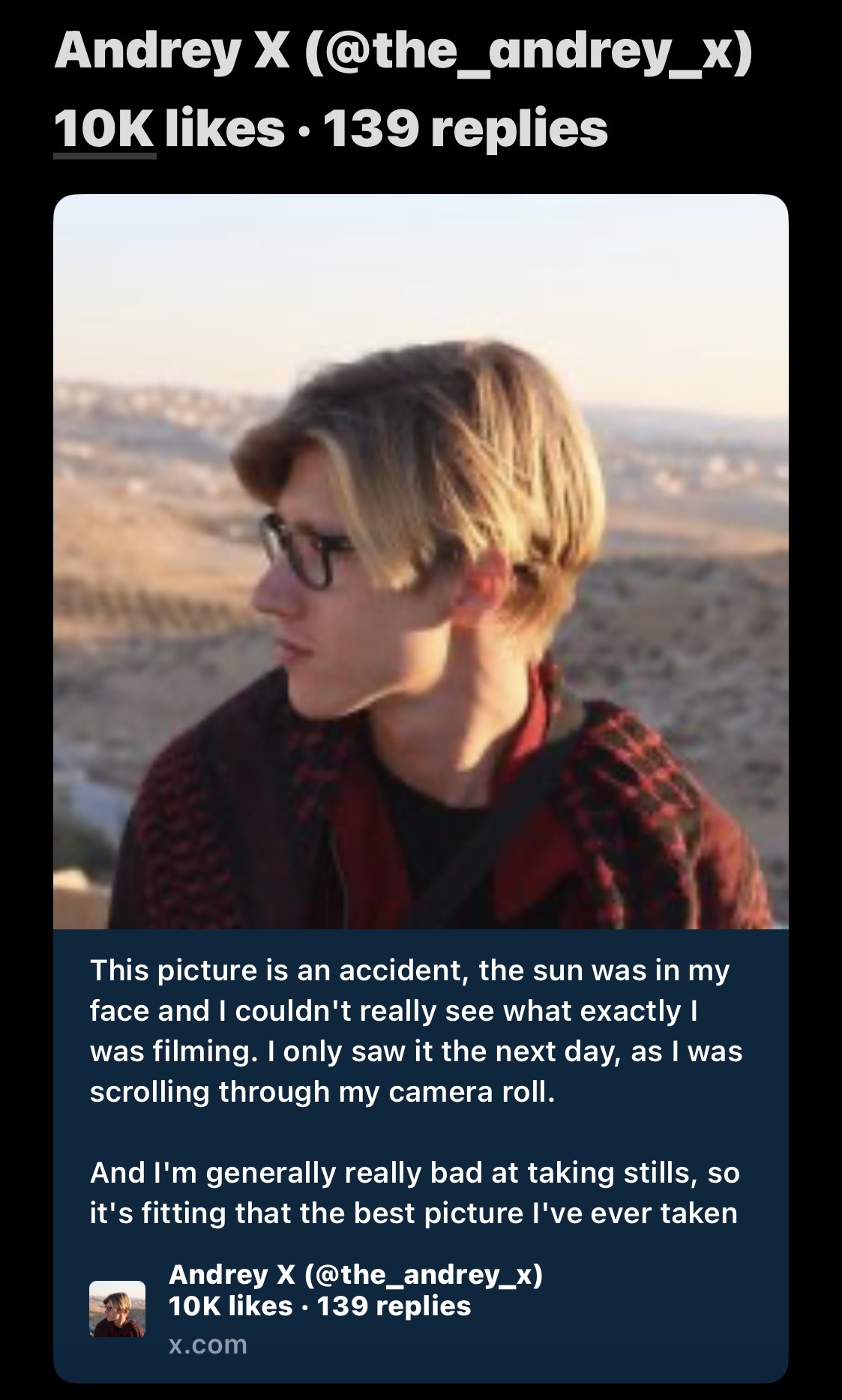
The photograph was taken by Andrey X, who presents himself as an independent journalist and human rights advocate.
He describes the image as accidental. He says he was filming and did not notice the frame at the time. He also states that he is generally not skilled at still photography, while calling this his strongest image.
The claim of accident runs counter to the image itself.
The frame is precise. The alignment of subject, barrier, and background is clear. The emotional message is immediate.
Whether intended or not, the outcome is not random. It is exact.
The Book
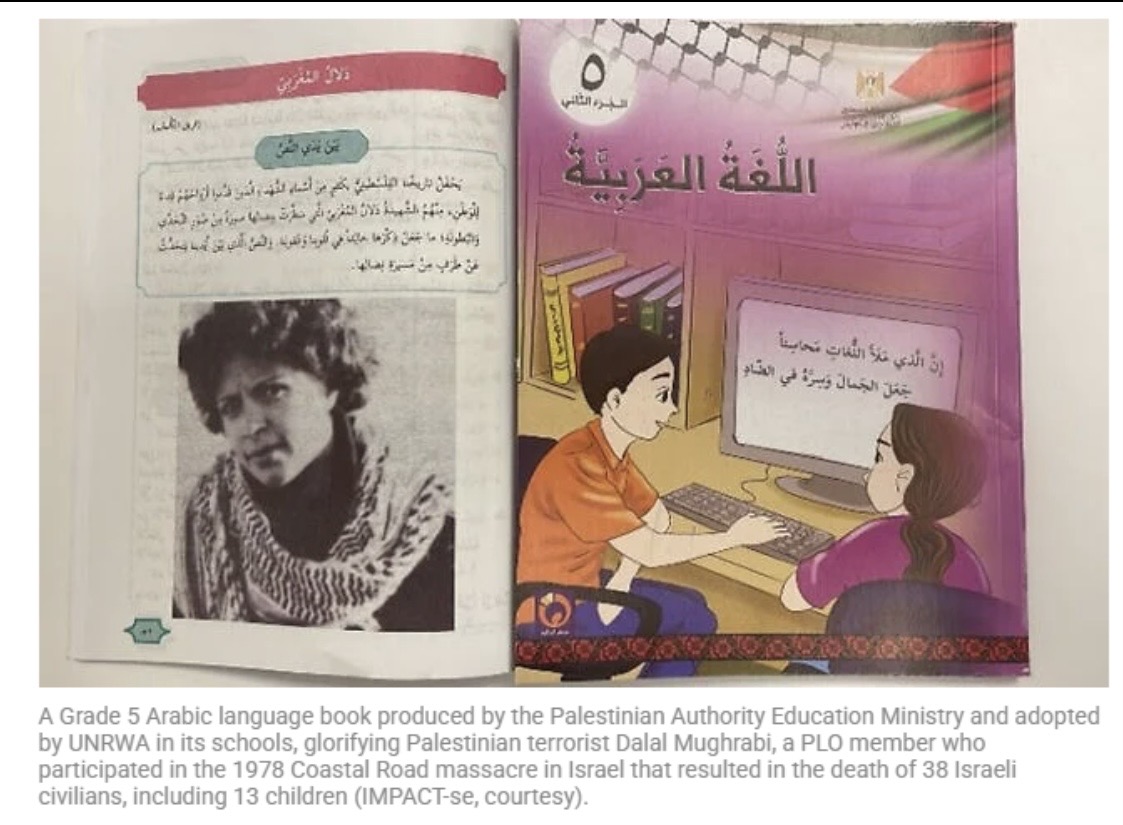
The child holds a Grade 5 Arabic language textbook, اللغة العربية, produced by the Palestinian Authority and used in UNRWA-linked education systems.
In the image, the book functions as a symbol. It signals education, normalcy, and interruption.
That symbol is not neutral.
The material includes a lesson on Dalal Mughrabi, associated with the 1978 Coastal Road attack in Israel, in which 38 civilians were killed, including 13 children.
The photograph does not show this. The caption does not mention it.
But it is part of what the image presents under the label of “studying.”
The meaning of the symbol changes once the content is known.
The Amplification
The image does not remain local.
It is posted with a defined narrative. It is shared across networks that repeat and reinforce that narrative. It is picked up by larger accounts and then by figures with mass audiences, including the Dallas Mavericks superstar NBA guard Kyrie Irving, extending its reach to tens of millions.
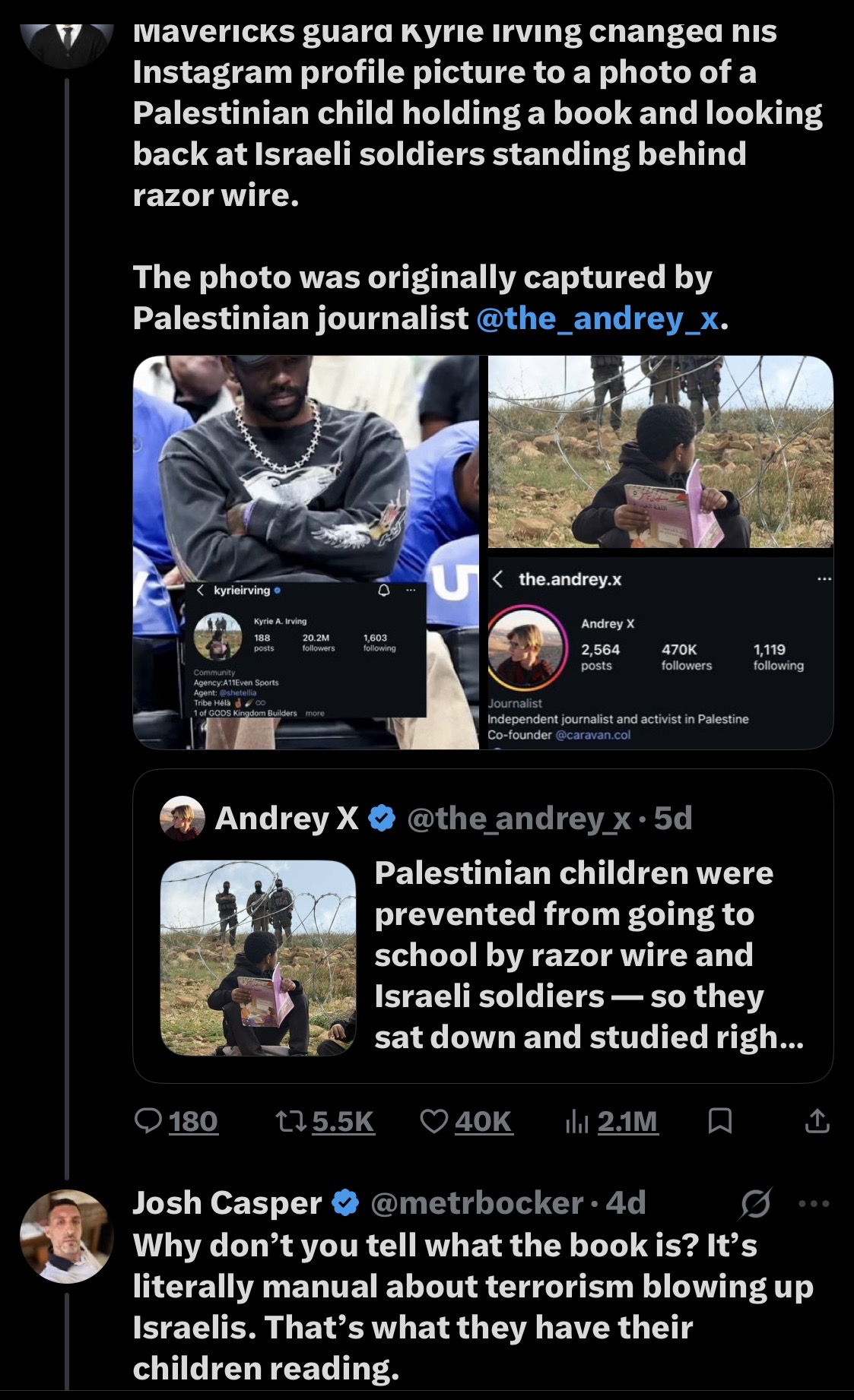
At that scale, the image no longer functions as a record of a single moment.
It becomes a statement about a wider reality.
The original context becomes secondary. The frame carries the meaning.
The Method
Put the elements together.
Create a confrontation environment. Ensure cameras are present. Position a child at the front where the emotional impact is strongest. Frame the barrier and the soldiers in the background. Capture the moment that reads most clearly. Attach a narrative that completes the image. Distribute.
This is a process.
It produces images that are ready to travel and ready to be understood in a specific way.
And when a child is placed at the center of that process, used to anchor the image that follows and the narrative that spreads from it, the image is doing more than documenting a situation.
It is being used.
Conclusion
The image’s trajectory also matters. Once amplified by accounts with mass reach, including Kyrie Irving and his audience of over 20 million, the photograph operates as a force multiplier. At that scale, the initial framing becomes dominant, while corrective context struggles to re-enter public understanding.
This is the wider environment in which such images now function. In modern conflict, the camera is not just recording events. It is part of how those events are shaped and understood, with the subject placed in the foreground of that process.
Confrontations exist. That is not in question.
What matters is how they are turned into images, and how those images are then used.
When a scene is arranged to deliver a clear message, and when that message is built around the placement of a child at the center of the frame, the result is not neutral.
It is constructed.
And once it is distributed at scale, the original moment no longer defines the story.
The image does
Liked this article? Follow HonestReporting on Twitter, Facebook, Instagram and TikTok to see even more posts and videos debunking news bias and smears, as well as other content explaining what’s really going on in Israel and the region. Get updates direct to your phone. Join our WhatsApp and Telegram channels!
© Divuach Ne’eman R”A, 2025