Key Takeaways:
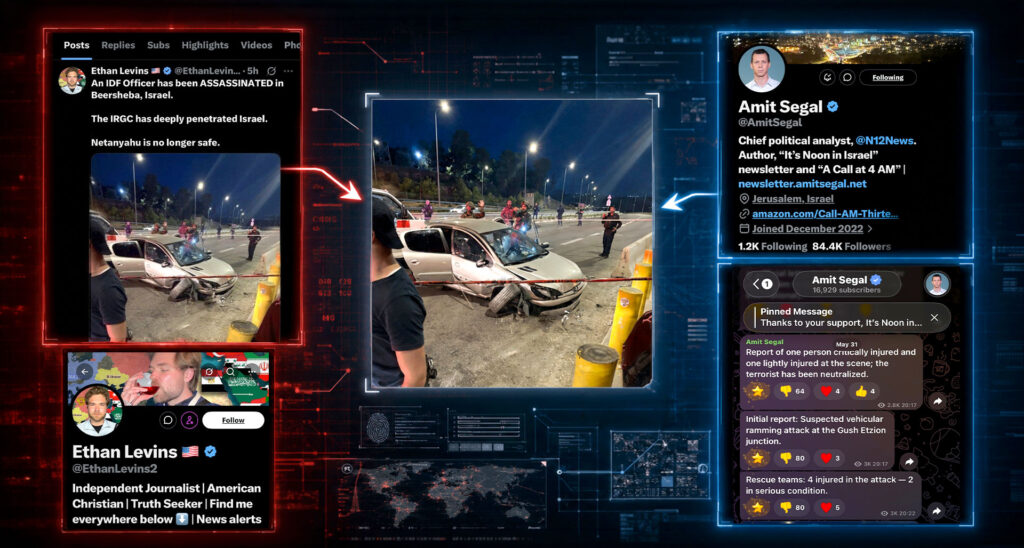
- A photograph from the May 31 terror attack at Gush Etzion Junction was repurposed online to support a false claim about an assassination in Beersheba.
- The same image appeared in reporting by veteran Israeli journalist Amit Segal and later in posts by anti-Israel social media influencer Ethan Levins, but with entirely different descriptions of the event.
- The episode demonstrates how authentic photographs can be detached from their reporting chain and reassigned to entirely different narratives.
On the evening of May 31, a Palestinian terrorist carried out a vehicular ramming attack at the Gush Etzion Junction south of Jerusalem.
Israeli police, the IDF, the Magen David Adom paramedic service, and multiple Israeli media outlets reported that the attacker drove into civilians waiting near the junction before being shot and killed at the scene. Among the wounded were two teenage girls, including a 17-year-old who sustained serious injuries.
As the attack unfolded, Channel 12 chief political analyst Amit Segal published a sequence of updates on his Telegram channel documenting the developing situation through casualty reports, operational updates, and official confirmations. One of those updates included a photograph from the scene showing a silver Peugeot with severe front-end damage, deployed airbags, a crushed front-right side, police tape stretched across the foreground, and security personnel gathered around the vehicle under floodlit streetlights.
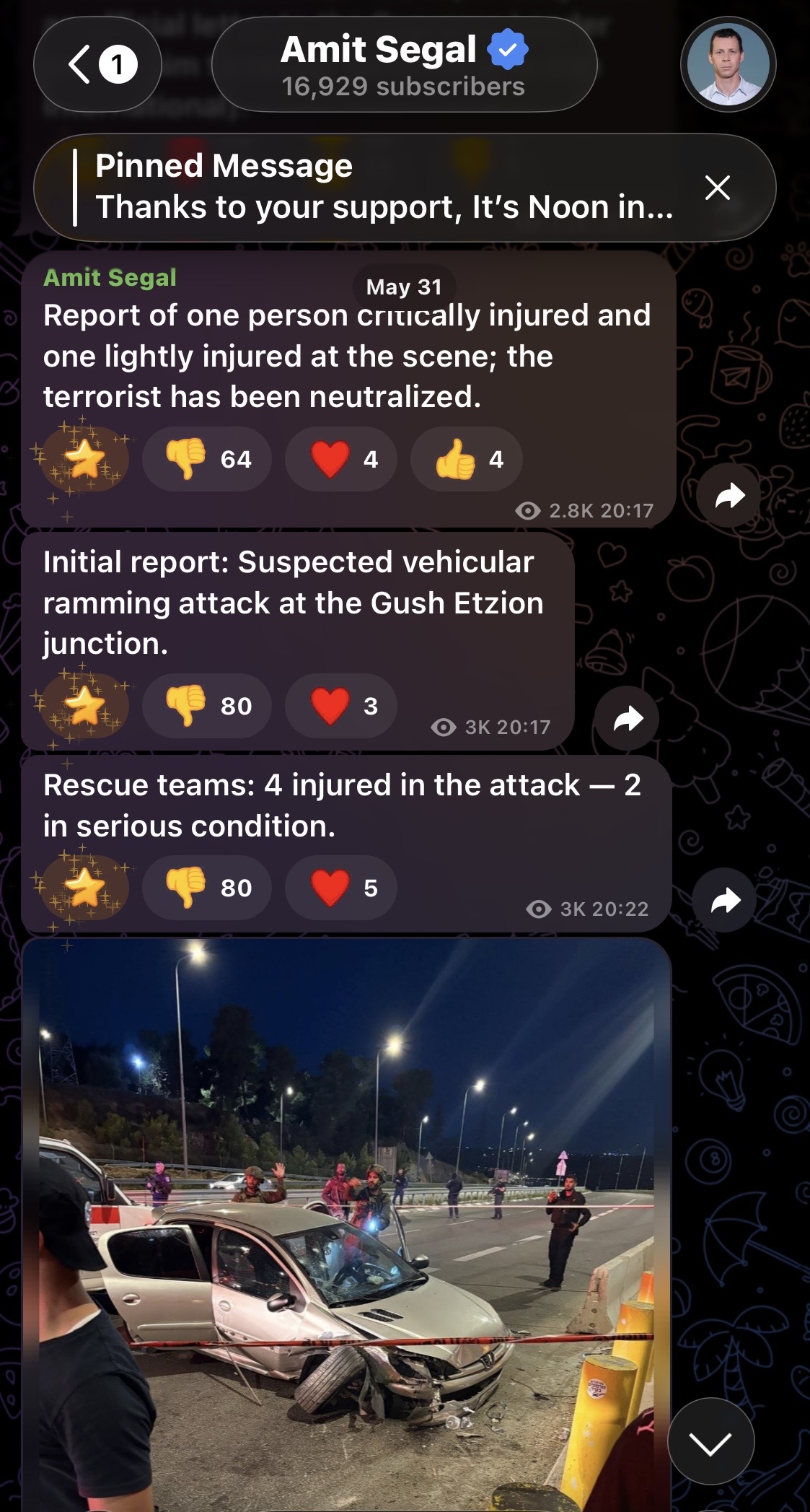
The image entered the public domain as part of the reporting trail surrounding a documented terror attack.
The Story Changes
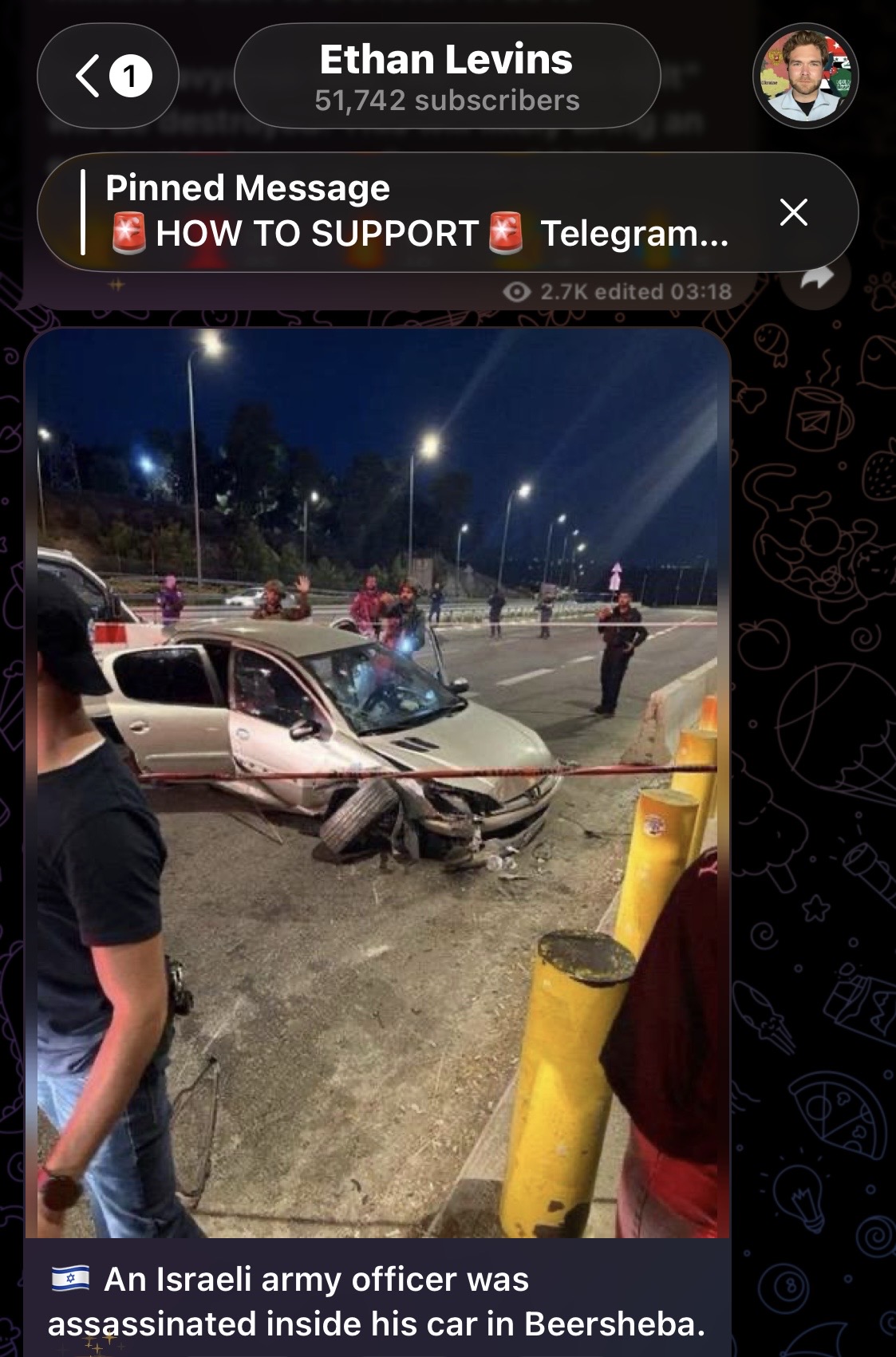
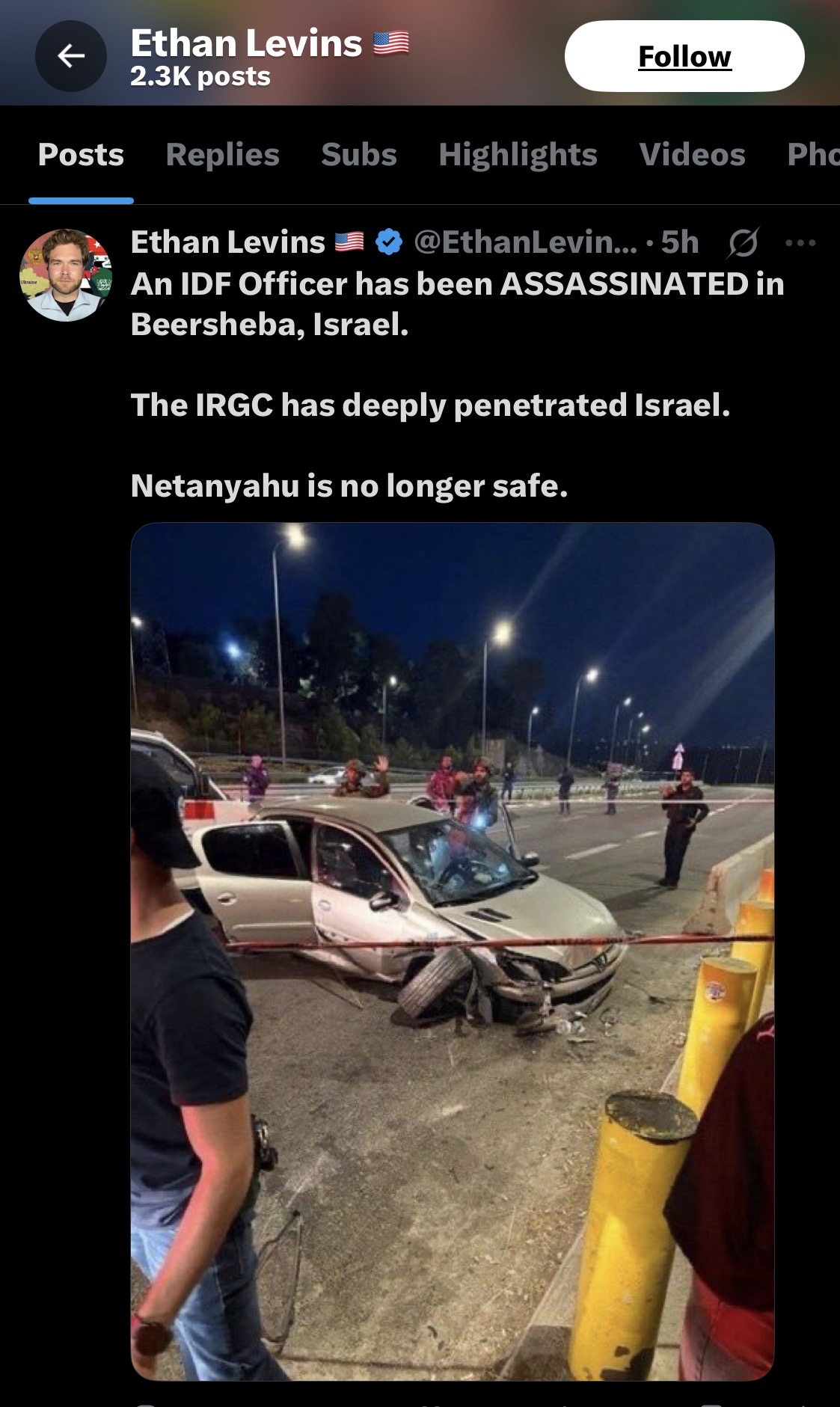
Within hours, the same photograph appeared on the X and Telegram accounts of Ethan Levins, an anti-Israel influencer who describes himself as an independent journalist and has built a substantial online following around geopolitical commentary, breaking news claims, and regional security developments.
The photograph that had circulated as part of live reporting from Gush Etzion was now attached to a very different narrative. Levins presented the image as evidence that an IDF officer had been assassinated in Beersheba. The post then expanded beyond the alleged assassination, claiming that the Iranian Revolutionary Guard Corps had deeply penetrated Israel and suggesting that Prime Minister Benjamin Netanyahu was no longer safe.
The image itself remained exactly the same. The damaged Peugeot, the police cordon, the emergency response, and the junction infrastructure visible in the photograph were all features of the Gush Etzion attack scene that had already been documented elsewhere that evening. What changed was the story attached to the image.
Following the Image Trail
Unlike many misinformation cases, the evidentiary chain in this instance is unusually clear.
The photograph appears in contemporaneous reporting connected directly to the attack itself. It was published by Amit Segal while the incident was still unfolding and was also credited elsewhere to the Gush Etzion Regional Council. The visual details remain consistent across every appearance of the image, including the vehicle damage, the emergency response, and the scene layout.
The significance of the case lies in that continuity. The image did not move through multiple edits, transformations, or manipulations. It moved through multiple narratives.
A photograph documenting the aftermath of a terror attack was reassigned to an alleged assassination in a different city and then elevated further into claims of Iranian penetration of Israel and threats to the country’s leadership.
The visual evidence never changed.
The narrative did.
Two Information Ecosystems
The contrast between the two reporting chains illustrates how the same image can function very differently depending on where it enters the information environment.
Segal’s reporting followed a conventional journalistic process. Information was updated as emergency responders arrived, casualty figures were revised, and official confirmations became available. The photograph formed part of that reporting chain and served as documentation of a specific event at a specific location.
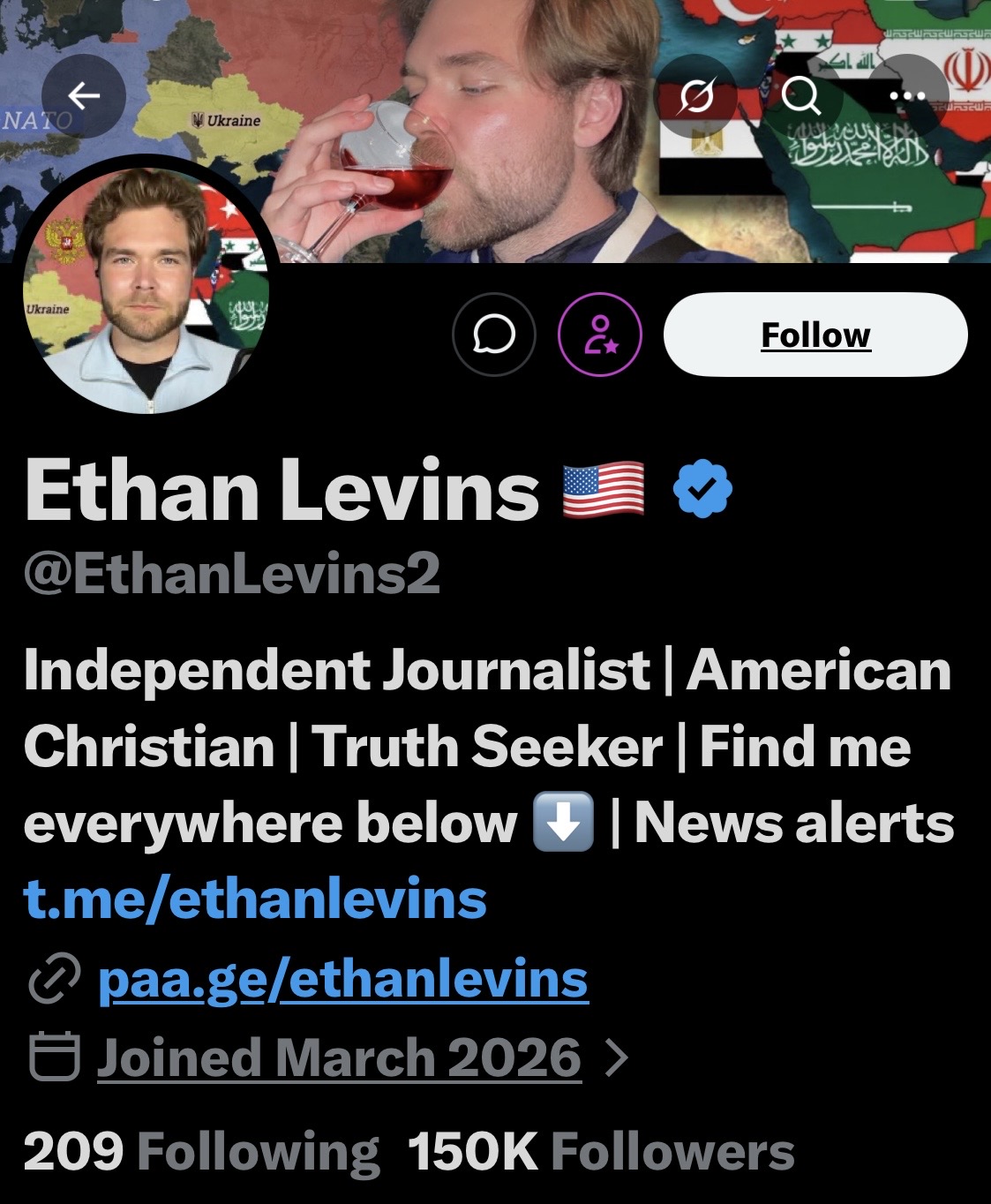
Levins used the image differently. Detached from its original context, the photograph became supporting material for a much larger geopolitical narrative. A terror attack at Gush Etzion Junction was transformed into evidence of an assassination in Beersheba, an Iranian operation inside Israel, and a broader warning about national security.
The authority carried by the image remained intact because the photograph itself was genuine. Viewers were looking at a real scene, a real vehicle, and a real incident. The disconnect occurred between the image and the explanation accompanying it.
The Levins Pattern
Levins has built a following across X and Telegram by positioning himself as an alternative source of geopolitical information and breaking developments from the Middle East.
His content frequently focuses on dramatic security events, intelligence claims, military activity, and regional escalation. Critics have accused him of amplifying unverified reports, circulating miscaptioned imagery, and promoting sensational claims before independent verification is available.
Whether supporters regard him as a whistleblower, commentator, or independent journalist, his reach is significant. Posts can reach hundreds of thousands of users within hours, allowing narratives to spread far faster than traditional verification processes.
That reach places a premium on accuracy, particularly when photographs from genuine events are used to support claims that are unrelated to the events depicted.
The Real Manipulation
Public debate about misinformation often centers on altered photographs, AI-generated imagery, and digital fabrication.
This case followed a different path.
The photograph was authentic. The vehicle existed. The attack occurred. The casualties were real. The image entered the information stream carrying one set of facts and emerged carrying another.
Its persuasive power came from its authenticity. Viewers were not being asked to believe a fabricated image. They were being shown a genuine photograph and encouraged to accept a false explanation for what it depicted.
That distinction is important because it reflects one of the most effective forms of modern misinformation. The credibility of the image is borrowed to support a narrative that the image itself cannot verify.
Conclusion
The photograph from Gush Etzion documented a real terror attack that left Israeli civilians wounded and generated extensive reporting across Israeli media.
Within hours, the same image was circulating online as evidence of an alleged assassination in Beersheba and a supposed Iranian operation inside Israel.
Nothing about the photograph needed to be altered. The vehicle, the scene, and the underlying event remained exactly as they had been when first reported.
The transformation occurred after the image left its original reporting chain and entered a different information ecosystem, where a documented terror attack became the foundation for a completely different story.
The episode serves as a reminder that some of the most effective misinformation does not begin with fake images.
It begins with real ones.
Liked this article? Follow HonestReporting on Twitter, Facebook, Instagram and TikTok to see even more posts and videos debunking news bias and smears, as well as other content explaining what’s really going on in Israel and the region. Get updates direct to your phone. Join our WhatsApp and Telegram channels!
© Divuach Ne’eman R”A, 2025