Look at this photograph of the aftermath of an Israeli strike in Deir al-Zahrani, southern Lebanon.
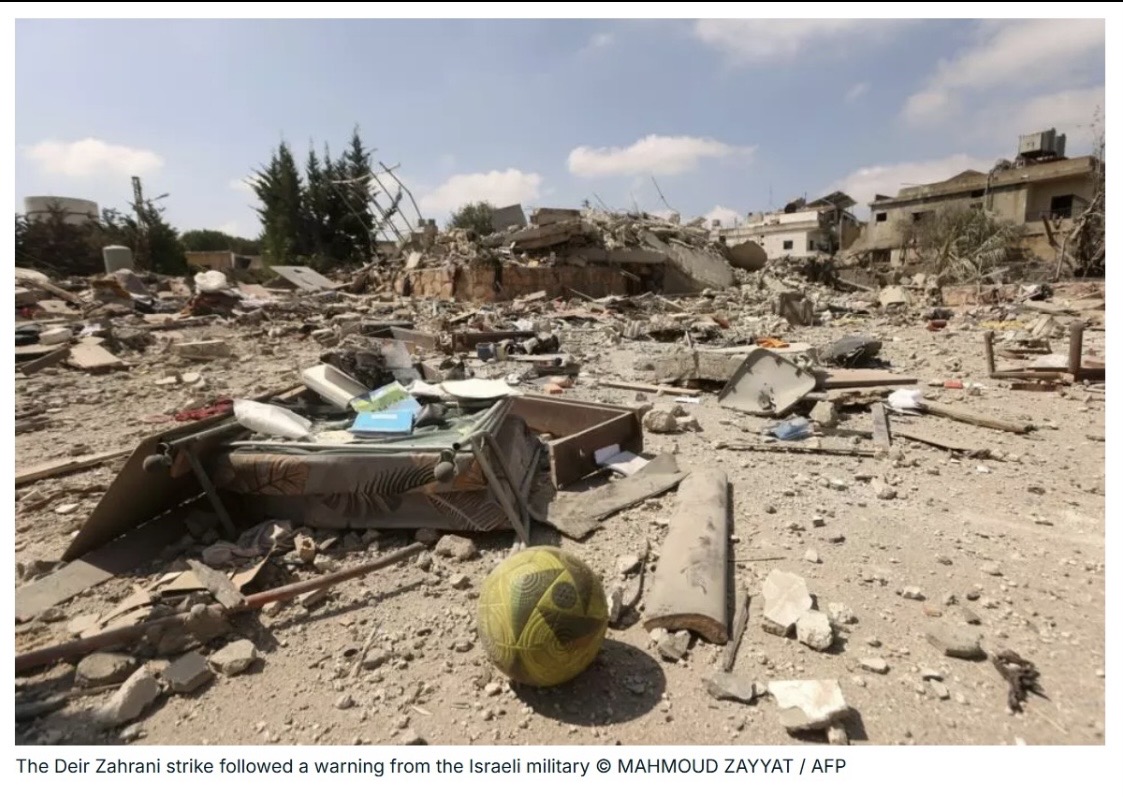
What do you see first?
Probably not the destroyed building. Not the rubble. Not even the overturned furniture.
The soccer ball.
AFP photographer Mahmoud Zayyat has placed it prominently in the foreground, transforming what might otherwise be another photograph of a destroyed building into something much more evocative.
A soccer ball suggests normality. Children. Families. A home. Life interrupted.
There is nothing inherently wrong with photographing it. And there is no evidence that the ball was placed there for the camera.
But photography is about choices. Of all the debris left after the strike, this is the frame that was made and distributed.
There is also some important context.
The Israeli military warned residents before the strike and ordered the evacuation of the targeted building and its surroundings. Even AFP’s caption accompanying the photograph acknowledges that the strike “followed a warning from the Israeli military.”
The IDF said it was targeting Hezbollah infrastructure.
Yet none of that is visible in the photograph.
Instead, sitting almost perfectly amid the devastation is a soccer ball.
Sometimes the most powerful thing in a news photograph isn’t what happened. It’s what the photographer chooses to put in front of us.
Liked this article? Follow HonestReporting on Twitter, Facebook, Instagram and TikTok to see even more posts and videos debunking news bias and smears, as well as other content explaining what’s really going on in Israel and the region. Get updates direct to your phone. Join our WhatsApp and Telegram channels!
© Divuach Ne’eman R”A, 2025