Key Takeaways:
- Some political analysts and observers misrepresent the Israeli Arab community as ideologically homogenous and portray the inclusion of the Joint List and Ra’am in an Israeli government as a given.
- It will take compromise and sacrifice if the anti-Zionist Joint List and the conservative Muslim Ra’am party are to be included in a ruling Zionist coalition.
- Claims that exclusion of the Arab parties from an Israeli government is evidence for racism are simplistic and superficially paper over the complexities and nuances that govern Israeli Arab politics.
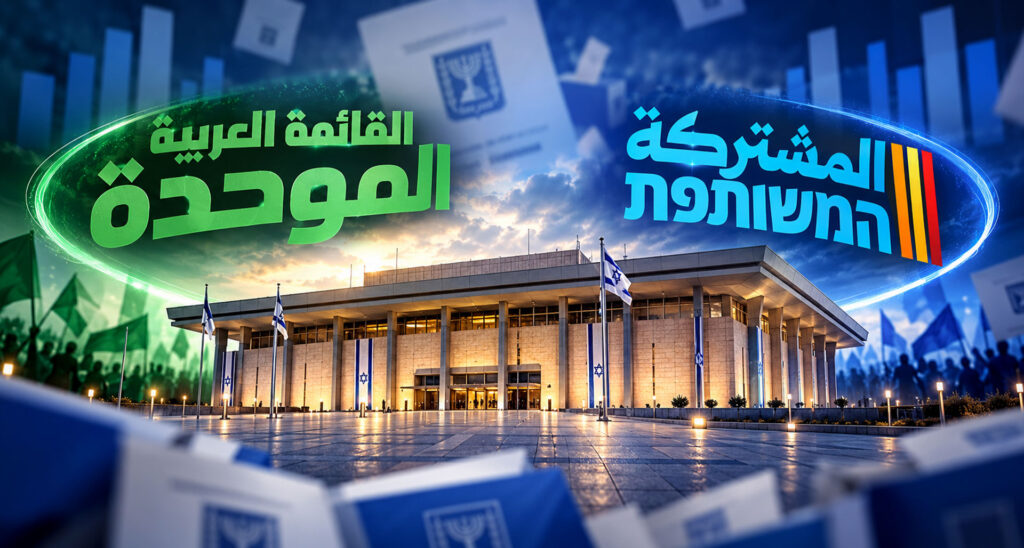
One of the surprising results of Israel’s recent national election was the surge in Israeli Arab voter turnout and the concomitant rise in support for the two parties that are widely seen as representing this minority community.
According to the final, but not yet certified, vote counts, the Joint List is slated to receive 11 seats (up from the 5 seats that Hadash-Ta’al held) and Ra’am is forecast to receive 8 seats (also up from 5). This means that in four years, the two Arab-majority factions have almost doubled their number of seats in the Knesset (Israel’s parliament).
As neither the ruling right-wing coalition led by Prime Minister Benjamin Netanyahu or the opposition coalition have reached the required number of seats to form a government, much ink has been spilled in both the traditional media and on social media about how the Arab parties are now the “kingmakers” of Israeli politics.
Some have even opined that if the opposition parties do not make an agreement with the Arab parties to form a coalition, this is a sign that the Jewish and Zionist parties are inherently racist factions that would rather have political uncertainty in Israel than sit with non-Jewish coalition partners.
According to Brad Lander, a New York Democratic nominee for Congress, a coalition that includes these parties is “obvious” and “non-racist,” while Phil Gordon (former National Security Adviser to Vice President Kamala Harris) claimed that failure by the opposition parties to include the Arab parties in a coalition would prove celebrations of Israeli democracy as “hollow.”
These analyses are not based in serious observations of the Israeli political landscape but are simplistic assessments that falsely portray the Israeli Arab minority as an ideological monolith, pay no attention to the ideological makeup of these two Arab parties, and possess a superficial understanding of the political issues that any ruling coalition will have to contend with.
Below is an honest look what these two Arab parties ideologically stand for and why it’s not such a simple decision for the opposition parties or these Arab parties to join together to become a ruling bloc.
What Are Israel’s Arab Parties?
Like mostly everything related to Israel (and the Middle East more generally), labels are simplistically broad and do not fully represent reality on the ground. While two political parties (the Joint List and Ra’am) are commonly referred to as the “Arab parties,” neither are homogenously Arab, with both parties having Jewish members on their party slates, and neither account for 100% of the Arab Israeli vote (with other parties having Arabs as candidates on their lists).
Nevertheless, as both Ra’am and the Joint List view themselves (and are viewed by others) as the two main parties representing the interests of Israel’s Arab minority, they are broadly referred to as the “Arab parties.”
So, what are these parties? What are their origins? What do they believe?
The Joint List is an amalgam of smaller Arab-majority parties. Originally founded in 2015, it has gone through several iterations (including not existing for several years) but is currently composed of Hadash, Ta’al, and Balad.
Hadash is a far left Jewish-Arab party that was formed in 1977 as an alliance of Israel’s Communist Party and other far-left parties. Although it is a coalition of both Jewish and Arab Israelis, the party’s main constituency is the Arab community.
Ta’al is an Arab nationalist political party that was founded in 1996. Its main ideology is centered around recognition of Israel’s Arabs as a national minority, the creation of a Palestinian state, and rescinding laws that give preference to Jews in composing Israel’s national character.
Balad is also a secular Arab nationalist party but is viewed as much more extreme than Ta’al. Formed in 1996, Balad believes in creating a binational state, giving Israel’s Arab autonomy in certain sectors, and the “right of return” for Palestinian refugees.
In its 30-year existence, Balad has been at the center of several controversies due to its members’ support for terrorism. In 2006, its founder, Azmi Bishara, fled Israel after it was discovered that he had been in contact with Hezbollah during the Second Lebanon War and had been encouraging its terrorist fight against Israel. In 2010, Balad Knesset member Hanin Zoabi was part of the Mavi Marmara flotilla that tried to break Israel’s blockade of Gaza (she would also later justify certain terrorist actions taken by Hamas), and in 2016, another member of Knesset from Balad, Basel Ghattas, was arrested for smuggling cellphones and SIM cards to Palestinian security prisoners.
According to its 2026 platform, the Joint List claims that it represents “a genuine democratic alternative to the racist Zionist consensus” and that it “expresses the national political will of the Palestinian citizens of Israel and the unity of their struggle, as an indigenous national group with a national and civil cause, as well as the partnership in struggle with the progressive Jewish forces.”
Practically, the party calls for the end of the war in Gaza and the lifting of Israel’s blockade of the Hamas-run territory, it opposes the “Judaization” of the Galilee and the Negev, and advocates the rescinding of legislation that entrenches “Jewish supremacy.”
Ra’am was formed in 1996 out of the Southern Branch of Israel’s Islamic Movement. Ideologically, Ra’am shares certain values with the Joint List (of which it was once a member), including the creation of a Palestinian state and the “right of return” for Palestinian refugees. However, Ra’am is more religiously traditional than the parties that make up the Joint List, representing a culturally conservative element within Israel’s Arab community.
Ra’am has also proven itself to be more politically practical than the Joint List, willing to negotiate with Zionist Jewish parties in order to achieve positive political results for Israel’s Arab constituency. This pragmatism saw Ra’am join the brief Bennett-Lapid government in 2021, the first majority-Arab party to be part of an Israeli governing coalition. As a further sign of its pragmatism, the number two on Ra’am’s current slate is a former senior Israeli Jewish police official (a signal that the party is taking the scourge of violence within the Arab-Israeli community seriously).
Despite its pragmatism, there were several controversies surrounding Ra’am in the lead-up to the election. In 2023, a Ra’am lawmaker was sanctioned by the Knesset for denying Hamas’ atrocities on October 7. In May 2026, a court ordered the dissolution of a charity with ties to Ra’am due to its alleged cooperation with terrorist organizations and in July of this year, Ra’am leader Mansour Abbas refused to label Hamas “as a terrorist organization,” claiming that the matter is a “political loyalty test.”
Claims about “Arab voters” that represent the Israeli Arab community as a homogenous political grouping that holds a singular ideology are superficial and misleading. Setting aside the Israeli Arabs who vote for Jewish Zionist parties, Israeli Arabs voting for the Joint List or Ra’am are not aligned in their views and what they perceive to be the best solution for Israel’s Arab minority.
Those voting for the Joint List are supporting a party that identifies with secular nationalist politics and is largely ideologically inflexible, while those who vote for Ra’am are putting their support behind a conservative Islamist party that is more pragmatic and willing to negotiate with Jewish Zionist parties in order to attain practical results for the Arab Israeli community.
Can Israel’s Arab Parties Join a Coalition?
Since the election results were published, both outside observers and domestic political voices have called for a governing coalition made up of the opposition Zionist Jewish parties and the Arab parties to replace the right-wing government of Prime Minister Benjamin Netanyahu.
Political intrigues aside, is this idea feasible? Can the Joint List and Ra’am realistically sit in the same coalition with Zionist Jewish parties? Can they sit in the same governing coalition with each other?
While Israel is the country where impossibilities become reality, it will be complicated for either Ra’am or the Joint List to join a governing coalition led by the Jewish Zionist opposition parties.
The following are just some of the issues that will have to be overcome for one or both of the Arab parties to join an Israeli government:
- Since the Hamas invasion of October 7, 2023, Israel has been in a state of war and will continue to be in one under a new government. Can a ruling coalition rely on the Joint List (which wants to immediately end the war) and Ra’am (whose leader refused to label Hamas as a terror group)?
- Conversely, would the Joint List and Ra’am be able to, in good conscience, be part of a government that is actively engaged in counter-terrorism operations in Gaza, the West Bank, and Lebanon? Would they be able to face their supporters if they okay these military operations?
- The Joint List’s Balad faction has a history of Knesset members supporting (including providing material support for) terrorist groups. Can they be trusted to be part of a government that is charged with Israel’s national security and defense?
- Irrespective of agreeing with the Jewish Zionist parties in the government, would the secularist Joint List and the conservatively religious Ra’am be able to agree on the ruling coalition’s core values?
- The Joint List opposes Israel’s Zionist foundations. Would it be able to reconcile this ideological viewpoint with being part of a largely Zionist coalition?
- Would a ruling coalition that includes the Joint List be able to pass a budget that includes funding for the IDF and other Israeli national institutions that it opposes?
- One of the prerequisites laid out by Gadi Eisenkot (the presumed leader of a ruling coalition of opposition parties) for anyone joining his coalition is military or civilian national service for all Israelis. Would the Joint List and Ra’am agree to have mandatory national or military service for their Arab constituents?
The above-mentioned issues are not to say that there is no chance that one or both of Israel’s Arab parties will join a coalition led by the opposition Jewish Zionist parties. Israeli politics is full of surprises and no one knows how coalition negotiations will play out over the next few weeks.
However, what can be gleaned from the above analysis are the following takeaways:
- The Israeli Arab community is not ideologically homogenous. Some support Zionist political parties, some support the religious and conservative Ra’am party, while others support the secular and nationalist Joint List. What one Israeli Arab voter wants to see from their Knesset representative can be very different from what the other Israeli Arab voters want from their elected representatives.
- Any coalition that includes one or both of the Arab parties along with Zionist Jewish parties would have to compromise or sacrifice on certain political values and ideals. This is not such a simple ask and some parties may refuse to give up on their ideological stances.
- If the Zionist opposition parties create a governing coalition without the Arab parties, this is not evidence for Israeli racism. The values of the Joint List and Ra’am (regarding security, the Jewish nature of the state, and a two-state solution among other contentious values) do not inherently fit in with the values of Israel’s Zionist opposition parties.
Liked this article? Follow HonestReporting on Twitter, Facebook, Instagram and TikTok to see even more posts and videos debunking news bias and smears, as well as other content explaining what’s really going on in Israel and the region. Get updates direct to your phone. Join our WhatsApp and Telegram channels!
© Divuach Ne’eman R”A, 2025