 3. Why does HonestReporting often link to paywalled articles? I want to be informed, but I don’t want to pay for the articles you link to.
The most important issue is giving credit or criticism where it’s due. If the article warrants a critique, scoops a story, or creates buzz and is behind a paywall, we’ll give over the key information in our own words and/or a snippet quoted directly from the article.
With the Israel Daily News Stream, we’ll link to what we feel is the clearest or most unique coverage of a particular development. Sometimes, we’ll add other non-paywalled links “for more on the story.”
All other things being equal, if we have to choose between a paywalled and non-paywalled article, we’ll certainly link to the free one.
Papers like the Wall St. Journal and Financial Times allow you to bypass their paywalls by clicking through Google News. That’s why you’ll sometimes see an additional Google News link.
Remember, HonestReporting’s media critiques and Israel Daily News Stream are free. We give readers enough key information, and anyone who’s moved to look further into the matter can certainly do so on their own.
Which leads to the next question . . .
4. Sometimes, I want to get around a paywall to look further into an article. How can I do that?
It depends. If the article’s behind a hard or combination paywall, you can’t get around it unless someone with an account copies and pastes (or prints out) the article and sends it to you. You can also do some Googling to see if anyone else republished the article.
If the article is protected by a soft paywall, what people often do is simply delete cookies (or clear their history) from their computer or browser (What’s a cookie? And how do I delete cookies from my computer?) Clearing your cookies/history will restart your monthly quota of articles.
Also, since clicking through social media doesn’t always count against your freebies, you could also find someone who posted the article on Facebook or Twitter and click from there.
Papers sometimes temporarily take down their paywalls in the public interest. The Washington Post did this for the Navy Yards shootings. The NY Times and Wall St. Journal dropped their paywalls during Hurricane Sandy, and the Boston Globe did likewise during the Boston Marathon terror.
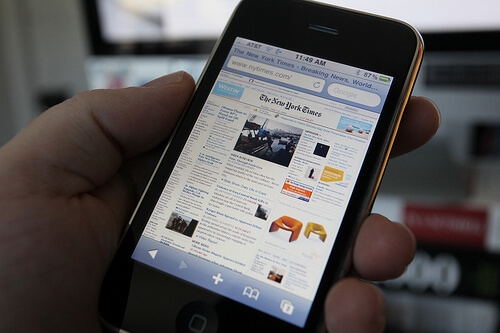 5. I subscribe to my local paper’s print edition, and I bought a few news apps too. I shouldn’t be charged any more for online content, right?
Presumably. But read the fine print or call the paper anyway. You could be in for a surprise.
6. Are paywalls the wave of the future?
They’re still relatively new, and there’s no consensus on how to gauge a paywall’s success. No two papers are alike, and publishers don’t release very much information about digital subscriptions and revenue.
But consider this: In August, the San Francisco Chronicle and Dallas Morning News junked their paywalls even as the Toronto Star launched one of its own. And The Australian revamped its paywall as part of a larger web site overhaul.
So bottom line: nobody really knows.
Images: CC BY-SA HonestReporting.com, flickr/Stephen Ferne, flickr/Tristan Bowler. flickr/Robert Scoble
© Divuach Ne’eman R”A, 2025