Key Takeaways:
- International legal and human rights forums failed to uphold the principles they were created to protect when they did not adequately address the atrocities of the October 7 massacre.
- October 7 massacre researchers have taken on a difficult and sensitive task, leaving them emotionally burdened with horrific scenes and responsibility.
- Denial of the October 7 massacre differs from Holocaust denial as the narrative was spread while the pogrom was still being filmed and uploaded in real time, while the Holocaust was denied only after the fact.
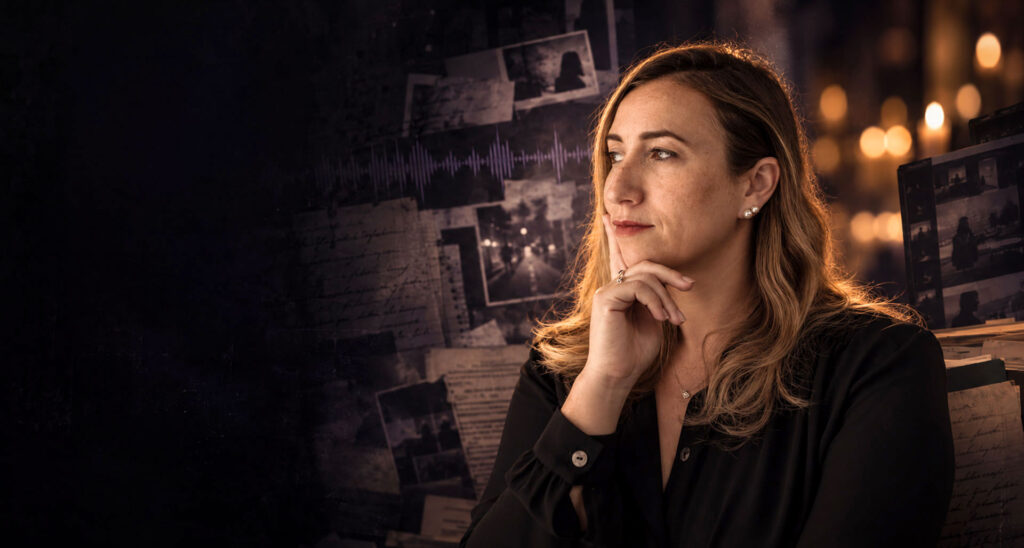
On the morning of October 7th, 2023, Dr. Cochav Elkayam-Levy was with her father in hospital when the sirens began. Immediately, her WhatsApp and Telegram groups filled with messages, while social media was flooded with footage, much of it filmed and shared by Hamas themselves. Cochav began watching. As an international law and human rights expert, she understood very quickly that she was seeing crimes against humanity. But there was something else happening too. The visibility of the violence was part of the violence.
“The visibility became a terror itself,” she told me.
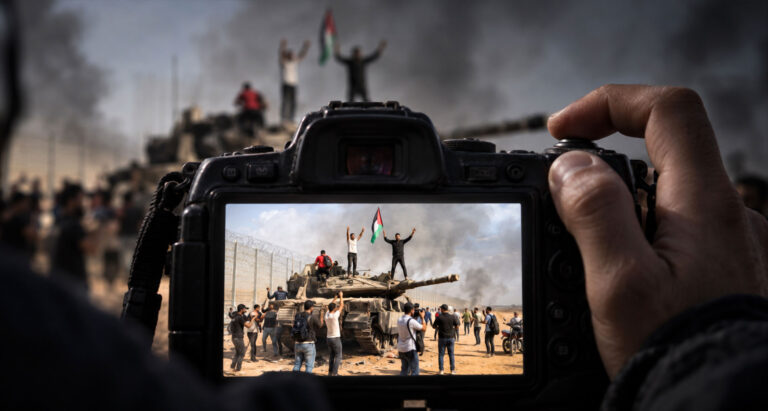
The atrocities were not simply committed. They were filmed, shared, and consumed, allowing the violence to travel beyond the places where it happened. The images became another means of terrorizing Israelis and Jews, extending the horror of October 7th long after the attacks themselves.
Even the day that we spoke on the phone, it was difficult for Cochav to talk about the massacre. Throughout our conversation, she tried to keep her emotions in check. October 7th remains, she said, the hardest day. But it was also the day that changed the course of her life.
Three years later, Cochav is the leading figure documenting the sexual and gender-based violence committed during the October 7th massacre. She founded the Civil Commission on October 7th Crimes by Hamas Against Women and Children and led the work that became Silenced No More, a major report documenting the systematic sexual violence committed during the attack and against hostages in captivity. Published in May 2026, it draws on more than 430 testimonies and over 1,800 hours of visual material, and identifies 13 distinct patterns of sexual violence. None of this was planned. She did not set out to become an investigator or the guardian of an archive. She became one because she understood that the evidence had to be protected.
The First Evidence
Cochav’s understanding of the sexual violence of October 7th came gradually, although there were signs from the first day. She saw the footage of Shani Louk and Naama Levy. As a feminist scholar, she recognized at once what she was seeing.
Over the next week, more footage and testimony arrived. Cochav remembers one video from the beginning of the war. The upper part of a woman’s body had been burned, while her lower body had been left exposed. She began putting the pieces together. Without meaning to, she was beginning to conduct an investigation. She collected footage and testimonies as they emerged, documenting evidence of sexual and gender-based violence almost in real time.
At the same time, Cochav and other Israeli human rights experts began contacting their colleagues in the United Nations. They sent information to UN officials and called on them to condemn the crimes and demand the immediate release of the hostages. They hoped international pressure might help bring them home. Cochav felt she had a responsibility to raise her voice. In fact, she believes international institutions already had access to more information than she did. Some of the videos she had struggled to find were already being broadcast by international media. She kept sending material, but there was almost no response. Emails and messages went unanswered.
Then an Israeli women’s protest movement asked Cochav to address the United Nations Committee on the Elimination of Discrimination against Women (CEDAW). The day before she was due to speak, the committee released a statement which made no mention of October 7th or the hostages. For Cochav, it was a moment of profound betrayal. She had built her career around international law and human rights. She had studied these institutions and believed in what they were supposed to represent. Now, she said, her “entire belief system collapsed” before her eyes.
The following day, she asked the committee a simple question: “Does international law exist for us as Jewish women, for Israeli women?”
If these institutions could not speak for Israeli women now, what did any of it mean? Her speech went viral and inspired protests around the world. But for Cochav, something else had become clear. If the world was not going to believe what had happened, they were going to have to prove it.
Becoming the Guardian
A few days after the speech, Cochav had a realization. “Something is wrong,” she remembers thinking. People were not believing what had happened, or they were not understanding it.
“We have to establish an archive under the most compelling international norms,” said Cochav.
In reality, the archive had already begun. People had been sending her material, and videos and testimonies were sitting on her phone and in her email. Much of Cochav’s life before October 7th seemed to have prepared her for this work. Her expertise in international law and her knowledge of the UN and human rights mechanisms meant that she understood how these systems were supposed to work. She could also see that they were failing.
At first, Cochav thought she would gather the evidence and eventually hand it over to somebody else. She wanted distance from the task because the material was so horrific. But slowly, she understood that she could not simply hand it away.
“I realized I am the guardian,” she said.
Cochav still feels that responsibility today. Some families do not know exactly what happened to their loved ones, and that reality shaped the way every case had to be handled. There was no room for carelessness when the material represented the final moments of real people whose families were still living with unimaginable loss.
The work also had a huge impact on the researchers. Some reached a point where they simply could not continue.
“I cannot do this,” team members would tell her.
“We understand and we hug them,” she explained her response.
But carrying that responsibility took its toll on her too. While she tried to support the people around her, she had to find a way to keep going herself. For Cochav, motherhood became an anchor. Her responsibility to her children gave her strength and purpose during a period that was hugely traumatic for her. She is stronger now than she was when she was writing the report and feels that she is beginning to come back to herself. But the responsibility has not gone away. What happened to these women has to matter.
“It must count,” said Cochav.
The Instability of the Truth
Cochav understood very quickly that documenting the crimes would not be enough. She was also going to have to fight for them to be acknowledged. The reaction of human rights institutions made that clear almost immediately.
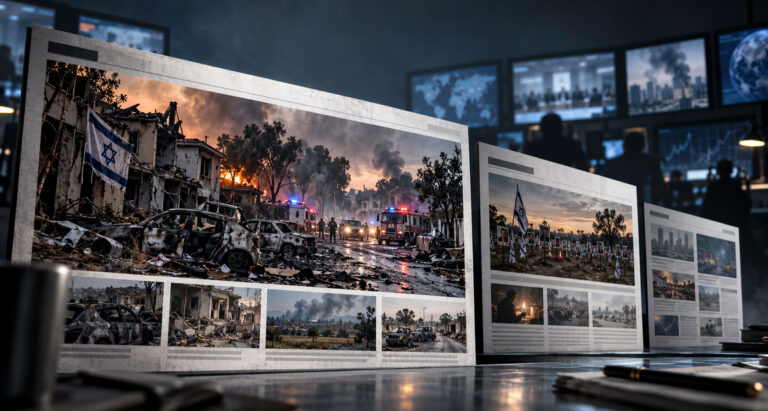
The erasure did not paralyze her. It drove her. Speaking at a conference in Haifa, Cochav described what she saw happening as “the instability of the truth.” As she put it, “We are losing the sense of knowing what happened. We have to preserve the truth.” For me, that sentence goes to the heart of what has happened since October 7th. The facts were still raw when narratives denying or diminishing Jewish experience began to appear. Cochav knew that the truth had to be preserved, but she did not know just how difficult that would become.
Until very late in the process, she was not sure they would succeed in publishing the report. The entire process had to be rigorous and every piece of material had to be reviewed carefully. The claims had to stand up to scrutiny, even as the burden on the people examining the evidence grew heavier. Still, they continued. Human rights activists do not often get to finish work like this and say, “We did it.” But they did. Cochav is clear that this achievement belongs not only to her team, but also to the advocates and activists around the world who fought alongside them.
Now comes the question of what happens to what they preserved. For Cochav, these stories cannot simply sit in an archive. What happened to these women must become the basis for meaningful change.
When the Human Rights World Looked Away
For Cochav, one of the deepest disappointments after October 7th came from the human rights world of which she had long been a part. Some of the people she admired, including people who had helped shape her as a scholar, turned their backs on Israelis after October 7th. But Cochav makes an important distinction.
“It’s the people, not the ideas,” she explained.
Cochav has not abandoned the idea of human rights because some of the people and institutions that claimed to defend them failed. And importantly, not everyone failed. Through this work, Cochav met women and survivors of sexual violence from around the world, including Yazidi survivors and women from Sudan and Ukraine. Among them she found real sisterhood and solidarity.
“We will be here, we are here, we believe, we are together in fighting this,” she said.
Before Silenced No More was released, the work received support from Hillary Clinton, leading legal experts, and former UN officials. Their support was more than symbolic. It was an important stamp of verification from people with authority in international law, human rights, and politics. After experiencing the silence of institutions she had trusted, that recognition mattered deeply. For Cochav, it became part of the healing.
Denial in Real Time
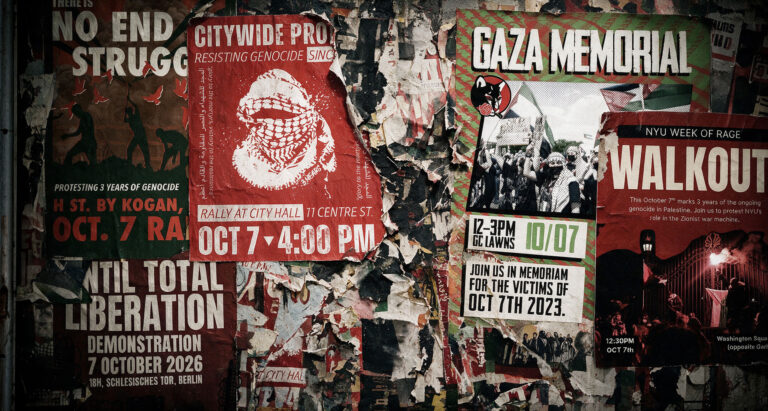
In my upcoming book, I wrote about the denial of October 7th as an attempt to erase Jewish experience. I described it as analogous to Holocaust denial. I wanted to know how Cochav understood the phenomenon after spending three years confronting it herself. She sees an important similarity, but also a frightening difference. Denial of October 7th began while October 7th was still happening. The massacre was being filmed, videos were being uploaded and people around the world could watch what was happening. Yet denial came almost immediately. The Holocaust was denied after the fact. October 7th was denied as it happened.
For Cochav, that tells us something about how fragile truth has become. Technology has also made denial more sophisticated. We have access to more evidence than previous generations could have imagined, yet that has not necessarily made truth easier to establish. There is another element that Cochav finds particularly disturbing. The Holocaust helped bring about the international human rights system we have today. Yet some of the institutions entrusted with protecting those rights have, in her view, helped create the conditions in which denial of October 7th has been allowed to grow.
In Silenced No More, Cochav and her colleagues describe October 7th as a genocidal attack. The report also examines the war crimes and crimes against humanity committed that day. For Cochav, the question of genocidal intent is present in the evidence itself. The archive contains material in which terrorists commit crimes while expressing that intent.
“It was a vividly genocidal attack,” she told me. “There was an intention to genocide.”
What We Remember
Three years on, I asked Cochav what she wants the world to remember about October 7th. She wants people to understand what Silenced No More established about the sexual violence committed that day. It was not incidental. The evidence shows, she argues, that it was calculated and carried out with extraordinary cruelty.
But that is not where she wanted to end. After everything she has seen, Cochav still believes in goodness. What allowed her to carry this for so long, she told me, was remembering that “there was as much goodness in this world as there is evil.” That goodness has to be protected.
“We must fight back to preserve the good,” Cochav said, and she believes we will. “We will rise. I already feel it in my bones.”
I believe her.
Interviewing Cochav is a great honor, but more importantly, so is being able to call her my friend. At the end of our conversation, I found myself holding back tears as I tried to tell her what her work has meant to me and to so many others.
“Cochav, I want to say thank you,” I said. “Thank you for the work you have done, for the stories you have preserved, and for refusing to allow what happened to these women and their families to be denied or erased. We owe you an enormous debt of gratitude.”
Cochav took responsibility for stories that should never have needed a guardian. But because she did, they cannot be erased.
Liked this article? Follow HonestReporting on Twitter, Facebook, Instagram and TikTok to see even more posts and videos debunking news bias and smears, as well as other content explaining what’s really going on in Israel and the region. Get updates direct to your phone. Join our WhatsApp and Telegram channels!
© Divuach Ne’eman R”A, 2025