Key Takeaways:
- Anti-Israel activists targeted “Spider-Man: Brand New Day” solely because Israeli-American producer Avi Arad was involved.
- Mark Ruffalo’s presence exposes the inconsistency: he promotes boycotting Israel while starring in an Arad-produced film.
- The campaign reflects a broader pattern of treating Israeli identity itself as grounds for boycott.
Spider-Man has faced some formidable villains over the years. But the latest threat to the web-slinger came from a social media campaign demanding that fans boycott his newest blockbuster outing.
It did not work.
Marvel Studios’ “Spider-Man: Brand New Day” became the second-biggest debut in box-office history this weekend, raking in $355 million in North America, in addition to $573 million internationally. Before the final numbers arrived, analysts were already projecting a domestic opening of between $230 million and $300 million.
The latest target of anti-Israel boycott activism had survived.
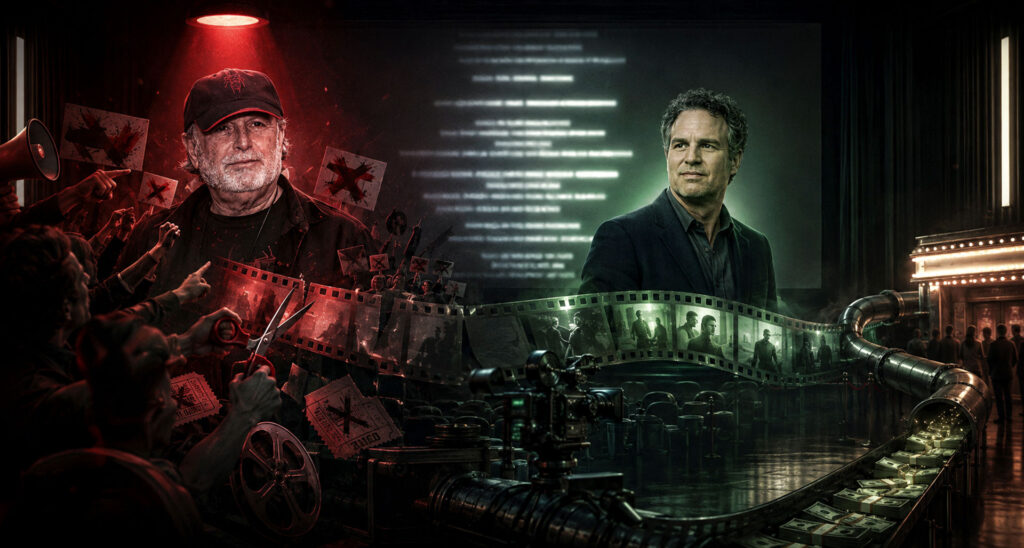
The campaign, which began circulating among activists in Lebanon and was amplified by pro-Palestinian accounts, urged audiences not to see the film because of one name in its credits: Avi Arad.
Arad is one of the movie’s four credited producers. He is also Israeli-American, has publicly supported Israel, and wore a yellow ribbon for the Israeli hostages held in Gaza at the Academy Awards.
That was apparently enough to declare the entire film a product of what the campaign graphics called the “occupation.”
1/6
— HonestReporting (@HonestReporting) July 31, 2026
Spider-Man’s latest supposed villain isn’t on screen. He’s in the credits.
Anti-Israel activists want a boycott of Spider-Man: Brand New Day because producer Avi Arad is Israeli-American.
But one of the film’s biggest stars exposes the absurdity. 🧵https://t.co/OvPmLp6CL9 pic.twitter.com/sRTXb7wwHI
Never mind that Arad has lived and worked in the United States for more than half a century. Never mind his decades-long role in bringing Marvel characters to television and cinema. Arad has been involved with Spider-Man productions since the 1990s and helped lay the foundations for the modern superhero industry. The official credits list him alongside Kevin Feige, Amy Pascal and Rachel O’Connor as a producer of “Brand New Day.”
For the activists behind the campaign, however, his nationality appeared to be the disqualifying fact.
This is not Marvel’s first encounter with an Israeli purity test.
When “Captain America: Brave New World” was released in 2025, protesters demanded a boycott because Israeli actress Shira Haas played Ruth Bat-Seraph, an Israeli character derived from the Marvel superhero Sabra. Demonstrators gathered outside the film’s Hollywood premiere carrying “Boycott Captain America” signs.
Israeli actress. Israeli character. Boycott.
But the campaign against “Brand New Day” contains a glaring contradiction in the shape of one of the film’s most prominent stars: Mark Ruffalo, who plays the Hulk.
Ruffalo has become one of Hollywood’s most relentless anti-Israel voices. He has accused Israel of apartheid and genocide, backed a boycott of its film industry and called to “boycott, divest, sanction and prosecute” the country. Remarkably, he had previously apologized for using the genocide accusation, admitting it was “inaccurate” and “inflammatory,” only to revive it years later.
But the contradiction here runs deeper than Ruffalo’s rhetoric.
The so-called “cultural” arm of the BDS movement claims that its boycotts target complicit institutions, not individuals merely because of their citizenship, religion or opinions. Its guidelines explicitly reject identity-based boycotts.
Yet the campaign against Brand New Day does not appear to rest on any allegation that the film is an Israeli state project or that Marvel is an Israeli institution. The supposed and sole offense is that an Israeli-American was involved in its production.
In other words, the campaign does precisely what BDS insists it does not: it treats a person’s Israeli identity and support for Israel as enough to contaminate an entire movie production.
Ruffalo makes that contradiction impossible to ignore. He has repeatedly called to boycott Israel and signed a film-industry pledge aimed at Israeli institutions. Yet he apparently found no conflict in starring in and promoting a film produced by Arad.
Ruffalo does not merely expose the hypocrisy. He embodies it. The campaign’s silence about his participation shows that its rules disappear as soon as one of its loudest celebrity allies might actually have to sacrifice something.
This is not a principled boycott. It is a selectively enforced purity test that punishes Israeli identity while excusing celebrity allies. If Avi Arad’s involvement makes the film unacceptable, why are the same activists not condemning Mark Ruffalo for choosing to star in it?
Liked this article? Follow HonestReporting on Twitter, Facebook, Instagram and TikTok to see even more posts and videos debunking news bias and smears, as well as other content explaining what’s really going on in Israel and the region. Get updates direct to your phone. Join our WhatsApp and Telegram channels!
© Divuach Ne’eman R”A, 2025