Congratulations to The Guardian’s picture desk. The boy, the brightly colored broom, the splash and the threatening sky all fit beautifully into the frame. As a veteran photojournalist and picture editor, I can appreciate the effort that went into making this photograph. I would also have asked some questions before publishing it.
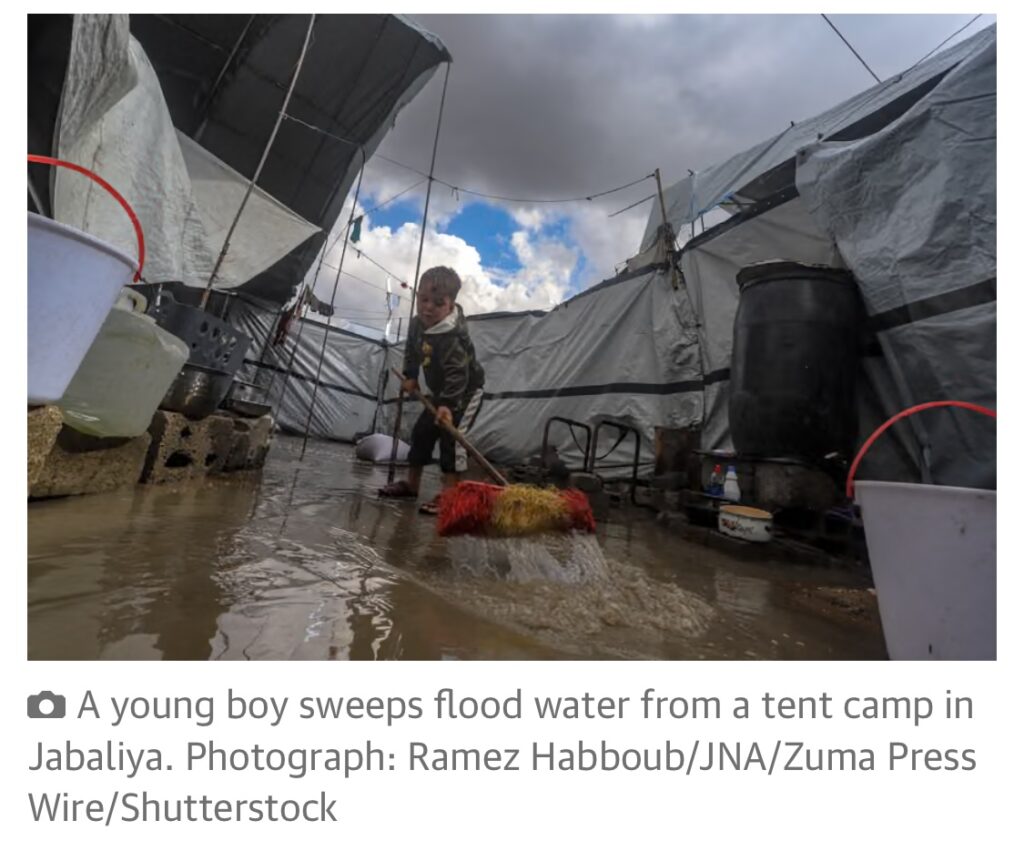
The image appears in the newspaper’s Gaza winter feature. Credited to Ramez Habboub through JNA, Zuma Press Wire and Shutterstock, it shows a boy sweeping water between makeshift shelters in Jabalia. The camera is positioned almost at ground level, giving the wet foreground considerable prominence while the shelters and clouds rise above him. Water spills from the broom at precisely the moment of exposure.
To my eye, it looks staged. That is my professional assessment of the photograph, not a claim that I was there and heard instructions being given. If it had arrived on my picture desk, I would have wanted to speak to the photographer about what happened before that exposure.
Look at the boy’s feet. The water immediately around them appears shallow. Now look at how much of the photograph the water occupies. Getting the camera down low has allowed a relatively shallow expanse to dominate the foreground. We cannot measure conditions across the camp from this frame, but we can see how effectively the photographer has used his position to emphasize the water.
Every experienced photographer understands this. I have spent decades choosing where to stand, when to crouch and what to include. The height of the camera can make an enormous difference to the impression a photograph creates. Here, the splash supplies movement, the broom supplies color and the child supplies the emotional focus. The picture desk has certainly been given plenty to work with.
People use brooms to clear standing water. My question concerns what this particular boy was doing for this particular camera. Was he already sweeping when the photographer arrived? Was he asked to move into position, face a certain direction or repeat the movement until the splash looked right? The photograph cannot answer those questions. The photographer can.
The placement deserves attention too. In the screenshot, the image sits between an account of restrictions on incoming supplies and descriptions of improvised flood defenses. In that setting, it carries an explanatory weight beyond the small patch of ground it actually shows. Readers are being given an image through which to understand the surrounding claims. That makes the circumstances of its production worth checking.
I have no objection to photographing hardship, and no interest in ridiculing a child whose family is living in a makeshift shelter. Shallow water can still soak bedding and make daily life unpleasant. Nor does warm weather afterward undo damage from rain. None of that relieves a photographer of the obligation to record events honestly or a picture editor of the obligation to ask how an unusually convenient frame came together.
The Guardian could resolve my questions by asking Habboub for an account of the shoot and examining the surrounding frames. If the boy was clearing water without direction, the newspaper can explain that. If he was asked to repeat an action or perform it for the lens, readers deserve to know.
As a picture editor, I would have wanted that explanation before congratulating anyone on the composition. The Guardian found room for the splash. It should find time for the questions.
Liked this article? Follow HonestReporting on Twitter, Facebook, Instagram and TikTok to see even more posts and videos debunking news bias and smears, as well as other content explaining what’s really going on in Israel and the region. Get updates direct to your phone. Join our WhatsApp and Telegram channels!
© Divuach Ne’eman R”A, 2025