Key Takeaways:
- Major news outlets have revisited the Nasser Hospital strike with lengthy investigations into Israel’s conduct and targeting decisions.
- Sky News and The Independent stressed that Israel had not publicly substantiated all of its claims about those killed, while overlooking Palestinian-source material that supports some of the IDF’s identifications.
- That material, published independently of the IDF, links several of the casualties to Hamas or Palestinian Islamic Jihad.
A year after an Israeli strike on Nasser Hospital in Khan Younis killed 22 Palestinians on August 25, 2025, major news outlets returned to the incident with lengthy investigations into what happened.
But some of that coverage omitted a significant part of the story: Palestinian sources themselves published material indicating that a number of those killed were affiliated with terrorist organizations.
On August 25, Sky News published an anniversary report declaring that “no one” had been held accountable for the strike. Although noting that Israel had said six of those killed were linked to Hamas, it added that the IDF “did not provide evidence” for that claim.
On August 23, The Independent published an extensive joint reconstruction of the attack centered on journalist Mariam Abu Dagga, who was among those killed.
The Independent went even further in questioning Israel’s account.
Citing Israeli military whistleblowers, The Independent reported that striking a surveillance camera would not ordinarily require additional authorization. Its sources nevertheless claimed that repeatedly firing on a hospital would have required approval at battalion level or higher, raising questions about how the Nasser Hospital strike was authorized.
The outlet further alleged that, after the strike, the military sought to establish links between some of those killed or wounded and Hamas. One source characterized this as “retrospective framing.”
The Independent also pointed to evidence that several of the men subsequently named by Israel held civilian jobs or had been involved in rescue efforts when they were killed.
In short, the reporting suggested that Israel had sought to justify the strike after the fact.
But that account leaves out important evidence.
A review of open-source material independent of the IDF appears to link some of the Nasser Hospital casualties to Hamas and Palestinian Islamic Jihad (PIJ).
What Israel Said
A day after the August 25, 2025 strike, the IDF released the results of a preliminary investigation.
The military said Golani Brigade troops identified what they believed was a Hamas surveillance camera positioned at Nasser Hospital. According to the IDF, troops believed the camera monitored Israeli forces and could help direct attacks against them.
The IDF also said six of those killed were terrorists, including one who had participated in the October 7 attack.
Israeli authorities identified the six as:
- Jum’a Khaled Jum’a al-Najjar, whom Israel said participated in October 7;
- Hisham Tayseer Ibrahim Quweder, identified as Hamas;
- Imad Abd al-Hakim Ali al-Shaer, identified as Hamas;
- Salah Yusuf Muhsin Barbakh, identified as Hamas;
- Muhammad Ahmad Salem Abu Hadaf, identified as Palestinian Islamic Jihad;
- Omar Kamal Shahada Abu Teim, identified as Hamas.
IDF Chief of Staff Lt. Gen. Eyal Zamir acknowledged shortcomings in the operation and ordered a fuller investigation.
Subsequent reporting challenged parts of the Israeli list. The Independent reported, citing Hamas officials, that Abu Teim had not been killed in the Nasser strike. It also reported that al-Shaer worked for Gaza’s Civil Defense and that Nasser Hospital described another individual named by Israel as a hospital employee.
But civilian employment does not preclude simultaneous membership in a terrorist organization.
Palestinian sources provide additional information that the anniversary reports largely ignored.
Palestinian Sources Link Some of the Dead to Hamas
One example is Salah al-Din Yusuf Mohsen Barbakh.
A Palestinian casualty database identifies Barbakh as a 30-year-old Khan Younis resident killed in the strike.
The IDF identified Barbakh as a Hamas operative. Evidence from sources outside the IDF appears to corroborate that identification.
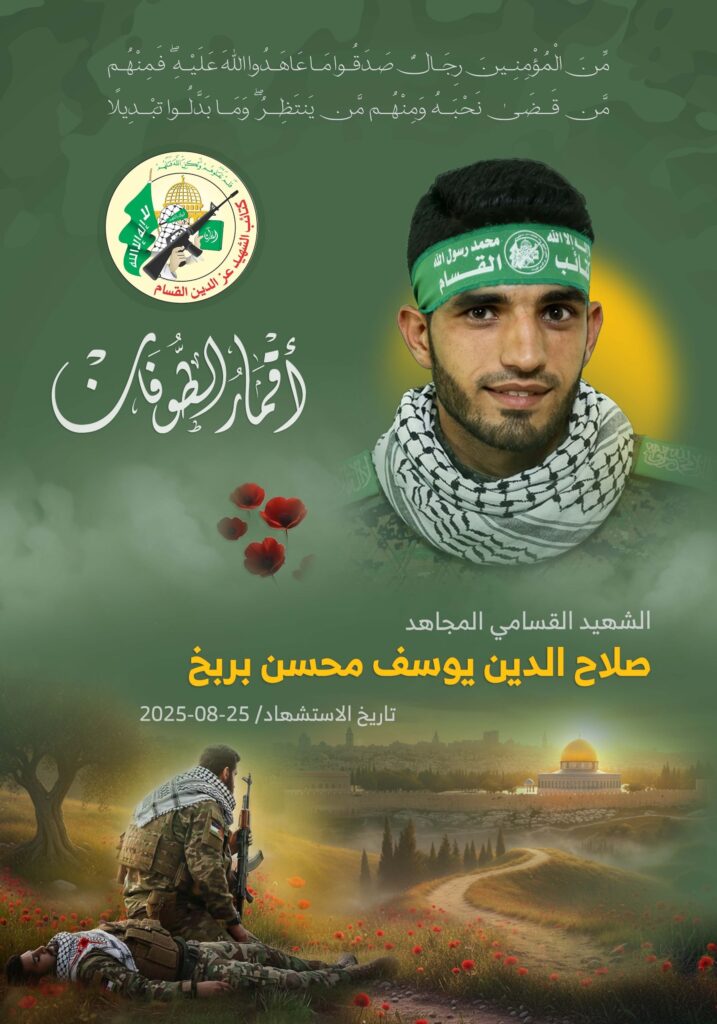
Barbakh also appears in a profile published by Aqmar al-Tufan, an Arabic-language Telegram channel that publishes detailed profiles of slain Hamas operatives.
That Palestinian-source material gives the IDF’s identification of Barbakh an independent evidentiary basis.
Then there is Imad Abd al-Hakim Ali al-Shaer.
The Independent devoted considerable attention to al-Shaer’s work with Gaza Civil Defense.
Its investigation reported that al-Shaer had just finished a shift when he joined other Civil Defense workers responding to the first strike. Video reviewed by the outlet shows him assisting at the scene before the second strike killed him.
The IDF identified al-Shaer as a Hamas operative.
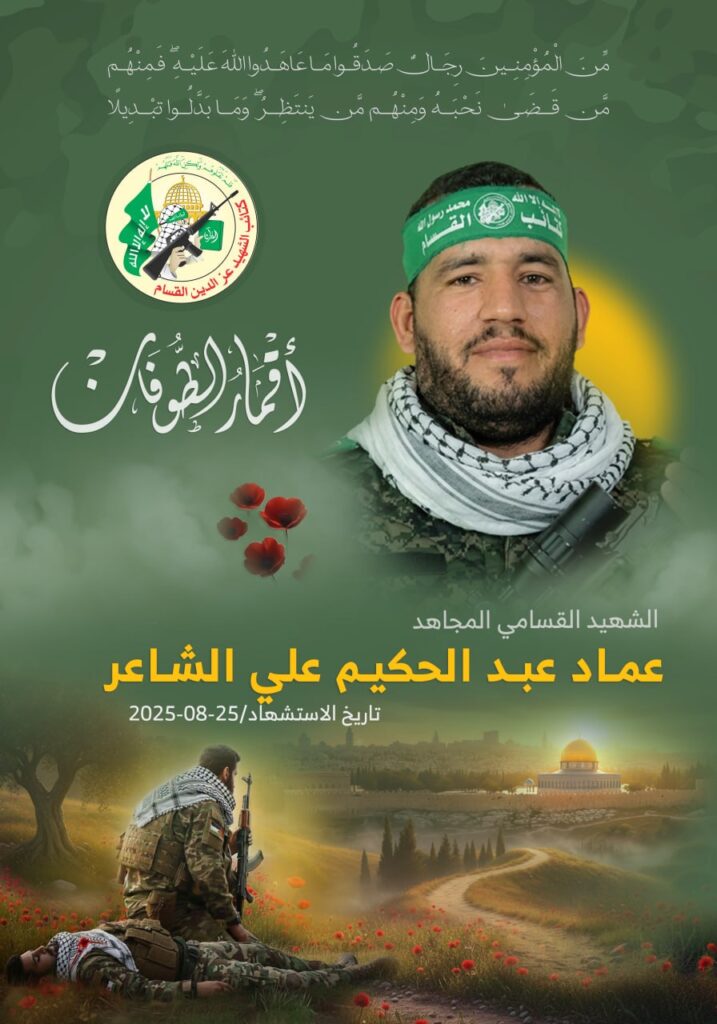
Open-source research into al-Shaer by HonestReporting board member Salo Aizenberg found an Aqmar al-Tufan profile that appears to identify him as part of Hamas’ military network. Meanwhile, photographs published on Facebook by an account under his family’s name, as well as those accompanying the Aqmar al-Tufan profile, which appear to show the same person.
The Independent instead emphasized al-Shaer’s Civil Defense work as evidence, casting doubt on the Israeli identification.
The article noted that multiple Civil Defense personnel identified al-Shaer as part of their rescue team and that video showed him actively participating in the response.
But civilian employment does not necessarily preclude membership in a terrorist organization.
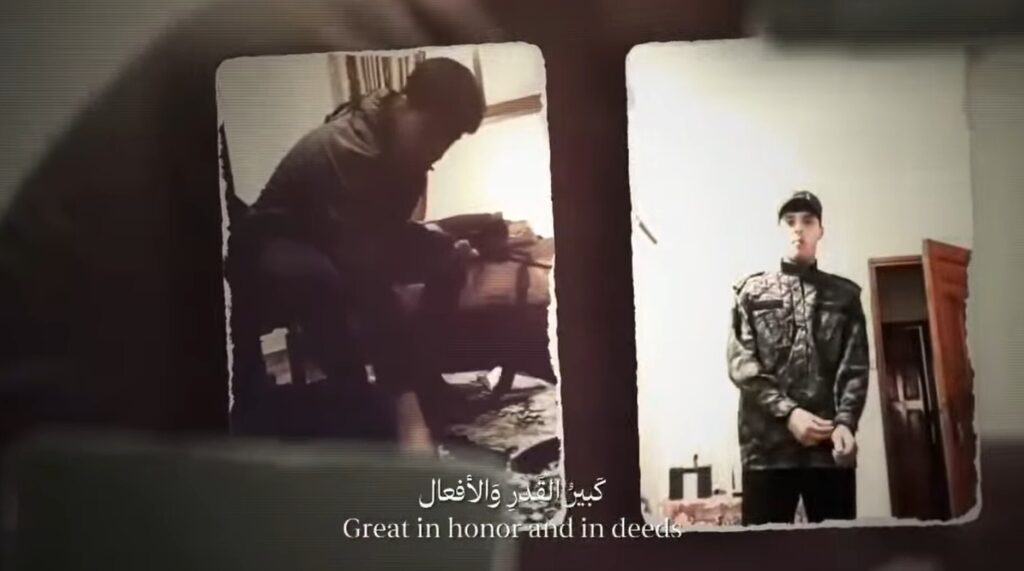
Another Palestinian killed in the strike, not mentioned by the IDF as a member of a terrorist group, is Ahmad Shaheen. A review by HonestReporting also uncovered material that indicate he had terrorist affiliations, including a memorial video published on Facebook that shows him wearing a military-style uniform and brandishing a rifle.
Evidence Links Muhammad Hadaf to PIJ
A similar trail exists for Muhammad Ahmad Salem Abu Hadaf.
Palestinian casualty documentation lists Hadaf as a 23-year-old Khan Younis resident killed at Nasser Hospital on August 25, 2025.
The IDF identified him as a PIJ operative.
Again, Palestinian sources appear to support that identification.
Material concerning Hadaf appears on a Telegram account associated with PIJ, which republishes content from the group’s online channels.
A separate Facebook post also provides another visual and identity reference for Hadaf, indicating he was a member of PIJ.
Questions About the Strike Remain
None of this resolves every question surrounding the Nasser Hospital strike. Those questions remain legitimate and should be addressed once the IDF completes its examination of the incident.
But another question also lingers: who was really killed at Nasser Hospital?
On that question, there has been far less appetite among media outlets scrutinizing Israel’s account to examine evidence that may support parts of it.
Sky News told readers that Israel claimed six Hamas-linked individuals were killed but “did not provide evidence.”
The Independent presented Israel’s identifications through the lens of an anonymous source who accused the military of “retrospective framing.”
Neither characterization fully accounts for Palestinian-source material that appears to corroborate at least some of those terrorist affiliations.
That material did not originate with the IDF. Palestinian factional and affiliated channels published it themselves.
Journalists are right to scrutinize Israeli military claims. But that scrutiny should also extend to evidence that complicates the narrative those claims are being measured against.
Omitting relevant evidence about the affiliations of some of those killed leaves readers with an incomplete picture of what happened.
A year later, the story remains incomplete without it.
Liked this article? Follow HonestReporting on Twitter, Facebook, Instagram and TikTok to see even more posts and videos debunking news bias and smears, as well as other content explaining what’s really going on in Israel and the region. Get updates direct to your phone. Join our WhatsApp and Telegram channels!
© Divuach Ne’eman R”A, 2025