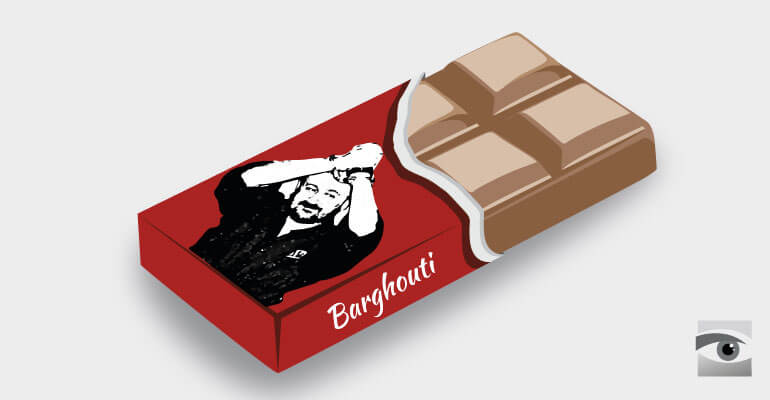
The release of a video purporting to show hunger striking convicted Palestinian terrorist Marwan Barghouti eating some candy and cookies in his prison cell has caused a predictable response from some quarters.
Palestinians claim that the video is a fabrication. Israeli officials, however, appear to have acknowledged that food was planted in Barghouti’s prison cell with the intention of getting him to break his hunger strike. Whether or not one agrees with the setup, Barghouti was under no obligation to “cheat” his hunger strike.
Given the wide release of the video footage, surely the media should give their online readership the opportunity to judge for themselves by linking to the video?
While reporting Barghouti’s midnight snacking as allegations, to their credit, the BBC, Washington Post, Telegraph and Newsweek embedded the video in their articles. While the New York Times did not do so, it, at least, included a clickable hyperlink to the video.
So which media outlets failed to do either in its story?
The Guardian and The Times of London.
The Guardian has previously had no problem embedding videos from various sources portraying Israel in a negative light. For example:
- A video showing Israeli teenagers dancing with guns at wedding and stabbing a picture of Palestinian child killed in an arson attack;
- A video released by B’Tselem showing the moment IDF soldier Elor Azaria shoots dead a wounded Palestinian terrorist in Hebron minutes after he had stabbed another soldier;
- A Palestinian video purporting to show an assault by IDF soldiers on AFP journalists at a West Bank demonstration;
- A B’Tselem video purporting to show an Israeli police officer kicking a nine-year-old Palestinian boy.
The Times has also promoted a small number of videos in the past, including the Elor Azaria shooting and a B’Tselem video appearing to show Israeli settlers shooting live ammunition at a group of stone-throwing Palestinians as Israeli soldiers look on. However, there are also examples of reports that refer to videos but, like the Barghouti story, don’t include the video itself or a link to the video from an outside source.
The media should be free to show videos which apparently show unacceptable behavior by Israelis. But it works both ways: why won’t The Guardian (and to a lesser extent, The Times) expose its readers to a video that calls into question the credibility of a prominent Palestinian figure?
Is The Guardian only interested in promoting one side of the conflict? If so, then there is a clear double-standard at work.
© Divuach Ne’eman R”A, 2025