Key Takeaways
-
Wikipedia is just not a site you visit. It is an infrastructure layer that reaches you through Google and AI, which turns coordinated editing into a fight over what reality looks like online.
-
On Israel-related pages, investigative journalist Ashley Rindsberg says a small cohort of experienced, ideologically committed editors has learned how to capture the most consequential topic space on Wikipedia, and lock in narrative framing that casual users cannot reverse.
-
Reddit is not just a forum. Rindsberg describes it as an upstream distribution engine where coordinated networks can seed content, amplify it through platform mechanics, and push it downstream into search results and AI outputs.
For years, HonestReporting has focused on the ways mainstream media reframes Israel, what gets emphasized, what gets ignored, and how bias quietly shapes public understanding. But the most powerful narrative engines today are not legacy newsrooms.
They are Wikipedia, Reddit, and artificial intelligence.
Those platforms do not just reflect the world. They increasingly define it. Wikipedia fills Google’s knowledge panels and dominates top search results. Reddit threads are pulled into search results and scraped into training data. Both are fed directly into AI large language models (LLMs) like ChatGPT and Grok. So when those systems tilt, the internet’s baseline reality tilts with them.
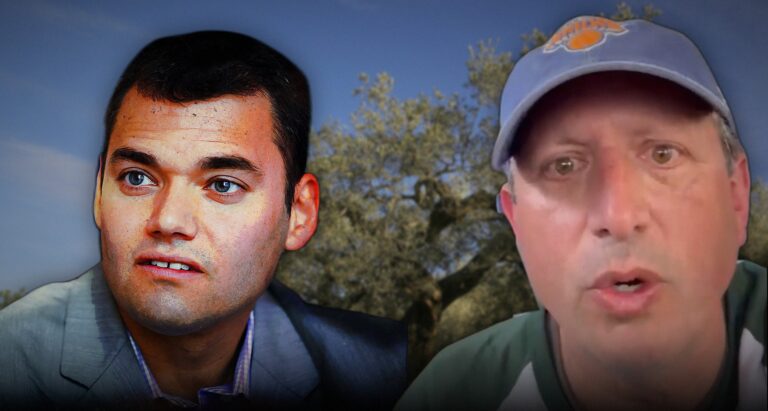
Ashley Rindsberg has been investigating how that shift happens. He is an investigative journalist and author, and the founder of Neutral Point of View, a project focused on how narrative power actually operates online. What he has found is not a series of random bad edits or isolated distortions. It is something closer to a structural vulnerability, where coordinated actors can reshape the “neutral” reference layer that millions of people treat as authoritative.
Wikipedia doesn’t wait for you to search it
Rindsberg’s warning starts with a simple observation: the average person believes Wikipedia is optional. In practice, it is unavoidable.
“A lot of people out there might be thinking to themselves, I don’t go to Wikipedia. But the reality is that Wikipedia comes to you.”
That is the heart of the problem as he sees it. Wikipedia no longer functions as a single website you consult. It functions as a foundational input into other systems. “It comes to you in the form of AI, which trains on its data,” he says. It also comes through Google, where Wikipedia tends to be the first result on countless queries and supplies much of what populates the knowledge panels that appear alongside search results. Those panels, which are ad-free, appear unbiased and authoritative. What Rindsberg reveals should convince everyone that on the most contested topics, they’re anything but neutral.
“We all kind of understand that we’re in an information warfare that’s going on all the time, all around us.” He is not describing occasional bias. He is describing a system whose incentives and mechanics can be exploited at scale.
“In this kind of environment where we are all fighting for ideological real estate,” he says, “it’s so easy to hijack the processes on the site that basically no longer function.”
For that reason, the rules and underlying assumptions upon which Wikipedia was founded no longer apply today.
The first clue was political bias, and it raised bigger questions
Rindsberg did not start in the Israel topic space. His investigation began with a study that suggested bias on Wikipedia was measurable and patterned. He encountered a study by machine learning researcher David Rosado focused on bias in AI systems, and Rosado’s findings on Wikipedia forced a new line of questioning.
“He produced this study showing that there is pervasive bias on Wikipedia,” Rindsberg says. In his reading, it showed a political trend: public figures on the right were more likely to be associated with negative sentiment and “bad-sounding terms,” while figures on the left skewed more positive.
“And I started to think to myself, like, if we’re seeing this show up in Wikipedia, which is supposed to be resistant to bias or to minimize bias,” he says, “there’s got to be a lot more to the story that we’re not seeing.”
The question was no longer whether Wikipedia contained bias. It was how bias becomes durable, how it is enforced, and who benefits when supposedly neutral reference material becomes ideological terrain.
Wikipedia has a public face and an institution behind it
One of Rindsberg’s core arguments is that it is impossible to understand the encyclopedia without also understanding the organization that owns it.
One part is the public-facing volunteer-edited platform. The second is the Wikimedia Foundation, the NGO that owns Wikipedia. The foundation was started in the early days of the organization to take in donations that fund the project. It’s since become a major institution with approximately a $200 million budget.”
Rindsberg argues that both layers have problems. On the editing side, he describes Wikipedia as “a hot zone of coordinated editing,” ranging from ideological coordination to paid editing aimed at manipulating reputations and improving search visibility.
“People understand that Wikipedia is by far one of the most valuable tools for SEO,” he says. “So they want to piece the action.”
On the foundation side, he describes an institutional ideological trajectory. Wikipedia’s culture, he says, reflected its geography and the kind of people it attracted. He stresses that most were well-intentioned, but he also says the institution hardened over time.
“I think 95% of those people were actually very well intentioned,” he says. “But over time, the organization becomes an institution. It has its own institutional ethos.”
He describes an inflection point in the mid-2010s. “Something really flipped in 2016, 2017,” he says, when the foundation “doubled down” and moved from a softer center-left lean to “something much more solidly on the left, the ideological left.”
Palestine-Israel articles: the “ideological war” inside Wikipedia
When Rindsberg turned his attention to Israel-related pages, he found what he describes as one of Wikipedia’s most intensely contested spaces. Inside Wikipedia, the topic area is often referred to as “PIA,” shorthand for Palestine–Israel articles.
“I would probably venture to say it’s the most contentious at this point,” he says, adding that “contentiousness is a euphemism. It’s an ideological war.”
In that topic space, he reported on a cohort he calls “the gang of 40,” a group of editors he describes as highly active, ideologically committed, and sophisticated in how they use Wikipedia’s rules and processes.
“I’ve reported and investigated what I call the gang of 40,” he says, describing “about 40 ideologically committed editors who edit almost entirely in PIA.”
He cannot confirm whether they coordinate off-platform, but he says their edits display a recognizable pattern that hints at de facto coordination at least. “They are extremely anti-Israel.”
The point, he argues, is not that they win occasional disputes. It is their sustained activity that results in control.
“What you end up with is a complete capture of that entire topic space,” he says.
The edits that change everything are often small
When people imagine Wikipedia manipulation, they picture obvious propaganda. Rindsberg says the more effective work is often quieter: language shifts, framing changes, the removal of context, the erosion of historical continuity.
Some edits are blunt, he says. He describes editors “remov[ing] just wholesale mentions of Hamas terror attacks,” or stripping references to “dozens and dozens of mentions of human rights abuses and crimes committed by the Islamic Republic of Iran.”
Other edits are subtler, but he argues they accumulate into a rewritten landscape. He cites one example: a change from “Hellenistic Judea” to “Hellenistic Palestine,” which is an anachronism.
But what he emphasizes is the strategy: reshaping the reader’s assumptions without triggering obvious alarm bells. “It’s these little shifts that shape the topography,” he says. In his view, that includes removing imagery and references that connect Jewish history to the modern state.
Why Wikipedia’s safeguards don’t stop capture
Wikipedia’s model is supposed to be self-correcting. It was established on the principle that many editors, acting in good faith, converge toward neutrality. Rindsberg says that assumption does not hold in an era where coordinated factions treat the platform as strategic terrain.
“Wikipedia is a product of a lot of idealism from the early internet,” he says. For a time, he believes it may have worked. “I think it possibly did work for 10 to 15 years.”
But he argues that the information environment is now fundamentally different. Wikipedia is too influential, too central, and too easy to game.
“It’s so easy to manipulate them and to hijack the processes on the site that they basically no longer function.”
He also argues that Wikipedia’s idea of consensus has shifted. Early consensus meant representing mainstream viewpoints and clearly labeling fringe claims. Today, he says, outcomes can be determined by headcount and stamina.
“Wikipedia works by a sort of head count,” he says. In his description, an admin can look at a dispute and decide based on how many editors argue for each side. “But that’s actually not [the] consensus. That’s just… brute force.”
“You will not succeed”: why casual editors can’t fix contested pages
A natural response to all of this is to ask why more people don’t simply correct it. Rindsberg’s answer is bleak: because the system is designed in a way that rewards experience, procedural mastery, and time.
“You will not succeed in that, unfortunately,” he says.
Wikipedia has a steep learning curve, especially in contested topic areas, where editors can be blocked for procedural missteps. He compares it to navigating a laser maze.
“To get to a point where you can edit contentious topics effectively, you need to be able to maneuver between the lasers.”
In the Palestine–Israel topic area, he says there are thresholds before you can even meaningfully participate.
“Even to get to the point where you can edit within Palestine-Israel articles, you need to have 500 confirmed edits,” he says, describing it as “a high bar” that could take an average person a year to reach.
And even then, he argues, newcomers are outmatched. “Two or three [editors] will swarm in,” he says, describing veteran editors who know exactly how to “outlast you, exhaust you, and trip you up.”
Unless someone is willing to spend years learning the system and fighting inside it, he says the odds of changing the narrative on high-conflict pages are “extremely low.”
The Zionism page: defining a movement for the online world
One example Rindsberg returns to is the Wikipedia page for Zionism, which he describes as possibly the most important definitional resource on the subject online.
“Most likely, at this point, [it] is the single most important resource defining Zionism to the online world,” he says.
He says the lead section was shaped to equate Zionism with ethnic cleansing. And then, he says, something even more consequential happened: the framing was frozen into place through a procedural maneuver.
“They do this thing which is quite shocking,” he says. “They take this concept of a moratorium, and they use it to lock the opening section, the lead section of the article.”
That matters because most readers never go deeper than the lead.
“It’s what most people, 90% of people, are just going to read,” he says. It also matters because the lead is what gets pulled into AI systems and other downstream products.
He says the lead was frozen for a year, a period that aligned with the minimum duration of topic bans that were about to be handed down against several key editors.
In his telling, the move was tactical: lock the definition, wait out the consequences, return to defend it later.
“Until they become unbanned, nobody else can touch it,” he says.
Rindsberg calls the maneuver “tactically brilliant,” while also presenting it as evidence that Wikipedia’s neutrality systems can be outplayed.
Gaza genocide and the power of Wikipedia’s “voice”
Another case study he describes involves how Wikipedia can present contested accusations as settled fact. Rindsberg says Wikipedia can speak in two modes: attributed claims and Wikipedia’s own authoritative voice.
“’Many people say that Israel committed genocide’ is a different statement from saying ‘Israel committed genocide’,” he explains.
The second is what he calls “wiki voice,” where Wikipedia asserts something as if it is simply established reality. “You’re speaking in Wikipedia’s own authoritative voice.”
Rindsberg argues that the “Gaza genocide” page was shifted toward that authoritative mode, transforming a disputed allegation into something Wikipedia states directly. Editors decided to flip it from saying “groups allege” to flat out “Israel committed genocide in the war,” he says.
His argument is not about litigating the legal claim. It is about the informational posture: Wikipedia declaring a contested claim as fact, in its own voice, because a determined group had the manpower and procedural skill to force it through.
“It’s not because they selected experts on the Middle East,” he says. “It’s just because enough members worked on this hard enough, for long enough, to get it done.”
He also recounts what he describes as a failed attempt by Wikipedia co-founder Jimmy Wales to intervene on related content, only to be rebuffed through internal processes.
“He, too, was defeated,” Rindsberg says. “It gives you a sense of how broken the system is when even its co-founder cannot make any headway.”
Reddit as an upstream engine for AI and search
From Wikipedia, Rindsberg shifts to Reddit, which he argues operates as a different kind of narrative machine. Wikipedia capture can be ideological and self-contained. Reddit, in his view, is more consciously operational, built to move content downstream into systems that index it.
“On Reddit, I think it’s a different kind of operation. Much more external influence and a much higher degree of mindfulness of the intent to affect downstream platforms.”
He describes the subreddit dedicated to Palestinian topics, “r/Palestine,” as a “base camp” for a broader network.
His claim is that material is pulled from Telegram channels belonging to terror organizations like Hamas, Hezbollah, and about a dozen others. It’s then translated and posted to Reddit, and then algorithmically boosted through coordination.
Then comes amplification. He describes an organizing layer on Discord, used for coordinated posting and coordinated upvoting. “They run command and control on that Discord [server].”
The mechanism is simple but effective: coordinate engagement to push content into visibility, and then let indexing do the rest. “When somebody does a post that they find important, everyone goes and likes it,” he says. “So it bumps it up through the algorithm.”
What makes this high impact, in his view, is how tightly Reddit content is integrated into AI and search. “Reddit is so heavily indexed… that it’s 1 to 1,” he says, meaning that posts that perform well can become part of the informational substrate downstream systems draw from. This refers to the results pulled by Google Search, Gemini, ChatGPT, or Perplexity, for example.
He offers a concrete example of what this can look like in real life: users asking AI tools for recommendations. “When you ask it a question like who should I donate money to if I want to help children in Gaza, you get this terror-linked charity that these guys had seeded upstream.”
Foreign financing and the limits of proof
When asked whether state actors are funding these operations, Rindsberg is careful. On the Reddit operation he discusses, he says plainly, “We don’t have evidence that there is.”
He adds that it would not surprise him if it turned up, but he is explicit about the evidentiary limits. “To get to that level requires an enormous journalistic task force or a government investigation,” he says, explaining that state-level attribution often requires subpoena power and access to private records.
He mentions a group he says his work has identified elsewhere: “Tech for Palestine,” which he describes as a post–October 7 network tied to an Irish entrepreneur named Paul Biggar, where he says he has found “open coordination” across platforms in Discord servers. But he distinguishes that from proving direct state sponsorship.
Are AI companies paying attention?
Rindsberg expects that most AI companies are not focused on upstream poisoning because they are locked in a competitive race to improve models.
“Probably not,” he says when asked if they know. “They’re in an arms race, and probably their only focus is to build better and better models.”
He treats Google differently, framing it as being intertwined with Wikipedia in a way other downstream players are not. He calls their relationship “symbiosis” and describes it as a feedback loop.
“Wikipedia exists as a function of Google,” he says. Without Google’s search prominence, he argues, Wikipedia would lose much of the traffic that drives donation revenue.
He describes how Wikipedia also benefited Google by making search results look credible. “When you get a Wikipedia article that looks neutral, you’re like, okay, this is actually really good content,” he says. “And Google got all that value for free.”
In his view, that once-useful relationship may now become a reputational risk. “I would hope that Google is starting to understand that Wikipedia is now becoming its own sort of liability,” he says.
Iran and Wikimedia Commons: a developing influence channel
In one of the most concrete examples about state-linked material, Rindsberg describes patterns he says point in the direction of Iranian regime influence. He does not claim definitive attribution but cites a developing pattern.
“We have a pattern of evidence that shows some kind of coordination in the direction of the regime,” he says, describing edits that remove mention of human rights abuses and activity that shapes key Iran-related pages.
Then he points to Wikimedia Commons, the media repository that supplies images and videos across the Wikimedia ecosystem. “A mass upload of at least 10,000 to 15,000 individual images and videos produced by Iranian state and state-affiliated media,” he says.
He names sources, including the @Khomeini.ir X account, Tasnim, Mehr, and major news agencies, which he describes as state-owned, and says some of the uploaded materials are watermarked. There are also images carrying threats, including threats against the US president and threats against Israel.
“These are being uploaded by the thousands to Wikimedia Commons and sort of becoming a distribution point of this type of material outside of their own little walled gardens in Iran.”
He explicitly says he cannot confirm whether the uploaders are Iranian government personnel. “Is that the Iranian government? It could be,” he says. “It could be some third party, I don’t know.”
His point is the operational effect: the Wikimedia ecosystem becomes a hosting and distribution layer for state media assets that can then be used and circulated beyond their original channels.
What does media literacy look like when the reference layer is compromised?
The most frustrating part of the story is that there is no single fix available to the average user.
“There’s not a code. There’s not like a turnkey solution,” he says.
His advice is closer to a mindset: dig when you can, recognize patterns, and seek out trusted communities and investigative sources that specialize in exposing manipulation and narrative capture. “It’s about seeking out high-quality sources,” he says, including organizations like HonestReporting and his own project.
“You won’t be able to do that on every single case,” he adds. “But it’ll sort of train you to identify a pattern that looks like it’s something of that nature.”
You can find Rindsberg’s work on his X account, Substack, and the website Neutral Point of View: www.neutralpov.com
Liked this article? Follow HonestReporting on Twitter, Facebook, Instagram and TikTok to see even more posts and videos debunking news bias and smears, as well as other content explaining what’s really going on in Israel and the region. Get updates direct to your phone. Join our WhatsApp and Telegram channels!
© Divuach Ne’eman R”A, 2025