Key Takeaways:
- Internalized anti-Jewishness, not “self-hatred,” better explains why some Jews adopt narratives that diminish, deny, or weaponize their own Jewish identity.
- Centuries of Jew-hate, trauma, and external definitions of Jewishness have created conditions in which anti-Jewish ideas can be absorbed by Jews themselves.
- Understanding the origins of internalized anti-Jewishness should foster compassion without removing personal responsibility or the need for healthy communal boundaries.
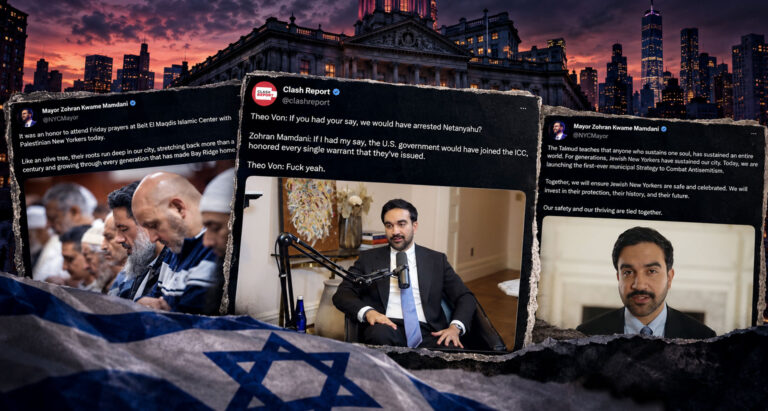
In July 2025, the Israeli historian Omer Bartov, a scholar of the Holocaust and of genocide, a man born and raised in Israel who served in its army, told the world that the Jewish state was committing genocide in Gaza. He framed it as an act of Jewish conscience: never again, he insisted, must mean never again for anyone. This year, in Michigan, a group of young Jews began campaigning for Abdul El-Sayed, a Senate candidate who has called the Israeli government “evil” and repeatedly declined to say whether Israel has the right to exist as a Jewish state. They called themselves “Jews for Abdul.” Their reasoning, one supporter explained, was that “their Judaism teaches them” to build alliances with the oppressed rather than “circle the wagons.” These are just two examples of countless phenomena that can be identified throughout thousands of years: Jews who turn on their own.
Not Self-Hatred
Before we explore the reasons for this phenomenon, we should discuss terminology. I reject the label “self-hating Jew.” I would rather speak of internalized anti-Jewishness. The former mistakenly suggests that the problem originates within the Jew themselves. It implies there is something inherently wrong with this person, that they have looked at themselves and found something to despise. But the hatred, or, in less extreme cases, the shame or discomfort, did not originate in them. It was put there.
It is also the case, as the Jews for Abdul example demonstrated, that most people exhibiting internalized anti-Jewishness do not actually hate themselves. Many feel genuine pride in their Jewishness. The problem is that their understanding of what Jewishness is has been shaped and defined by the wider world rather than by the Jewish people themselves. As a result, they often direct their hostility not at themselves, but at Jews who refuse to conform to that distorted understanding of Judaism.
Jew-hatred is the oldest hatred in the world. For two thousand years, the societies in which Jews have lived have transmitted a fantasy version of the Jew: greedy, disloyal, conspiratorial, alien, dangerous. You do not have to be taught these ideas in a classroom to absorb them. They are spread through culture, language, and the assumptions of the world. And Jews grow up inside that world too. As the writer Theodor Lessing observed a century ago, if you tell a people for long enough that they are dogs, some of them will eventually begin to believe it. If we understand that non-Jews who grow up in anti-Jewish environments, even the most subtle, will likely absorb anti-Jewish ideas, we must also recognize that Jews in those same environments can do the same.
The Black American writer James Baldwin described exactly this process in his own community: “What the world does to you, if the world does it to you long enough and effectively enough, you begin to do to yourself.” That is the mechanism. It is not weakness, and it is not treachery. It is what happens to any minority dealing with generations of hostility. We see the same pattern in the internalized homophobia of gay men who despise anything “effeminate,” and in the internalized racism psychologists have long documented in Black communities. If it exists there, why on earth would it not exist among Jews, the target of the world’s most enduring prejudice?
So here is a working definition, the one I use in my book Reclaiming Our Story: The Pursuit of Jewish Pride: internalized anti-Jewishness is what happens when Jews absorb non-Jewish perceptions of Jews, Jewishness, and Judaism, and allow the non-Jewish world to define our story.
The crucial word is absorb. The problem begins outside the individual Jew and, through something like osmosis, passes through and lodges inside. It is not a Jewish flaw. It is a non-Jewish hatred that has found its way into Jewish minds.
How It Gets In: The Distorted Mirror
Our sense of who we are is shaped, often in large part, by the reflections other people show us. Regarding the relationship between the majority and minority, this is an almost natural part of the power dynamic that exists. The majority creates palatable versions of minority identity. The mirror held up to Jews was silvered by a world that has spent millennia painting a fantasy Jew. When we look into it and mistake the fantasy for our reality, we absorb a version of ourselves authored by people who do not understand us and, generally speaking, do not wish us well.
In Reclaiming Our Story, I called this the Broken Mirror. I have come to think a better word is distorted. A broken mirror is shattered. You look in, the image is obviously wrong, and you turn away. If that were the mechanism, this would all be easy to fix. But that is not what happens. Bartov does not look into the mirror and recoils. The Jews for Abdul do not see a stranger. They look, and they recognize themselves. Think instead of a funhouse mirror, the kind that stretches you tall or short. Wide or narrow. What unsettles you is not that the reflection is unrecognizable, but that it is you, warped out of all proportion. The distortion works precisely because it begins with recognition.
Take the oldest example: the reduction of the Jewish people to “a religion.” With Emancipation in the eighteenth and nineteenth centuries, the non-Jewish world offered Jews a bargain. You may join our nations as free citizens, on one condition: stop being a people. Be a faith instead, distinguished only by what you believe on a Saturday. And when Jews looked into that mirror, they recognized themselves, because it is true that we have religion. That fragment was real, so they accepted the frame and, in doing so, quietly amputated the rest: our peoplehood, our nationhood, our indigeneity to the Land of Israel, the fact that we are an ancient Middle Eastern people and not merely a congregation. The mirror smuggled in a falsehood behind one honest detail. That is the trap, and it is why you cannot argue people out of it with facts alone. The fragment they are clinging to is genuinely theirs.
Why the Reflection Sticks
None of this would work if we were not primed to accept it, and we are. Understanding why is the difference between dismissing these Jews and actually seeing them.
Start with trauma. Jews carry the inheritance of the longest campaign of hatred in human history: expulsions, inquisitions, pogroms, and, within living memory, an industrialized genocide. That kind of history does not stay in the past. It is passed down in stories and silences and, the research increasingly suggests, in the body itself. And trauma has a logic. When something appears, over and over, to be the source of your danger, part of you longs to put it down. For some Jews, in time, Jewishness itself begins to feel like the thing that brings the hurt, and the deepest wish becomes to set it aside and finally be safe. Acceptance by the wider world stops being a preference and starts to feel like survival.
This is why the bargain is so hard to refuse, and here is its cruelty: the acceptance is never actually delivered. The world says shed your specificity and we will let you in, and Jews have shed and shed, our names, our noses, our nationhood, our God, and it has never been enough. Theodor Lessing caught the trap exactly. We are called parasites, so we leave; called middlemen, so we take up farming; called cowards, so we become the finest soldiers, and still we are told we are only tolerated. The good Jew, in the end, is still a Jew. But the hope is so intoxicating, and the alternative so exhausting, that people keep paying for a prize that is never handed over.
Then there is the oldest reflex of all. We blame ourselves. There is something remarkable in the Jewish habit of introspection, the yearly accounting of Yom Kippur, the liturgy that asks what we did wrong; it has kept us morally awake for three thousand years. But aimed in the wrong direction, it becomes a weapon against us. When the world hates us, the trained instinct is to ask, “What did we do to deserve this?”, as though the hatred were a verdict rather than a lie. A people schooled to look inward for the fault can also create a people primed to accept the world’s indictment as its own.
Put these together, a deep wound, a reward forever promised and never given, and a reflex to blame ourselves, and you have a community exquisitely prepared to look into a distorted mirror and believe what it shows.
How it Shows Up: Diminish, Deny, Deploy
Internalized anti-Jewishness expresses itself in three broad ways. Jews diminish their Jewishness, deny it, or deploy it as a weapon.
Diminishing is the quietest and most common. It is the Jew who keeps their head down, who is quick to say they are “not really that Jewish”, who feels a flush of embarrassment at anything too visibly, particularly Jewish, who wants above all to be seen as “just like everyone else”. It is the instinct to make oneself smaller and more palatable, to shave off the specificity the world finds awkward. These Jews, like the Jews described under Deploy, can feel pride in their Jewishness because we do not exist within the binary of shame or pride. We can, and often do, feel both at the same time. I share my own experience to illustrate this example: I was raised in a deeply Jewish and Zionist home. My brother and sister made Aliyah, with my brother serving in the IDF for ten years. I worked for a Jewish organization educating young people in Scotland about Israel and Jewish history. And still, when discussing my Jewishness with my non-Jewish friends at university, I told them, “I am Jewish but…”. “I am Zionist but…”. Why? Because I wanted them to recognize my Jewishness but for it not to mark me out as different. To put it plainly, I wanted to be accepted.
Denying goes further. It is not the instinct to make one’s Jewishness smaller, but to reject part or all of it altogether. Historically, this often meant conversion. Johannes Pfefferkorn abandoned Judaism for Christianity and became one of the fiercest opponents of the Jewish people, while huge numbers of German Jews converted to Christianity during the nineteenth century, part of well over 100,000 conversions across Europe, in the hope that, if they ceased to be Jewish, they would finally be accepted. Today, this form still exists, but it more commonly manifests differently. Rather than rejecting Jewish identity entirely, it rejects one of its central pillars: the Jewish connection to the Land of Israel. Once again, to do so requires accepting a story about ourselves written by others, one in which Jews are recast as colonists in their own ancestral homeland and one of the oldest and most enduring elements of Jewish identity is dismissed as illegitimate.
Deploying is the most striking, and it is what people usually mean when they talk about Jews “turning against their own.” Here a Jew uses their identity as a credential. “As a Jew,” I tell you, this community is guilty. The Jewishness is not shed. It is brandished, precisely because a Jewish voice is uniquely useful to those making the case against Jews. This is why anti-Israel campaigns prize Jewish spokespeople so highly, and why a “Jews for Abdul” is worth more to a campaign than its numbers alone would suggest.
Now the two opening scenes become clearer. When Bartov invokes “never again” to brand the Jewish state a perpetrator of genocide, he is holding a genuine fragment of Jewish moral inheritance, the horror at mass death, the duty to remember, and deploying it inside a frame handed to him by a world that has found a newly respectable grammar for its oldest hatred: antizionism, in which the single Jewish country among two hundred nations is uniquely illegitimate and uniquely murderous. The Jews for Abdul are doing the same with a different fragment. That Judaism cares about justice and the stranger is no fabrication; it runs right through our tradition. But the mirror that tells them the highest form of Jewish justice is to back a man who will not grant that their own people deserve a state is held by a coalition whose price of admission, for Jews specifically, is the surrender of Jewish specificity. Every other group may arrive whole. Jews must leave their peoplehood at the door. Because the reflection contains something they rightly recognize as their own, they mistake the amputation for authenticity, and feel more Jewish at the very moment they are being asked to become less.
Good Jews and Bad Jews
None of this would be so durable if it were not rewarded. The world that offers Jews the distorted mirror sorts us into “good Jews” and “bad Jews”. The good Jew keeps the palatable fragment, the ethics, the memory, the social conscience, and sheds the specificity the world finds indigestible: the nation, the land, the tribe, the refusal to disappear. In return they are applauded, platformed, held up as the enlightened kind of Jew. The bad Jew is the one who insists on the whole of themselves at once, and in the mirror held by others, wholeness itself becomes the offense. That applause is a powerful drug, and it is administered precisely to those Jews willing to police the rest of us.
Here is the part that is hardest, and most important, because it has two halves that have to be held together. Despite the damage they inflict, the Jews I have described are not just the villains of this story. In a real sense they are also its victims. Bartov, the young activists in Michigan, did not invent the hatred they carry. They inherited it from a world that has hated Jews for as long as there have been Jews, and many of them are, in the deepest sense, sincere. That sincerity is not evidence that they are right. It is evidence of how completely the distortion has done its work.
And yet. Understanding where a harm comes from is not the same as excusing it. A casualty can still cause damage, and a wound is not permission. We are all shaped by forces we did not choose, and we are still answerable for what we do with them. This is especially true of those who Deploy. There is a real difference between the Jew who quietly shrinks from their Jewishness and the Jew who stands on a platform and lends their Jewish name to the case against their own people. The first is mostly hurting themselves. The second is doing the work of our enemies, and no account of their pain erases the harm of that choice. To treat every Jew who acts against the community as a helpless product of history is its own quiet insult, because it strips them of the dignity of being moral agents. Compassion for the wound and accountability for the deed are not opposites.
A Broad Synagogue
This is why the Jewish world needs boundaries, and needs them now. We are, and should be, a broad synagogue. We argue, we disagree, we contain every kind of Jew, whether their connection is theological, cultural or national, left and right, and that endless internal argument is one of the oldest and most beautiful things about us. But a broad synagogue is still a synagogue, and a synagogue has walls. There is a difference between disagreement within the family and picking up the tools of the people who hate us and turning them on our own. Criticism of Israel, of our leaders, of our institutions, offered as a Jew who wants their people to flourish, belongs firmly inside those walls. Lending your Jewishness to a movement that denies your people should exist at all does not. Drawing that line is not a purity test. It is what every healthy community does. It decides what it is, and therefore what it is not. A people with no walls is not infinitely welcoming. It is simply undefended.
The way out, then, is not only condemnation nor limitless tolerance. It is clarity, and it begins by remembering whose hands are on the mirror. The reflections that have taught Jews to see ourselves as a mere religion, or as an awkwardly particular people who would be so much more welcome if we would only universalize ourselves out of existence, were not authored by us. They were authored by a non-Jewish world that has never had the right to define us, and never will. Only Jews get to decide what it means to be a Jew, which means we also get to decide, together, what we will carry into our own house and what we will leave at the door.
So when we next see Jews who seem to have turned against their own, we must resist the easy answer. What we are watching is not simple treachery, and it is not innocence either. It is the oldest hatred in the world, doing what it has always done, except this time from the inside, through people who are at once its casualties and, for what they choose to do with it, responsible. The task is not simply to condemn it, nor to excuse it, but to understand it. Only then can we begin to challenge it.
Liked this article? Follow HonestReporting on Twitter, Facebook, Instagram and TikTok to see even more posts and videos debunking news bias and smears, as well as other content explaining what’s really going on in Israel and the region. Get updates direct to your phone. Join our WhatsApp and Telegram channels!
© Divuach Ne’eman R”A, 2025