

Key Takeaways:
- Coverage by major outlets emphasized restrictions on Christians and Muslims while underplaying equivalent limitations on Jewish worship, skewing audience perception.
- Israeli security measures were applied universally across holy sites due to real threats, but selective framing made them appear discriminatory rather than operational.
- The absence of visual and contextual evidence – particularly from the Western Wall – removed critical comparisons, reinforcing a misleading narrative of unequal treatment.
As Easter and Passover converged in Jerusalem in the shadow of an active regional conflict, entry to the Old City was severely restricted. Israeli authorities cited elevated security risks, including the threat of ballistic missile fire and the absence of sufficient shelter infrastructure in densely populated religious areas.
Within hours, international coverage focused on the visible impact of those restrictions. The question is not whether limitations were imposed, but how those limitations were presented to global audiences.
What Actually Happened
As the war escalated, entry into key religious sites in Jerusalem’s Old City was significantly restricted.
This included the Church of the Holy Sepulchre, the Temple Mount and Al Aqsa Mosque compound, and the Western Wall Plaza.
The restrictions were applied broadly, reflecting operational realities:
- High-density civilian environments
- Limited access to protective shelters
- Elevated threat conditions linked to regional hostilities
As a result, major religious gatherings across all faiths were curtailed. Most notably, the Priestly Blessing at the Western Wall, which typically draws thousands during Passover, was disrupted.
What Was Reported
Coverage from CNN, led by Jim Sciutto, emphasized the absence of Christian and Muslim worshippers.
“On a typical Easter Sunday, these alleys would be crowded with Christian pilgrims… but we found… different rules now for different holy sites.”
The report stated:
“No Muslim worshippers… are allowed inside” the Dome of the Rock compound.
CNN’s @jimsciutto claimed Israel has “different rules for different holy sites.”
That’s not true.🧵 pic.twitter.com/8Nr4etJkXy
— HonestReporting (@HonestReporting) April 7, 2026
Coverage from Sky News, reported by Diana Magnay, reinforced this framing, describing an “Easter unlike any they have seen before” and highlighting the closure of access to Christian and Muslim holy sites.
View this post on Instagram
Both reports referenced limitations at the Western Wall. However, the narrative weight remained focused on Christian and Muslim access.
What Was Omitted or Underweighted
The key omission was structural rather than factual.
There was no equivalent emphasis on:
- The closure of the Western Wall Plaza
- The disruption of the Priestly Blessing
- The scale of restricted Jewish worship during Passover
These are not peripheral details. They are central to understanding whether restrictions were selective or universal.
Without proportional inclusion of these elements, the reporting lacked the comparative framework required for accurate interpretation.
The Missing Image: What Was Not Shown
The most revealing element of the coverage may not be what appeared on screen, but what did not.
While reports focused on restricted access to Christian and Muslim sites, there was no widely circulated broadcast imagery showing the Western Wall Plaza under the same conditions.
This absence is significant.
During Passover, the Priestly Blessing at the Western Wall is one of the largest recurring public religious gatherings in Israel. Its disruption represents a major limitation on Jewish worship.
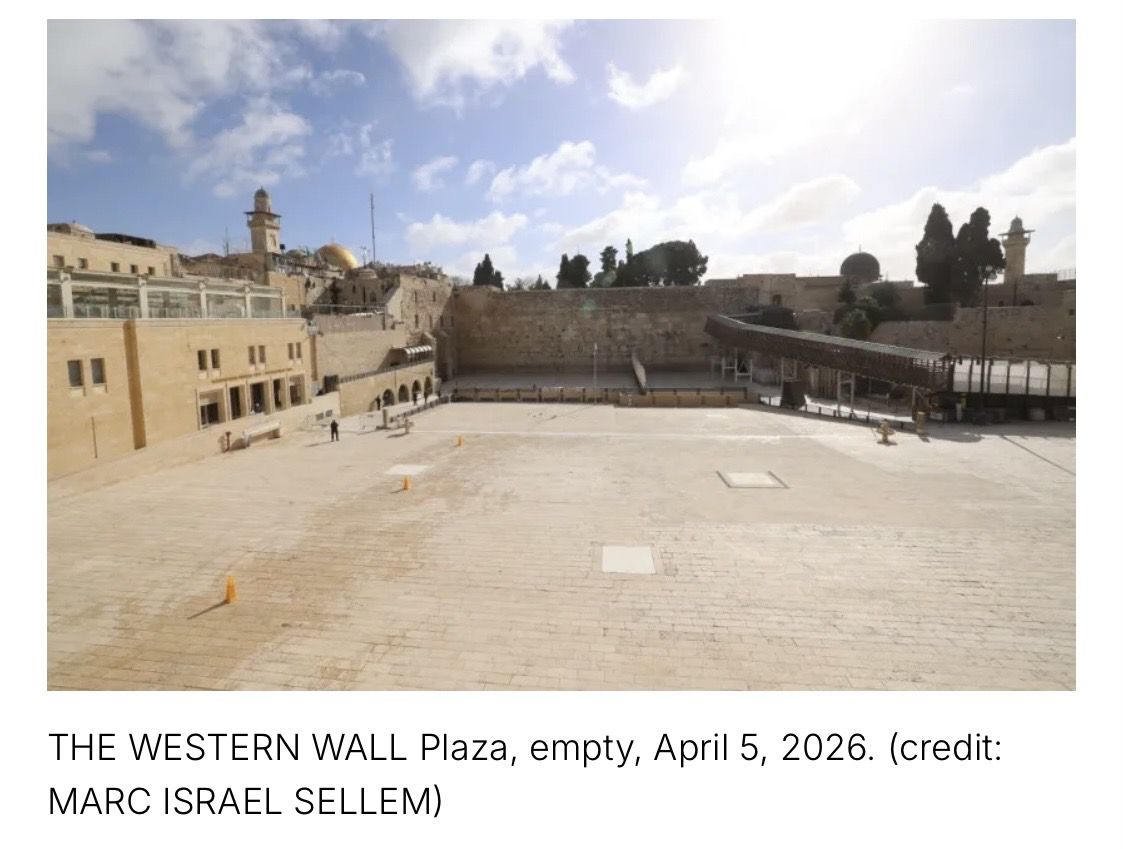
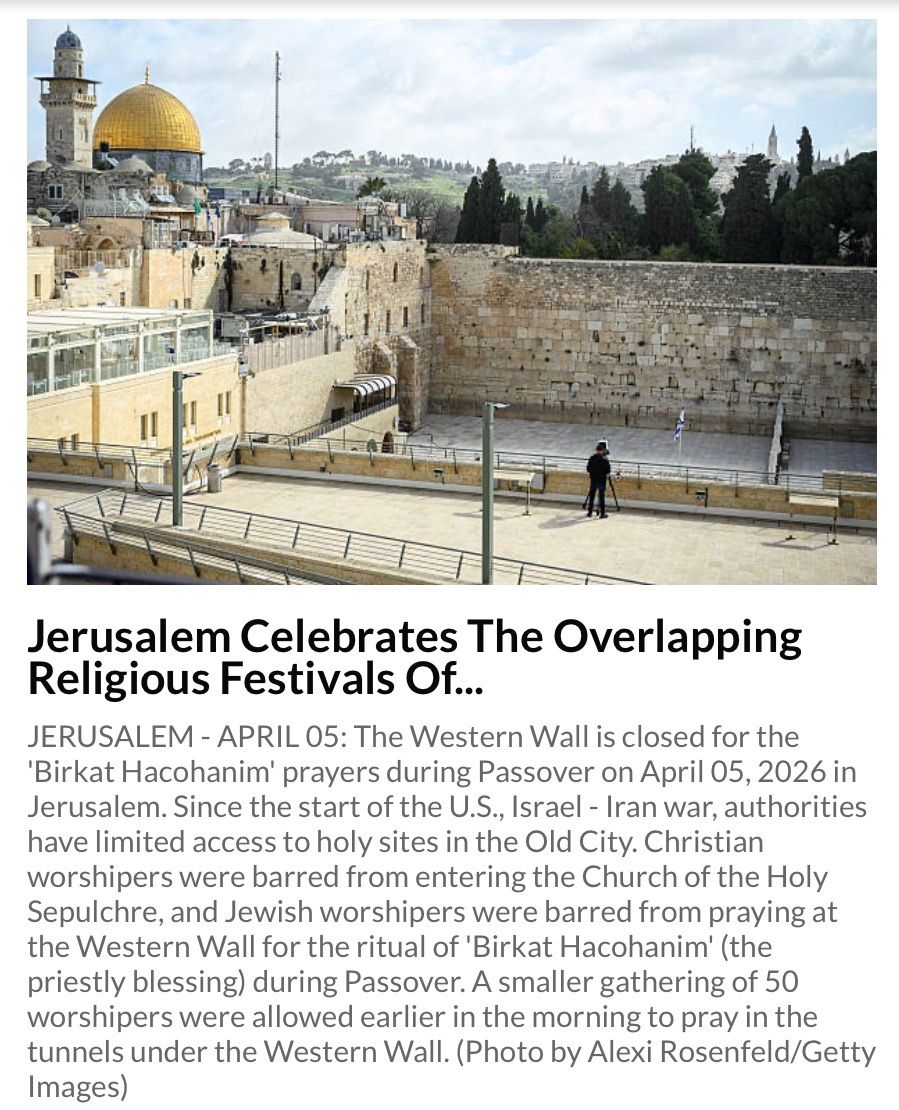
Yet coverage did not visually document:
- An empty Western Wall Plaza
- The absence of the Priestly Blessing gathering
- The full impact of restrictions on Jewish worshippers
This omission removes a critical point of comparison.
Comparable imagery has been available in previous periods of restriction, including during the COVID-19 pandemic. In those cases, visual documentation played a central role in conveying the scale of disruption.
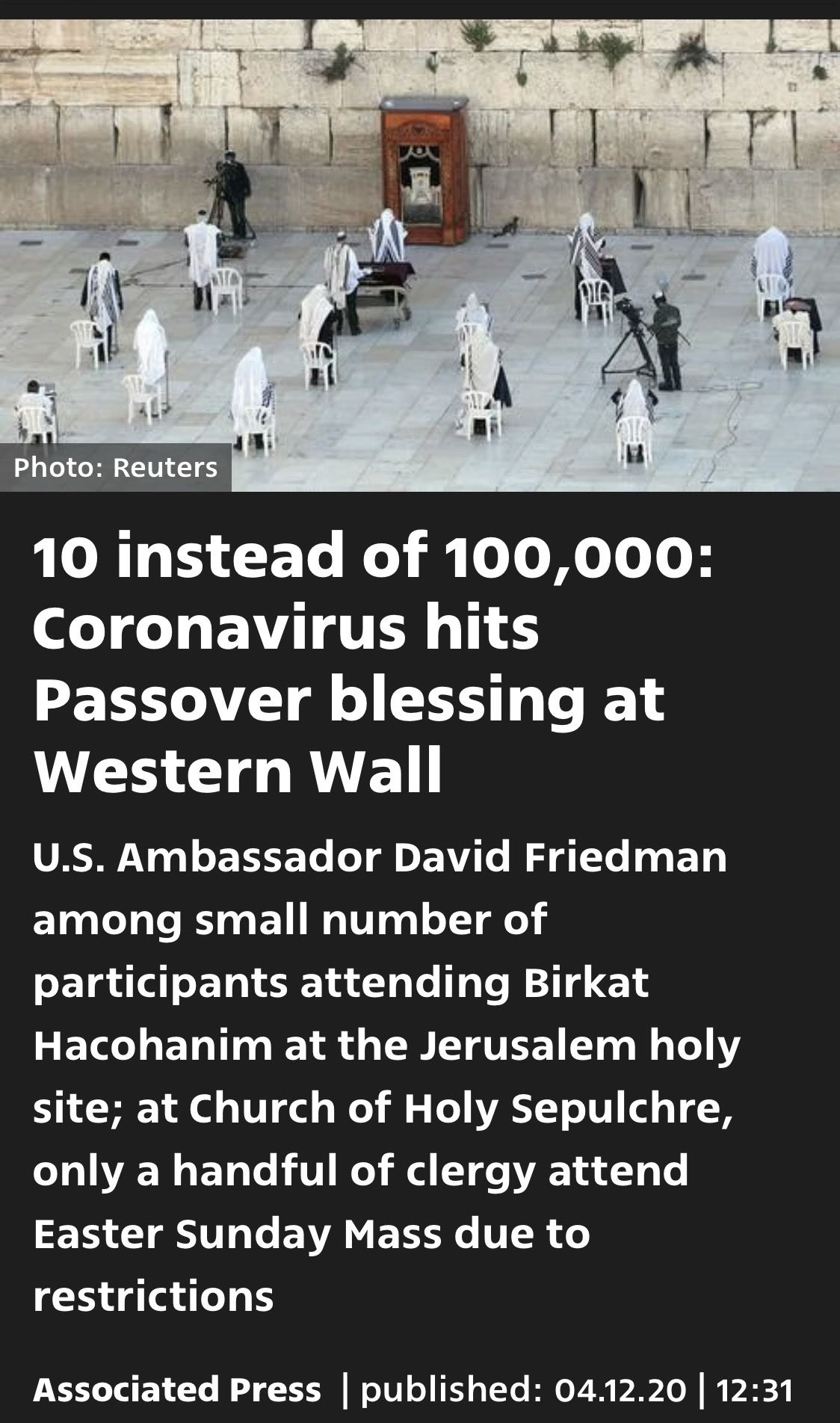
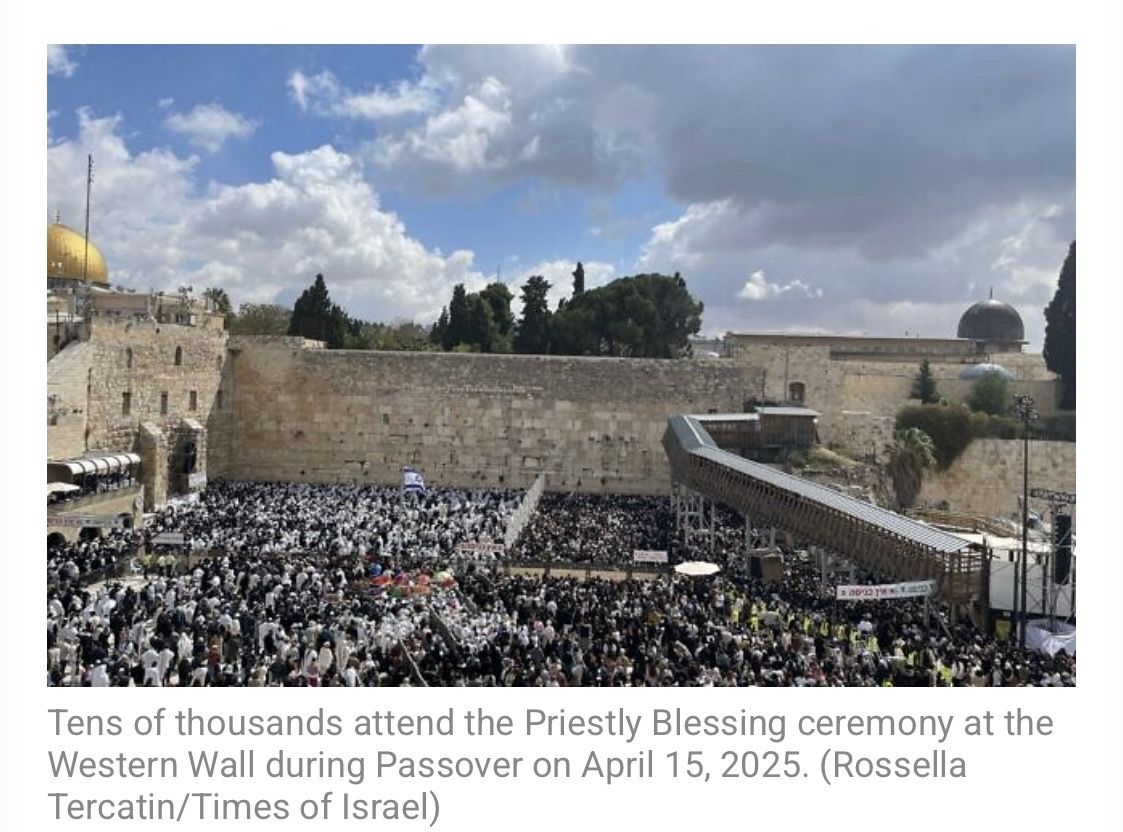
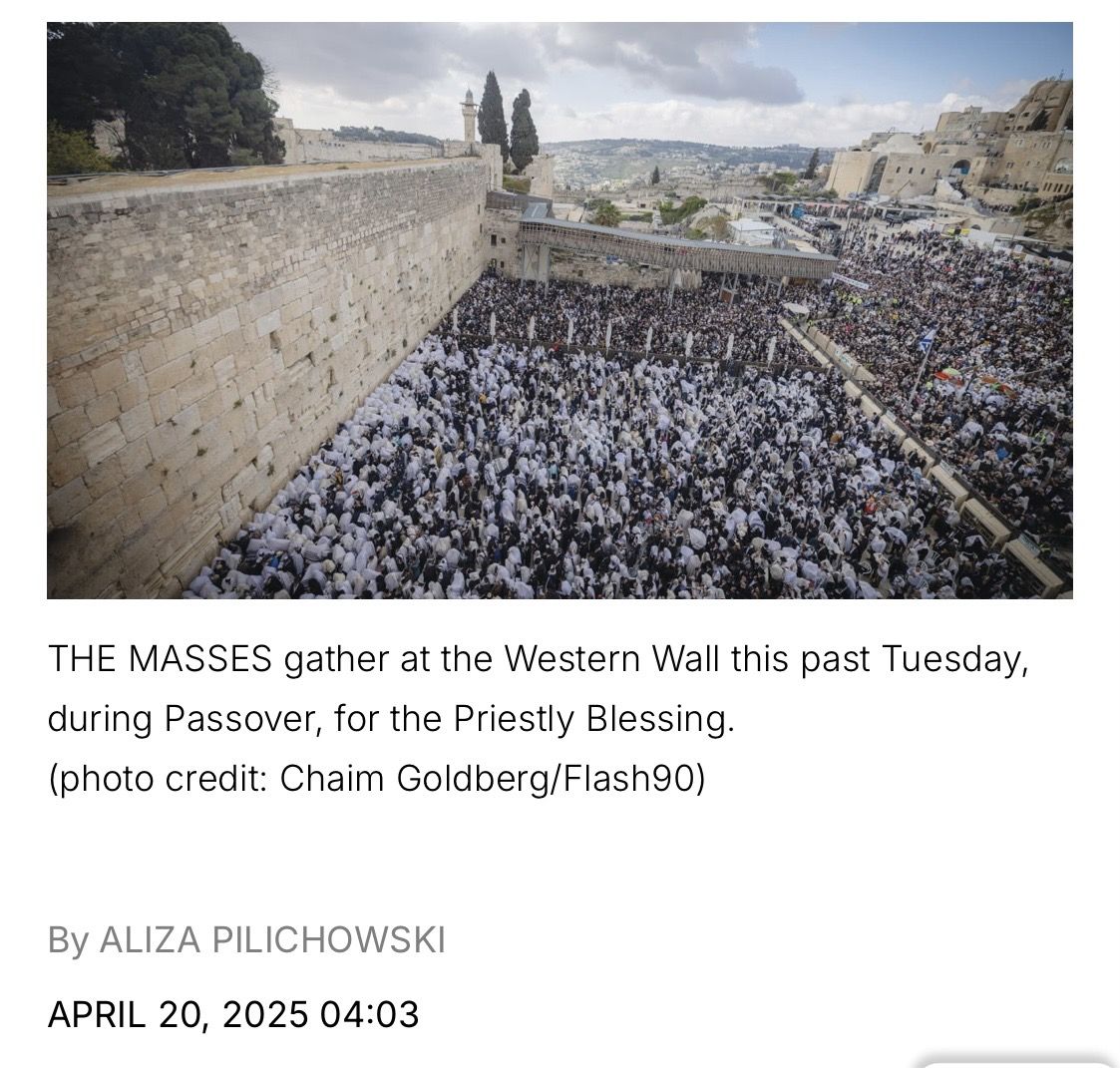
The absence of equivalent imagery alters perception.
Audiences are shown restriction without symmetry, impact without equivalence, and limitation without full visual context.
The Mechanism: From Security Policy to Perceived Discrimination
A consistent pattern emerges.
A universal policy applied across multiple groups can be reframed through selective presentation:
- Highlight impact on one group
- Reinforce impact on another
- Underweight or omit impact on a third
The result is a shift in interpretation.
A security-driven restriction is perceived as selective limitation.
No false statements are required. The transformation occurs through selection, emphasis, and omission.
This Matters Because
In Jerusalem, where access, control, and symbolism are inseparable, how restrictions are framed often matters as much as the restrictions themselves.
When coverage presents limitations without full context, the implications extend beyond incomplete reporting. It shapes the perception of intent.
In this case, the absence of parallel context obscures a simple reality:
All worshippers, across all faiths, were affected.
Conclusion
The events of Easter and Passover 2026 did not present a case of selective religious restriction. They reflected a period of universal limitation under heightened security conditions.
But when key elements are absent, interpretation does not remain neutral. It shifts.
As with imagery, framing determines meaning. And when critical context, including visual evidence, is missing, even accurate details can lead to incomplete conclusions.
Liked this article? Follow HonestReporting on Twitter, Facebook, Instagram and TikTok to see even more posts and videos debunking news bias and smears, as well as other content explaining what’s really going on in Israel and the region. Get updates direct to your phone. Join our WhatsApp and Telegram channels!