Key Takeaways:
- The UN walkout on Benjamin Netanyahu was a coordinated political gesture, with the Palestinian Mission encouraging delegations to attend in numbers and leave together when the Israeli PM spoke.
- The widely cited figure of 77 empty delegations blurred an important distinction between countries that actually walked out and those that were simply absent.
- The resulting photographs were accurate, but incomplete: they captured the visible protest, not the organization and context that helped create the image.
It was a terrific news picture.
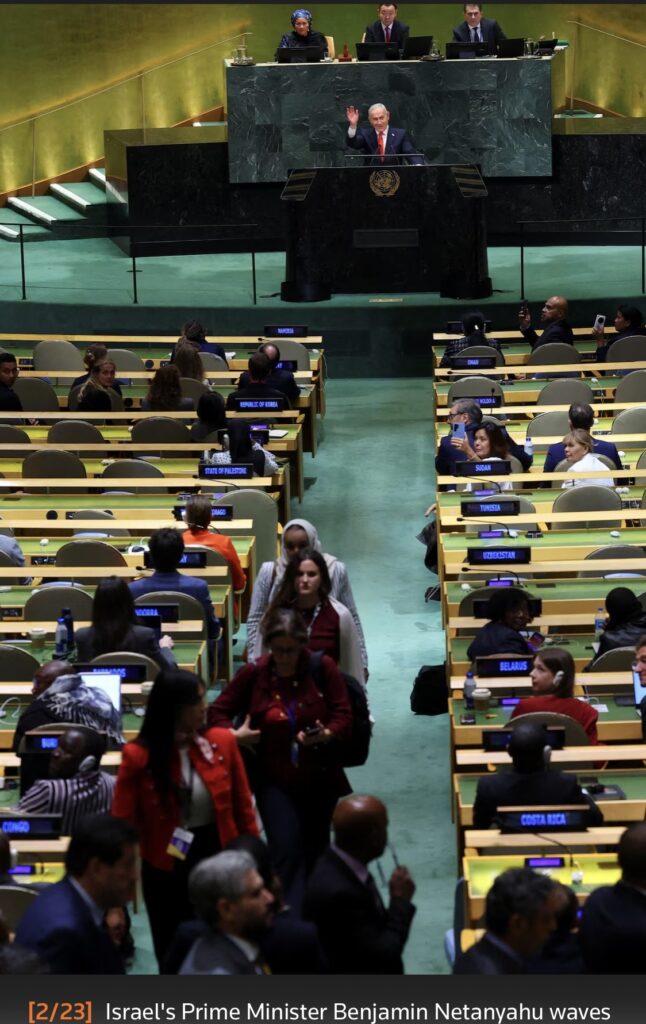
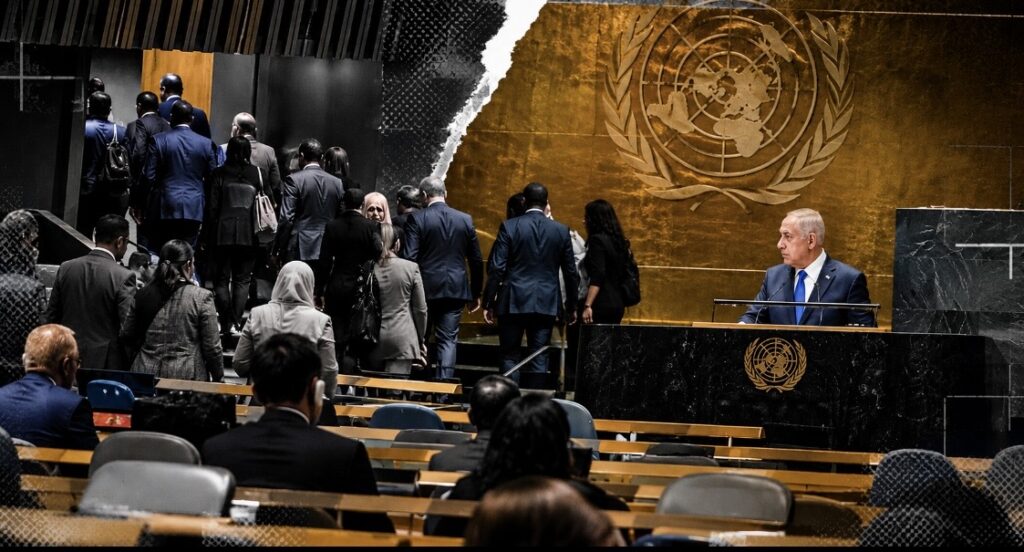
Benjamin Netanyahu approaches the podium at the United Nations and, almost on cue, diplomats begin streaming out of the General Assembly Hall.
Empty seats. Delegates heading for the doors. An Israeli prime minister apparently addressing a world that no longer wants to listen.
I’ve photographed enough demonstrations over the years to recognize a photo opportunity when I see one. This particular one came with assigned seating.
The walkout was real, and so were the photographs. But what happened before the photographers pressed their shutters is rather more interesting.
Ahead of Netanyahu’s speech, the Palestinian Mission to the UN had urged other missions to bring “as many staff as possible” into the General Assembly before “collectively” walking out when Netanyahu was announced.
With that in mind, look at the pictures again.
According to the United Nations’ own description of the General Assembly Hall, each national delegation has six seats: three for delegates and another three immediately behind them for alternates.
In other words, a single country can put several moving bodies into the frame. And for a photographer, movement matters. People getting up and heading for the exits make pictures. People remaining quietly in their seats generally do not.
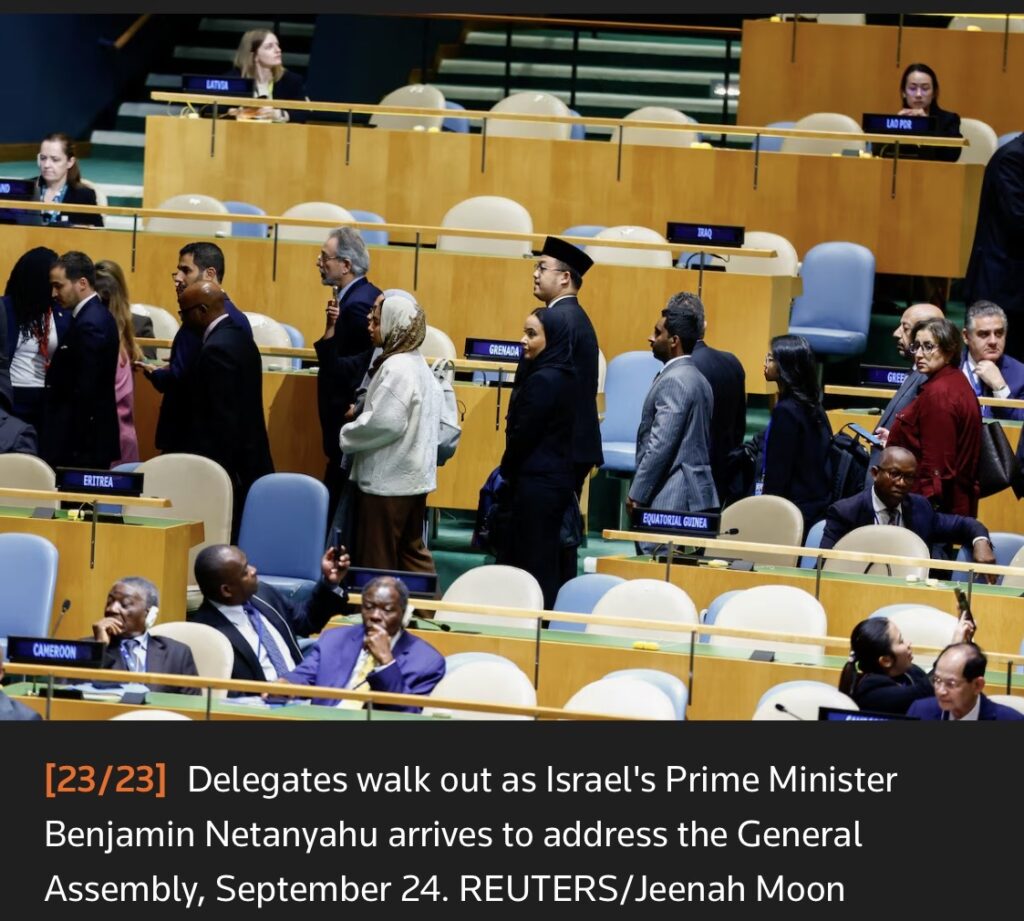
When Empty Became “Walked Out”
Then came the numbers.
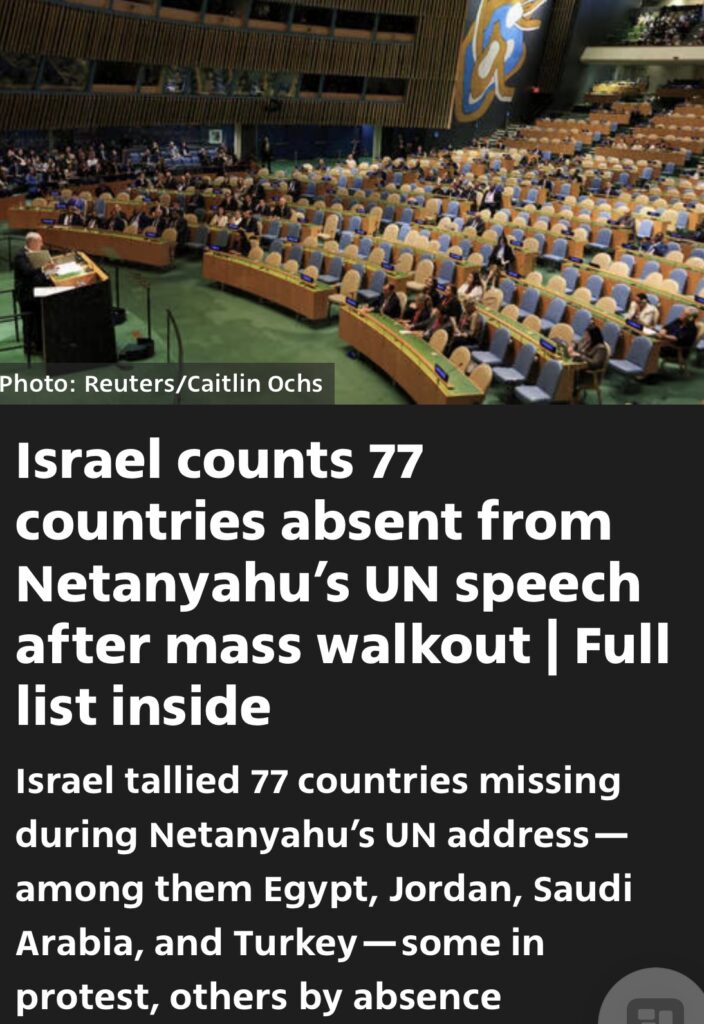
Israeli officials subsequently counted 77 delegations whose seats were empty during Netanyahu’s address. But the Israeli count itself contained an important qualification: the 77 included both delegations that were absent altogether and those that actually left when Netanyahu began speaking.
Those are not the same thing.
That distinction became even more important when a graphic from The World in Maps began circulating after the speech under the headline: “Who walked out on Netanyahu’s speech at the UN.”
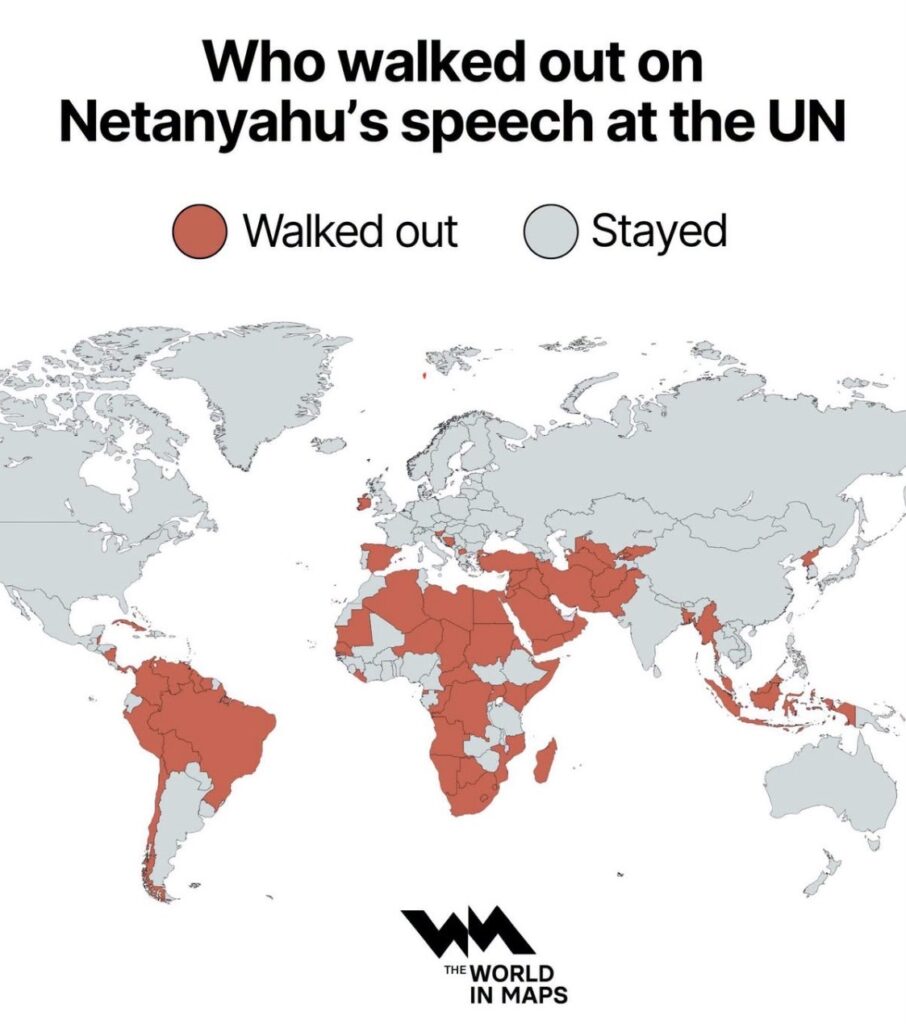
Countries were divided neatly into two categories. Red meant “Walked out.” Grey meant “Stayed.”
Except the accompanying text acknowledged that the count included delegations that were either absent or had left, and that not all of them had necessarily taken part in the organized walkout.
A complicated diplomatic event had been reduced to a very simple visual: red or grey, walked out or stayed.
The small print, in this case, was doing considerably more work than the graphic.
And Then There Was Ireland
There is also an especially interesting grey patch on that map: Ireland.
Given the Irish government’s increasingly outspoken criticism of Israel, Ireland might have appeared an obvious candidate to join the protest. It did not.
Foreign Minister Helen McEntee explained beforehand that Ireland had maintained representation during every national address and intended to do the same for Netanyahu.
Her reasoning was refreshingly straightforward. Even when Ireland strongly disagrees with another government, she argued, it is still important to hear and understand what that government is saying.
That tells us something useful about the photograph as well.
Remaining in the hall was not necessarily an expression of support for Netanyahu, just as leaving it was not merely a matter of diplomats deciding they had heard enough. The walkout was a political statement, and it had been deliberately organized to make that statement visible.
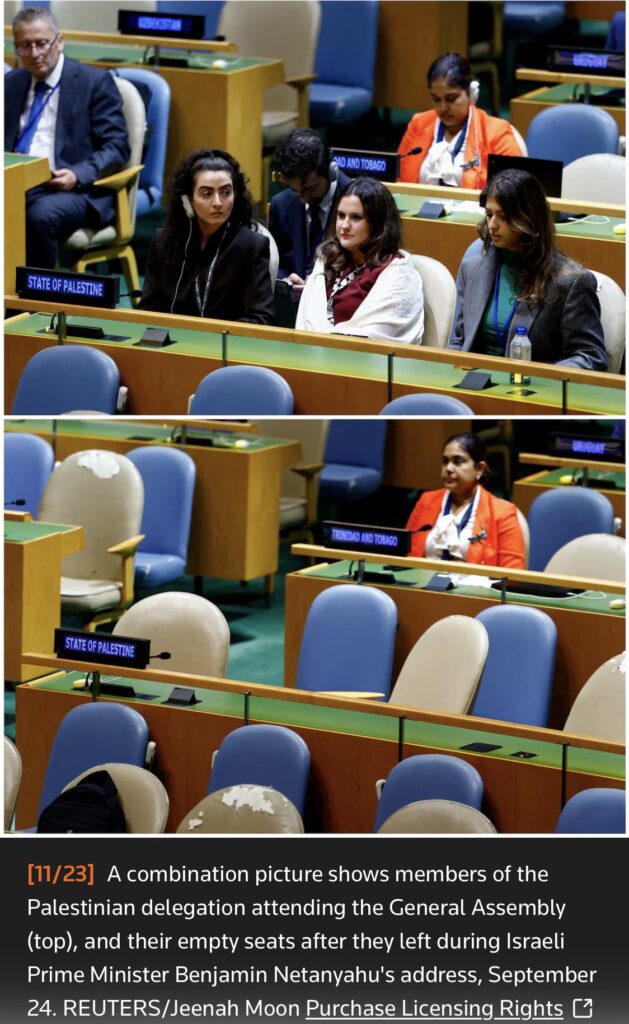
Netanyahu himself pointed to another contrast from the podium.
“In defending itself, Israel is also defending many of the countries whose delegates just left this hall,” he said, before claiming that some of those countries’ leaders “even thank us privately for taking out Iran’s nukes.”
That was Netanyahu’s claim, made immediately after the walkout. He offered no names, so there is no way from his remarks alone to know which leaders he was referring to.
But the contrast he sought to draw was clear enough: between the public diplomatic gesture taking place in front of the cameras and what he claimed some of those same governments say to Israel in private.
Whatever one makes of Netanyahu’s claim, the public gesture was unquestionably intended to be seen.
The Palestinian Mission asked other delegations to turn up in numbers. The General Assembly’s seating arrangements allowed each mission to bring several representatives. When those representatives got up and moved toward the exits, the photographers had exactly the kind of scene that makes for a powerful image.
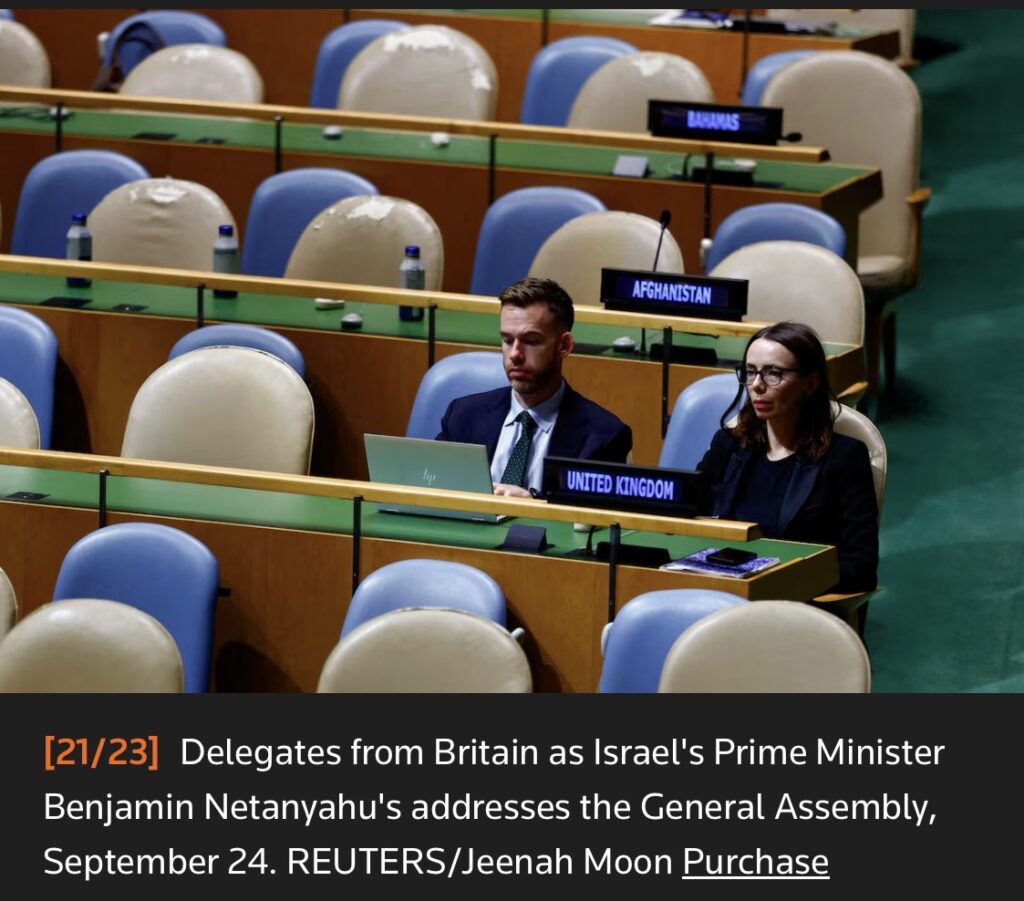
And by the following day, that image was being presented as evidence of a world walking out on Israel.
The cameras photographed precisely what happened in front of them.
What they could not photograph was the message that had helped organize the scene.
Liked this article? Follow HonestReporting on Twitter, Facebook, Instagram and TikTok to see even more posts and videos debunking news bias and smears, as well as other content explaining what’s really going on in Israel and the region. Get updates direct to your phone. Join our WhatsApp and Telegram channels!
© Divuach Ne’eman R”A, 2025