Memory, perhaps more than time, may be the most precious and rare of resources. While time is limited and non-renewable, it can be measured, stock can be taken of it, and we can allocate its use.
Memory is much more temperamental — gossamers of recollection float on the wind for us to collect, triggered by scent, individual notes of sound, a flash of color. When you catch the thread, memory may come to you in an oppressive force all at once, then fade away in a fleeting moment. Attempting to measure memory is an exercise in futility, as it slips through one’s hands, finer than the grains of sand in an hourglass. Memory is so elusive that one’s body may remember what the mind may not, recall coming to only some of our senses, such as familiarity. Memory can perhaps be seen as a distillate of time, concentrated as we churn hours and minutes with our lives, causing it to warp and thicken. Maybe this is why time can appear so distorted when some of the most important memories are being made.
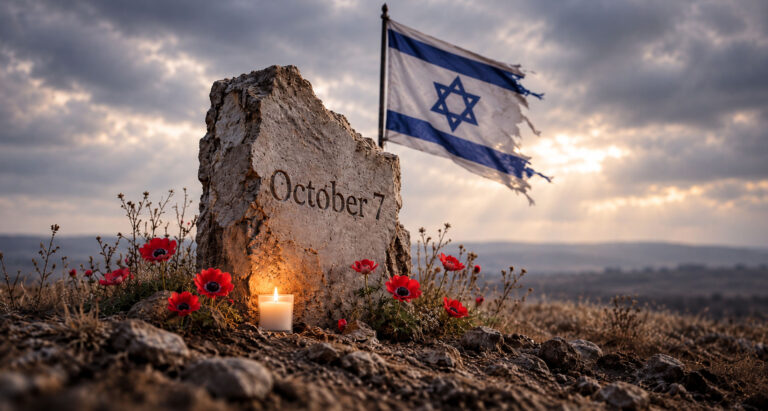
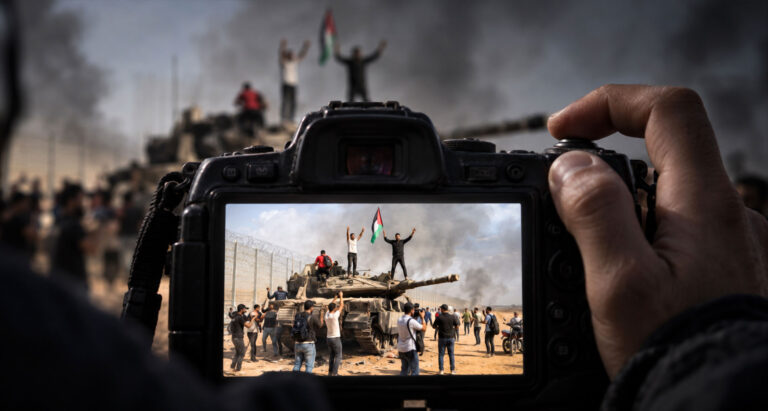
October 7, 2023 was supposed to just be a day. Yet at 6:29 on the Simchat Torah holiday, as the gates of Israel were breached by barbarians from Gaza, the clock hands ceased. No matter the operation name declared by an officer’s order, or official government proclamations naming the war, the conflict will always be defined by the first day, as the October 7 War.
It is not just that after I had been drafted as a reservist, sleep, which demarcates our days, was replaced with moments of fading in and out of consciousness as mission and danger demanded. The day had such density of events that its gravity pulled in the weeks around it and melded them into one mass. Its event horizon has extended out into the years to come, its limits still uncertain. However, to understand the moment as a singularity is to mistakenly cleave to our single timeline, and memory, particularly compounded by the multiverse of many minds, transcends time and splits it into concurrent streams.
The Liminal Space of October 7
I cannot speak to the multitude of October 7 experiences, but for veterans of the war, any meeting is inevitably a ritual of reconciliation of different timelines. We rediscover the exact same cosmic moments as they reverberated on different worlds, such as the first time we stepped into the site of the Nova festival massacre. The Nova site I saw, in standard time almost two weeks since the slaughter, was one of settled chaos. Tents, bags, and personal items were strewn or abandoned inside the metal fences and around party installations, like the sediment in a cup of water, only moments before churning about in a raging river before being scooped up for us to observe. At many angles, as we patrolled looking for survivors, terrorists, or weaponry, the festival grounds looked normal, as if the party had been underway only seconds ago, but all the celebrants had vanished as soon as our boots intruded.
A similar liminal space existed inside the border towns and kibbutzim. The streets and homes were almost completely devoid of life. The pall of deathly silence was stifling, punctuated only by the relief of incoming and outgoing rockets and mortars. If it were not for corpses, pools of blood, and bullet-riddled walls, these places could have been models preserved to depict Israeli life. The eeriness of the empty town was born of the expectation of vehicle traffic, children playing, people going about their lives, but the circulation of the everyday had been dammed by an artificial barrier. House by house we cleared, each frozen in time; a birthday celebration had been fossilized, balloons and decorations still hanging. The sukkot that had been erected in the towns for the eponymous holiday became artifacts of this unnatural bubble of space and time. Meant to be temporary structures, the booths stood for weeks and even months as testaments to the abnormal state of southern Israel. They stand in my mind even now — Amid this year’s celebration of Sukkot, the sight or entrance of the booths transports me back to the empty towns beyond my discretion.
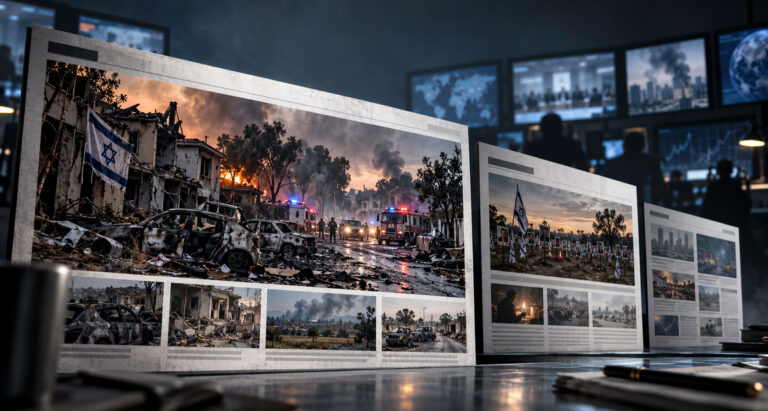
The destroyed permanent homes had their constancy corrupted, burned onto our flesh like thermal shadows. Within the safety of civilization, we can conceptualize the destruction of houses, the ripping of roads, the crushing of cars, but we still feel as though cities are immutable fixtures of the landscapes like hills and valleys. It is only when you come to face a ruined village that one begins to see the cracks in every wall. Every city can be destroyed. The greatest monuments of civilization are made of matches, if in the grasp of raiding savages with diesel-soaked rags. When we finally had our first leave, almost a month later, seeing people going about their business or lounging in cafes, felt a lie. Perhaps they could also see the cracks after October 7, and pretended otherwise, but the sight of these civilians conjured a voiceless scream demanding to know whether they too saw the fragility. The ground was not stable. Society could collapse. The country could fall. These were not concepts learned from the histories of other states. They were real dangers unrealized by the merit of those that took up arms. As one officer voiced the emerging awareness, “nothing is certain anymore.”
The Lingering Scent of Death
Despite the scenes of destruction and their ghosts, nothing haunts memory more than smell. The scent of October 7 was the sickly sweet warmth of rotting corpses, the charcoal and smoldering plastic of incinerated houses and cars, the decay of rotting food. The fermented and stale miasma of death never quite leaves one’s nostrils after it has been inhaled enough. Death’s relentless scent lingers at the back of your breath, like a mold infecting your respiratory system. Walking by a garbage container or visiting a butcher’s shop can shake the spores loose, and the sharp pungency of putrefaction pulls you back in time.
Sometimes I go back to Kissufim, where the fish-eyed corpses of terrorists rotted alongside those of cattle. Cows desperately bleated for the relief of milking as they waded in the fecal pools that sprang from the font of an RPG-busted water main. In the fetid water, a cow bloated like the terrorists, but had a fouler vegetative scent. The smell of dead animals and men was different, we learned.
Sometimes I go back to the Nahal Oz outpost. We were the first unit to hold the base after it had been conquered. We rededicated it by raising the blue-and-white flag over the destruction. We received the parents of fallen soldiers, making mourning pilgrimages to come to better grasp their loss. We also secured the area while it was cleaned. Sticky brown blood stained the ground; gore remained embedded in the outpost’s concrete corners and crevices. The scent of death hung in the air, seemingly manifesting into physical being as an innumerable legion of black flies that plagued the region. The insatiable insects that had spawned in the meat of our countrymen and enemies were ubiquitous throughout the early days of the war, swarming and crawling over every person and surface, and on the back of each of them I smelled the rank of death.
The buzzing of the flies was as omnipresent as the drones overhead. The whirring of the propellers eventually filled every space that the liminal silence had hollowed. The droning was maddening, causing some soldiers to curse at the sky. Yet when the wind shifted, or the unmanned aircraft pulled away to a sufficient distance, the unsettling silence returned. These noises were accented by the occasional thunder of falling rockets, the whistle of incoming mortar bombs, and the shriek of shrapnel. Our forces returned fire with a constant drum of mortars, continuous like the slow heartbeat of kibbutzim trying to hold on to life. The metallic warping of air as our mortars shot overhead toward the enemy brought comfort as much as the growl of tanks and armored personnel carriers. Endless rocket sirens have primed me for a tone. Whenever there is a similar whine far off, my ears perk to attention.
It is Still October 7
These memories remain fresh in my mind, as though they just happened: The lingering regret of not having gone straight to the Gaza border rather than assembling with the army; an unfired cartridge remains chambered in my mind, never to meet the destined terrorist I held in my crosshairs, because my commander rightfully feared friendly fire; my heart dropping into the pit of my stomach when the crackle of the radio whispered tidings of fallen friends.
They are fresh memories because they happened earlier today. The rising and setting of the sun has had no more relevance to the passage of time than the endless cycle of enlistment and release to serve in Gaza, Syria, and Lebanon. Even as the events sometimes feel eons ago — my hair is greyer, my friends have had children, and others I have served as witnessed at the Chuppah — most of the time my life feels as stagnant as the silence of October 7. Run or stand, I’m always in the same place: that battlefield of memory. Memory is a precious resource, and for better or worse, a great deal of it has been invested into October 7. It is the shortest of years, and the longest of days.
This is what I remember of October 7.
Liked this article? Follow HonestReporting on Twitter, Facebook, Instagram and TikTok to see even more posts and videos debunking news bias and smears, as well as other content explaining what’s really going on in Israel and the region. Get updates direct to your phone. Join our WhatsApp and Telegram channels!
© Divuach Ne’eman R”A, 2025