Key Takeaways:
- Prominent figures like Benjamin Moser and Zack Polanski use their Jewish identities to lend legitimacy to anti-Zionist positions, portraying Zionism itself as a threat to Jewish safety.
- From mainstream news outlets to prestigious literary awards, Jewish anti-Zionists receive disproportionate attention and recognition, helping normalize efforts to sever the connection between Jews and Israel.
- By providing cover for anti-Israel rhetoric and undermining Israel’s legitimacy, Jewish anti-Zionists risk emboldening antisemitism and making Jews worldwide less safe.
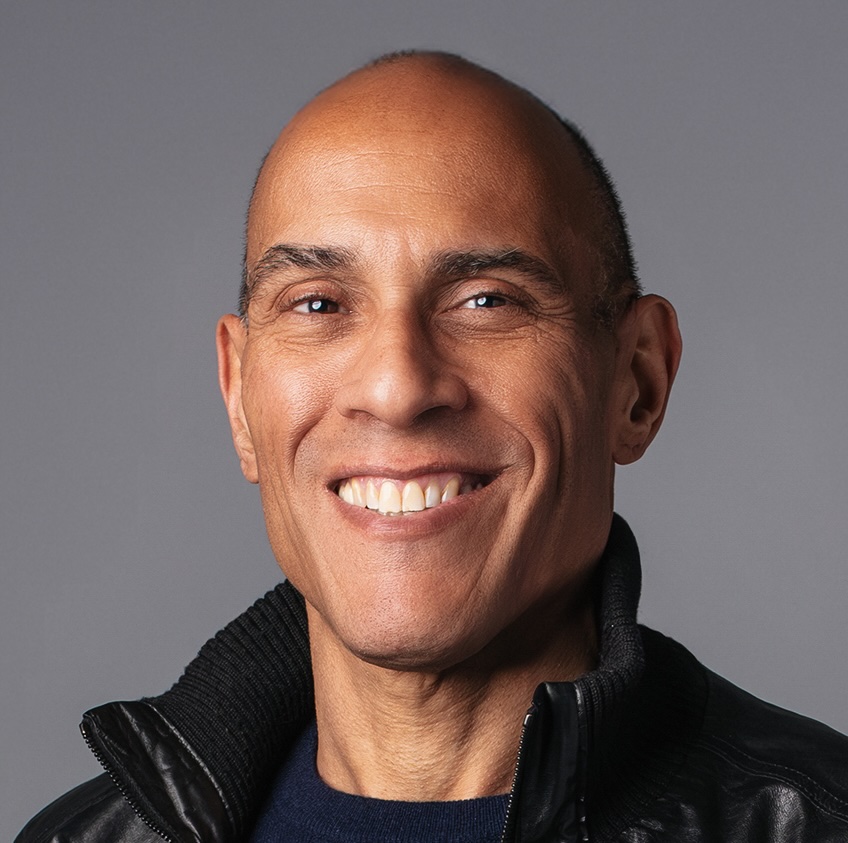
At first glance, esteemed Pulitzer Prize-winning author and historian Benjamin Moser and Zack Polanski, the former hypnotherapist turned radical leader of the Green Party of England and Wales, would seem like improbable ideological allies. But the pair, now in the headlines owing to a major new book by the former and controversial party moves by the latter, are among the highest-profile protagonists in the matrix of antisemitic and anti-Israel personalities that have overwhelmed Western politics and culture three years after Hamas’ October 7 massacre.
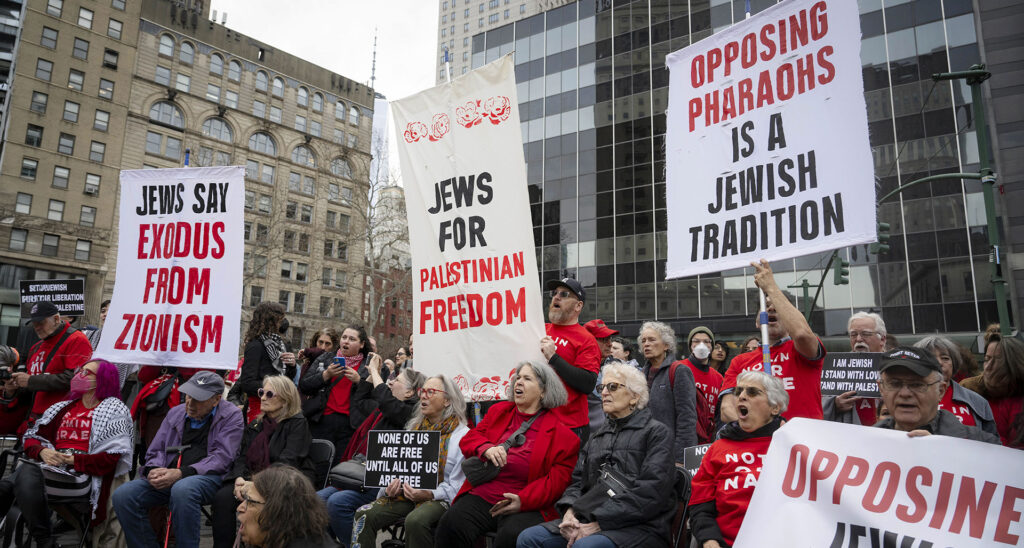
What unites Moser and Polanski is not that each happens to be gay or even that both men are Jewish. After all, in politics and culture, there is nothing unusual about either. Rather, it’s Moser and Polanski’s distinctive brand of Jewishness – very avowed and very public anti-Zionist Jewishness – that makes the pair so odious and influential.
Raised with strong Jewish identities – Moser in Texas, Polanski in Britain – both men have staked their current professional prominence on not merely advocating against Israel as a formalized Jewish nation, but legitimizing this thinking through their Jewishness itself. Indeed, as both men see it, fealty to Israel, rather than classical antisemitism on the right or radical jihadism on the left, is actually the greatest threat facing Jews right now. In fact, both could not have said so more clearly.
Zionism “makes me feel less safe as a Jewish person,” declared Polanski to Mehdi Hasan, founder of the anti-Israel site Zeteo, in the run-up to the Green Party’s recent vote to declare Zionism as racism. As for Moser: “Jews are really in danger right now, and not because of Palestinians or Arabs,” he explained in a late September interview with the Brown Daily Herald while promoting his new book Anti-Zionism: A Jewish History, “Jews are in danger because of Zionism.”
Such sentiments would be of little value, of course, were it not for a fawning and pliant media eager to pit Jews against the Jewish nation as the ultimate rhetorical and ideological weapons. Just look at a recent article from The Washington Post, “Why Some Jewish Leaders Say They Want to Stop Using the Word ‘Zionism’”. It aims to legitimize the idea of “decoupling” Israel from Jewishness, dismantling the core connections between a people and country in order to pave the way for Israel’s further isolation, demonization, and perhaps even destruction.
Similar articles have appeared over the past year or so in mainstream outlets ranging from NPR to Haaretz, and The Guardian – while the news site Mondoweiss and highbrow literary platform Jewish Currents have staked their entire existences on Jewish anti-Zionism.
The media’s embrace of anti-Zionist Jews doesn’t merely include platforming them across both traditional and social media, but rewarding them for their efforts, often literally with cash and prizes. Just look at author and Jewish Currents Editor-at-Large Peter Beinart, who not only advocates against Israel in his regular columns for The New York Times, but saw his 2025 anti-Zionist book, “Being Jewish After the Destruction of Gaza: A Reckoning“, awarded the top prize for nonfiction earlier this year by literary giant PEN America. The honor arrived with a $10,000 honorarium.
Politicians like current Michigan Senate candidate Abdul el-Sayed and New York City Mayor Zohran Mamdani have also become masters at using anti-Zionist Jews to not only “prove” they’re not antisemitic, but insist their Israel-hatred has nothing to do with Jews at all. Here too, progressive-led media makes for an all-too-eager messenger for these politicians’ highly calculated messages.
El-Sayed’s Rosh Hashanah social media video with a Jewish anti-Israel mother-and-daughter duo perfectly captures how this works. He cannily celebrates the new year with the pair of self-described “Jews for Abdul,” indulging in and honoring sacred Jewish traditions amid endless homemade kugel and feel-good glee. Missing from the entire affair, however, is any mention of his hosts’ longtime affiliation with Jewish Voice for Peace, an anti-Israel organization that stands “in full solidarity with Palestinian resistance.”
This is what’s most disingenuous, if not downright dangerous, about the role of anti-Zionist Jews in the current Israel/Judaism/Zionism debate. It’s their sheer dishonesty – and the unwillingness of media and cultural institutions to challenge this dishonesty with the same rigor and critique demanded of nearly every other identity-driven movement in the U.S.
Such dishonesty plays out most cravenly in the attack on the very foundations of Zionism itself, and the unwillingness of anti-Zionists (both Jewish and not) to honestly consider what might happen to the nearly 8 million Jews living in Israel if the state were to suddenly not exist.
Perhaps, what’s most intriguing, if not obscene, about anti-Zionist Jews is that they have no racial or ethnic equivalent in the vast canon of American and Western identity politics. Which is why their impact is both so potent and difficult to dismiss.
True, conservative African Americans, particularly amid the Trump era, have become more confident in airing the types of intra-community critiques embraced by leaders such as comedian Bill Cosby decades before his legal troubles. But Cosby’s sentiments, which lambasted stereotypes of Black boorishness or criminality, found little traction beyond the extreme right or a tiny Black elite. Same with their equivalents today. And same with, say, gay Republicans or conservative Latinos. Their opinions matter, but mostly to other gay people or Latinos, regardless of political slant.
But in the case of anti-Zionist Jews, the damage is both far-greater reaching and longer lasting. Rhetoric by Jewish anti-Zionists doesn’t merely exist along the extremes; it infects the entire political middle. And Jews, all Jews, including those who blast Israel, are less safe because of it.
The new film NAZA, for instance, was made by anti-Zionist Jews who insist it was intended for an Israeli audience in order to change Israel from within. But NAZA is actually receiving far more interest outside than inside of Israel, a tailor-made tool for anti-Zionist propagandists whose only goal is to remain the center of attention and terrorize Jews into submission and silence.
In the case of Moser and Polanski, both men are likely to remain in the spotlight at least for a bit longer. But with Moser’s book panned by much of the major media that was expected to embrace it, there is some hope that the endless elevation of anti-Zionist Jews might be coming to an end. Or is at least slowing down. Nothing would better honor the thousands of Jews, both soldiers and civilians, who have paid with their lives to keep Israel Jewish.
Liked this article? Follow HonestReporting on Twitter, Facebook, Instagram and TikTok to see even more posts and videos debunking news bias and smears, as well as other content explaining what’s really going on in Israel and the region. Get updates direct to your phone. Join our WhatsApp and Telegram channels!
© Divuach Ne’eman R”A, 2025