There are photographs you never forget, however much you might wish you could. For me, this is one of them.
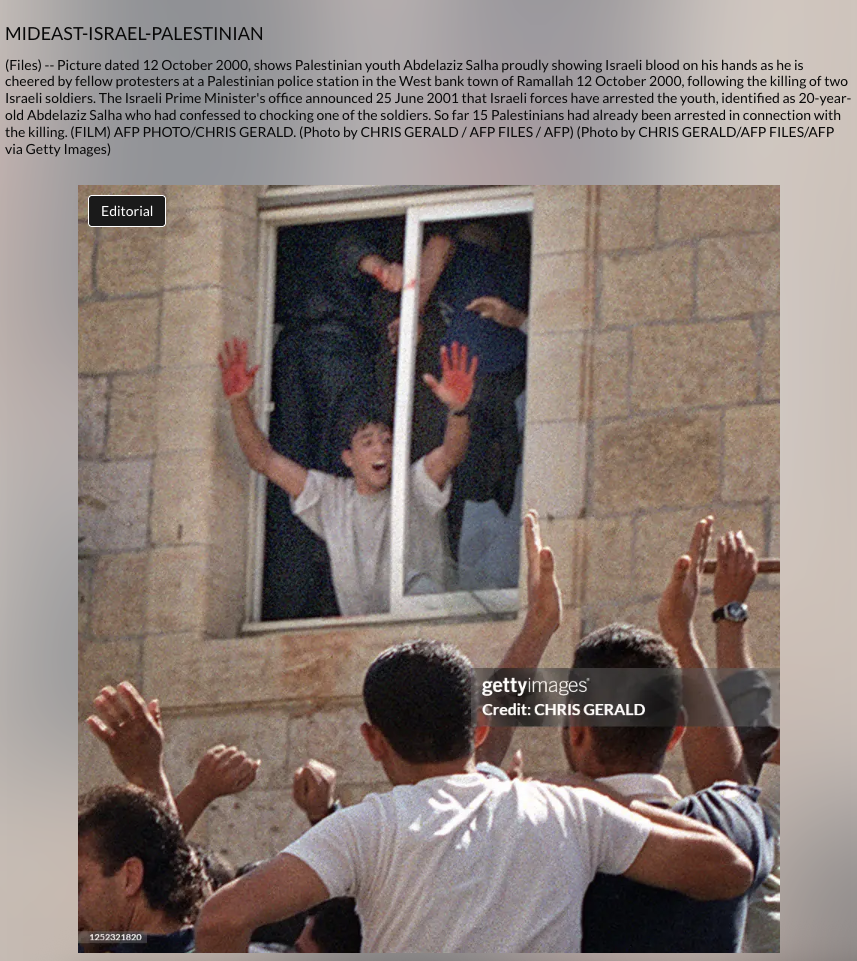
On October 12, 2000, two Israeli reservists, Vadim Nurzhitz and Yossi Avrahami, took a wrong turn and ended up in the Palestinian-controlled West Bank city of Ramallah. They were detained and taken to a Palestinian Authority police station, where a mob broke in and murdered them.
The photograph that came to define the atrocity shows a young Palestinian man leaning out of an upstairs window, his hands covered in the blood of the murdered Israelis. Below him, a crowd raises its arms in celebration.
His name was Abdelaziz Salha, and the photograph was taken by AFP photographer Chris Gerald. It remains one of the most disturbing images of the Second Intifada, partly because the circumstances of the murders are so plainly written across the frame. There is no need for an elaborate caption to explain the blood on his hands.
What I had forgotten until revisiting the photograph was what subsequently happened to Salha.
He was arrested, convicted and sentenced to life imprisonment for his involvement in the murders. In 2011, he was released as part of the Gilad Shalit prisoner exchange and deported to Gaza. He later became associated with Hamas and was killed in an Israeli airstrike in October 2024.
The man whose bloodied hands became internationally recognizable had been released from prison just eleven years after the murders.
There is another part of this story that deserves considerably more attention, particularly from anyone who has spent a working life around news photography.
Several journalists who attempted to document the lynching were attacked. British photographer Mark Seager was punched while trying to take pictures, and his camera was smashed. AFP photographer Patrick Baz had two cameras seized, one of which was destroyed. An ABC News cameraman was assaulted and prevented from filming.
These incidents were documented by the Committee to Protect Journalists, which also reported attempts to confiscate journalists’ film.
An Italian television crew managed to get footage out, but even that became the subject of an extraordinary controversy. Riccardo Cristiano, a correspondent for Italy’s state broadcaster RAI, wrote to the Palestinian Authority distancing his organization from the footage and effectively identifying the rival journalists responsible for recording it. RAI subsequently recalled him to Italy.
The Guardian reported the controversy at the time.
Having worked on picture desks, I find that aspect of the story particularly troubling. We tend to assume that when something happens in front of cameras, the resulting pictures will eventually reach us. Ramallah demonstrated how easily that record can be interrupted, particularly when people at the scene are determined to prevent photographs being taken.
It is worth remembering that the image of Salha at the window survived while other photographers were being assaulted and their equipment destroyed. The pictures that reached the world’s newspapers were only part of what happened that day.
There is a more recent and uncomfortable visual connection.
At the 2024 Academy Awards, celebrities including Billie Eilish and Mark Ruffalo wore red Artists4Ceasefire pins featuring an orange-red hand with a black heart in its palm. The organizers explained that the symbol represented humanity, compassion and a call for a ceasefire in Gaza.
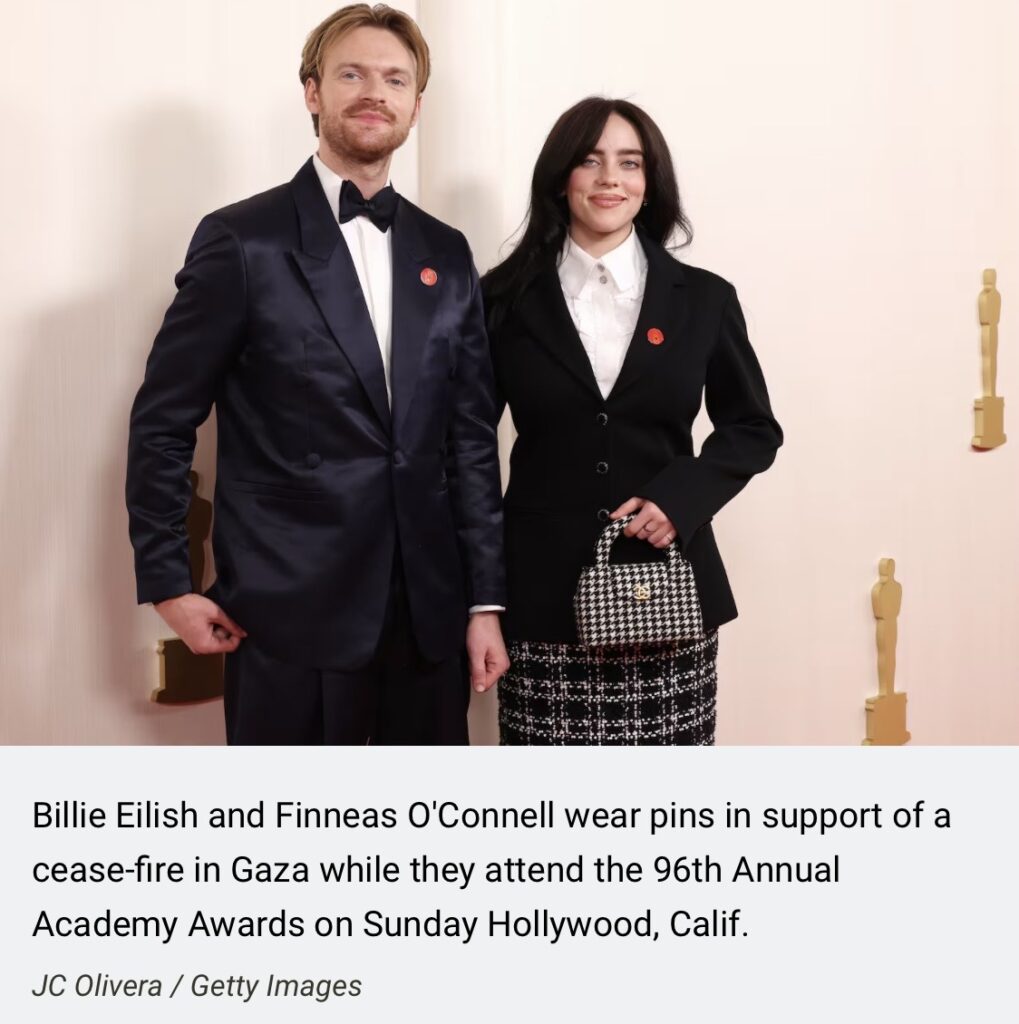
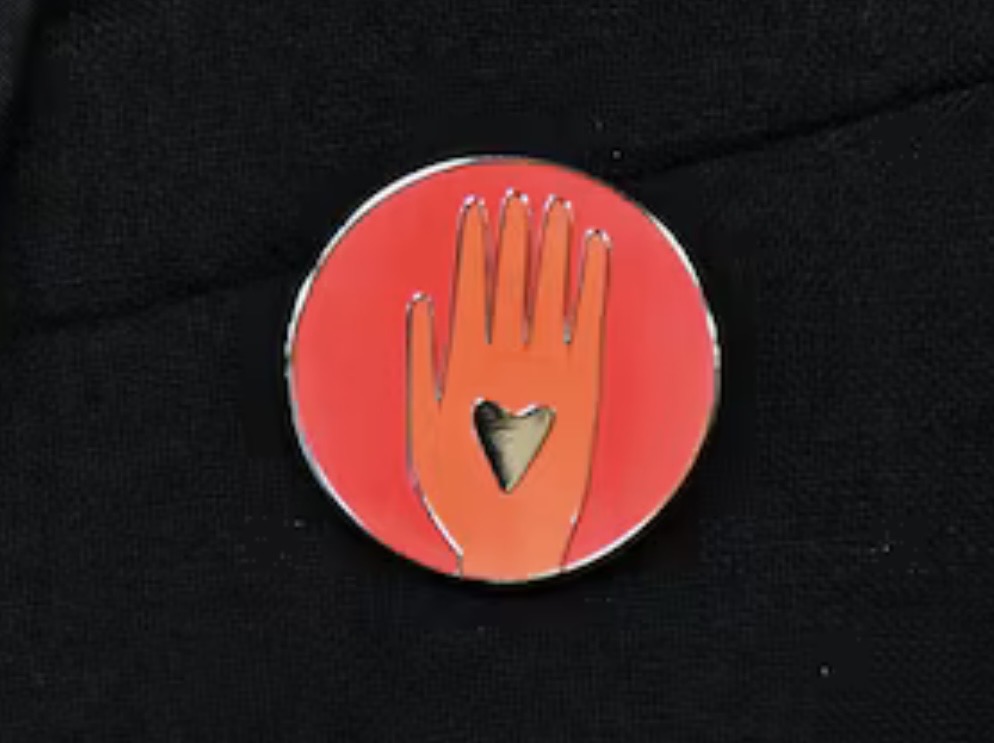
For many Israelis, however, the image of a raised red hand immediately recalled Ramallah. The resemblance prompted considerable controversy, although there is no established evidence that the badges were intended to reference the lynching.
The Forward examined the controversy and the competing interpretations of the symbol.
I can accept that the people wearing those badges intended something entirely different. But photographs have a habit of staying with those who remember the events behind them, and the meaning of an image cannot always be separated from its history.
Which brings me to today’s anniversary.
International news organizations regularly revisit events in the Israeli-Palestinian conflict, particularly those involving Palestinian suffering. There is nothing wrong with commemorating victims or examining events years later. Such reporting is part of journalism’s responsibility.
Yet I wonder how many international newspapers and broadcasters will remind their audiences today of Vadim Nurzhitz and Yossi Avrahami, the circumstances of their murders, or the journalists who were attacked while trying to document them.
The Ramallah lynching received extensive international coverage when it happened. Twenty-six years later, the photograph remains, but the history behind it risks disappearing from public memory.
I have spent enough years looking at photographs to know that some images become part of the historical record almost immediately. Others are forgotten, and occasionally there are those that people would prefer not to remember.
The photograph from that upstairs window in Ramallah belongs to the first category.
Whether the anniversary of what happened there still receives the attention it deserves is another question.
Liked this article? Follow HonestReporting on Twitter, Facebook, Instagram and TikTok to see even more posts and videos debunking news bias and smears, as well as other content explaining what’s really going on in Israel and the region. Get updates direct to your phone. Join our WhatsApp and Telegram channels!
© Divuach Ne’eman R”A, 2025