Key Takeaways:
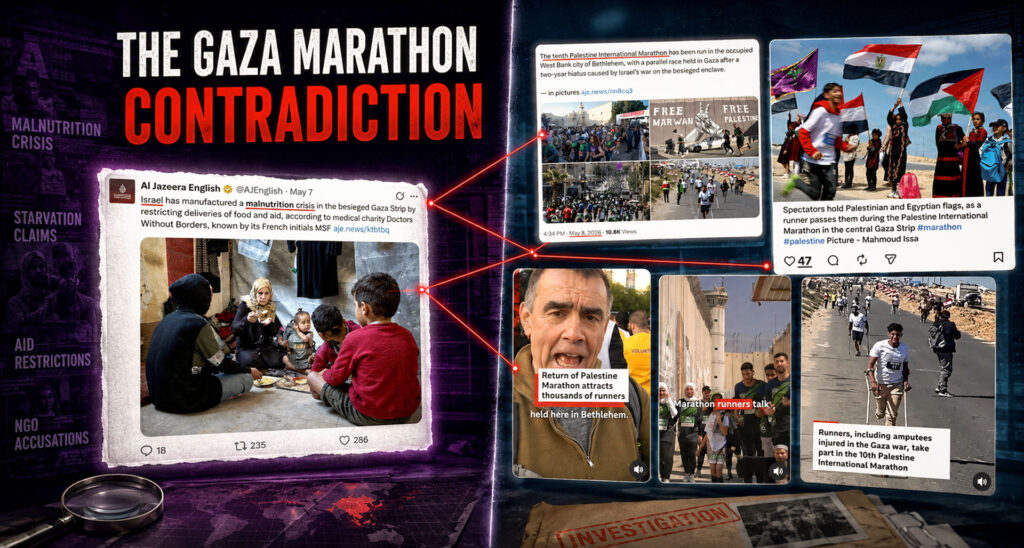
- Within days of global media outlets amplifying famine and starvation imagery from Gaza, thousands of Palestinians participated in highly publicized marathon events in Gaza and Bethlehem.
- The issue is not whether hardship exists, but how radically different visual narratives are presented simultaneously without editorial reconciliation.
- Modern conflict coverage increasingly relies on selective imagery that isolates emotion while avoiding wider visual contradictions.
For years, international audiences have been told that Gaza stands on the brink of famine. Images of emaciated children, empty cooking pots, overcrowded aid queues, and warnings of “mass starvation” have dominated headlines, NGO campaigns, television reports, and social media feeds alike. The implication has been unmistakable: Gaza is not simply enduring hardship, but teetering on the edge of physical collapse.
Now comes the marathon footage.
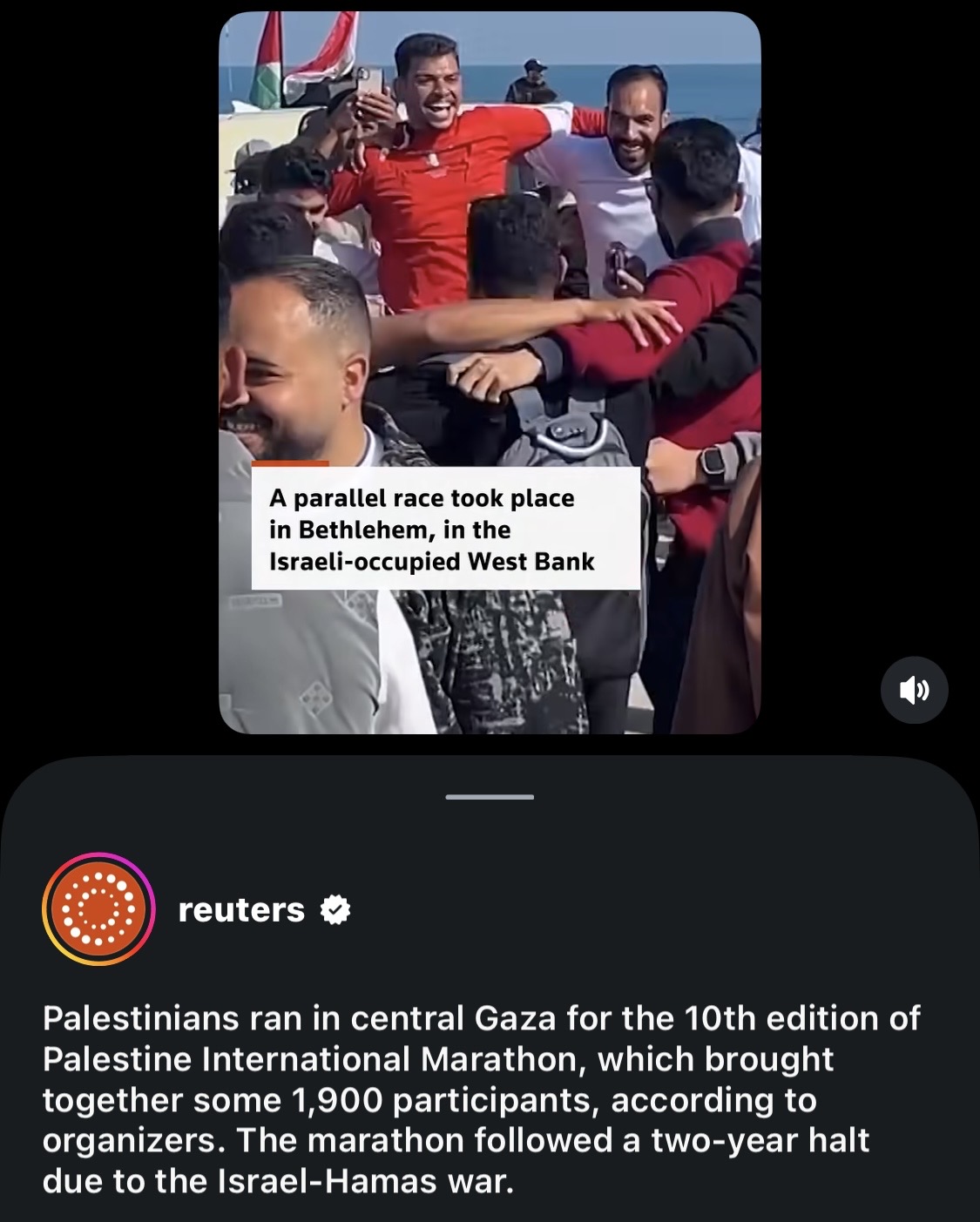
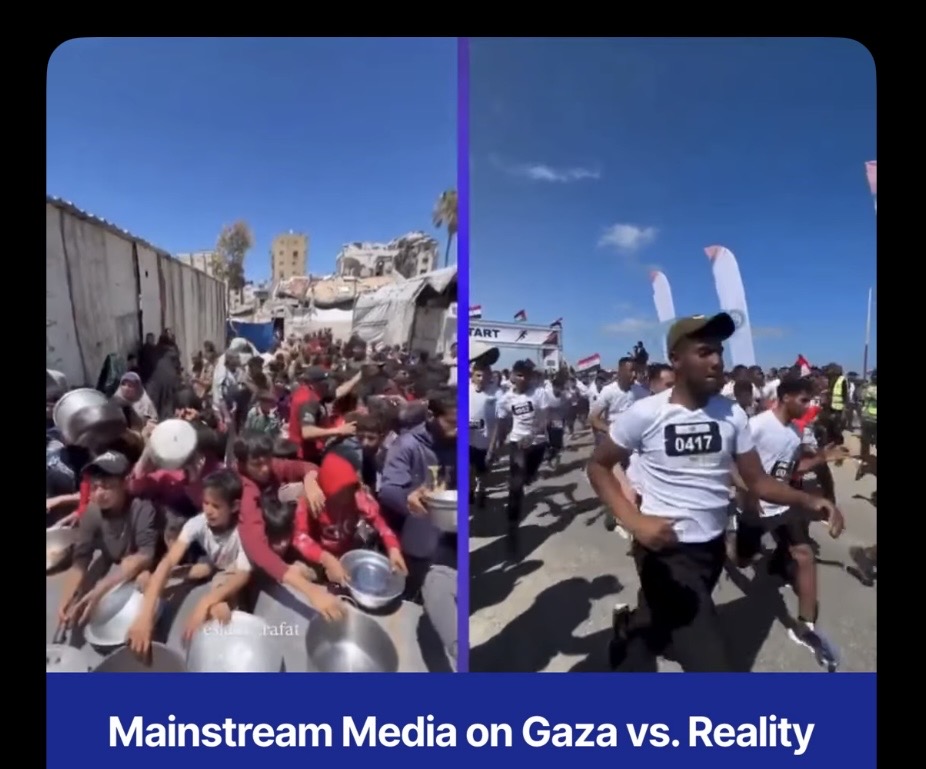
Thousands of Palestinians running along Gaza’s coastline. Organized crowds. Drone shots. Event branding. Stewards. Public celebration. Sustained physical exertion. At almost the same moment, another marathon event took place in Bethlehem, heavily promoted through many of the same activist and media channels that routinely amplify claims of humanitarian catastrophe.
The contradiction is difficult to ignore.
Not because suffering in Gaza does not exist. It plainly does. But because two competing visual narratives were suddenly colliding in real time, with almost no effort made to reconcile them.
View this post on Instagram
The Timing
The timing matters.
On May 7, activists, NGOs, media outlets, and social media accounts were once again circulating claims of worsening famine conditions in Gaza. The language was familiar: “severe hunger,” “manufactured starvation,” “malnutrition,” even “genocide.” The imagery focused heavily on skeletal children, empty food containers, distressed civilians, and chaotic aid distribution scenes.
Within roughly twenty-four hours, footage emerged of more than 2,000 Palestinians participating in Gaza’s 10th Palestine International Marathon.
The contrast was striking.
Participants appeared energetic and physically capable. Large crowds gathered openly. Long-distance runners moved in coordinated waves along the coastal road. The atmosphere resembled a civic celebration far more than a population in visible physical collapse.
That contrast is the real story.
The Visual Split
Modern media audiences are rarely encouraged to place competing images side by side. One set of visuals is categorized as humanitarian catastrophe. Another is framed as cultural resilience or human-interest reporting. Each is allowed to exist independently, serving a different emotional purpose.
The famine imagery generates urgency. The marathon imagery inspires admiration. Rarely are audiences invited to compare the two directly.
Reuters, for example, described the Gaza race as “a rare moment of community and normalcy,” while simultaneously reminding readers that runners passed through streets still scarred by conflict. The framing performed two functions simultaneously: preserving the backdrop of destruction while presenting the runners themselves as symbols of endurance, resilience, and communal vitality.
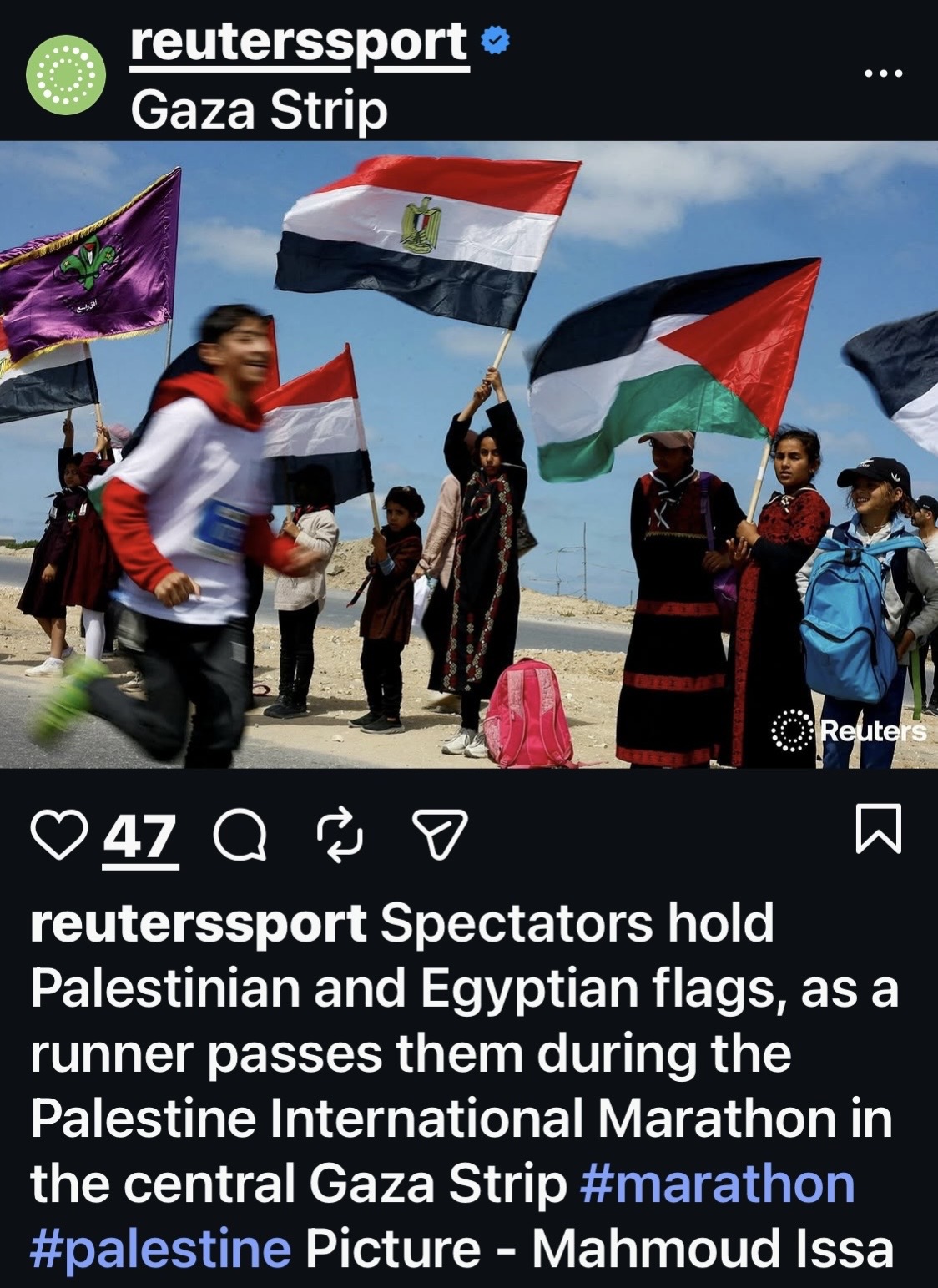
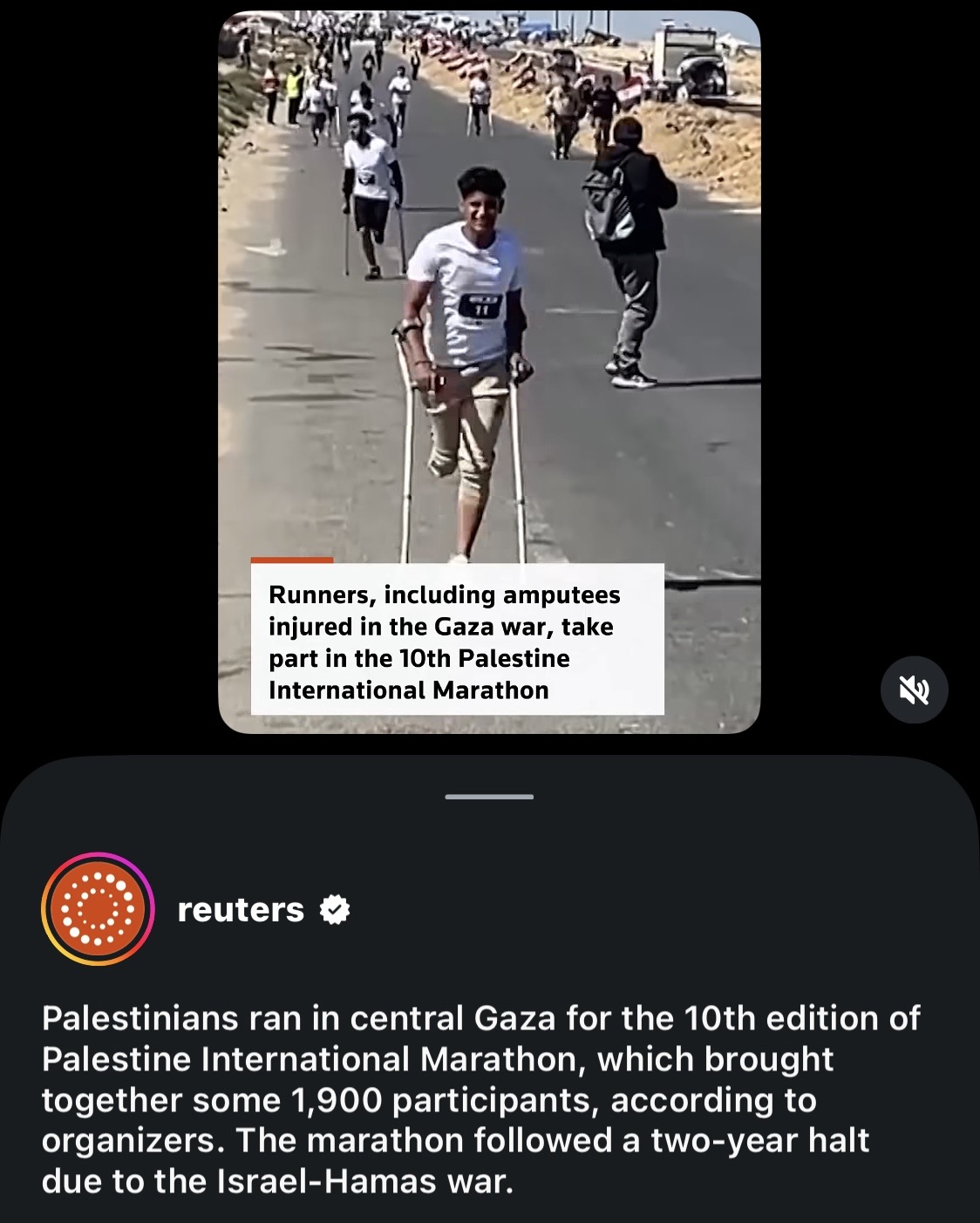
The result was a carefully balanced emotional composition in which devastation and normalcy comfortably coexisted without ever being meaningfully examined together.
But comparison matters.
Because visual journalism is shaped as much by what is excluded from the frame as by what is included within it.
The Endurance Problem
People suffering severe malnutrition do not typically participate in mass endurance events. That is not a political statement. It is a physiological one.
None of this means nobody in Gaza is hungry. It does not mean hardship is fabricated or that civilians are not suffering in wartime conditions. But it does raise legitimate questions about scale, consistency, and editorial framing.
If international audiences are repeatedly shown imagery implying generalized physical collapse across Gaza’s population, then footage of thousands participating in organized long-distance running events inevitably complicates that narrative.
Particularly when both images circulate almost simultaneously.
Narrative Management
The issue extends beyond a single marathon.
What the footage reveals is the extent to which Gaza is visually curated for international consumption. Certain images are elevated aggressively. Others receive minimal attention. Some become defining symbols. Others are treated as isolated exceptions with no wider implications.
A skeletal child becomes representative of Gaza. A marathon runner does not.
An aid queue becomes evidence of societal collapse. Thousands participating in a physically demanding public event are dismissed as culturally incidental.
Editorial weighting shapes public perception long before audiences have an opportunity to interpret events independently.
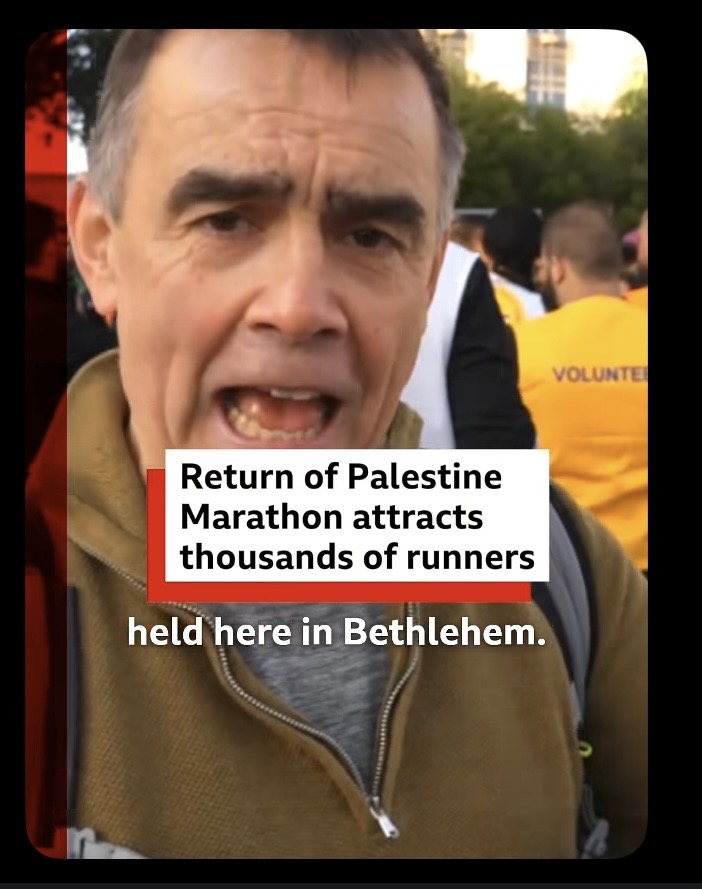
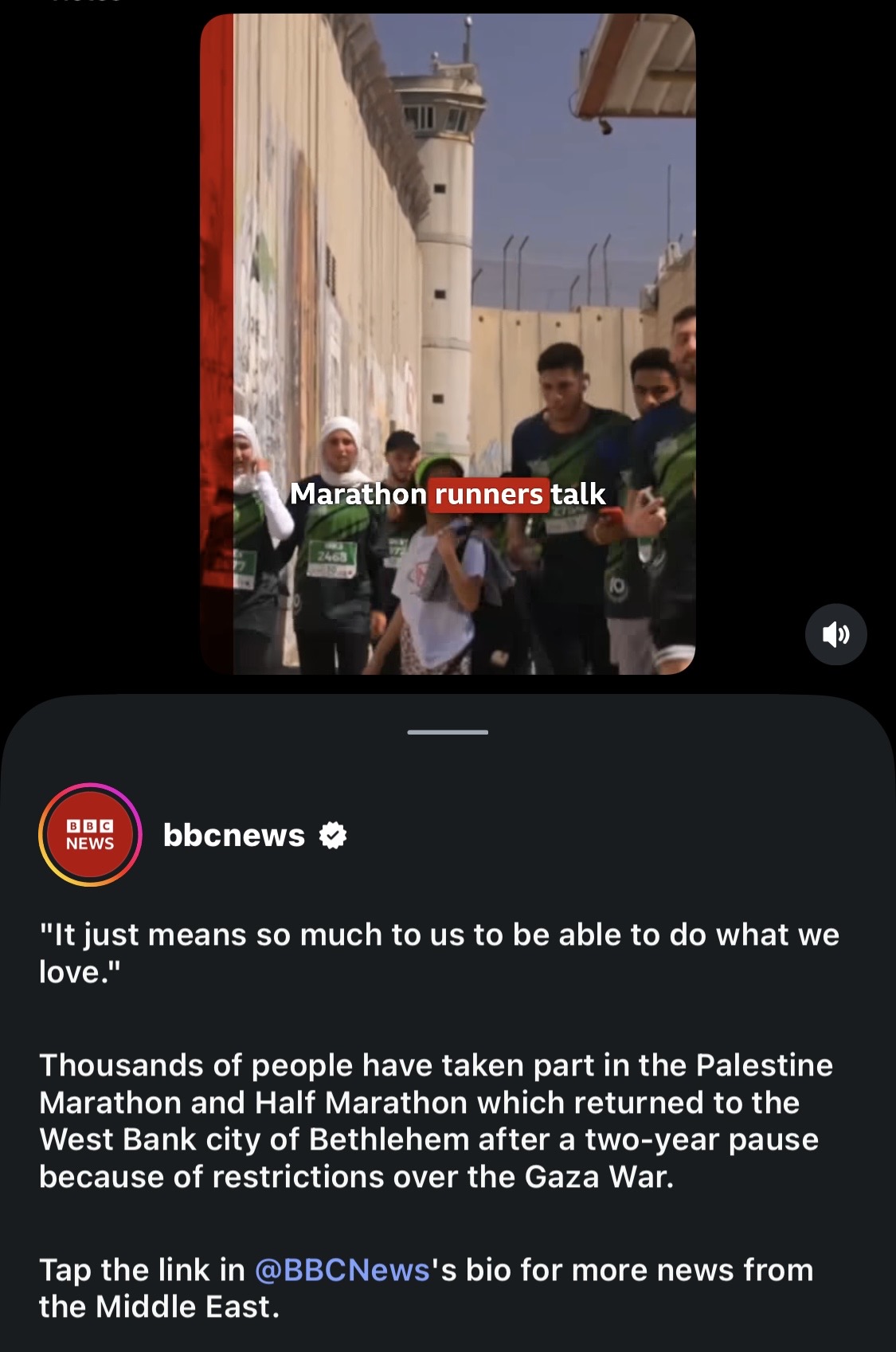
The Bethlehem marathon added another layer to this dynamic. Here, sporting imagery became overt political metaphor. BBC coverage framed runners as “overcoming barriers,” repeatedly positioning Israel’s security barrier as both a literal and symbolic obstacle shaping Palestinian identity and endurance.
The marathon ceased to be merely athletic participation. It became narrative infrastructure.
Even camera positioning reinforced the framing, frequently keeping the barrier visually inseparable from the runners themselves.
The Media Ecosystem
What makes this particularly striking is that many of the same institutions helped distribute both narratives simultaneously.
Within the same media ecosystem:
- Famine warnings intensified
- Starvation imagery circulated globally
- NGOs issued emergency alerts
- Activists amplified claims of collapse
And then:
- Marathon footage appeared
- Celebratory public events were promoted
- Physically robust crowds became openly visible
Yet almost nobody paused to ask whether these images presented a coherent picture of reality.
No serious editorial reckoning followed. No institutional voice appeared interested in reconciling the contradiction. Instead, the inconsistency simply disappeared into the fragmentation of modern media consumption.
That fragmentation is precisely the point.
Conclusion
Images today are consumed individually rather than comparatively. Audiences absorb isolated emotional moments rather than coherent narratives. Contradictions survive because viewers are rarely encouraged to stop long enough to place competing frames beside one another.
The marathon footage does not disprove suffering in Gaza. That was never the argument.
What it does expose is how selectively Gaza is presented to international audiences, and how incompatible visual narratives are often allowed to circulate without scrutiny.
One day, viewers are shown images suggesting widespread starvation and physical collapse. The next, thousands of people appear participating in organized endurance events requiring stamina, coordination, mobility, and public infrastructure.
Both realities cannot carry identical editorial weight without raising obvious questions.
The more revealing question may be why so few people in the media appear willing to ask them.
Liked this article? Follow HonestReporting on Twitter, Facebook, Instagram and TikTok to see even more posts and videos debunking news bias and smears, as well as other content explaining what’s really going on in Israel and the region. Get updates direct to your phone. Join our WhatsApp and Telegram channels!
© Divuach Ne’eman R”A, 2025