As the global media landscape evolves at breakneck speed, so do the narratives that shape how the world sees Israel. Every day, HonestReporting tracks and responds to skewed coverage, misinformation, and subtle or not-so-subtle distortions in how stories are told. But fighting bias isn’t just about reacting. It’s about understanding how bias works and why certain narratives resonate, spread, and distort public understanding.
We developed a new analytical framework to guide our efforts. We invite you to explore the framework for yourself and see why HonestReporting is the premier organization educating the public to become better media consumers.
FIB – Falsehood Identification & Breakdown: A new classification system that identifies the five core types of distorted narratives about Israel in the media. These are the “what” of bias, the overarching storylines that manipulate perception.
Updated Bias Mechanisms: We have also updated our foundational guide to understanding the mechanisms used to create disinformation (a separate article will explore these updates). This improves on our original “8 Categories of Media Bias” as an analytical tool to understand the mechanisms used to create disinformation.
Together, these frameworks help us promote accuracy and objectivity.
What is FIB?
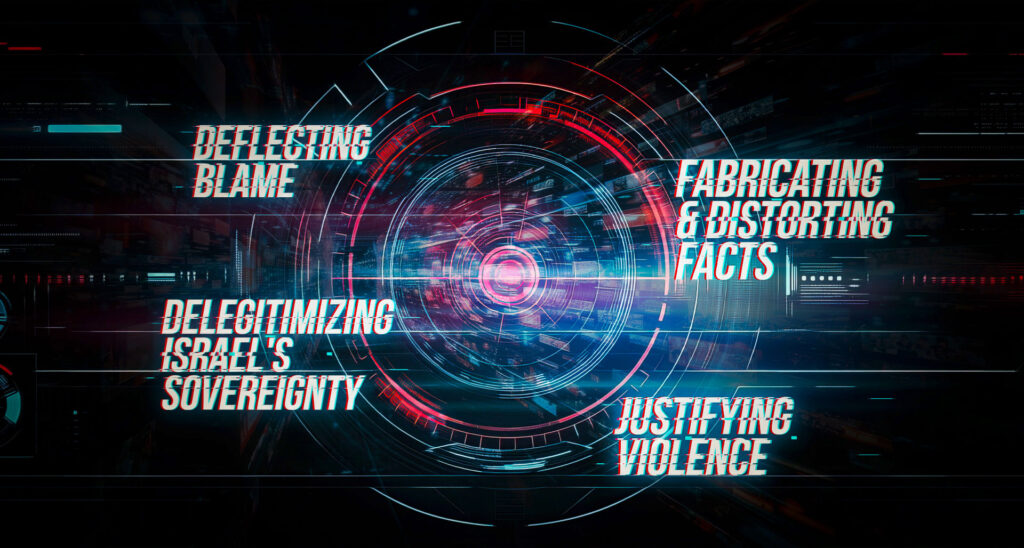
The Falsehood Identification Breakdown (FIB) Framework includes the 5 core narrative distortions used in global media to undermine Israel, misrepresent the conflict, or mislead audiences. Each “FIB type” focuses on what is being said, as opposed to how it is framed, to shape global perception.
Falsehood Identification Breakdown (FIB) classification – Narrative Categories:
- Delegitimizing of Israel’s Sovereignty
- Justifying & Legitimizing Violence Against Israel, Israelis, and/or Jews
- Denying Violence Against Israel, Israelis, and/or Jews
- Deflecting and Shifting Blame onto Israel
- Fabricating & Distorting Facts, including Atrocity Propaganda
Explore each FIB category below to see how it appears in the media, with examples that reveal how bias takes shape:
1. Delegitimizing of Israel’s Sovereignty
- Challenging Israel’s legal/historical legitimacy.
- Erasing or undermining Israel’s statehood and self-determination, while using “historical revisionism” (e.g. denying Jewish indigeneity).
- “Lawfare” tactics (e.g. misinterpreting and misrepresenting international law).
- “Anti-Zionism” (e.g. denying Jewish self-determination while supporting other national movements).
Example:
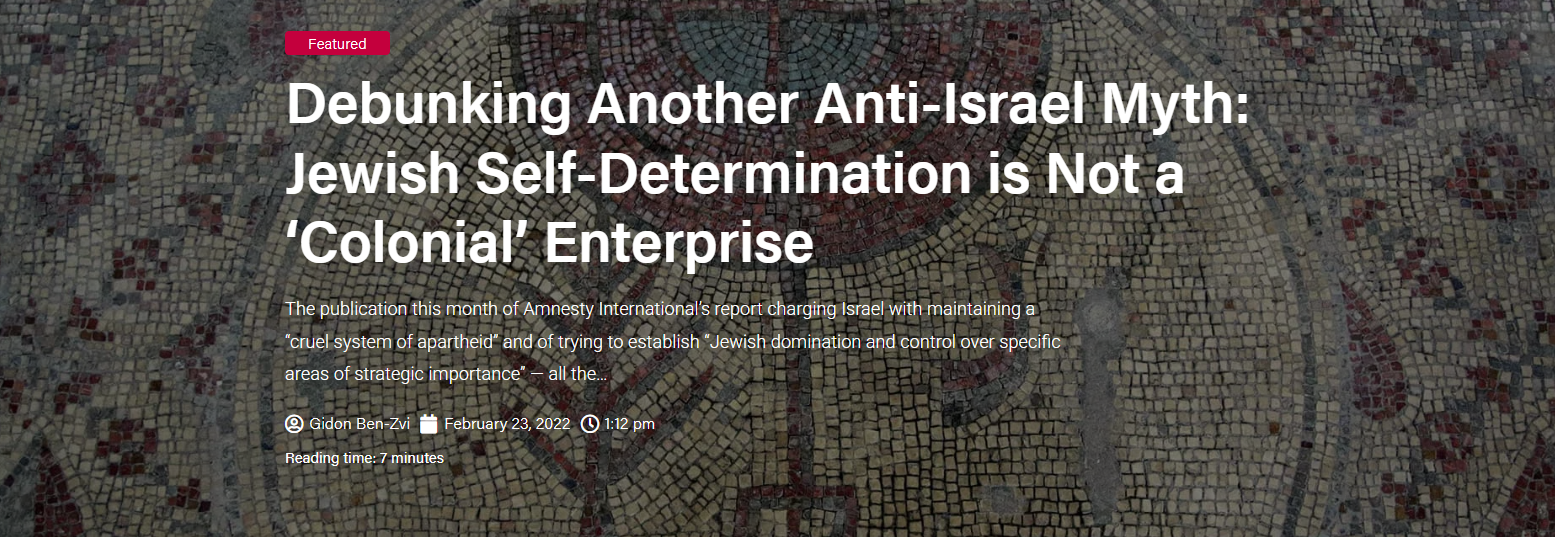
Explanation:
In the article “Debunking Another Anti-Israel Myth: Jewish Self-Determination is Not a ‘Colonial’ Enterprise,” claims that label Jewish self-determination as ‘colonialism’ are debunked. The piece emphasizes the indigenous connection of the Jewish people to the land of Israel and challenges narratives that seek to undermine Israel’s legitimacy.
2. Justifying & Legitimizing Violence Against Israel, Israelis, and/or Jews
- The normalization, excusing or celebration of violence, which can include justifying attacks and moral inversion (e.g. labeling terrorism as “resistance” or “self-defense,” or glorification of terrorism – depicting perpetrators as “heroes” or “martyrs” rather than “terrorists”).
- Selective moral outrage, or reframing attacks as “provoked” responses, implying Israeli actions justify violence.
- Antisemitism – hostility, prejudice, or discrimination against Jews as an ethnic, religious, or national group (See IHRA working definition).
Example:
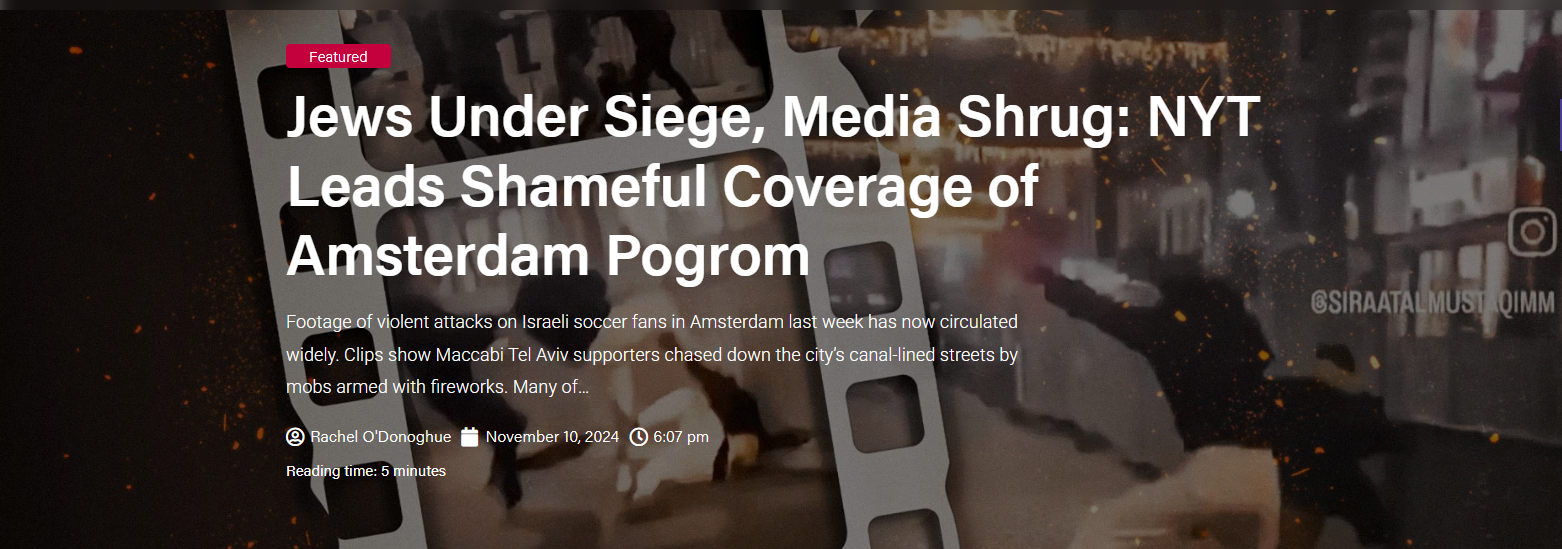
Explanation:
In the article “Jews Under Siege, Media Shrug: NYT Leads Shameful Coverage of Amsterdam Pogrom,” the framing of attacks against Jewish individuals and institutions is challenged. The piece critiques how international media described the events as generic unrest tied to soccer or geopolitical tensions, rather than recognizing them as premeditated acts of antisemitic violence. It emphasizes the targeted nature of the attacks and exposes how the omission of motive contributes to the normalization and justification of antisemitic aggression.
3. Denying Violence Against Israel, Israelis, and/or Jews
- Erasing or downplaying violence targeting Israelis and/or Jews (e.g. whitewashing terrorism, selective omission, and selective reporting).
- Erasing or minimizing Jewish victimhood (e.g. misrepresenting casualties).
- Minimizing antisemitic hate crimes, physical assaults, terrorism, etc.
Example:
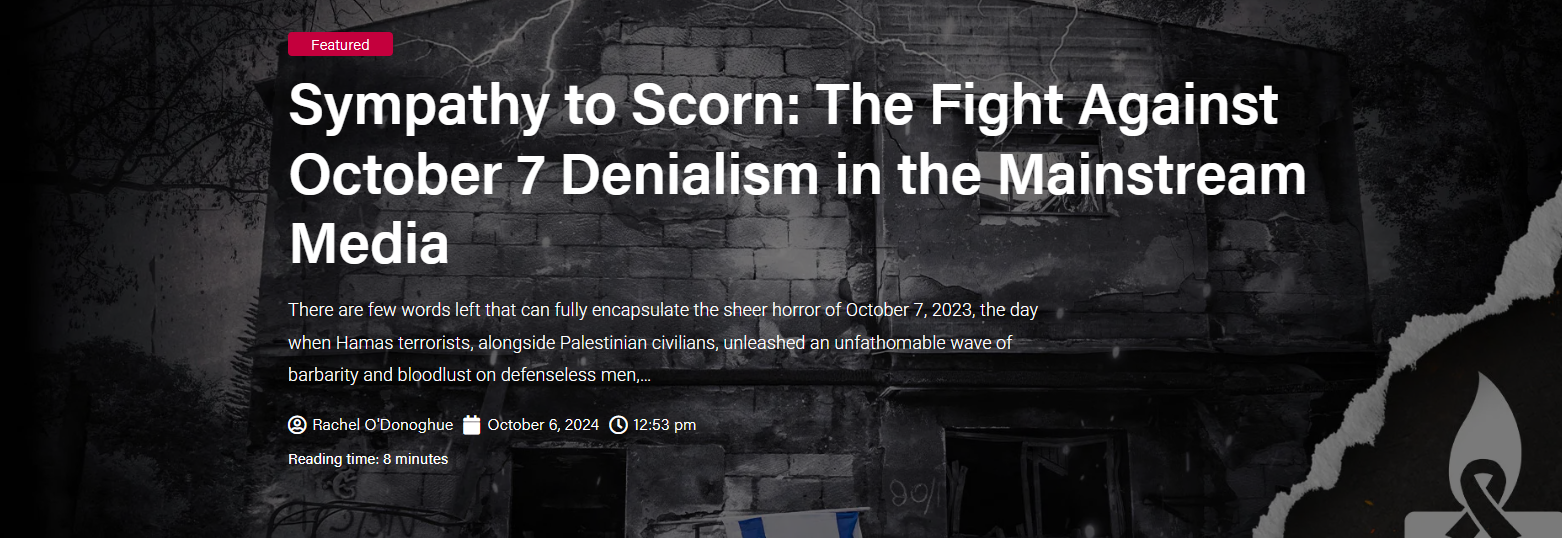
Explanation:
In the article “Sympathy to Scorn: The Fight Against October 7 Denialism in the Mainstream Media,” the widespread attempts to downplay or deny the severity of the October 7 attacks are examined. The piece highlights how certain media outlets minimized the violence committed against Israeli civilians, including mass murder, hostage-taking, and sexual violence, thereby distorting the factual record and erasing the scale and brutality of the atrocities.
Additional example:
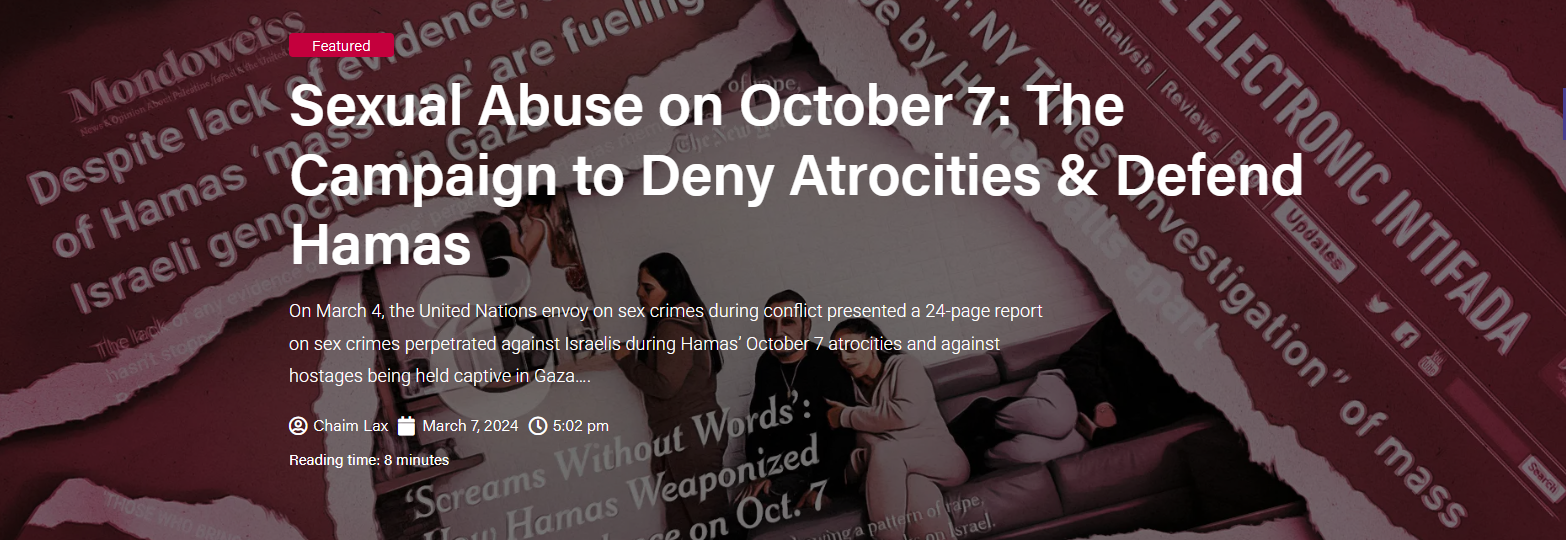
Explanation:
In the article “Sexual Abuse on October 7: The Campaign to Deny Atrocities & Defend Hamas,” the efforts to deny or distort facts about sexual violence committed during the October 7 attacks are confronted. The piece challenges disinformation and emphasizes the importance of acknowledging and reporting the truth.
4. Deflecting and Shifting Blame onto Israel
- Removing agency from the Palestinians while holding Israel responsible.
- Focusing disproportionately on Israel’s actions while ignoring greater regional violence (e.g., Syrian civil war, Iranian oppression, or Palestinian Authority (PA) responsibility).
- Inverted chronology (e.g. focusing on Israel’s response to terror rather than the terror that initiated the response – “It all started when Israel fired back.”).
Example:
Explanation:
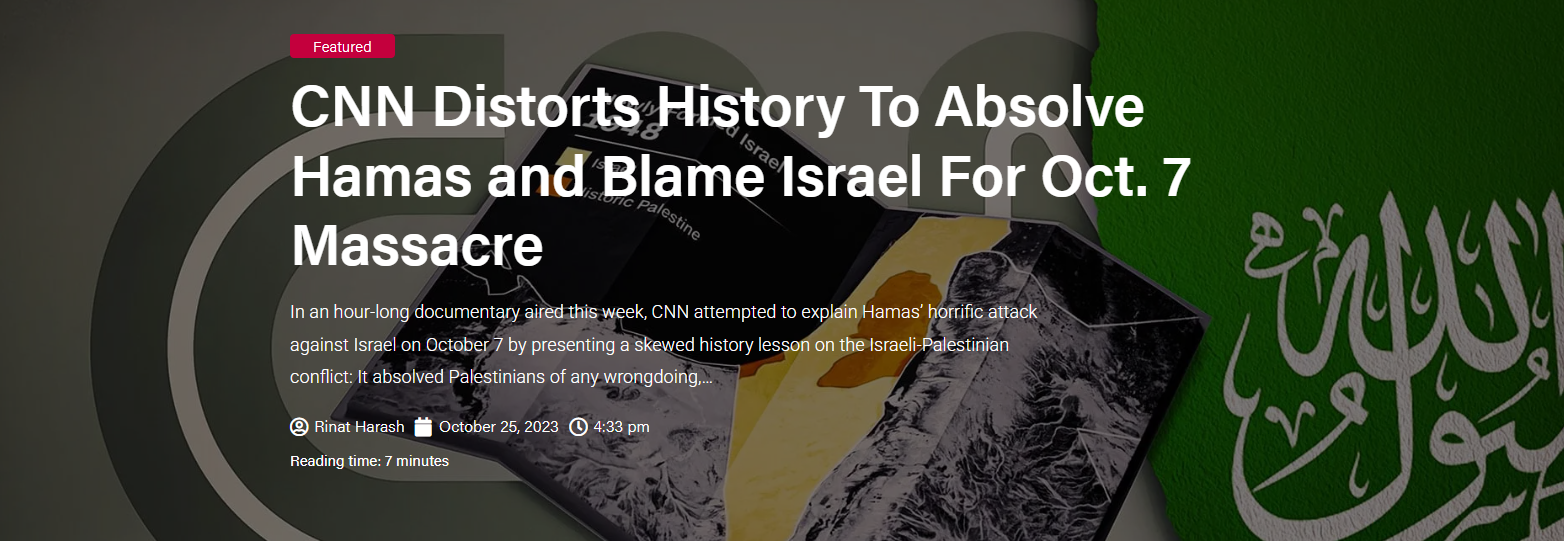
In the article “CNN Distorts History to Absolve Hamas and Blame Israel for Oct. 7 Massacre, the coverage is critiqued for framing the October 7 massacre as a reaction to Israeli policies, suggesting that Hamas’s atrocities were somehow provoked or contextualized by Israel’s actions. The article critiques how CNN allegedly reframed the events, while removing agency from the terrorists and shifting moral responsibility onto Israel by emphasizing political grievances over violent intent.
Additional example:
Explanation:
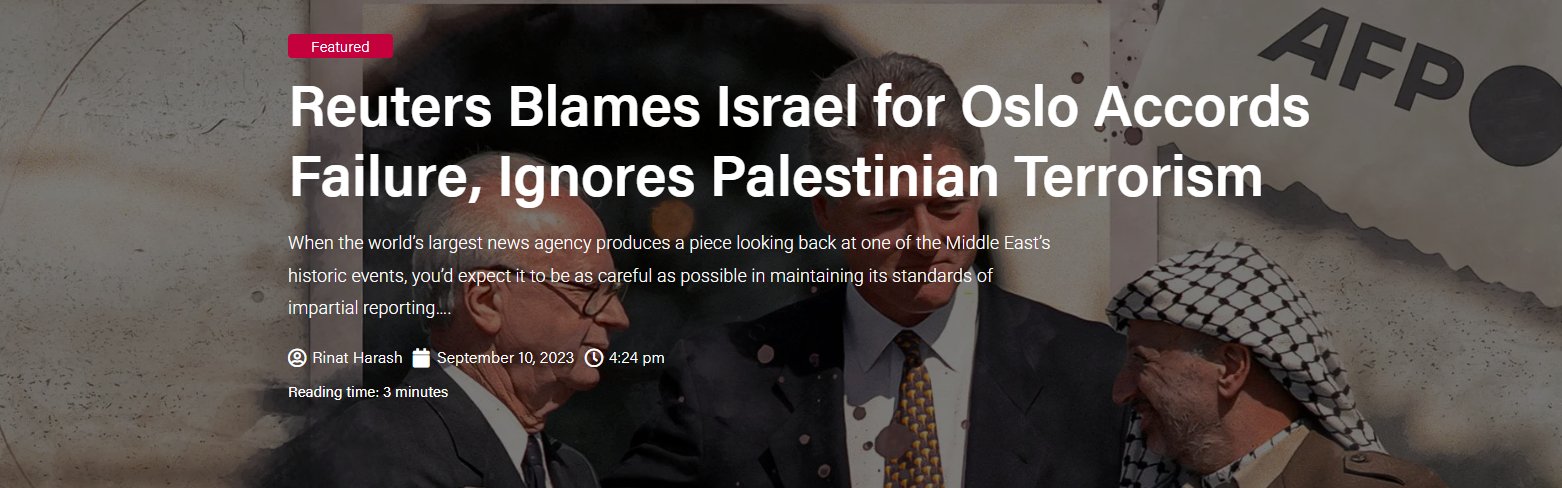
In the article “Reuters Blames Israel for Oslo Accords Failure, Ignores Palestinian Terrorism, the narrative presented by Reuters is critiqued for attributing the collapse of the Oslo peace process primarily to Israeli actions while overlooking the significant role of Palestinian terrorism. The piece highlights how this framing removes agency from Palestinian actors and shifts moral responsibility onto Israel by emphasizing Israeli policies over violent actions by Palestinian groups. This selective reporting distorts the historical record and misleads readers about the complexities of the peace process.
5. Fabricating & Distorting Facts, including Atrocity Propaganda
- Manipulated content (e.g. edited images, videos, and reports).
- Data falsification or fabrication (e.g. manipulated statistics, inflated casualty numbers with no independent verification, and reframing all Gazan deaths as “civilian” while ignoring combatants).
- Selective evidence that supports false claims that distort perceptions.
- AI-generated media (e.g. deepfakes and synthetic content).
- Staged incidents (a phenomenon often referred to as “Pallywood”).
- Recycling of old footage from unrelated conflicts, falsely presented as current events.
Explanation:
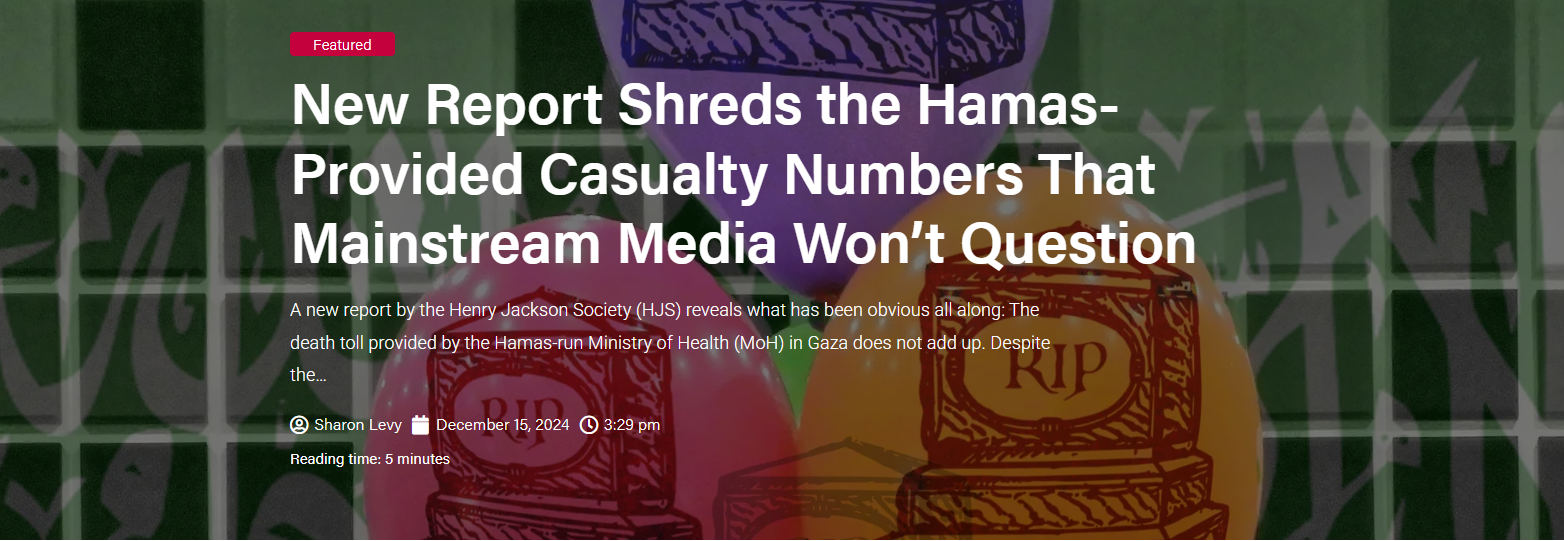
In the article “New Report Shreds the Hamas-Provided Casualty Numbers That Mainstream Media Won’t Question,” the reliance of major news outlets on unverified statistics from Hamas is examined. The piece critiques how media reports repeated casualty figures without clarifying the source’s credibility or acknowledging the lack of independent verification. It emphasizes how such reporting blurs the distinction between combatants and civilians, contributing to distorted public perceptions. By amplifying unsubstantiated claims, often tied to accusations of “genocide” or indiscriminate targeting, this type of coverage plays into broader efforts to manipulate international opinion through fabricated or exaggerated narratives.
- Challenging Israel’s legal/historical legitimacy.
- Erasing or undermining Israel’s statehood and self-determination, while using “historical revisionism” (e.g. denying Jewish indigeneity).
- “Lawfare” tactics (e.g. misinterpreting and misrepresenting international law).
- “Anti-Zionism” (e.g. denying Jewish self-determination while supporting other national movements).
Example:
Explanation:
In the article “Debunking Another Anti-Israel Myth: Jewish Self-Determination is Not a ‘Colonial’ Enterprise,” claims that label Jewish self-determination as ‘colonialism’ are debunked. The piece emphasizes the indigenous connection of the Jewish people to the land of Israel and challenges narratives that seek to undermine Israel’s legitimacy.
- The normalization, excusing or celebration of violence, which can include justifying attacks and moral inversion (e.g. labeling terrorism as “resistance” or “self-defense,” or glorification of terrorism – depicting perpetrators as “heroes” or “martyrs” rather than “terrorists”).
- Selective moral outrage, or reframing attacks as “provoked” responses, implying Israeli actions justify violence.
- Antisemitism – hostility, prejudice, or discrimination against Jews as an ethnic, religious, or national group (See IHRA working definition).
Example:
Explanation:
In the article “Jews Under Siege, Media Shrug: NYT Leads Shameful Coverage of Amsterdam Pogrom,” the framing of attacks against Jewish individuals and institutions is challenged. The piece critiques how international media described the events as generic unrest tied to soccer or geopolitical tensions, rather than recognizing them as premeditated acts of antisemitic violence. It emphasizes the targeted nature of the attacks and exposes how the omission of motive contributes to the normalization and justification of antisemitic aggression.
- Erasing or downplaying violence targeting Israelis and/or Jews (e.g. whitewashing terrorism, selective omission, and selective reporting).
- Erasing or minimizing Jewish victimhood (e.g. misrepresenting casualties).
- Minimizing antisemitic hate crimes, physical assaults, terrorism, etc.
Example:
Explanation:
In the article “Sympathy to Scorn: The Fight Against October 7 Denialism in the Mainstream Media,” the widespread attempts to downplay or deny the severity of the October 7 attacks are examined. The piece highlights how certain media outlets minimized the violence committed against Israeli civilians, including mass murder, hostage-taking, and sexual violence, thereby distorting the factual record and erasing the scale and brutality of the atrocities.
Additional example:
Explanation:
In the article “Sexual Abuse on October 7: The Campaign to Deny Atrocities & Defend Hamas,” the efforts to deny or distort facts about sexual violence committed during the October 7 attacks are confronted. The piece challenges disinformation and emphasizes the importance of acknowledging and reporting the truth.
- Removing agency from the Palestinians while holding Israel responsible.
- Focusing disproportionately on Israel’s actions while ignoring greater regional violence (e.g., Syrian civil war, Iranian oppression, or Palestinian Authority (PA) responsibility).
- Inverted chronology (e.g. focusing on Israel’s response to terror rather than the terror that initiated the response – “It all started when Israel fired back.”).
Example:
Explanation:
In the article “CNN Distorts History to Absolve Hamas and Blame Israel for Oct. 7 Massacre, the coverage is critiqued for framing the October 7 massacre as a reaction to Israeli policies, suggesting that Hamas’s atrocities were somehow provoked or contextualized by Israel’s actions. The article critiques how CNN allegedly reframed the events, while removing agency from the terrorists and shifting moral responsibility onto Israel by emphasizing political grievances over violent intent.
Additional example:
Explanation:
In the article “Reuters Blames Israel for Oslo Accords Failure, Ignores Palestinian Terrorism, the narrative presented by Reuters is critiqued for attributing the collapse of the Oslo peace process primarily to Israeli actions while overlooking the significant role of Palestinian terrorism. The piece highlights how this framing removes agency from Palestinian actors and shifts moral responsibility onto Israel by emphasizing Israeli policies over violent actions by Palestinian groups. This selective reporting distorts the historical record and misleads readers about the complexities of the peace process.
- Manipulated content (e.g. edited images, videos, and reports).
- Data falsification or fabrication (e.g. manipulated statistics, inflated casualty numbers with no independent verification, and reframing all Gazan deaths as “civilian” while ignoring combatants).
- Selective evidence that supports false claims that distort perceptions.
- AI-generated media (e.g. deepfakes and synthetic content).
- Staged incidents (a phenomenon often referred to as “Pallywood”).
- Recycling of old footage from unrelated conflicts, falsely presented as current events.
Explanation:
In the article “New Report Shreds the Hamas-Provided Casualty Numbers That Mainstream Media Won’t Question,” the reliance of major news outlets on unverified statistics from Hamas is examined. The piece critiques how media reports repeated casualty figures without clarifying the source’s credibility or acknowledging the lack of independent verification. It emphasizes how such reporting blurs the distinction between combatants and civilians, contributing to distorted public perceptions. By amplifying unsubstantiated claims, often tied to accusations of “genocide” or indiscriminate targeting, this type of coverage plays into broader efforts to manipulate international opinion through fabricated or exaggerated narratives.
Why It Matters and What Comes Next
Media bias today is more complex, volatile, more emotional, and more algorithmically amplified than ever. The combination of the Falsehood Identification Breakdown (FIB) Framework, which classifies the narrative, and the Bias Mechanisms, which explain how it is created, gives HonestReporting and the public the tools to decode disinformation in real time.
But with the rise of AI-generated content and coordinated digital smear campaigns, traditional monitoring is no longer sufficient. Now, powered by our new AI engine, BiasBreaker, we can:
- Detect and classify false narratives within seconds
- Respond before disinformation spreads
- Help educate the public through interactive, data-driven tools (launching soon)
- Hold journalists and platforms accountable, at scale (launching soon)
The bias tactics are rarely random, and often are part of strategic influence operations, coordinated to manufacture outrage, rally global support against Israel, and manipulate perceptions to prompt international intervention. Such campaigns frequently rely on “atrocity propaganda”, including false claims of ‘genocide,’ designed to maximize emotional response while eroding public trust, and obscuring factual reporting.
Not all outlets have the same reach or impact. Therefore, assessing narrative severity helps prioritize responses and clarify the impact of misleading content. We consider factors such as reach and virality, emotional intensity and framing, audience trust in the outlet, and the degree of falsehood. A viral, completely fabricated story broadcast by a major outlet is high severity, demanding a swift correction. While a niche opinion piece that subtly omits context may be low severity, it is still worth tracking, but with less urgency. This approach allows us to distinguish between dangerous disinformation campaigns and lower-impact editorial bias, and to respond accordingly.
With BiasBreaker and our evolving analytical frameworks, HonestReporting is pioneering a real-time system of digital accountability. Our mission is clear: to build public resilience against media manipulation, restore truth to the center of discourse with accurate and fair reporting – one narrative at a time.
Liked this article? Follow HonestReporting on Twitter, Facebook, Instagram and TikTok to see even more posts and videos debunking news bias and smears, as well as other content explaining what’s really going on in Israel and the region. Get updates direct to your phone. Join our WhatsApp and Telegram channels!
© Divuach Ne’eman R”A, 2025