Key Takeaways:
- A mass wedding in Gaza was presented by major international outlets as a symbol of resilience and hope, built on carefully selected visuals and emotionally framed reporting.
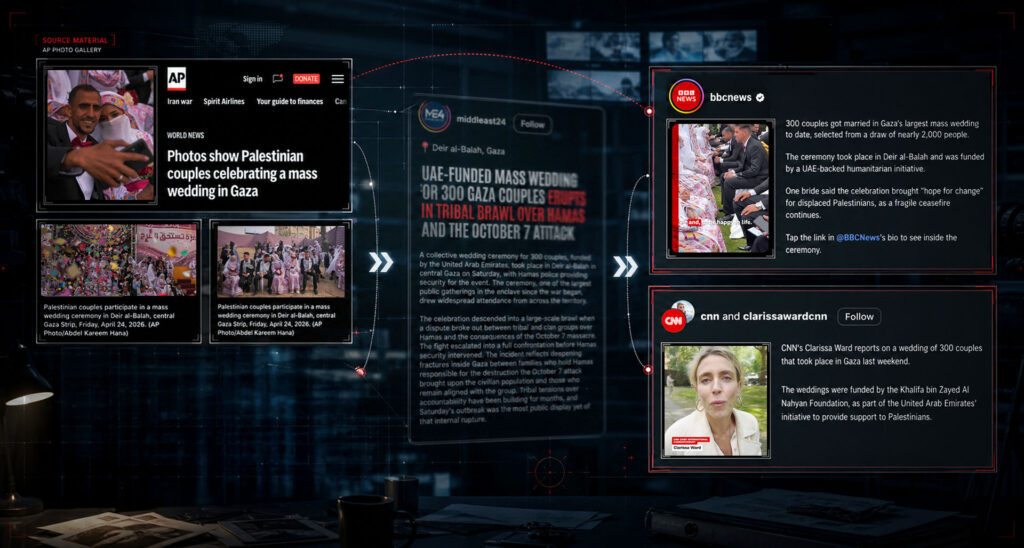
- Three major global news organizations, CNN, BBC, and AP, covered the same event while leaving out a documented mass brawl that took place at the same location.
- The result is not simply incomplete reporting. It is a constructed narrative shaped as much by what is left out as by what is shown.
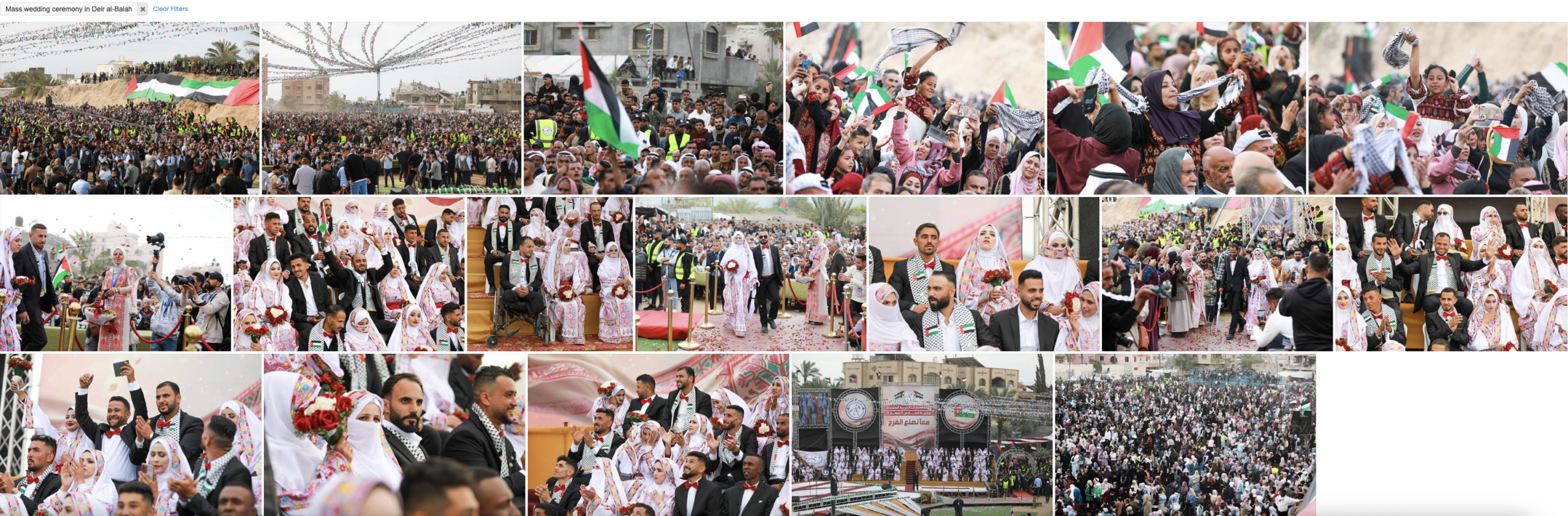
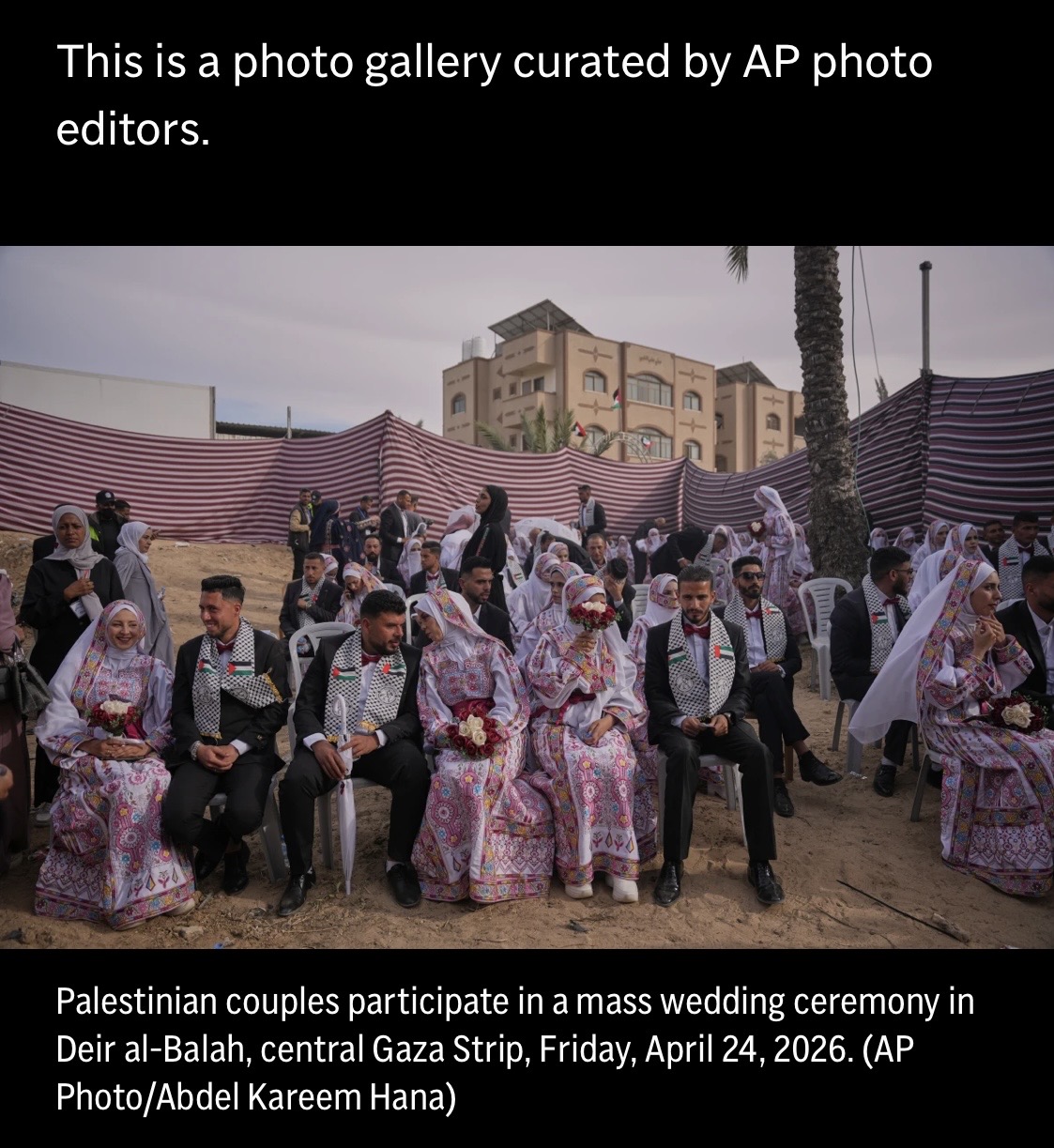
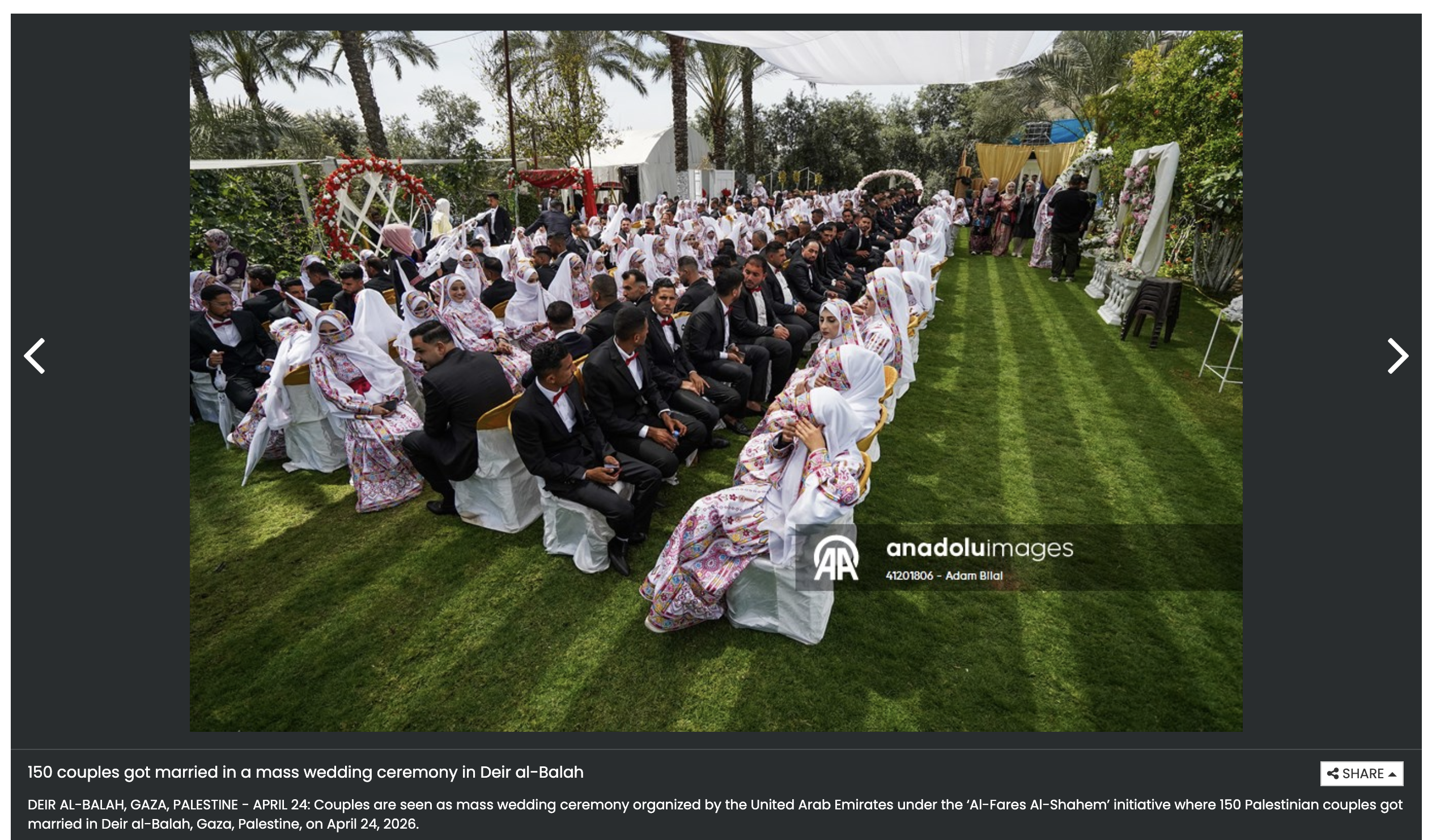
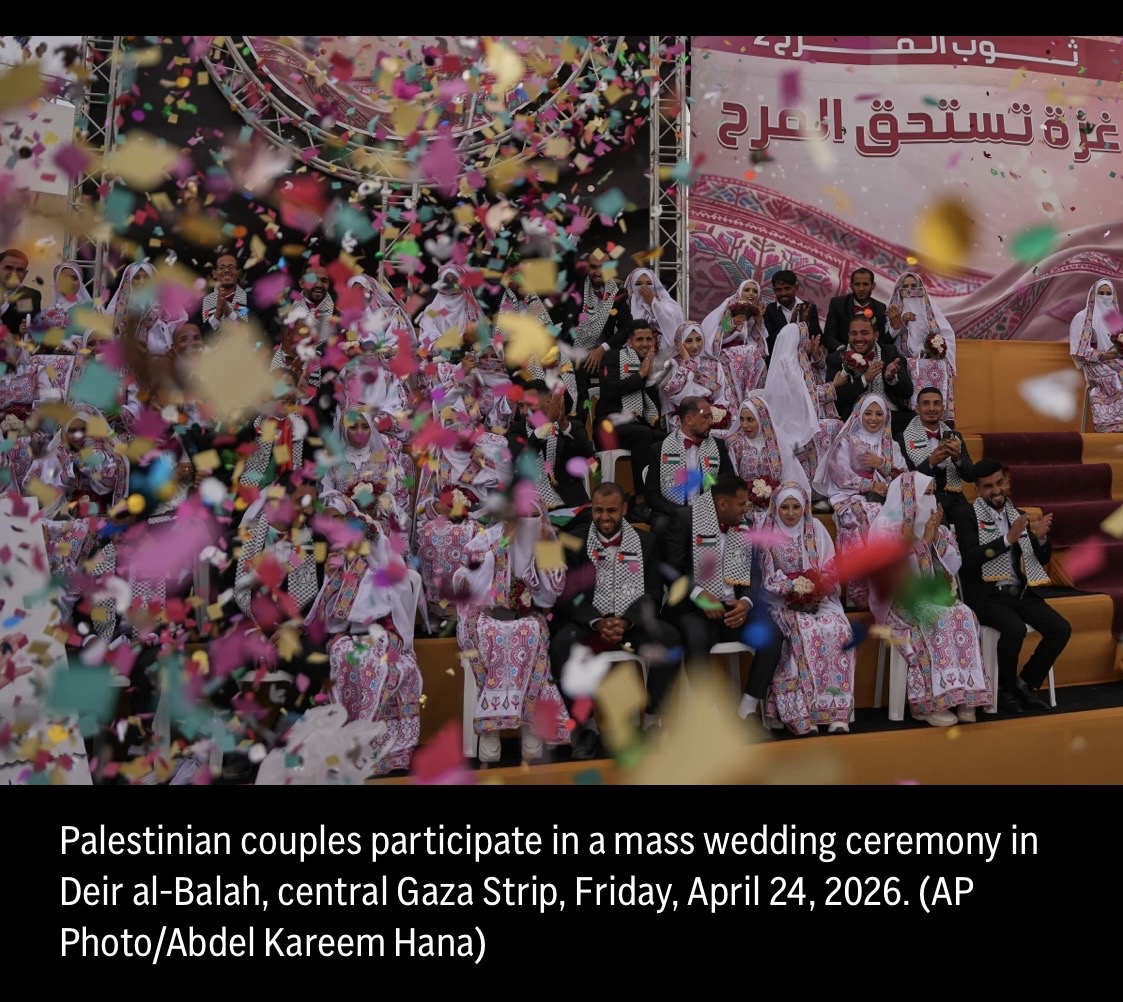
Three hundred couples gather for a wedding in Gaza. The pictures are vivid. Embroidered dresses. Rows of grooms in suits. Music, movement, color. A scene designed to feel hopeful. That is the version that travels.
But that is not the full event.
The Framing
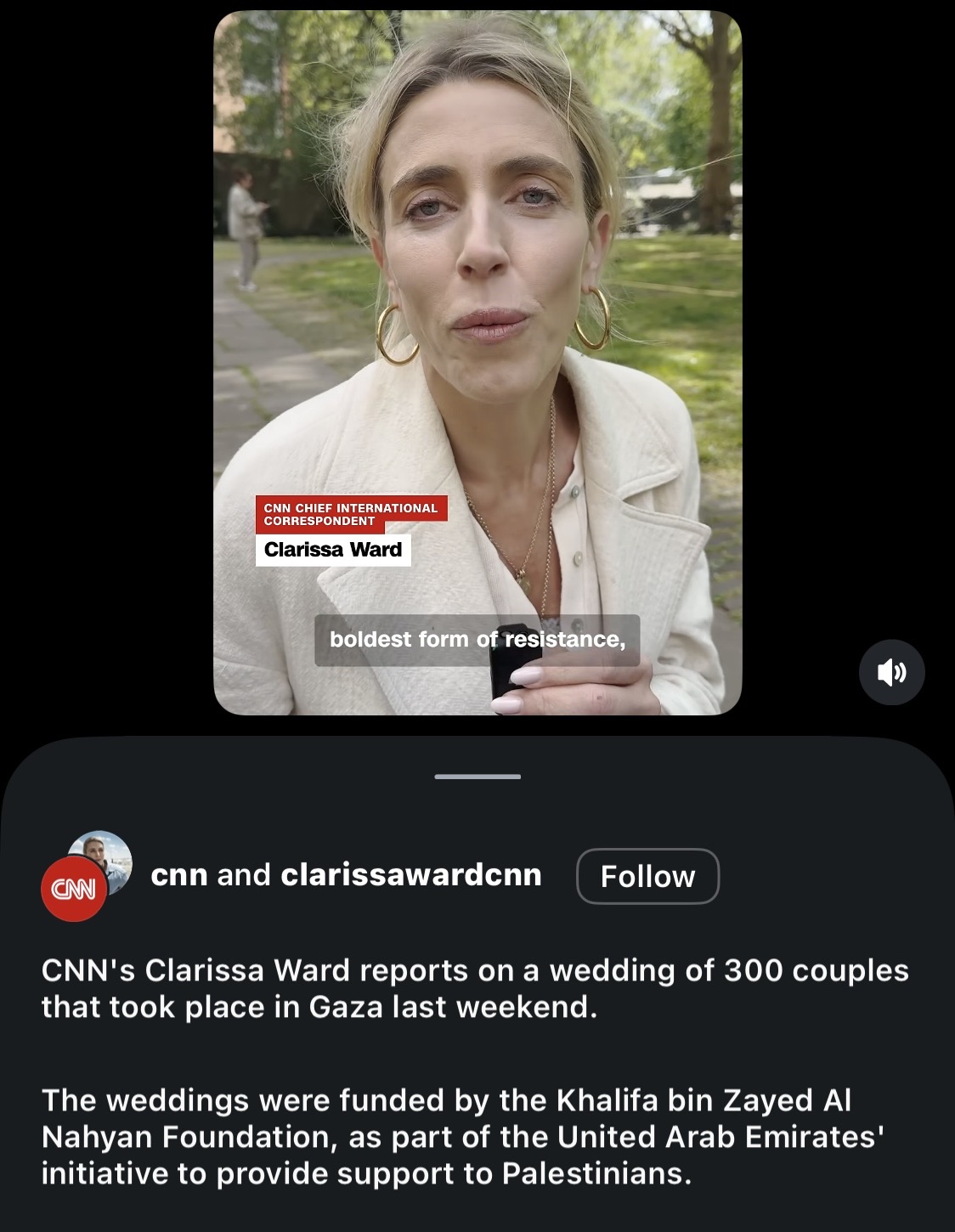
On CNN, Chief International Correspondent Clarissa Ward sets the tone:
“Sometimes love is the boldest form of resistance.”
The report moves through images of celebration. Couples smiling. Families watching. A rare moment of joy after prolonged hardship.
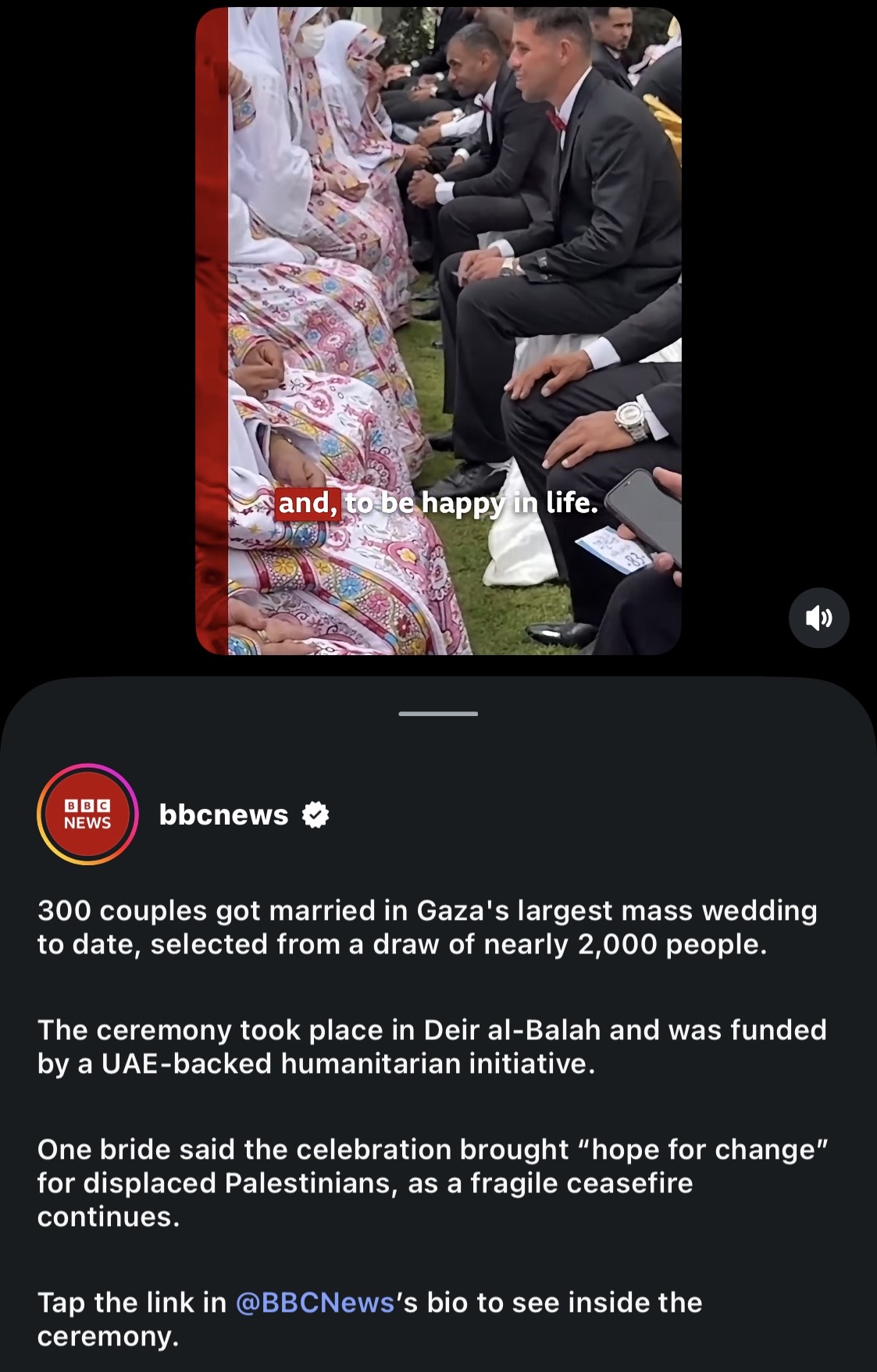
BBC News follows the same line. The wedding is presented as a humanitarian initiative, a sign that life continues despite the war.
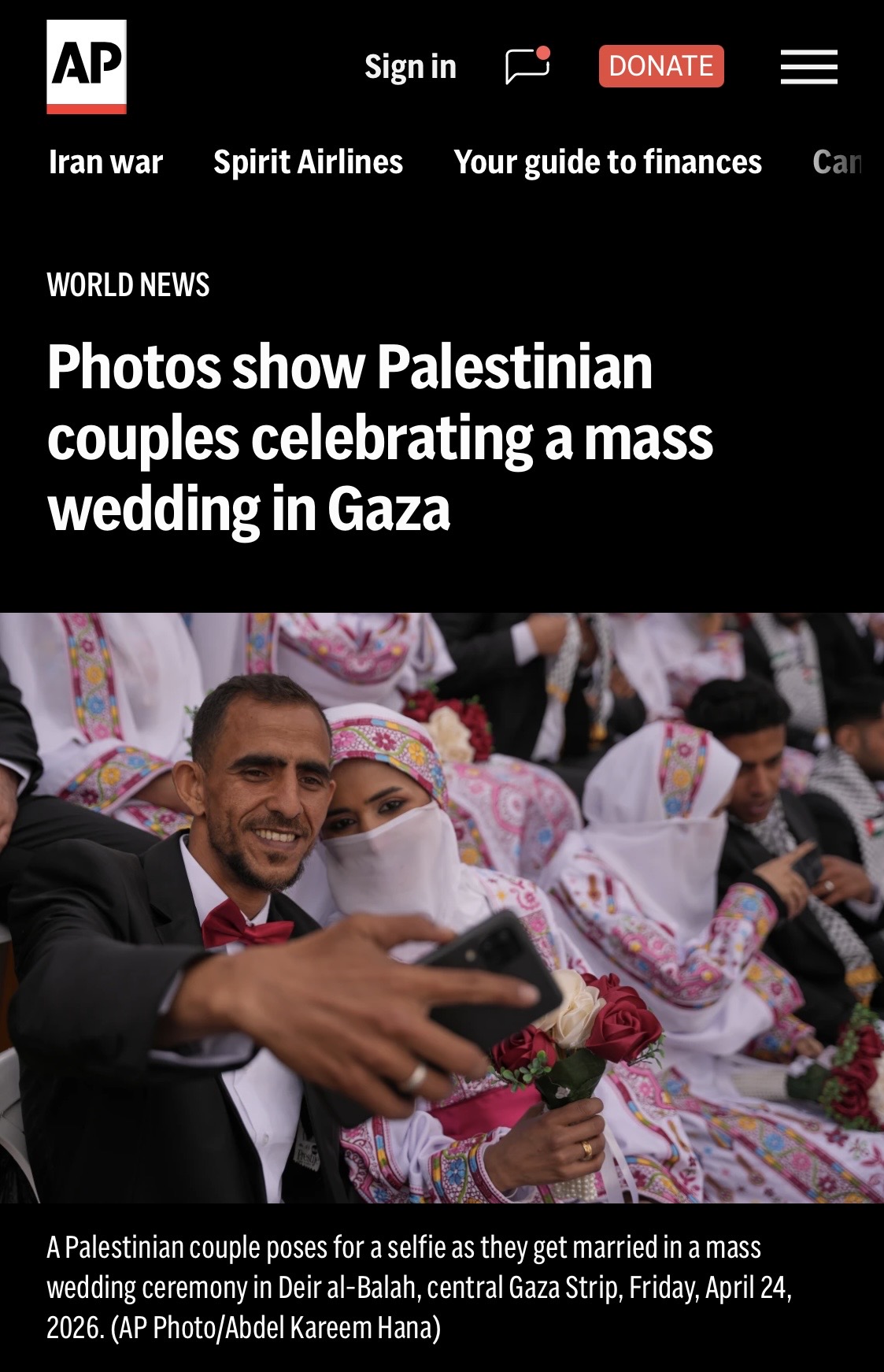
Associated Press supplies the imagery. Wide, clean frames that reinforce the same message.
Three organizations. One story.
The Construction
The event does not appear by chance. It is organized, funded, and structured to be seen.
Large numbers are brought together. Dress is coordinated. The setting is controlled. Cameras are already there.
Everything inside the frame works.
The repetition of couples. The symmetry of the crowd. The color and movement.
It reads clearly because it is meant to.
What Is Not Shown
At the same event, the atmosphere changes.
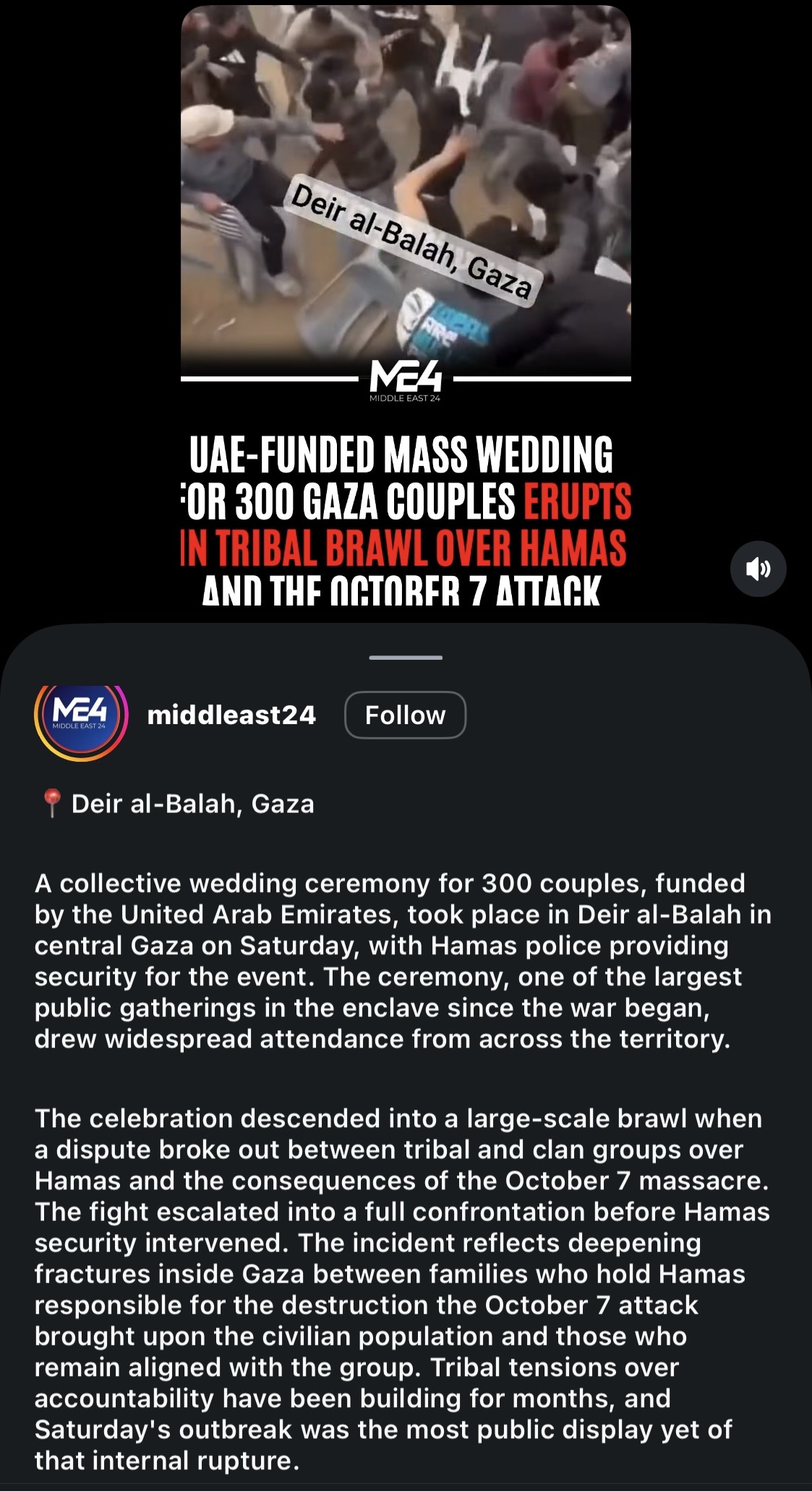
Footage from the scene shows a confrontation breaking out among attendees. Chairs are thrown. Groups push into each other. The gathering loses control before it is eventually contained.
This is not another location.
It is the same event.
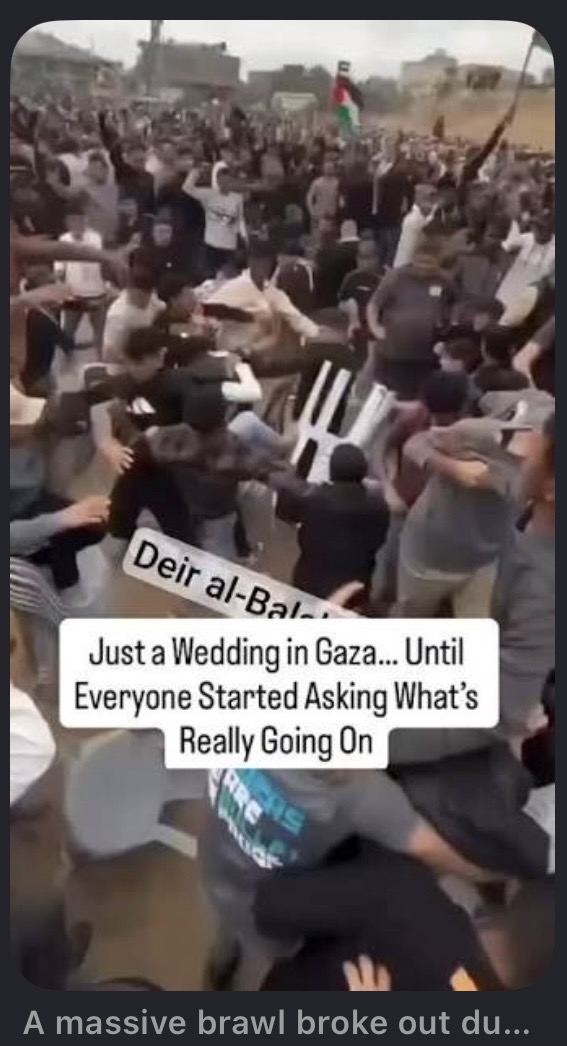
The Brawl
The breakdown is not minor. It is a large-scale clash involving multiple groups, with visible violence and disorder. Regional reporting links the confrontation to internal tensions between factions, including disputes connected to Hamas and the aftermath of October 7.
This is not background detail. It is part of what happened that day.
Yet it does not appear in the coverage that presented the event as a unified celebration.
A UAE-funded mass wedding in Gaza became a polished soft story for international media.
Beautiful dresses. Suits. Music. @CNN‘s @clarissaward even called it “the boldest form of resistance.”
Then the event ended in a brawl over Hamas and the fallout from October 7.
Funny how… pic.twitter.com/7oaZkPBzXs— HonestReporting (@HonestReporting) May 1, 2026
The Omission
CNN does not mention it.
BBC News does not include it.
Associated Press does not show it.
These are separate organizations with different teams, different editors, and different systems. Yet they arrive at the same version of events.
That is not coincidence.
It shows how editorial choices across institutions can produce a single narrative, even when the underlying reality is not singular.
This is not oversight.
It is systemic.
L: @BBCNews showcases a mass wedding of 300 couples in Gaza.
R: What they don’t show — a mass tribal brawl at the same event.
Because when it comes to the Palestinians, it’s all about selective storytelling for the BBC. pic.twitter.com/FJbXADXwg7
— HonestReporting (@HonestReporting) April 27, 2026
The Effect
The audience is given a complete story.
Not because everything is visible, but because everything that complicates the story has been removed.
What remains is simple. Hopeful. Coherent.
And that simplicity is what makes it effective.
The Amplification
Once published, the images move quickly.
They are shared, reposted, and repeated. The framing holds at every stage.
The wedding becomes a symbol. A shorthand for resilience.
The confrontation does not travel with it.
It disappears from the narrative.
The Pattern
This is not an isolated example.
The structure is familiar. A controlled event. A clear emotional message. Immediate distribution. Complicating details left out.
That process does not begin and end with the image.
As shown in earlier cases, scenes can be positioned to produce a specific frame. Here, the same logic continues after the moment is captured. The selection of what is shown and what is excluded completes the narrative.
The camera records part of the event.
Editorial decisions determine the rest.
Conclusion
Three major global news organizations covered the same event and produced the same story.
A mass wedding. A moment of hope. A sign of resilience.
But they did not report the same reality.
The confrontation that followed was recorded and available. It simply did not fit the version that was chosen.
That is the issue.
This is not about a missing detail.
It is about a line being drawn around what counts as the story.
When that line is drawn in the same place across multiple institutions, the result is not just reporting.
It is narrative construction.
And once that version is established, everything outside it fades from view.
Liked this article? Follow HonestReporting on Twitter, Facebook, Instagram and TikTok to see even more posts and videos debunking news bias and smears, as well as other content explaining what’s really going on in Israel and the region. Get updates direct to your phone. Join our WhatsApp and Telegram channels!
© Divuach Ne’eman R”A, 2025