President Trump is calling it the 12-Day War, a nod to Israel’s lightning Six-Day War of 1967, but adjusted for inflation, as one netizen quipped Tuesday morning, shortly after the ceasefire was first triumphantly announced by Trump on social media, and before either Israel or Iran had confirmed it.
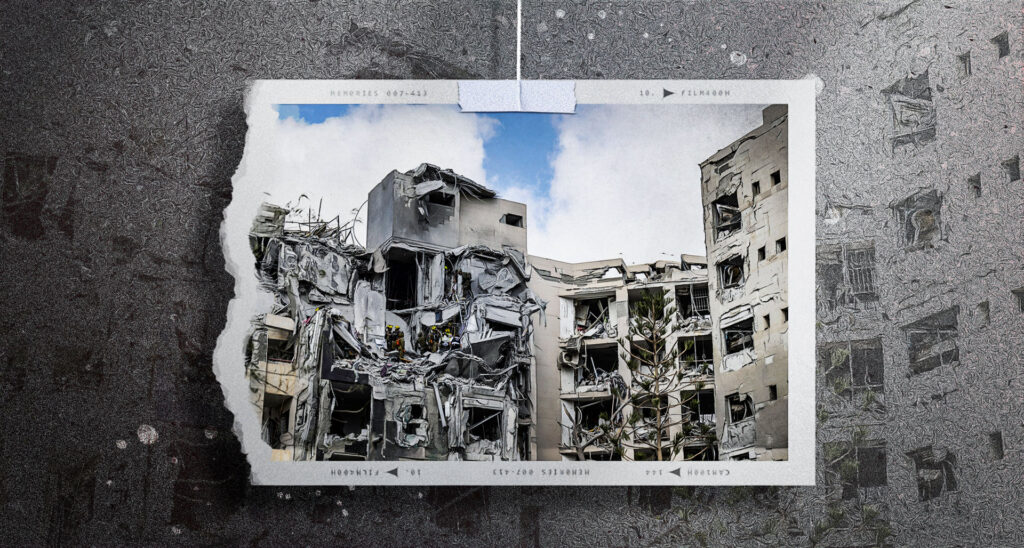
As is often the case with ceasefires in this region, there was immediate confusion about whether one had actually begun. This one was scheduled to take effect at 7:00 a.m. Israel time (midnight ET), but in the hours leading up to it, the Iranian regime launched several missile barrages at Israeli cities, including one that struck an apartment block in Beersheba, killing at least four and injuring more than 20.
Then, just minutes after the 7 a.m. ceasefire deadline, as sirens were expected to fall silent, they wailed again. More missiles. More shelters. More destruction. Iran had apparently violated the ceasefire it had just agreed to.
Israel did what it always does when a ceasefire is violated: it struck back. This, it seems, is the part the media never quite understands.
Because also par for the course, almost as predictable as a missile barrage, is the media’s Pavlovian instinct to accuse Israel of breaking the ceasefire.
Take Sky News, for example. The outlet appeared to cast doubt on Israel’s account, implying that the regime’s post-ceasefire launch was either fabricated or exaggerated, perhaps just a convenient excuse for another strike.
The Islamic Republic breaks the ceasefire by launching a missile at Israel’s north.@SkyNews treats the violation as an Israeli “accusation” while implying Israel’s response is the cause of the ceasefire breakdown.
Typical Sky News: blame Israel for everything. pic.twitter.com/osNQo4bRsD
— HonestReporting (@HonestReporting) June 24, 2025
NPR opted for a more classic dodge: pretend it didn’t happen. According to their reporting, both sides had simply “exchanged attacks up to the final moments.” No mention of the firing after the last minute by Iran.

NPR
The BBC, which has an entire team based in Israel yet somehow still can’t confirm when missiles land, went with a headline that read: “Israel defense minister accuses Iran of violating ceasefire and orders ‘powerful strikes’ on Tehran.”
A missile was intercepted over northern Israel this morning.
Shrapnel hit the ground.
Civilians saw it with their own eyes.
Yet the @BBC leads with “Israel accuses Iran” and worries about Israel’s response. pic.twitter.com/Biv9Z8OoCu
— (((Emanuel Miller))) ?? (@emanumiller) June 24, 2025
One might think that if your correspondents are physically present in a country under attack, they’d be able to confirm whether a missile had, say, audibly screamed through the air and slammed into a residential building. Apparently not. Perhaps the BBC’s Verify team needs a bit more time to trawl social media before they can be absolutely sure.
Meanwhile, The Telegraph, reporting on Iran’s pre-ceasefire barrage, appeared to offer a tacit justification for the targeting of the city. Beersheba, according to Global Health Security Editor Paul Nuki, has a “heavy military presence.” This, in reference to a civilian city of 210,000 people.
APPALLING: At least 4 Israelis have been murdered in an Iranian missile strike in Beersheba.
They were civilians. They lived in a civilian neighborhood. The city is a civilian target.
So no, @PaulNuki, @Telegraph, there is not a “heavy military presence living in the area.” pic.twitter.com/SZTbvoNNQB
— HonestReporting (@HonestReporting) June 24, 2025
Israel responded to a blatant ceasefire violation. It has since held its fire. Whether the ceasefire holds is anyone’s guess. But if it breaks again, we already know who’ll be blamed, facts be damned.
And if it holds? Brace yourself for a week of op-eds agonizing over Israel’s decision to target military sites in Iran, plus the usual handwringing over how terribly unfair it is that Israel maintains a nuclear deterrent while Iran is somehow expected not to build an arsenal of its own to obliterate the world’s only Jewish state.
In fact, we’ve already had a preview. The BBC is fretting about “essential infrastructure” destroyed (code for nuclear facilities). The Independent, meanwhile, laments that Israel’s suspected nuclear weapons continue to get a “free pass,” as though Jerusalem routinely threatens to wipe countries off the map, rather than defend itself from those that do.
This is what @BBCNews calls analysis?
Israel did not “bombard” or target the Iranian population; it warned them to evacuate in advance.
And the “essential infrastructure?” That’s the regime’s nuclear facilities & the assets it uses to threaten its neighbors & its own people. pic.twitter.com/mb8y47Xxc8
— HonestReporting (@HonestReporting) June 24, 2025
No hypocrisy, just a skewed moral relativism as @Independent repeats the tired old false equivalence between the Islamic Republic that wants to use its nuclear program to threaten the annihilation of Israel, and Israel that has never responded in kind.
The two aren’t the same. pic.twitter.com/b3BjTCYwy2
— HonestReporting (@HonestReporting) June 24, 2025
The 12-Day War might be over. But for the media, the real battle has only just begun; how to frame Iran as the aggrieved party without quite saying it outright.
Liked this article? Follow HonestReporting on Twitter, Facebook, Instagram and TikTok to see even more posts and videos debunking news bias and smears, as well as other content explaining what’s really going on in Israel and the region. Get updates direct to your phone. Join our WhatsApp and Telegram channels!
© Divuach Ne’eman R”A, 2025