I was sitting at the Daily Mail picture desk when the news came through from Enniskillen. I was a young press photographer, early in my career. It was November 8, 1987, Remembrance Sunday. The IRA had bombed people gathered to remember the war dead. Eleven people were killed.
On April 24, 1993, I was at home in Barkingside, east London, when the house shook. The IRA had bombed Bishopsgate. My colleague Ed Henty, a photographer working for the News of the World, was killed.
I grew up loving soccer. Evacuations after bomb warnings were also part of growing up in London. I had encountered terrorism long before I moved to Israel, which is something I keep thinking about while reading the buildup to Ireland’s Nations League matches against Israel.
Ireland manager Heimir Hallgrímsson has provided the phrase that seems to sum up the occasion: “We’re not playing with genocide, we’re playing against genocide.”
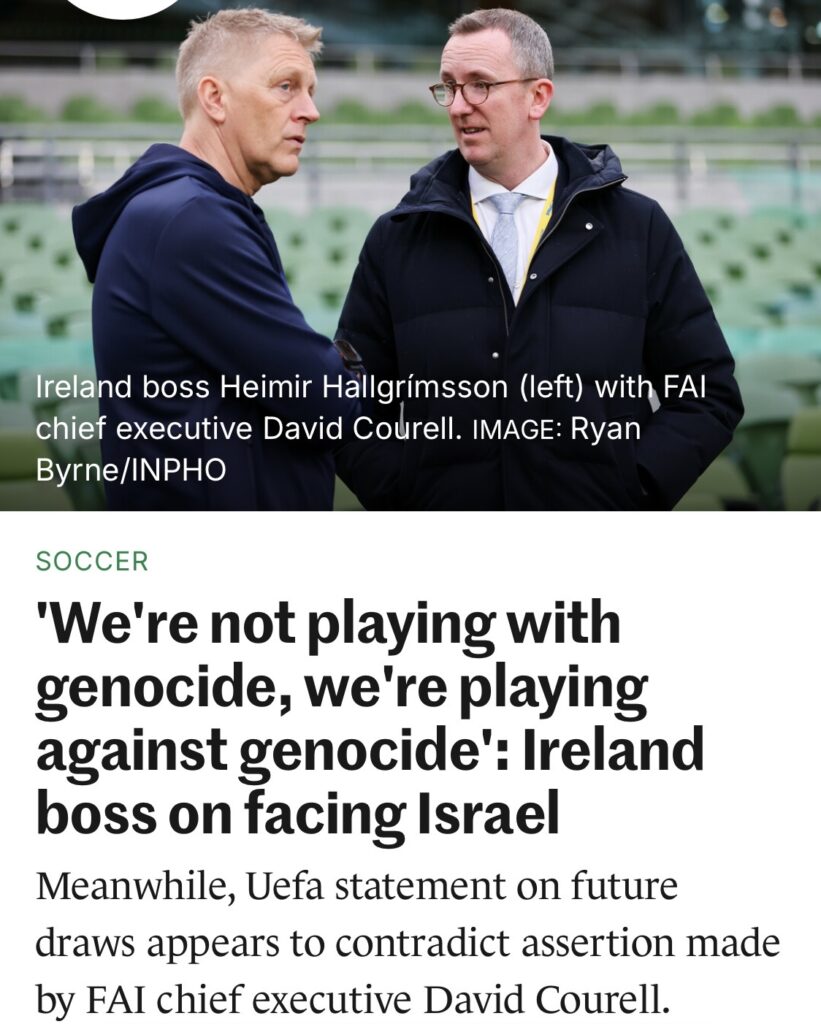
I wonder whether he has thought about what he is calling the men on the other side of the pitch. An entire national team becomes the embodiment of an atrocity. Once you describe your opponents that way, even fulfilling a fixture needs a moral explanation.
The Football Association of Ireland (FAI) is supplying one. Chief executive David Courell says the association continues lobbying UEFA to exclude Israel. His case for playing rests on the financial and sporting consequences of refusing. Participation is being explained to the public almost as an unfortunate necessity.
That hardly puts the association at odds with the boycott campaign’s objective. It leaves them arguing over how much Irish soccer should pay to achieve it.
In the interview circulated by Irish Sport for Palestine, Pat Fenlon makes his position plain: “If the game takes place, it’s a scandal.” He wants Ireland to refuse to play Israel in any sport until the situation is resolved.
The interviewers press him about sanctions and whether other countries would follow. Across the supplied interview, nobody asks him about Hamas. October 7 does not get a mention.
I find that omission extraordinary. Hamas and other armed groups attacked civilians and took hostages. Anyone discussing what Israel has done since is entitled to scrutinize it fiercely. They still have to account for the people who launched that attack and their responsibility for the war. Fenlon’s argument proceeds without them.
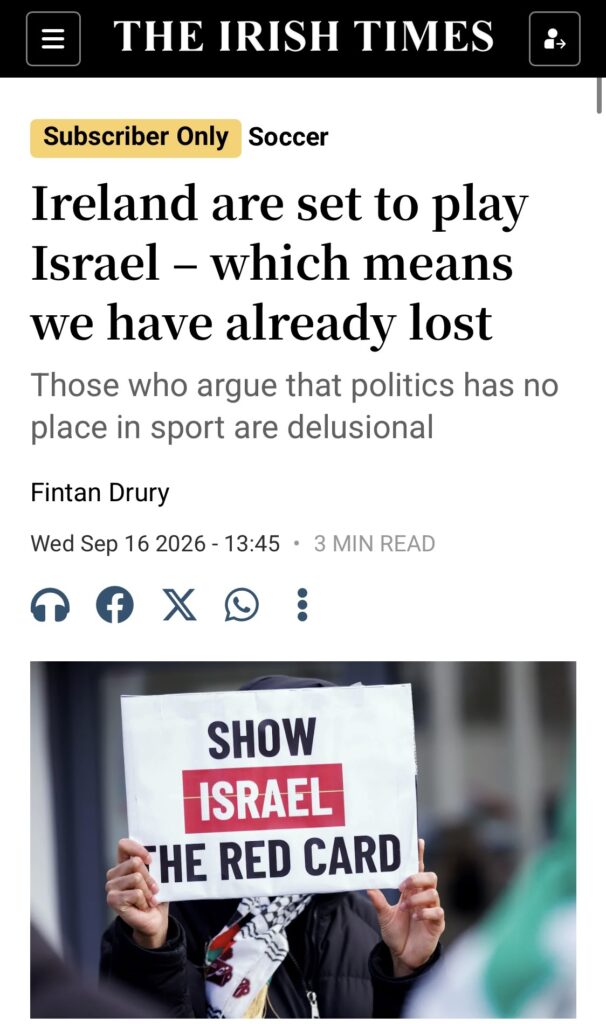
The Irish Times has given space to an equally categorical view. In Fintan Drury’s column, genocide is his stated conclusion, and waiting for the legal process is explicitly rejected as a reason to delay action. The newspaper discloses his involvement in the Stop the Game campaign. Readers are hearing from a campaigner, with the authority and reach of a national newspaper behind his argument.
Meanwhile, national media RTÉ will broadcast the matches without its usual studio coverage or its own commentator, and without advertising or sponsorship around either game. The broadcaster is fulfilling its contract while limiting its association with the occasion. Even the broadcast arrangements convey discomfort at being there.
Ireland’s experience of terrorism ought to make its public figures particularly careful about assigning guilt by nationality. Holding Irish sportsmen responsible for the IRA’s bombs would have been indefensible. My memories of those bombs give me no right to do it now.
Yet Hallgrímsson can describe playing Israel as playing against genocide, and the discussion carries on about whether Ireland should take the field.
Palestinian suffering deserves serious attention. It does not relieve a manager of responsibility for his language, or a newspaper of examining the premises of a boycott campaign. Nor does it entitle anyone to turn Israeli nationality into a sporting offense.
I remember Ed Henty when people in this debate talk about the moral cost of a soccer match. Before accepting their lecture, I would like to hear them make room for the Israelis whose experience of terrorism is every bit as real as mine.
Liked this article? Follow HonestReporting on Twitter, Facebook, Instagram and TikTok to see even more posts and videos debunking news bias and smears, as well as other content explaining what’s really going on in Israel and the region. Get updates direct to your phone. Join our WhatsApp and Telegram channels!
© Divuach Ne’eman R”A, 2025