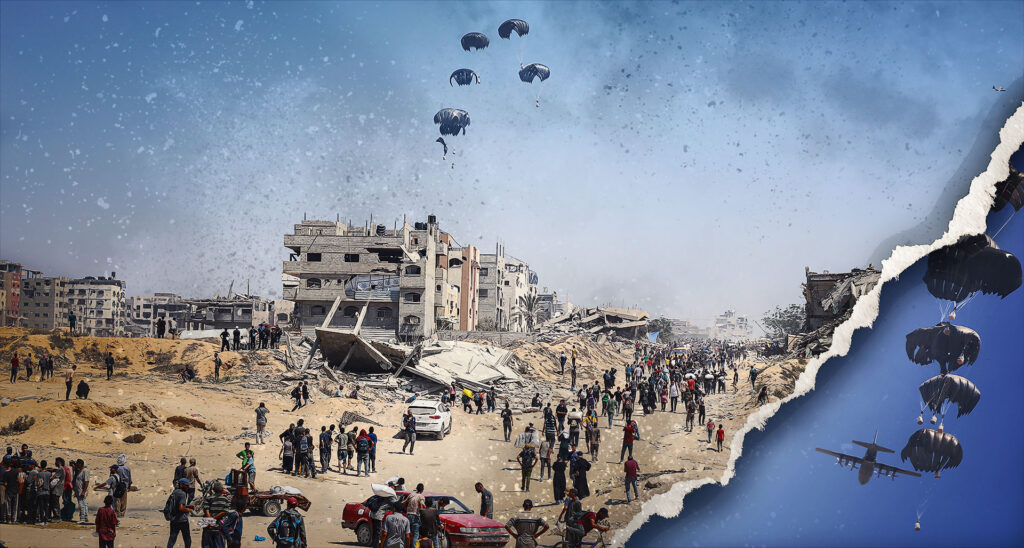
The general media narrative on Israel’s decision to allow airdrops of aid and its action to “improve” the humanitarian situation in Gaza were an admission of guilt and that finally, finally, Israel had seen the error of its evil ways after mounting international pressure. Yet, the demonization still remained – because on top of saying that Israel was “making right” and finally taking responsibility, there was an accusation that it was also just trying to placate the international community with some useless show of public effort to deliver aid from the sky.
View this post on Instagram
But the truth? Israel’s public shaming of the UN worked, and now about 50% of the aid that was left to rot on the Gaza side of the Kerem Shalom border crossing has been collected, a deal for safe passage for that aid was made between the UN and Israel, Egypt opened the Rafah border crossing and on top of that, Israel, Jordan and the UAE resumed airdrops.
And let’s get the facts straight here. The current humanitarian crisis in Gaza is Hamas’ responsibility. You wouldn’t know that from western media, though.
This was the theme of Jeremy Bowen’s portrayal for the BBC. It’s evidence that no matter what Israel does, there will always be an issue.
While Israel continues to insist it is not responsible for the humanitarian catastrophe in Gaza and does not impose restrictions on aid entering Gaza, those claims are not accepted by its close allies in Europe, or the United Nations and other agencies active in Gaza.
The new measures might be a tacit admission by the Israelis that they need to do more.
More likely they are a gesture to allies who have issued strong statements blaming Israel for starvation in Gaza.
In other words, Israel’s carrying out airdrops of humanitarian aid had an ulterior agenda and was a silent admission of guilt – nothing more.
Related Reading: Hungry For Truth: Media, Propaganda, and the Misguided Starvation in Gaza
Not to mention, Bowen has relinquished Hamas from responsibility and made it appear as an uninvolved party (because why hold a terror group that oppresses the people it rules responsible?) The only times Hamas is mentioned are when it condemns Israel for trying to deceive the international community and to dismiss claims by the IDF about Hamas systematically stealing aid.
Bowen goes on to describe his experience with airdrops post-Gulf War. To legitimize his perspective, he starts this way:
Air dropping aid is an act of desperation. It can also look good on television, and spread a feel-good factor that something, at last, is being done.
Yes, this is clearly a desperate situation, as the world is insisting. Israel is doing what it can to help improve the situation, and this may also be the most efficient and quickest way to deliver aid to certain areas of the Strip.
Professionals involved in relief operations regard dropping aid from the sky as a last resort. They use it when any other access is impossible. That’s not the case in Gaza. A short drive north is Ashdod, Israel’s modern container port. A few more hours away is the Jordanian border, which has been used regularly as a supply line for aid for Gaza.
Unfortunately, it seems like other ways of delivering aid hadn’t panned out any better until now. It’s unclear what is meant by listing the Ashdod port or the Jordanian border as options for aid delivery, but here are some quick reminders:
- The western media and the UN have complained when aid has to be driven through Gaza as the trucks get looted. Bowen ignores that the UN had been declining Israeli protection for aid in transit until last week. His silence absolves the UN for its own guilt in this mess.
- The media and the UN will also say that it’s a deadly mission for Gazans to retrieve aid themselves, as reports of dozens killed per day have been headlining newspapers since May.
- And remember the U.S. pier that brought in tons of aid? Most of that aid just sat to rot.
Perhaps the idea is to try to get aid to the people who need it in any way possible? Airdrops are evidently flawed and some of the aid likely falls into the wrong hands, but it’s worth a try.
Another report by Sky News on Sunday frames Israel as a bad actor by backing aid drops, which aid agencies like the UN say are insufficient and dangerous. Meanwhile, Jordan and the UAE were involved aside from Israel, and the operation was backed by the UK. But sure, paint Israel as a bad actor.
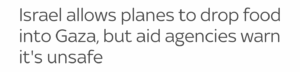
A subsequent article from Monday emphasizes the UN stance against airdrops. Field correspondent Sally Lockwood explains how they are “fraught with problems” and a “desperate last resort.”
But when Lockwood reports from a Jordanian plane, she explains the safety precautions taken to ensure prevention of casualties on the ground, as well as admitting that although the amount of aid is not enough, “it’s something.”
As extensive reports from The New York Times, BBC, NBC, and many others have been urging dire need of aid to the Gaza Strip, and photos of emaciated children are circulating through the media, the particulars of how aid is being distributed are being twisted and exaggerated to fit a narrative that Israel is waging war on Gazan women and children. Israel is portrayed as having malicious intent to starve civilians to death and humiliate them as they try to survive.
Related Reading: Another Photo. Another Lie.
Google is a Fantastic Tool
While the UN and the media criticize airdrops over Gaza, let’s take a moment to recognize that the UN’s World Food Programme (WFP) carries out airdrops on its own in South Sudan, for example. It gets almost no media coverage, and when it does, it’s covered as an “unconventional”, “expensive” and “complex” operation, but it’s the “last resort” and therefore necessary due to fighting blocking roadways to certain areas.
There is no controversy, no denial and no excuses. Just WFP doing what it needs to do in order to get aid to those in need.
It’s always interesting when war zones — while catastrophic, are recognized as war zones. By nature, aid may be difficult to deliver. The Israel-Hamas war in Gaza is no different.
Liked this article? Follow HonestReporting on Twitter, Facebook, Instagram and TikTok to see even more posts and videos debunking news bias and smears, as well as other content explaining what’s really going on in Israel and the region. Get updates direct to your phone. Join our WhatsApp and Telegram channels!
Image Credits:
– Anadolu Agency/Reuters Connect
– Imago Images/Reuters Connect
© Divuach Ne’eman R”A, 2025