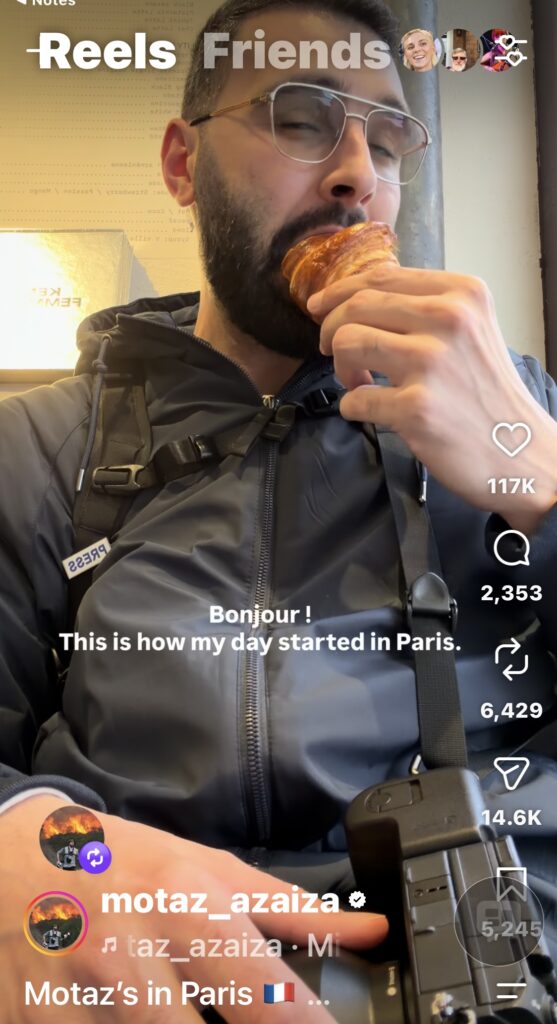
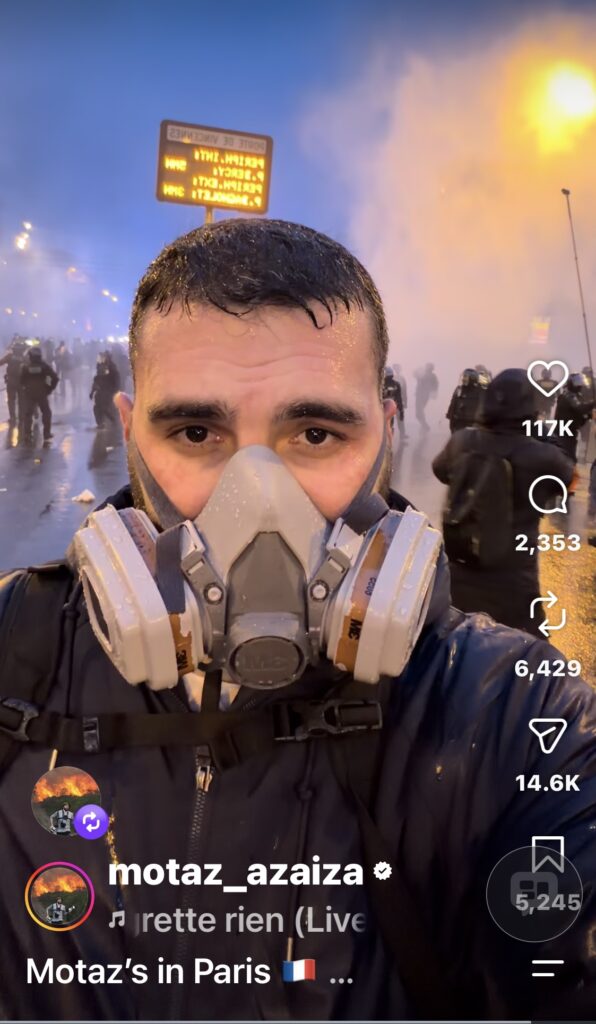
Motaz Azaiza appears to be enjoying his breakfast. Sitting in a Paris café, he bites into a pastry beneath the words, “Bonjour! This is how my day started in Paris.” Within seconds, we are outside with riot police and smoke, watching the considerably less comfortable conclusion to his day.
Édith Piaf provides the accompaniment with “Non, je ne regrette rien.” By the end, Azaiza is looking into the camera wearing a respirator. Paris has supplied the café, the confrontation and the soundtrack, and he has assembled them into a short film in which the photographer gets rather more attention than the people he came to photograph.
I watched it with particular interest because I wrote about Azaiza last month, following his interview on the Taqarob podcast. He described going out with his camera at 6:30 am on October 7, intending to head toward Erez, then following a Qassam vehicle. He also described photographing Israeli captives and withholding images because he did not want people visible around them to be identified and harmed.
Those were his explanations of his own decisions. They are worth remembering when he presents himself to an international audience as a witness.
Azaiza left Gaza in January 2024. CNN reported his departure for Doha aboard a Qatari military aircraft, and a later UN account described his journey through Rafah into Egypt and onward from El Arish. By November 2025, CNN was reporting that he lived in New York. His audience has followed him well beyond the place where he became famous.
Now he is photographing Paris. In the accompanying carousel, a woman holding a large French flag rises above the crowd. Other photographs show a packed street and police vehicles on a wet road. His caption describes protests against the cost of living and demands for better public services, before making the connection he wants his followers to carry with them: “From Gaza to Paris, my camera continues to witness the streets, the struggles, and the voices demanding change.”
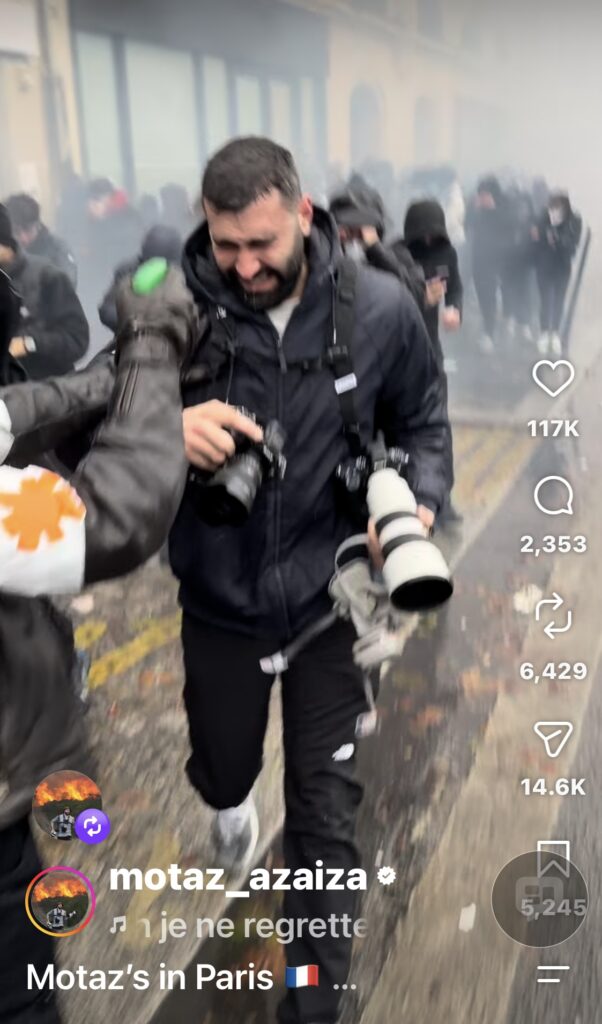
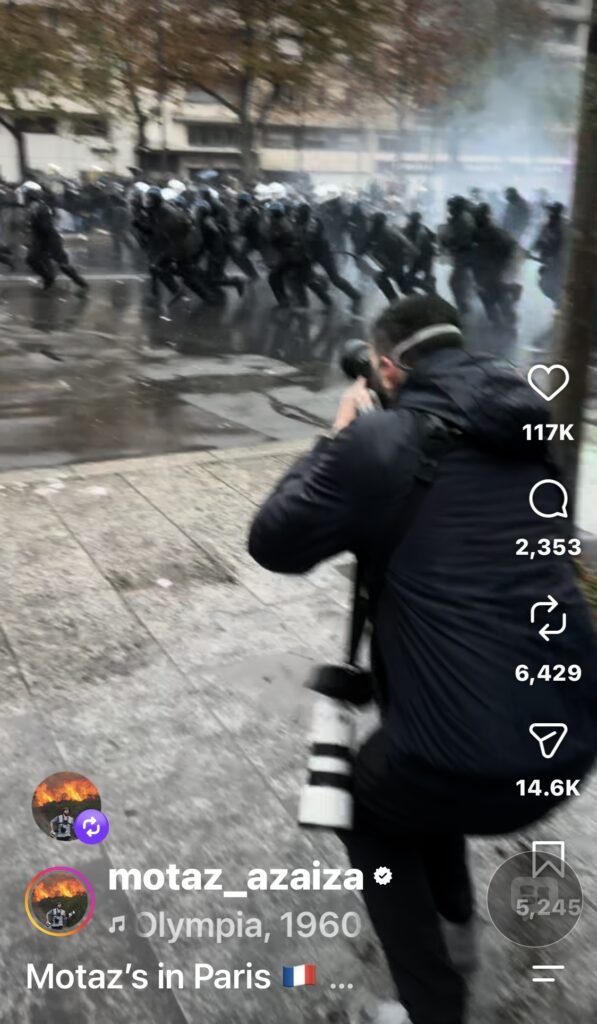
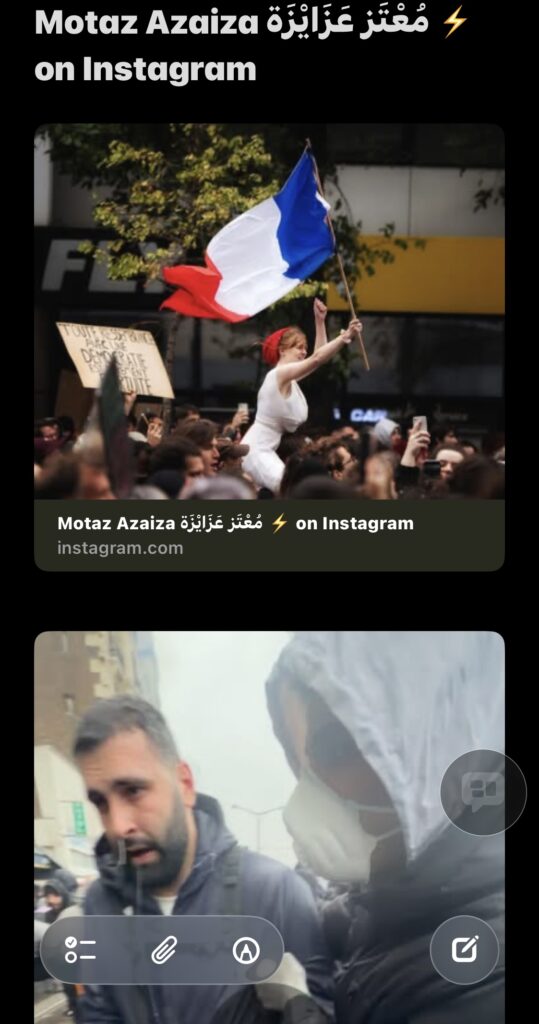
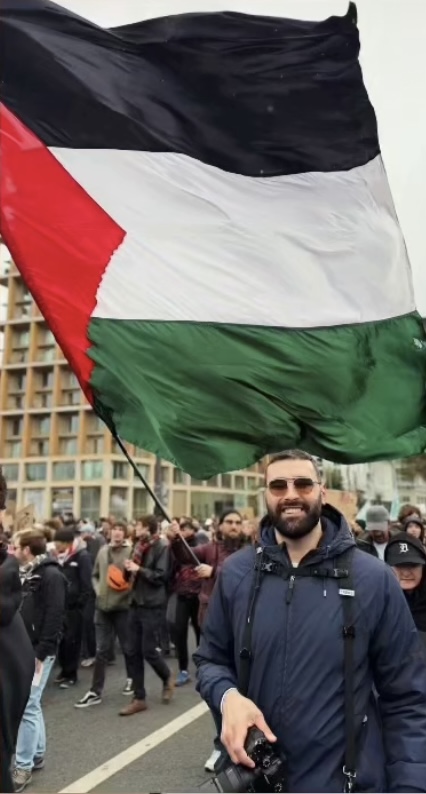
I would like to know what brought him to this particular demonstration. Was he working on an assignment, pursuing a personal project or making material for his own enormous audience? The posts supplied here do not explain that. They do, however, explicitly bring Gaza into his account of a protest over French domestic conditions.
A photographer can cover different countries and different conflicts. What interests me is the authority that accompanies him and whether the audience knows enough about how he has used it.
In that same podcast interview, Azaiza described journalists lowering their cameras when Palestinians criticized Hamas, and material being deleted. He acknowledged his own initial hesitation about publishing such criticism. The pressures on journalists in Gaza deserve examination, but so do the consequences for everyone relying on their pictures.
In Paris, his personal experience receives a polished treatment, from breakfast through to the respirator selfie. There is room for humor, music and a little adventure. The caption even offers a lesson about remembering a proper tear gas mask.
I would be more interested in hearing what he learned about the photographs of Israeli captives that he kept from his audience. Before I follow his camera from Gaza to Paris, I would like him to finish explaining what he left out of the Gaza story.
Liked this article? Follow HonestReporting on Twitter, Facebook, Instagram and TikTok to see even more posts and videos debunking news bias and smears, as well as other content explaining what’s really going on in Israel and the region. Get updates direct to your phone. Join our WhatsApp and Telegram channels!
© Divuach Ne’eman R”A, 2025