



Key Takeaways:
- New York City Mayor Zohran Mamdani’s wife, Rama Duwaji has been exposed to have a public trail of associations with extremist figures and support for terrorism.
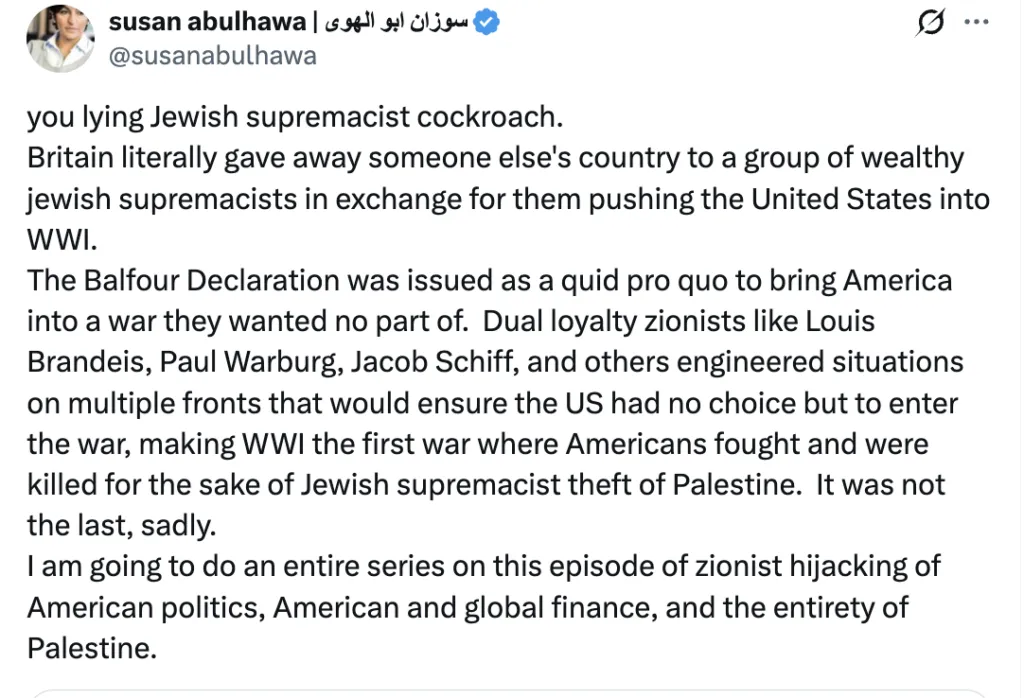
- Susan Abulhawa is a Palestinian-American activist and writer who has collaborated with Duwaji on a short essay, and she has a long public record of antisemitic and pro-terror rhetoric
- When will coincidence become a pattern? Mamdani’s approach is to continue to distance himself and Duwaji from these revelations, but he falls short by not addressing these issues directly, by not taking accountability.
Recent scrutiny surrounding New York City’s First Lady, Rama Duwaji (wife of Mayor Zohran Mamdani), raises questions that go beyond any single incident.
Over the last couple of weeks, Duwaji was exposed for having liked more than 70 posts on social media praising Hamas’ October 7 attacks.
These reports were initially dismissed by Mamdani, who emphasized that his wife is a “private citizen” with no formal role in his administration. That argument is difficult to sustain. The position of First Lady, formal or otherwise, carries an inherent public dimension, particularly when controversies arise.
View this post on Instagram
Duwaji has since been linked to an illustrated essay, A Trail of Soap, co-edited by Susan Abulhawa, a Palestinian-American activist who has repeatedly used dehumanizing language about Jews and has expressed support for terror. Once again, the mayor’s response was to distance himself and his wife, describing Abulhawa’s rhetoric as “reprehensible” while claiming no familiarity with her.
That claim warrants closer examination.

Who Is Susan Abulhawa?
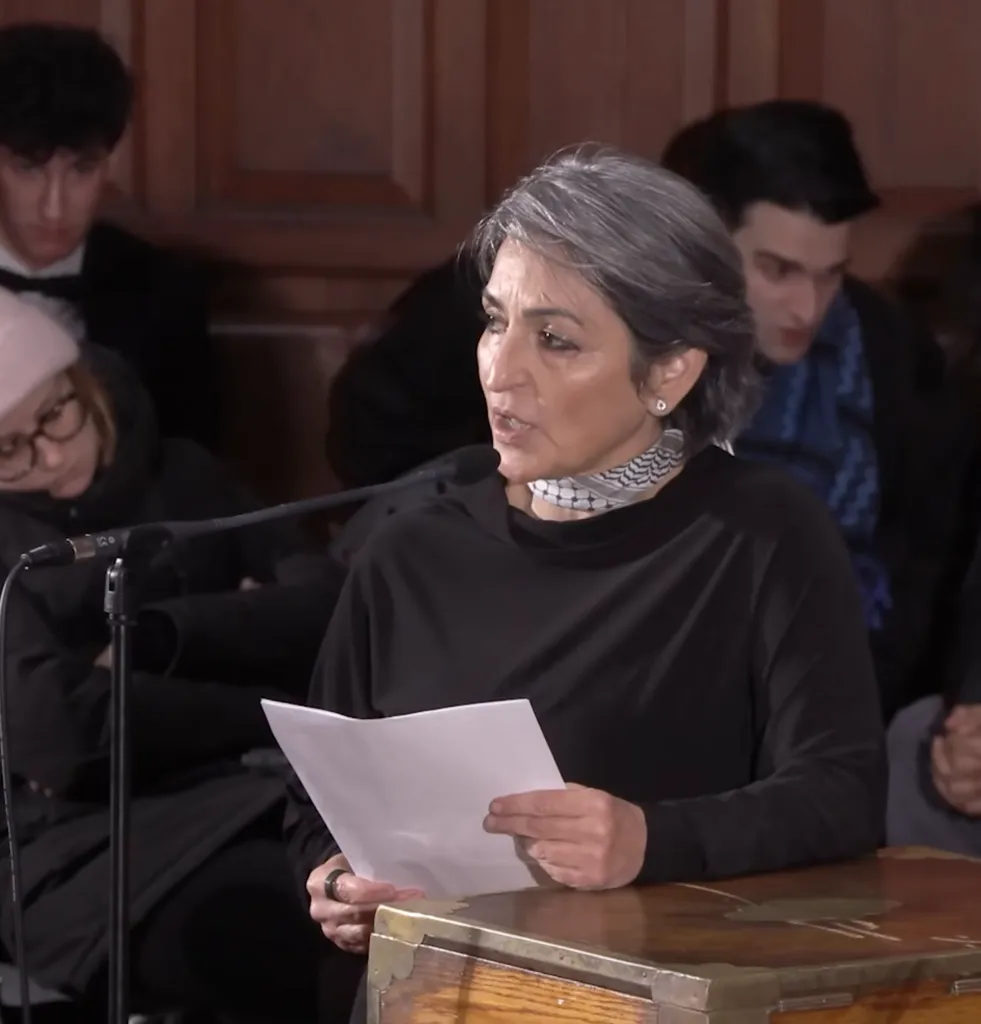
Susan Abulhawa is a Palestinian-American writer, activist, and proud antisemite. She has openly referred to Jews as “cockroaches” and “parasites.” She’s been an activist since 2001, and very soon became involved with the Boycott, Divestment and Sanctions Movement (BDS), among other anti-Israel causes. She now boasts 133k followers on her Instagram account and about 68k followers on her X account.
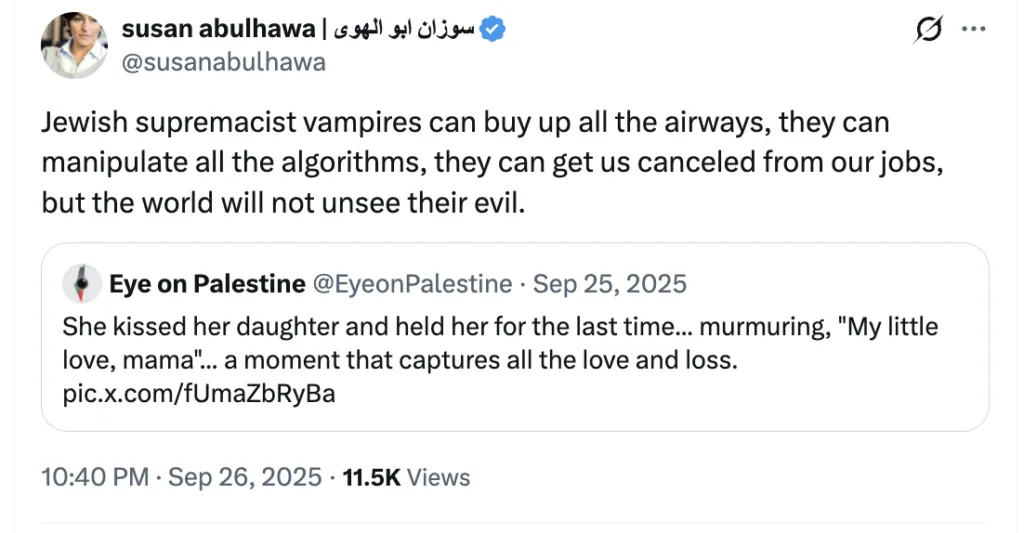
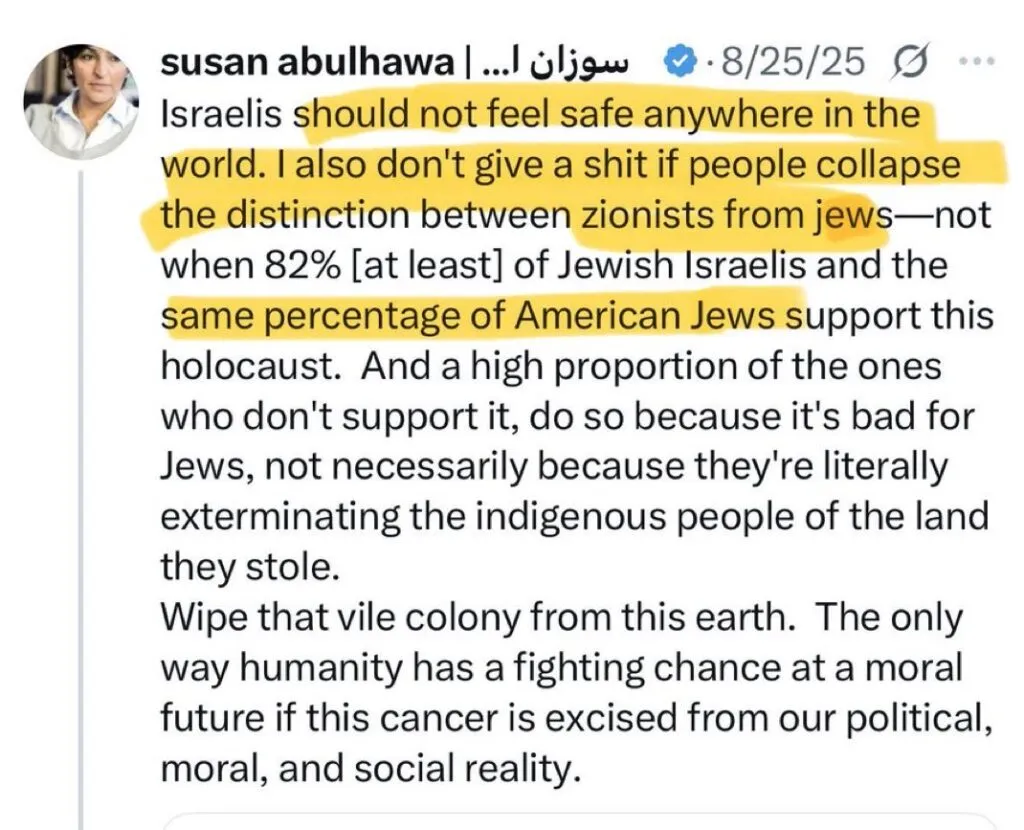
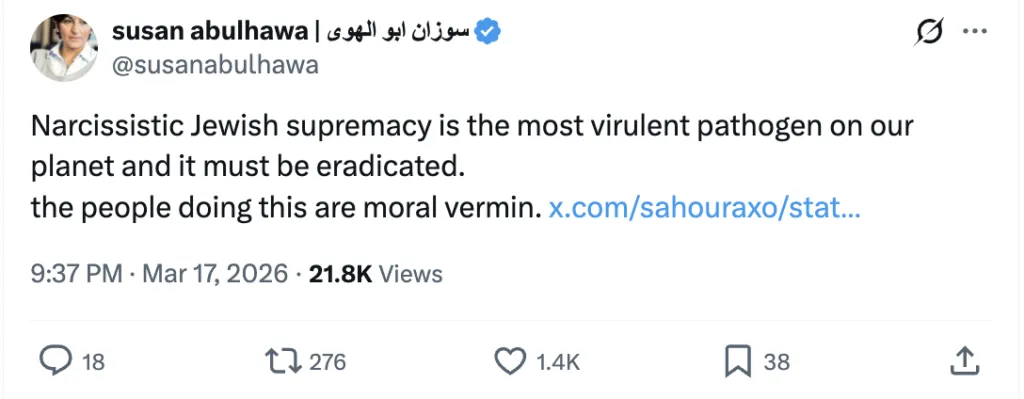
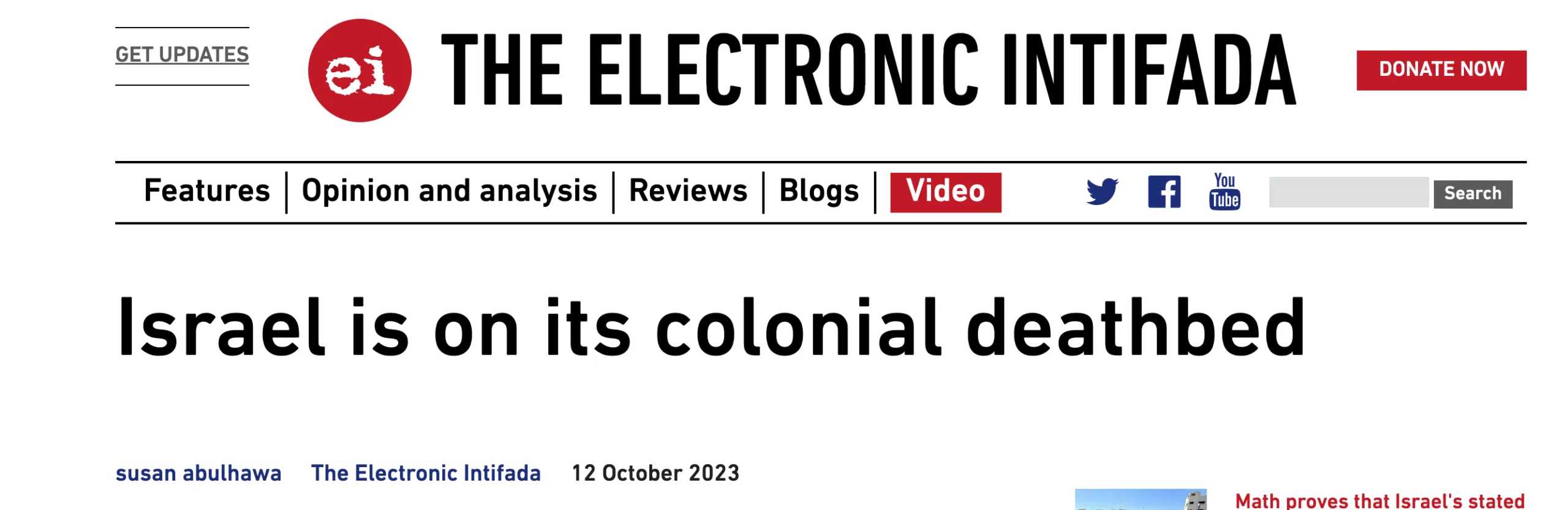
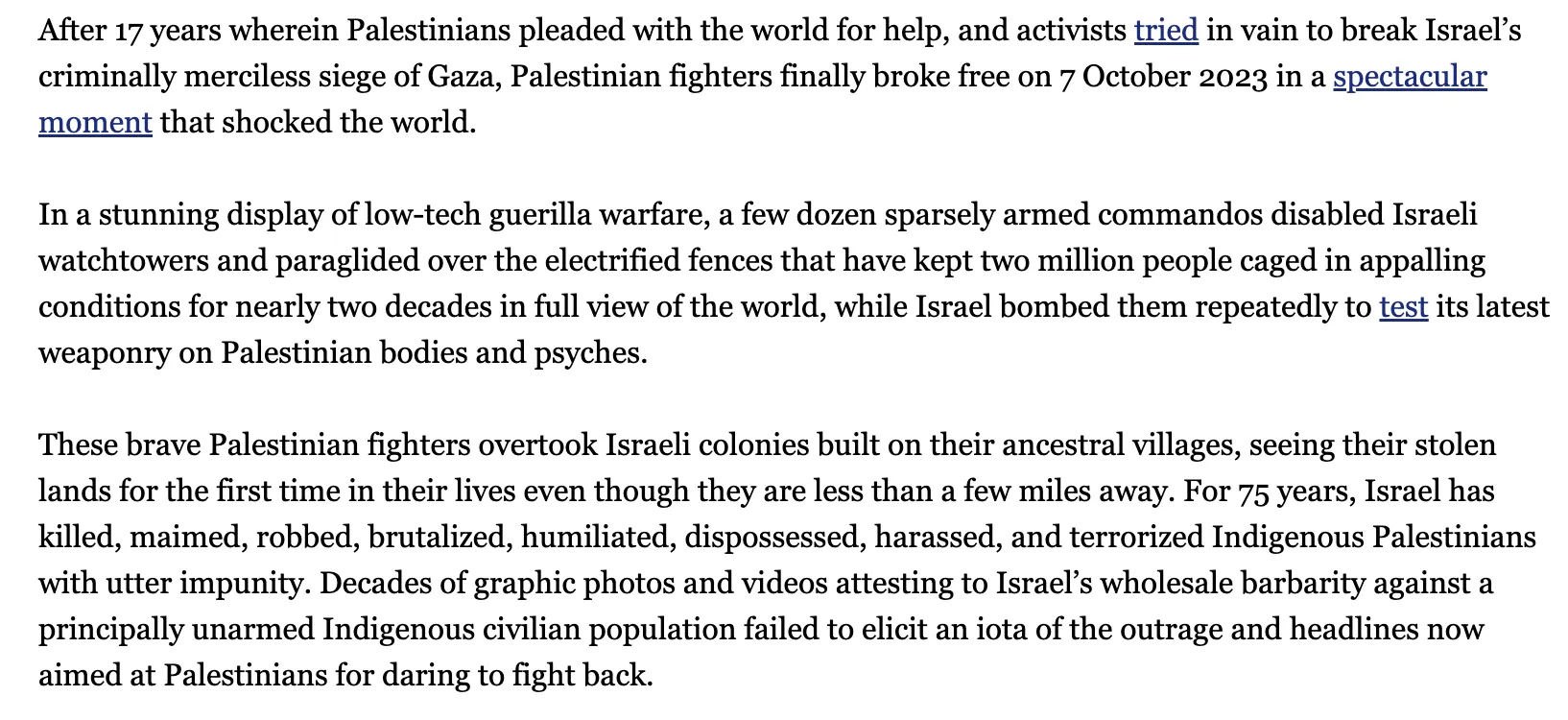
Below is one of her pieces for the Electronic Intifada, in which she referred to October 7 as a “spectacular moment” and called Palestinian terrorists “brave.”
Abulhawa is not an obscure figure operating on the margins. She has been active in anti-Israel advocacy for over two decades and has a substantial public platform. Her vile statements are well-documented and not difficult to locate.
Related Reading: Mamdani’s Wife Liked Posts Celebrating October 7. Why Didn’t the Media Ask Harder Questions?
Mamdani Attempts to Evade Accountability… Again
Video Credit: @josiestratman/X
Mamdani said neither he nor his wife knew Abulhawa and called her rhetoric “reprehensible.” But that’s hard to believe.
No matter how he tries to distance himself and Duwaji from problematic, or rather alarming personalities, beliefs, and actions, the facts speak for themselves.
More importantly, there appears to be a degree of overlap between Abulhawa and the Mamdani family that makes claims of unfamiliarity less convincing:
- Mamdani’s mother, Mira Nair, and Abulhawa were official speakers at the ZEE Jaipur Literature Festival in 2018
- Joint activist initiatives, including Abulhawa and the Mamdani family, between 2018 and 2023
- In 2023, Mamdani and Abulhawa were guests on the same episode of The Katie Halper Show
- Then, in 2024, Mamdani’s father, Mahmood Mamdani, and Abulhawa were both appointed to the Advisory Policy Council of the Gaza Tribunal, a performative kangaroo court meant to prove Israel’s guilt in advance
- And ultimately, there was direct collaboration between Duwaji and Abulhawa in 2025 on the aforementioned “A Trail of Soap.”
Duwaji’s own public record also merits consideration:
- In 2015, Duwaji retweeted a thread that said Tel Aviv, “shouldn’t exist in the first place”
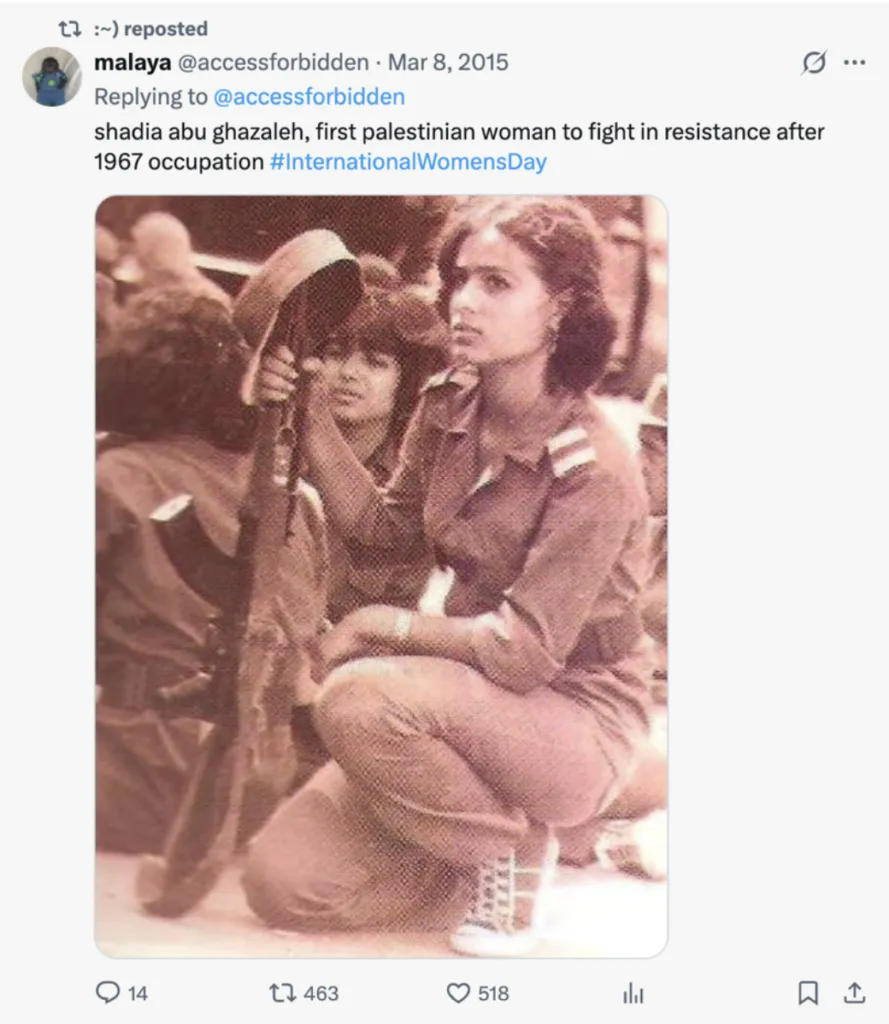
- The same year, she engaged with content praising PFLP terrorist Shadia Abu Ghazaleh
- Duwaji posted imagery of infamous terrorist airplane hijacker Leila Khaled to her Tumblr in 2017

Individually, each episode might be explained away. Taken together, they form a pattern.
It feels safe to infer that at the very least, Duwaji knew what Abulhawa was all about, even if she did not know her personally.
Related Reading: Live from New York: It’s Antisemitism, with Zohran Mamdani
At Some Point, It’s Not Coincidence
At each stage, the response from the mayor has followed a similar trajectory: distance, dismiss, and move on.
But this approach raises a fundamental question. At what point do repeated associations and recurring controversies cease to be coincidences?
The overlap between their circles, paired with Duwaji’s history of supporting terror, is undeniable.
Duwaji may not have run for office or aimed to make a life for herself in the public eye, serving others, but that doesn’t mitigate her behavior now, nor shield her from scrutiny.
Public trust depends not only on what leaders say, but on how they address uncomfortable facts.
Because when the same questions keep arising, the real issue is no longer the individual incidents themselves, but the reluctance to address them.
Liked this article? Follow HonestReporting on Twitter, Facebook, Instagram and TikTok to see even more posts and videos debunking news bias and smears, as well as other content explaining what’s really going on in Israel and the region. Get updates direct to your phone. Join our WhatsApp and Telegram channels!
Image Credits:
– David Dee Delgado via Getty Images
– YouTube Screenshot (Oxford Union’s channel)