Key Takeaways:
- Palestinian state recognition was predicated on the Palestinian Authority meeting a series of commitments.
- The Palestinian Authority did not meet these expectations, but there is no consequence for failing to pay the price after the prize of recognition has already been delivered.
- Rewarding the PA for failing to meet commitments essential to peace undermines prospects for peace, rather than advancing a resolution to the conflict.
The geo-political folly of states that recognized a Palestinian state was put on display last week when the Palestinian Authority (PA) delayed elections and demonstrated why the commitments made in exchange for statehood were worthless. Western countries were fooled into giving diplomatic prizes to the Palestinians for free, and effectively damaged prospects for peace by failing to establish expectations of the PA as preconditions.
Recognizing a Palestinian State for Peace
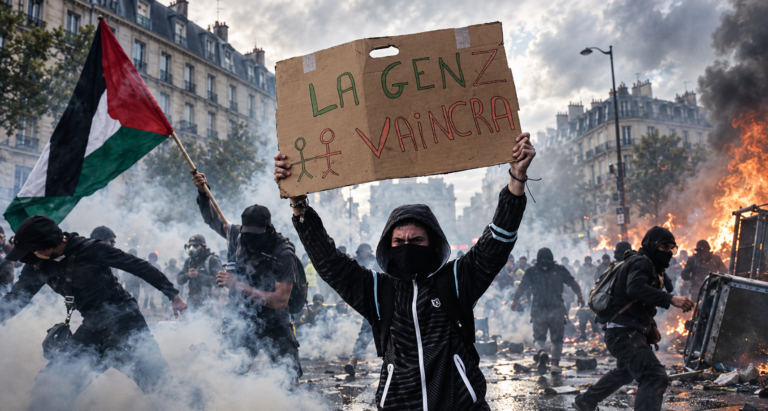
A diplomatic shockwave reverberated through the Middle East in September 2025, after countries including the United Kingdom, Australia, Canada, and France announced their recognition of a Palestinian state. Amidst the ongoing October 7 War and Gaza hostage crisis, the Western states asserted that the move would contribute to peace and a two-state solution.
Australian Prime Minister Anthony Albanese and Foreign Minister Penny Wong explained in a joint September 21 statement that the recognition was “part of a co-ordinated international effort to build new momentum for a two-state solution, starting with a ceasefire in Gaza and the release of the hostages taken in the atrocities of October 7, 2023.”
“The UK has formally recognised Palestine to protect the viability of a two-state solution and create a path towards lasting peace for the Israeli and Palestinian people,” began a corresponding UK Foreign, Commonwealth & Development Office statement.
Ultimately, the diplomatic move did not directly lead to a resolution of the Gaza conflict, and only with U.S. President Donald Trump’s Comprehensive Plan to End the Gaza Conflict were the remaining hostages returned and a lasting ceasefire implemented. The countries attempted to placate concerns about rewarding the Palestinians for militancy, and for the moral quandary of democratic states supporting an illiberal regime, by conditioning their diplomatic acknowledgment on reforms by the Palestinian Authority (PA).
The PA’s Commitments
The commitments included education, finance, and governance reforms, a demilitarized state, and rejection of hate speech, incitement and terrorism. The crown jewel of the conditions for statehood, which supposedly guaranteed the rest of the PA’s promises, was the commitment of democratic elections in 2026. According to Albanese and Wong, PA President Mahmoud Abbas had “given direct undertakings to Australia, including commitments to hold democratic elections and enact significant reform to finance, governance and education.”
Canadian Prime Minister Mark Carney related that his country was supposedly also given “direct commitments” by the PA, “including to fundamentally reform its governance, to hold general elections in 2026 in which Hamas can play no part, and to demilitarize the Palestinian state.”
The July 2025 United Nations New York Declaration, which was backed by 18 states, the European Union, and the Arab League, welcomed Abbas’ “commitment to holding democratic and transparent general and presidential elections throughout the Occupied Palestinian Territory, including East Jerusalem, within a year, under international auspices, enabling democratic competition between Palestinian actors committed to respect the PLO political platform, its international commitments and the relevant UN resolutions.”
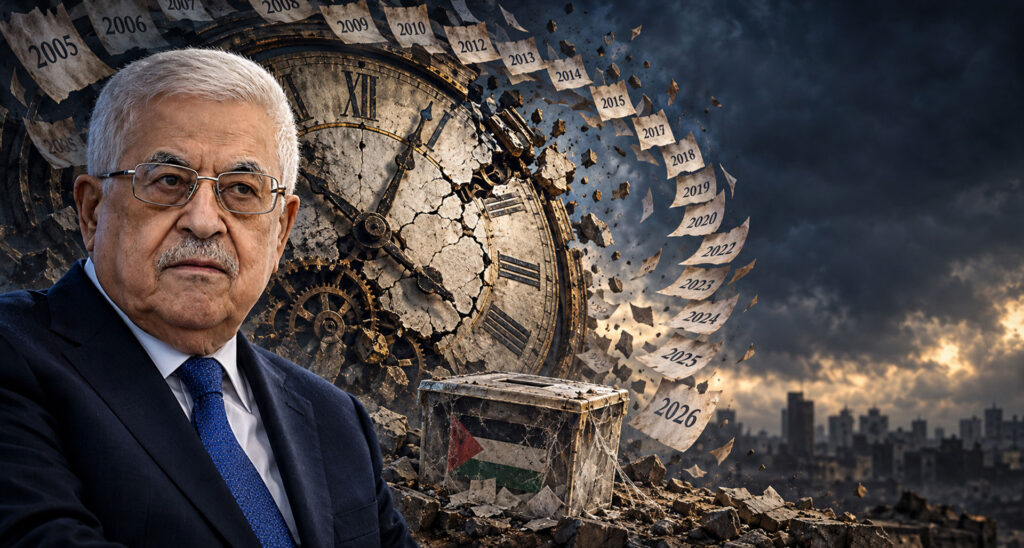
Despite the applause for diplomatic boldness and political self-congratulation for ushering in a new era for the supposed state, the Palestinian leadership soon proved itself an untrustworthy vendor by failing to deliver the goods after payment had been made. On October 10, the PA delayed elections yet again, from November 28, 2026 to September 11, 2027. The deferment extended Abbas’ two decade-long rule for another year. The decree was ostensibly made in response to security and instability issues in Gaza and PA-governed territories.
Palestinian Elections Delayed
Australia, Canada, France and the United Kingdom responded with a joint statement on October 13, expressing deep “regret” about the postponement, explaining that “credible elections are an important element of the commitment that President Abbas and the Palestinian Authority made to reform, including democratic renewal and accountable governance, and are in line with the June 2025 New York Declaration.”
“As longstanding supporters of Palestinian self-determination, we call on the Palestinian Authority to reconsider the decision to postpone elections and to take the necessary steps to hold legislative and presidential elections, without further delay,” said the states. “We will continue to support efforts to deliver on these elections.”
There were no consequences for the PA’s failure to uphold its end of the agreement, and the only real demand was for Abbas to reconsider his decree. Without any repercussions, there is no incentive for Abbas to hold elections – particularly after he already got what he wanted from the exchange. Yet elections were not even the only commitments and conditions that the PA and its leader failed to meet. The New York Declaration noted that Abbas had also promised a commitment to “the peaceful settlement of the question of Palestine, and the continued rejection of violence and terrorism,” while French leaders detailed specific metrics.
“He [Abbas] confirmed the end of allowances for the families of prisoners convicted of terrorism offenses, announced a reform of school textbooks to remove all hate speech, committed to holding presidential and general elections in 2026, and accepted that the Palestinian State will be demilitarized,” French Minister for Europe and Foreign Affairs Jean-Noël Barrot said at a July UN conference on the Arab-Israeli conflict. “The conditions set down for the acceptance of a Palestinian State by Prime Minister Benjamin Netanyahu, in his 2009 Bar-Ilan speech, are met.”
Pay-for-slay Continued
According to the U.S. State Department, the commitment to end allowances for the families of terrorists had not been met. In a January 2026 Palestinian Liberation Organization (PLO) Commitments Compliance Report, it was reported that payments were continuing under a new welfare program of a different name. A follow-up report in July detailed that in February 2026, PA Finance Minister Estephan Salameh pledged to continue the program known as “pay-for-slay,” and that same month a draft constitution article was proposed to enshrine allowances for the kin of convicted terrorists. Abbas reportedly complained about the pressure exerted on the program at a May Fatah conference. On September 16, the U.S. government leveled sanctions against PA officials for continuing “to pay stipends to terrorists and to glorify acts of terrorism and terrorists in public pronouncements and school textbooks.”
Failure to Reform Education System
New educational materials published in September 2025 – after the supposed commitments by the PA – incited antisemitism, violence, jihad, terrorism, and rejected peace and the two-state solution, according to a November 2025 review by the Institute for Monitoring Peace and Cultural Tolerance in School Education (IMPACT-se). Far from the promised reform, IMPACT-se assessed that the 2025-2026 PA national curriculum was only marginally modified from the 2020–2021 school year.
In an Arabic language class, a reading comprehension text extolled the supposed heroics of Coastal Road Massacre terrorist Dalal al-Mughrabi, who was involved in the murder of 38 Israeli civilians, including 13 children. An example of antisemitism highlighted by IMPACT-se was an 8th-grade teacher’s guide, which included a listening comprehension exercise on corruption, which featured a Jewish client trying to cheat a Muslim merchant with counterfeit money. The NGO also provided several examples from geography and social studies classes which depicted a Palestinian state from the Jordan River to the Mediterranean Sea. There were also irredentist claims to Israeli cities, and language in a text that implied that a two-state solution was undesirable.
Rejection of Terrorism and Financial Transparency
Support and incitement to violence and terrorism, which supporters of recognition touted as a commitment met by the PA, was not just relegated to school textbooks. The U.S. State Department compliance reports noted that the PA continued to post glorification of terrorism on social media. Fatah Parliamentarian Nasser Abu Bakr, within Abbas’ party, has repeatedly published fawning social media posts about terrorists. French President Emanual Macron noted in a September 2025 speech on Palestinian statehood recognition that Abbas “has strongly condemned the terrorist attacks of 7 October 2023,” yet according to the State Department, Abbas’ Advisor on Religious Affairs and Islamic Relations Mahmoud al-Habbash said in April that “when we come to judge October 7, resistance to the occupation in itself is a legal, even sacred thing. You will not find any Palestinian, Muslim, or even a normal person who can dispute this principle. Resistance to the occupation is legal.”
The PA also appears to have failed in the matter of finance reforms. Albanese and Wong said that Abbas pledged to “enact significant reform to finance,” and the New York Declaration reaffirmed the Palestinian leader’s “credible reform agenda” that included “good governance, transparency, fiscal sustainability.” Yet a 2026 U.S. State Department fiscal transparency report found that the PA did not publish a complete budget and did so within an unreasonable time period.
“The PA published monthly budget execution reports that provided a picture of revenues and expenditures. Information on debt obligations, including for PA-owned enterprises, was incomplete,” read the report.
Recognition as a Failed Strategy for Peace
The extensive failures of the PA to meet the commitments that predicated state recognition show that geopolitical guarantees are worth nothing if a reward has already been given. It would be too politically fraught for the UK, Canada, France, and Australia to retract recognition of a Palestinian state, so there is no consequence. Since there is no consequence, all the factors that the recognizers have acknowledged as essential to peace will not be met without additional measures, carrots and sticks. One of the most influential tools, state recognition, has already been surrendered, making it more difficult to create these peace conditions. Any sense of pressure to engage in peace reforms has also been removed, as Palestinian leadership has likely learned it can promise and receive without great loss. The countries also created rifts between themselves and Israel, removing the possibility that they could serve as mediators in peace negotiations in the near future.
Most concerning is that if the PA is unwilling to meet its commitments regarding elections and other issues, it may be unwilling to meet other obligations. Some experts have expressed concern about the PA’s commitment to demilitarization. While the legitimacy of this problem remains unclear, the PA’s recent actions lend credence to fears of its growing forces. The PA has pledged to peace, a two-state solution, and other platitudes that charm Western leaders, but the trustworthiness of Palestinian leadership is brought into question when they can’t even hold elections.
France, the UK, Canada, and Australia made themselves the guarantors of Palestinian statehood and peace. Yet they may now find themselves paying a moral and diplomatic debt now that the principal debtor has failed to meet its contract. The price is peace, and the blunders have only compounded the ability to meet its requirements.
Liked this article? Follow HonestReporting on Twitter, Facebook, Instagram and TikTok to see even more posts and videos debunking news bias and smears, as well as other content explaining what’s really going on in Israel and the region. Get updates direct to your phone. Join our WhatsApp and Telegram channels!
© Divuach Ne’eman R”A, 2025