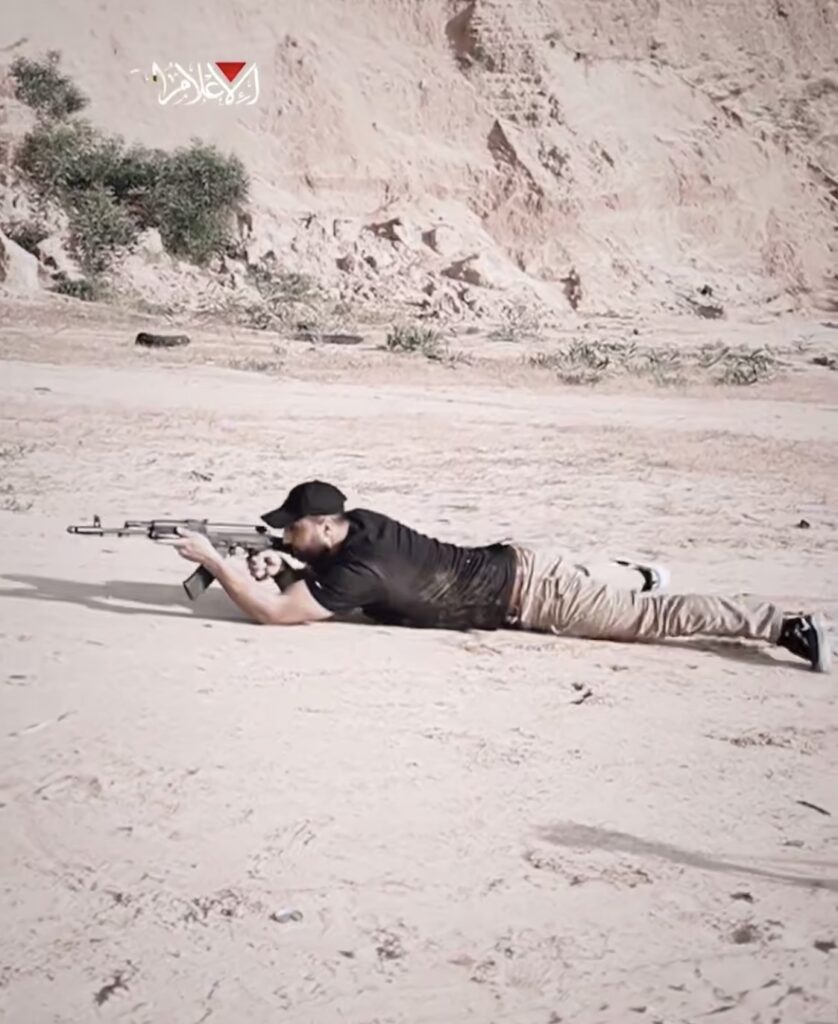
About four minutes into a recently published Hamas martyr video, Mahmoud Matar is lying close to the ground with a camera in front of him, working its controls. It is a small moment among the weapons, uniforms and music, but it catches my attention. After more than forty years in photography, I recognize someone who appears comfortable with his equipment and is prepared to get himself into an awkward position to make a picture.
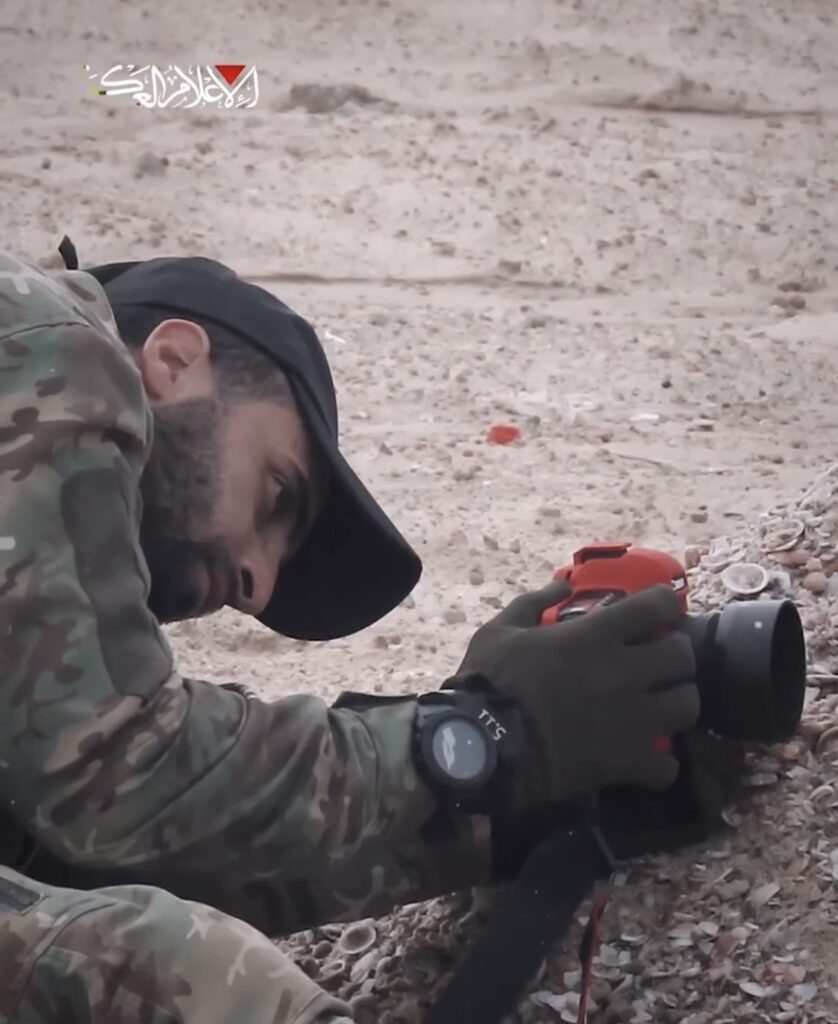
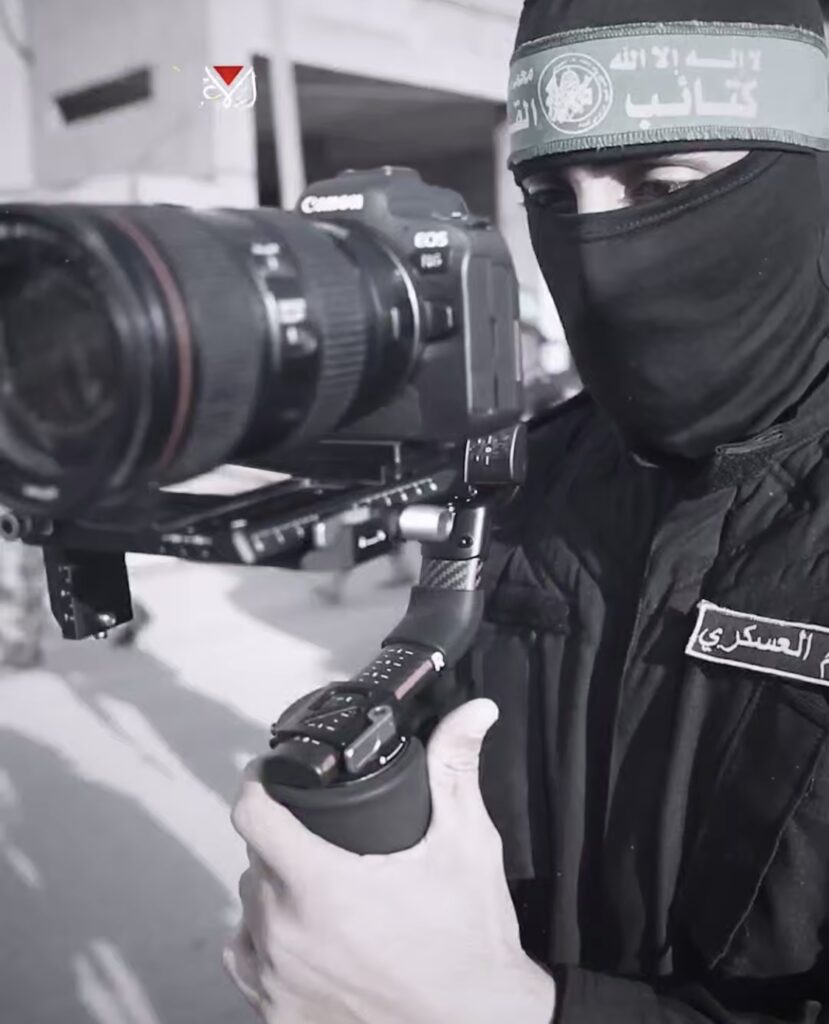
Elsewhere, he handles a Canon camera among damaged buildings. He examines equipment with another man. In a posed portrait, he holds a camera fitted with the familiar white telephoto zoom that would look entirely at home beside a soccer pitch or at a news assignment. There is nothing amateurish about the range of photographic equipment assembled in this film.
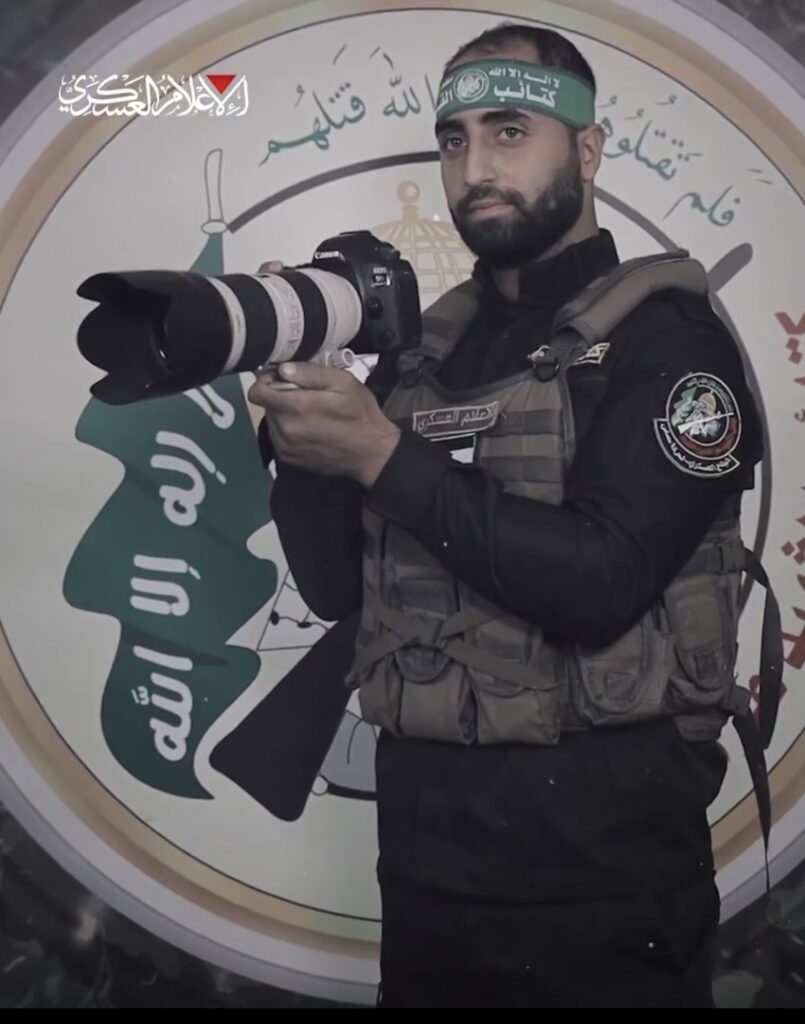
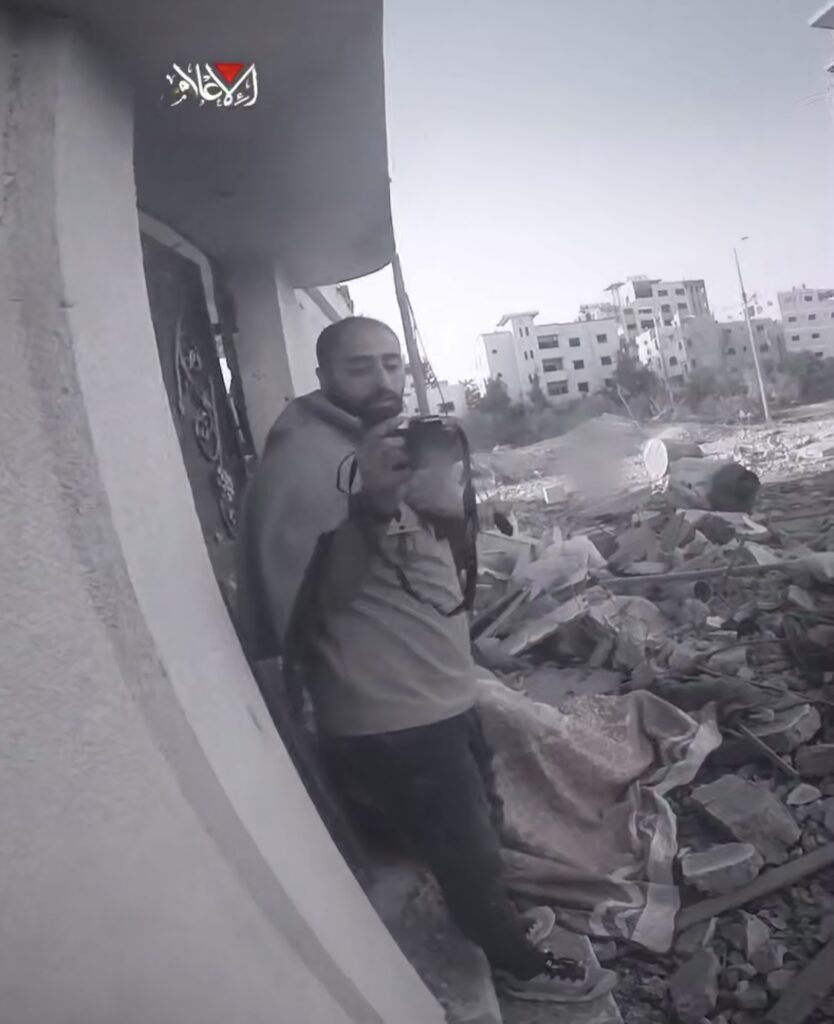
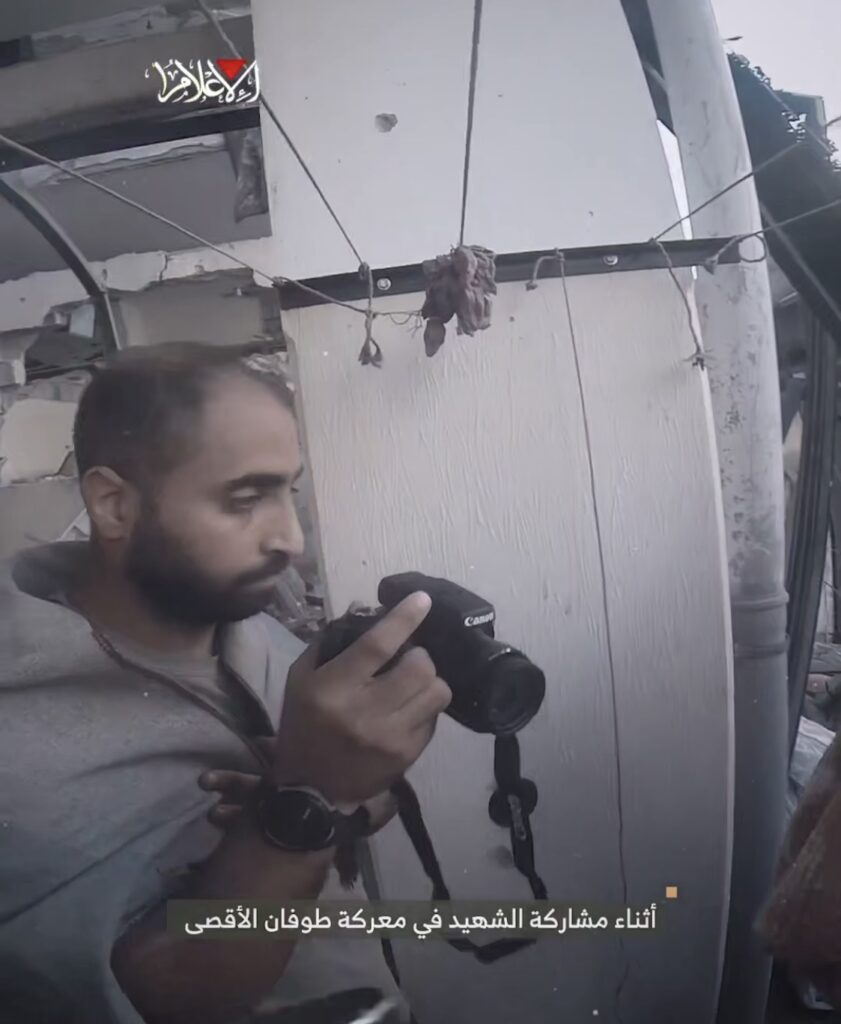
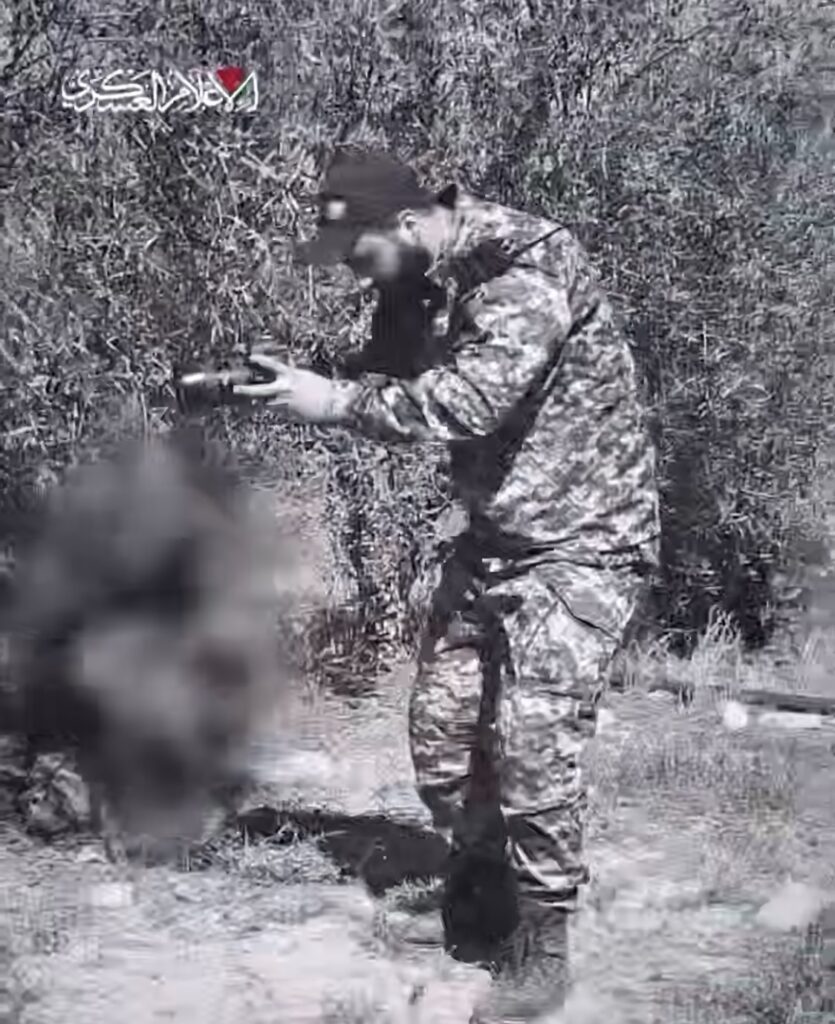
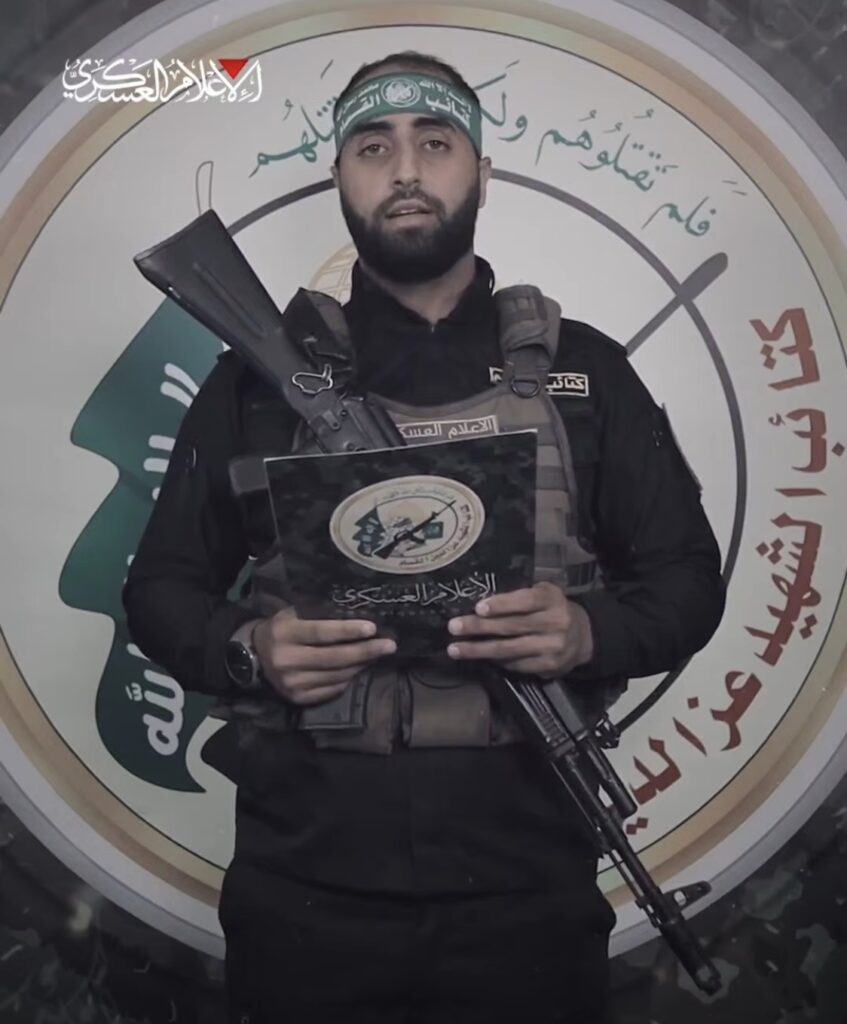
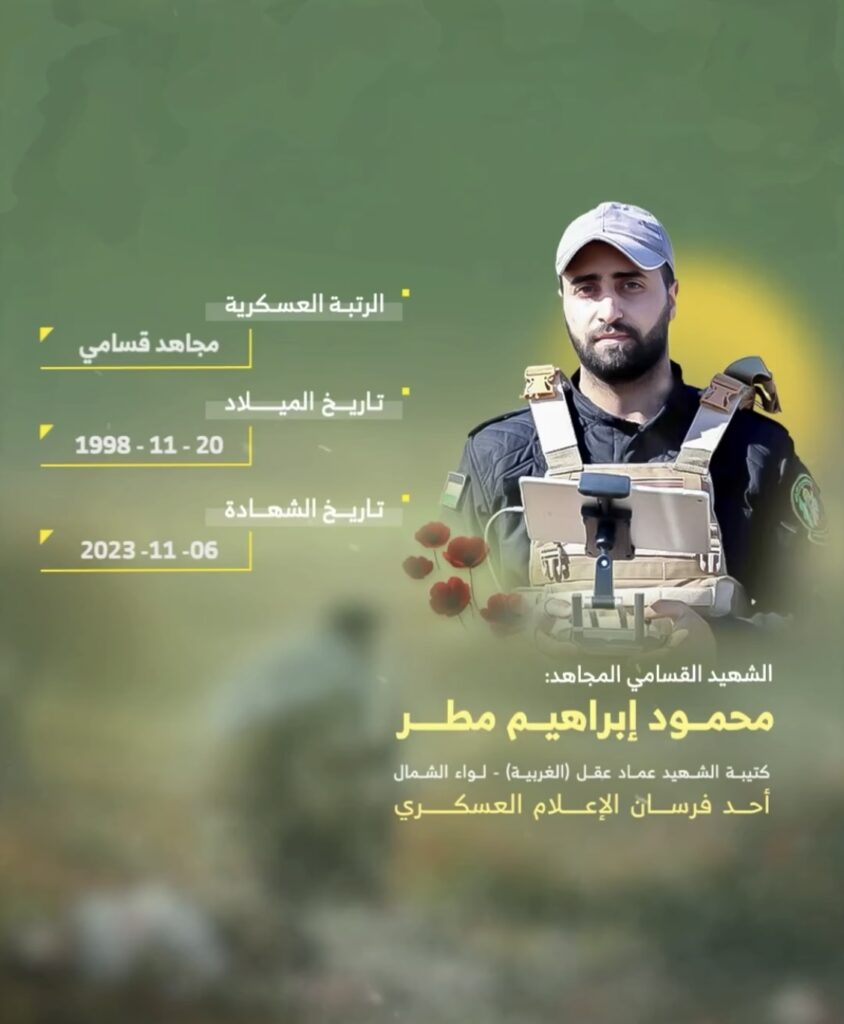
The memorial video identifies him as Mahmoud Ibrahim Matar and calls him “one of the knights of Military Media.” His battalion and brigade are supplied underneath his name. Near the end, he gives his fuller name, Mahmoud Ibrahim Yaqub Matar, and identifies himself as a member of the Izz al-Din al-Qassam Brigades, Hamas’s military wing.
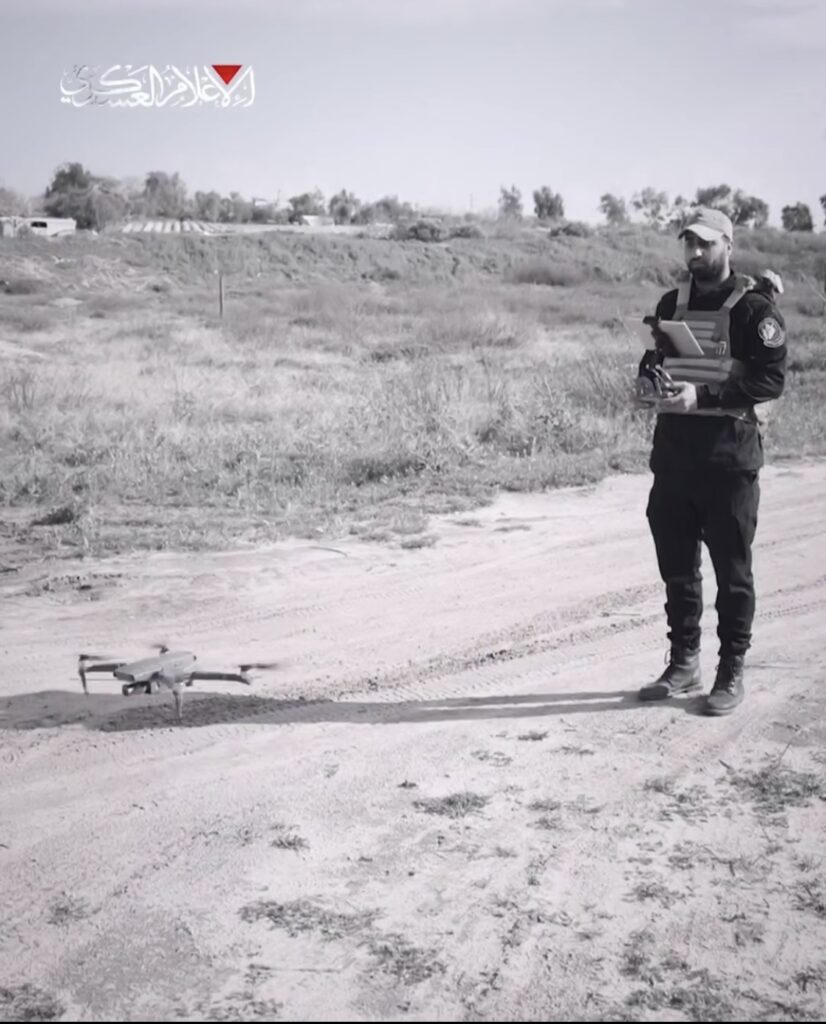
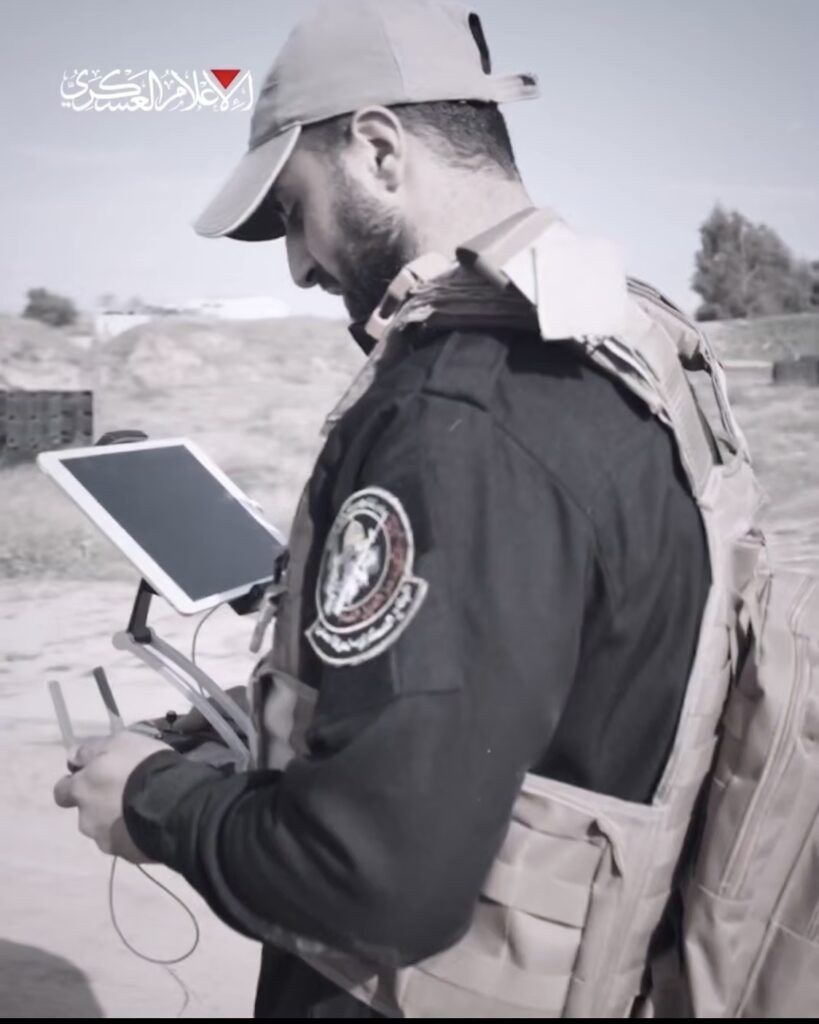
The production moves between camera work and extensive rifle training. Matar handles a drone controller with an attached tablet. Other sequences show a masked camera operator using a motorized stabilizer, with “Military Media” written across his chest. I cannot identify the man beneath the face covering, but the editors have chosen to include those scenes in Matar’s military biography. They evidently see the camera equipment as something worth showing off.
There is a revealing moment during the recording of his farewell statement. Another man adjusts Matar’s green headband while he stands with his rifle and presentation folder. Anyone who has worked around filmed interviews will recognize the attention to how the subject looks before the finished sequence reaches an audience. Even the farewell has a production process.
I have been seeing this combination often enough that the next name now sends me back to the previous one.
In September, I wrote about Nihad Khalil Mohammed Abd al-Nabi, whose publicly documented photography work during the 2018 Gaza border riots preceded the Al-Qassam memorial presenting him with professional camera equipment and military training. He, too, was described as a “knight” of Military Media.
Matar’s opening card names the Martyr Imad Aqel Battalion, with “Western” in parentheses, and the Northern Brigade. Nihad’s memorial identified the Imad Aqel Battalion and Northern Brigade as well. That is a specific connection between the two records, although it does not establish that the men worked together or belonged to the same immediate media team.
Then there is Basem al-Jamal. In his recorded statement, he describes himself as a son of the Military Media Unit and names the Raed al-Attar Battalion in the Rafah Brigade. His memorial also uses the “knights” description. Here, the same media role appears in a different Al-Qassam formation.
Across the organizational boundary, Muhammad Nabil al-Zaq’s memorial supplies the Palestinian Islamic Jihad example. Its armed wing presented camera work, Military Media insignia and weapons training within the biography of a man it identified as a platoon commander. His employment with Al-Quds Today was also documented.
These records do not give us a complete organizational chart. They do show military media personnel associated with different formations, and a comparable function inside a separate terrorist organization. “Knights” is the language of commemoration; the battalion names and membership declarations provide the organizational detail.
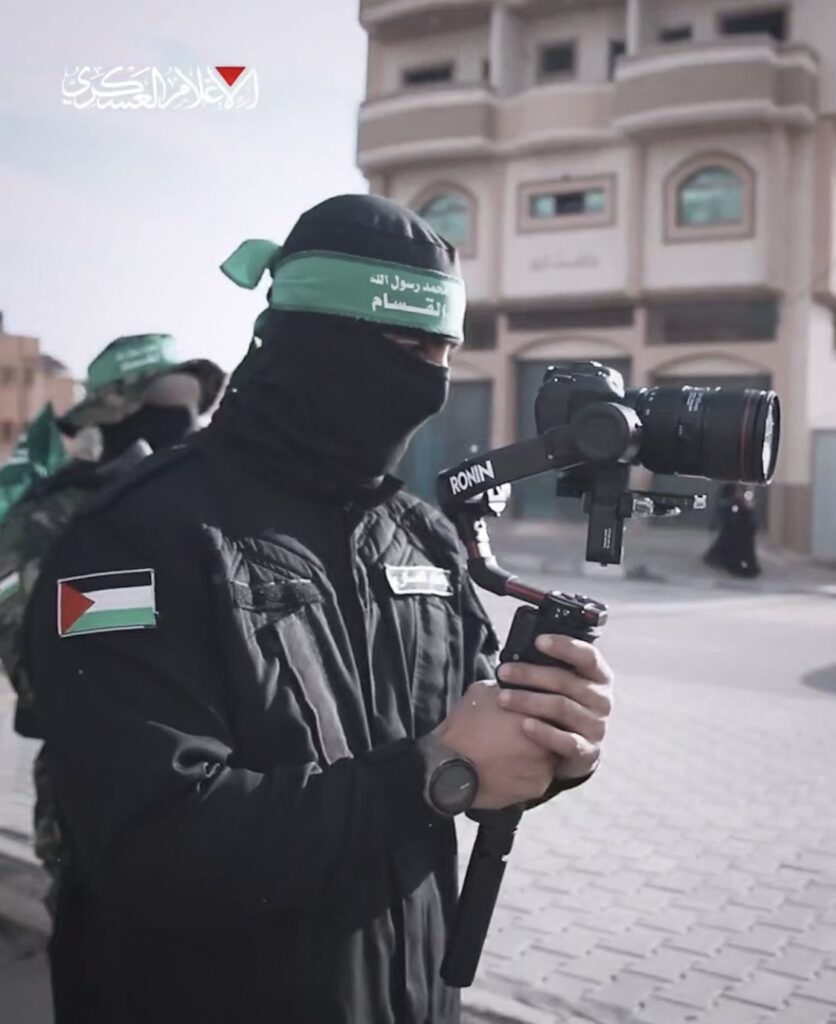
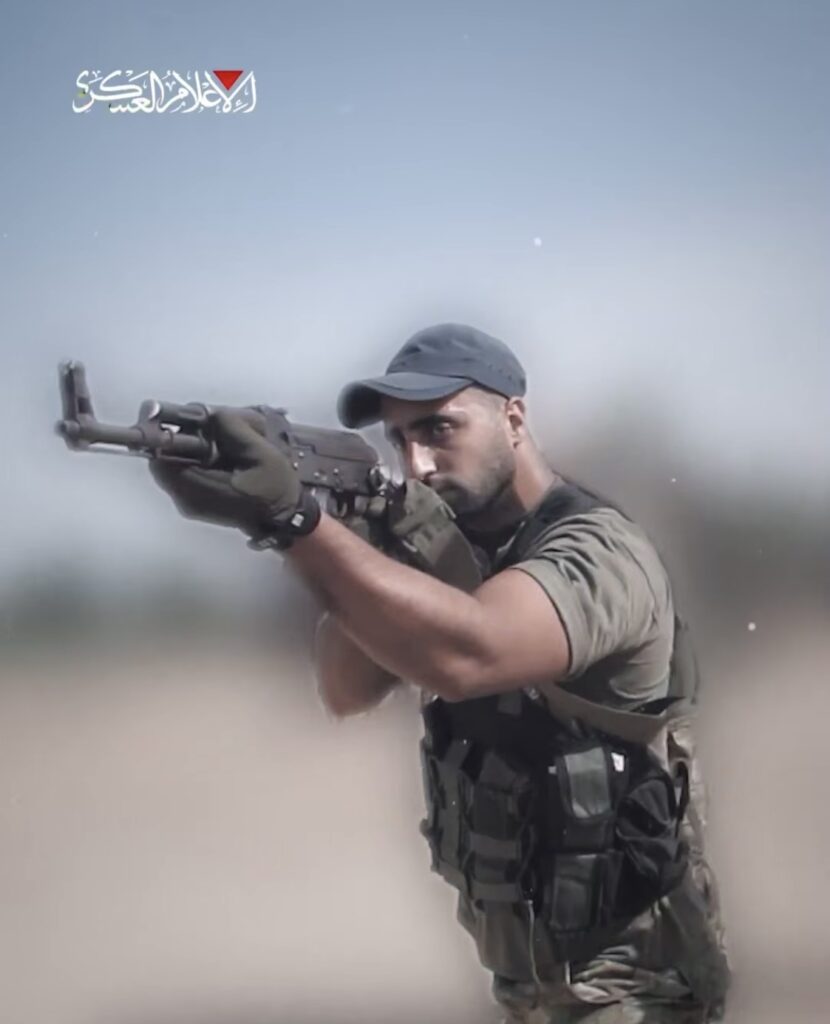
As a photographer, I am interested in how much practical work filming and photography involves. A low camera position changes the appearance of the person being filmed. A stabilizer makes movement smoother. A long lens lets the photographer work from farther away and choose what fills the frame. Those are ordinary photographic tools and decisions being put to an explicitly military purpose in the material Al-Qassam has chosen to publish.
I have not established a civilian newsroom employer or international agency client for Matar. His camera cannot supply that missing evidence, any more than it could establish his membership on its own. His declaration and the military identification in the film do that work.
What stays with me is how proudly the organization includes his photographic ability in its account of his service. The camera belongs in the tribute alongside the rifle, the training and the battalion name. Whoever edited the film expected its audience to understand why.
I recognize the care taken over the pictures. I have spent my working life taking that care myself. It is precisely why I want to know whose purposes a photographer is serving. In Matar’s case, Hamas has gone to considerable trouble to give us the answer. We should pay as much attention to the name on his uniform as we do to the name on his camera.
Liked this article? Follow HonestReporting on Twitter, Facebook, Instagram and TikTok to see even more posts and videos debunking news bias and smears, as well as other content explaining what’s really going on in Israel and the region. Get updates direct to your phone. Join our WhatsApp and Telegram channels!
© Divuach Ne’eman R”A, 2025