



Key Takeaways:
-
Media amplified famine claims against Israel with certainty, then quietly walked them back when the same UN-backed source admitted Gaza was never actually in famine.
-
The reversal received minimal scrutiny or accountability, despite the original claims shaping global outrage, diplomatic pressure, and public belief that Israel was deliberately starving civilians.
-
This failure matters because uncritical reporting fueled antisemitism and hostility, showing how sensational humanitarian narratives can inflame real-world consequences when corrections are buried instead of confronted.
CNN delivered the update quietly and inaccurately, with much less gravity it once used to amplify the warning.
“Gaza no longer in famine,” read a CNN post citing a UN-backed hunger monitor. But the source itself — the Integrated Food Security Phase Classification (IPC) — said that famine conditions have been “pushed back” since the October 10 ceasefire, a formulation that effectively hides the fact there was never any famine to begin with.

Reuters and the Associated Press followed with similar headlines. What is striking is not that the unreliable IPC, which has been criticized in the past for faulty methodology, revised its assessment. It is that much of the press treated the reversal as a weather update, not as a reckoning.
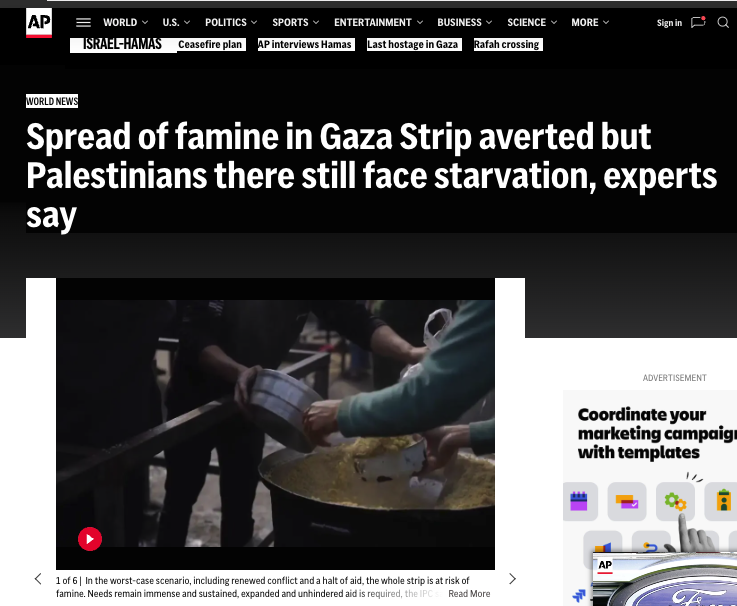
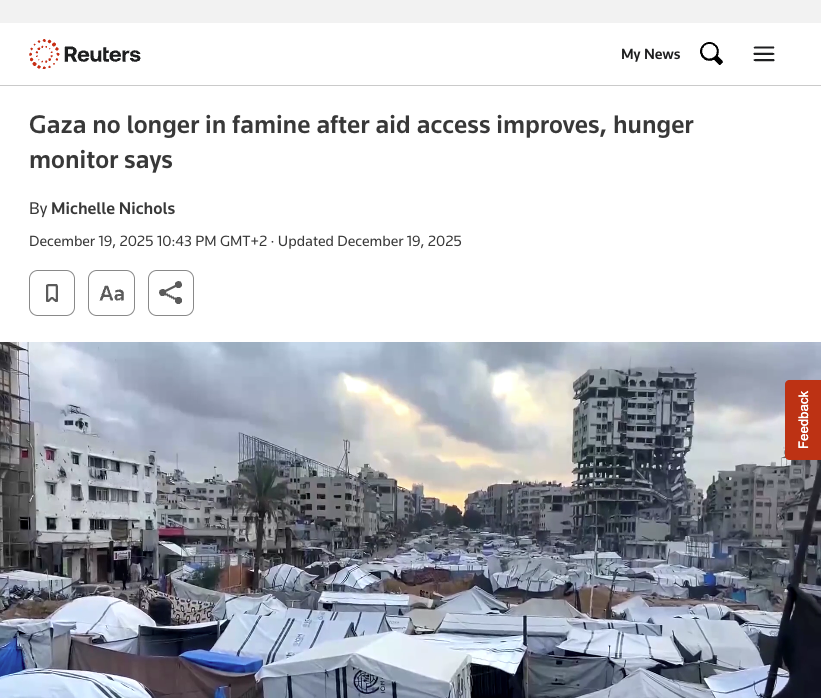
Only months earlier, these same institutions helped cement a very different narrative. In late July 2025, UN agencies issued a high-profile warning that key indicators in Gaza exceeded famine thresholds, citing IPC data and describing hundreds of thousands facing famine-like conditions. The IPC alert itself stated that famine thresholds had been reached for food consumption in most of Gaza and for acute malnutrition in Gaza City. In August 2025, the Food and Agriculture Organization of the United Nations (FAO) announced famine was confirmed for the first time in Gaza, again anchored to IPC assessments.
Those claims ricocheted through global coverage with little visible skepticism about methodology, access constraints, or incentives baked into a wartime information environment. The result was a widely accepted narrative that Israel was causing famine, a narrative that shaped diplomatic pressure and public outrage long before the data could be stress tested.
Now the IPC’s latest assessment says no area has ever been in famine, attributing improvements to increased humanitarian and commercial food deliveries after the ceasefire, while warning the situation remains fragile and could deteriorate again if access is disrupted or fighting resumes.
🧵IPC’s latest fraudulent Gaza report implies 1,700+ starvation deaths this December 2025—even TODAY we should see 57 such deaths! But even Hamas reports only 475 total starvation deaths for the ENTIRE WAR. The math exposes how detached from reality all these models are. 1/ pic.twitter.com/wOvIohWTt2
— Aizenberg (@Aizenberg55) December 19, 2025
AP at least gestured to the whiplash, noting that months earlier, the IPC said famine was occurring in Gaza City and likely to spread without a ceasefire and an end to restrictions. Reuters likewise framed the change as a shift from earlier IPC findings, while stressing continued emergency-level needs. But what was largely missing was the one ingredient journalism owes the public when an apocalyptic claim collapses or is materially revised: responsibility.
Related Reading: Famine Claims in Gaza Fall Apart, Western Media Don’t Even Blink
No media outlet interrogated the underlying assumptions when famine warnings were treated as settled fact. None explained what changed in the inputs and thresholds. None revisited the earlier certainty with the same prominence as the original alarm.
This matters because narratives do not stay on paper. In the United States, the ADL has reported that anger at Israel during the war has been a driving force behind antisemitism, underscoring how the information ecosystem around Gaza can translate into real-world hostility toward Jews. When famine claims are amplified uncritically, they do not just inform. They inflame.
The new UN-backed update does not erase Gaza’s suffering, and it does not vindicate anyone’s politics. It does, however, expose a core media failure: outsourcing verification to a single authoritative label, then moving on when the label changes.
If famine was once a front-page certainty, the correction cannot be a footnote.
Liked this article? Follow HonestReporting on Twitter, Facebook, Instagram and TikTok to see even more posts and videos debunking news bias and smears, as well as other content explaining what’s really going on in Israel and the region. Get updates direct to your phone. Join our WhatsApp and Telegram channels!