What bothers me about this photograph is how conveniently everything comes together. A building has collapsed, concrete blocks are scattered everywhere, yet a collection of colorful toys sits across a relatively flat surface in front of a child. Several look remarkably clean against the surrounding debris. The boy, wearing orange, bends toward them.
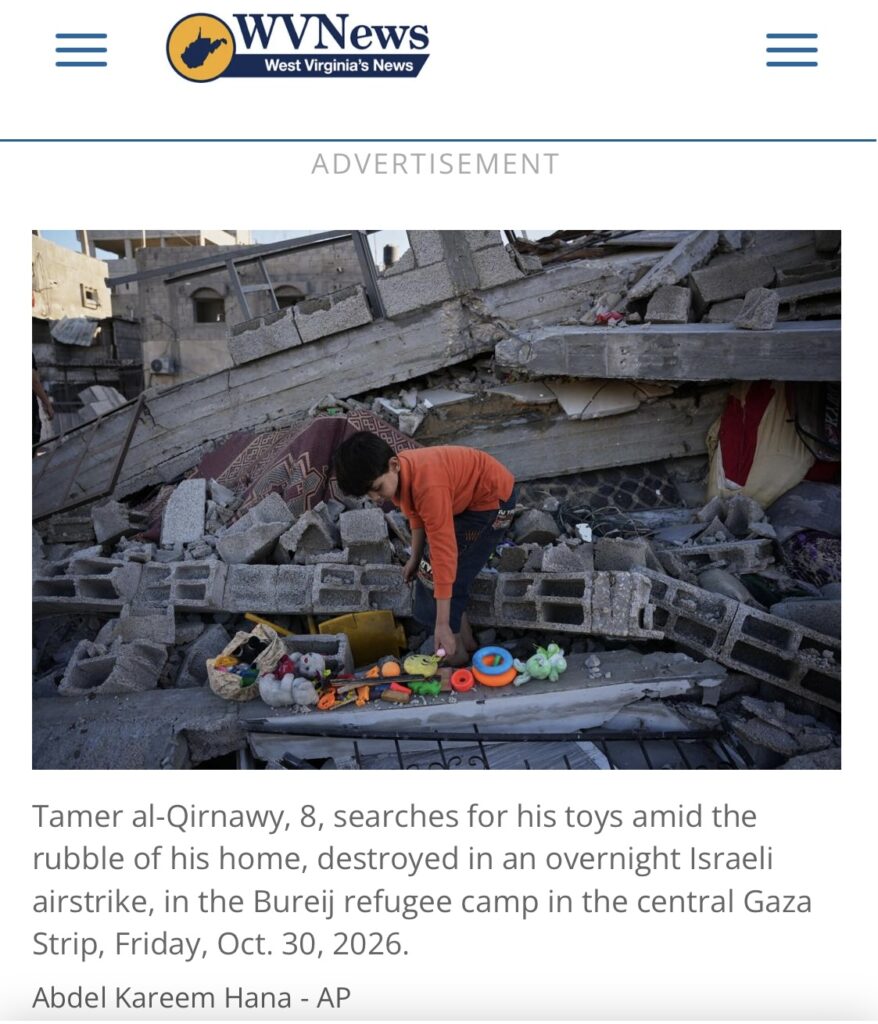
To my eye, it looks arranged. Having worked as a photographer and picture editor, I would have challenged this image before publishing it. That is my judgment of what I can see, rather than proof that the photographer positioned the toys or instructed the boy. Those are questions the agency should be able to answer.
The photograph is credited to Abdel Kareem Hana of the Associated Press. Its caption identifies eight-year-old Tamer al-Qirnawy, searching for his toys in the rubble of his home in Bureij, central Gaza, on October 30, after an overnight Israeli airstrike.
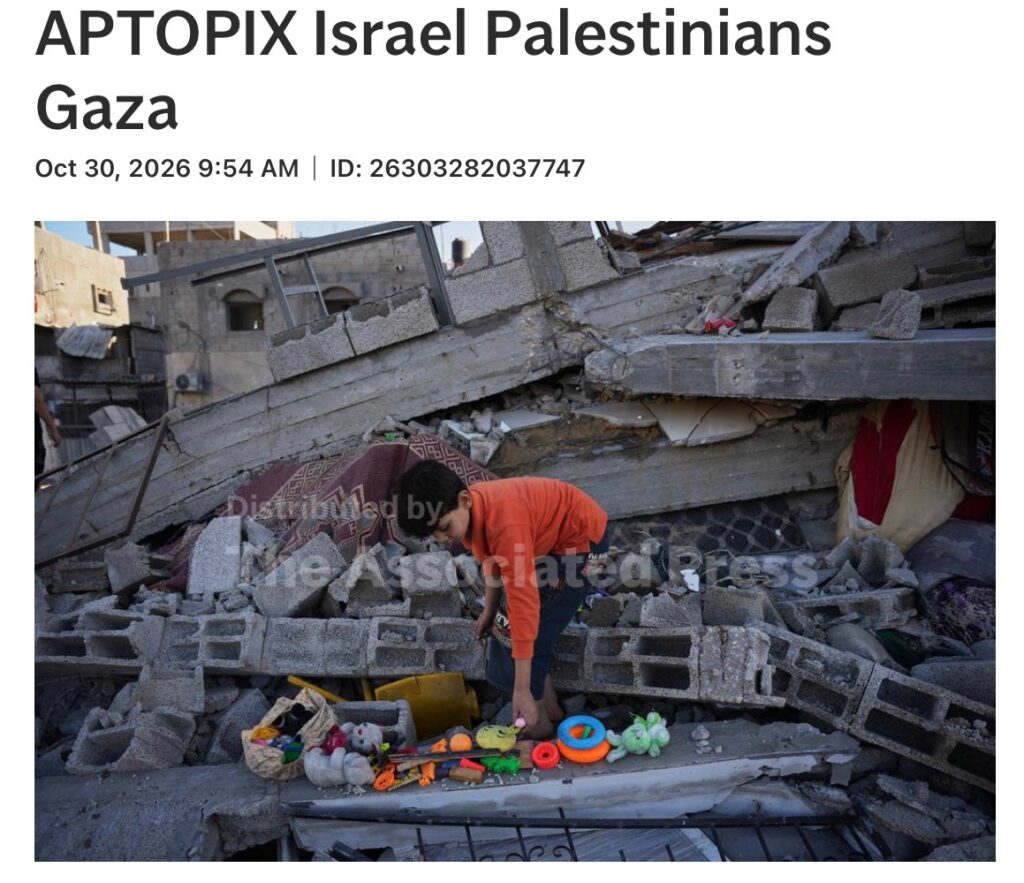
AP marked it APTOPIX. According to the agency’s reference guide, that means picture editors selected it as one of AP’s best photographs. The scene therefore passed through an editorial selection process in which someone decided it deserved particular attention. I would be interested to hear whether the arrangement prompted any questions along the way.
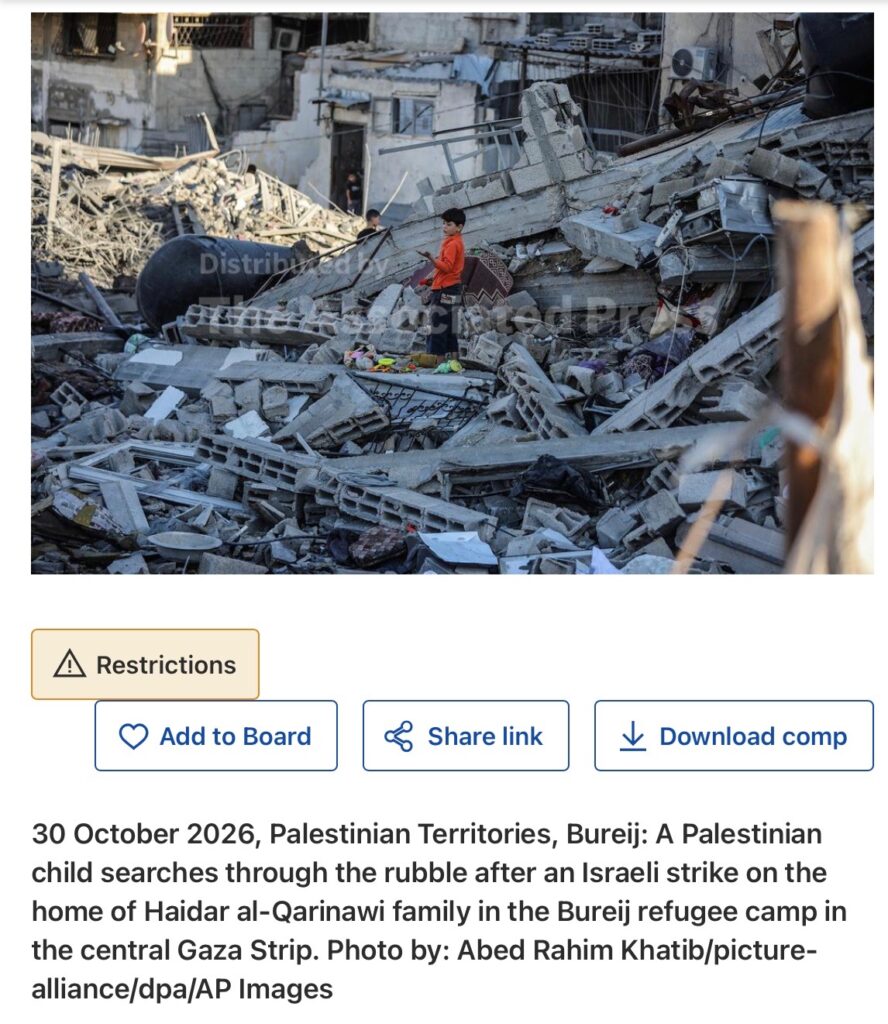
Looking through AP’s platform, I also found a wider view credited to Abed Rahim Khatib through picture-alliance/DPA. It shows the same boy standing above the toys, with the patterned cushion and broken slabs recognizable behind him. Moving farther back has given us a much better view of the wreckage, but the collection of toys remains conspicuous on its little stretch of clear surface.
Other pictures in the DPA results show adults and children moving through the debris and apparently recovering belongings. A second AP caption describes Tamer collecting his toys while other children climb through the rubble. He or his family may have gathered them there. If that is what happened, the photographers can explain it, including whether they simply watched him retrieve his possessions or asked him to handle them for a picture.
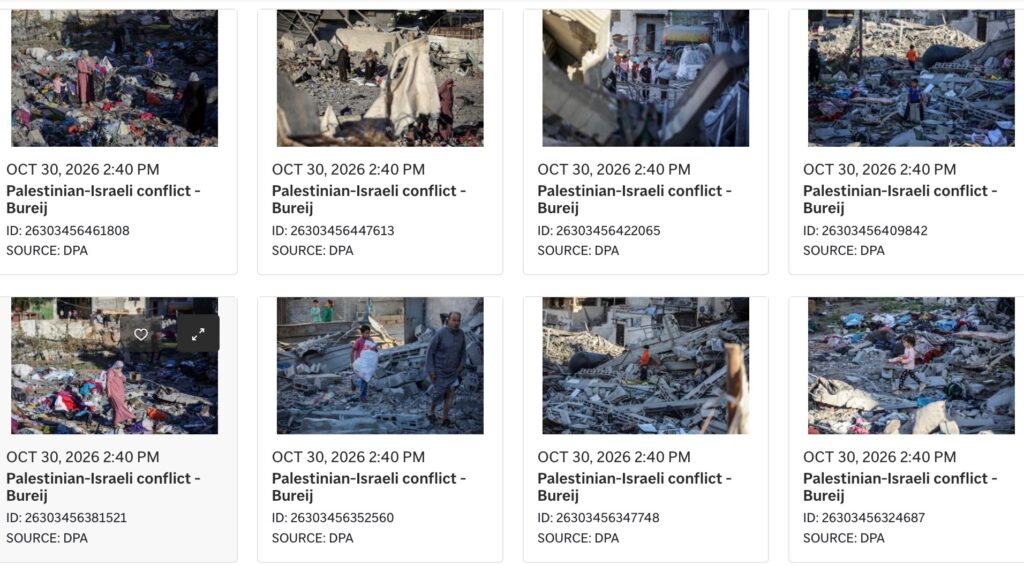
I understand why a child would want his toys back. What I find harder to accept is the apparent willingness of adults to let children climb around a recently destroyed building. The wider photograph shows fractured slabs, loose blocks and exposed metal surrounding the boy. There are other children in the accompanying pictures. Who was looking after them while the photographers worked?
I am not suggesting that a photographer arriving at a scene assumes control of every family present. I am saying that getting a photograph does not excuse encouraging a child into danger or keeping him there. If anyone asked this boy to stand among that wreckage, bend toward the toys or repeat an action, I would regard it as a serious failure of judgment. His willingness to oblige would not make it acceptable.
Khatib’s name will be familiar to readers of my earlier work. I have examined his photographs of children during Gaza’s rainstorms and discussed his photography inside Israel during the October 7 attack. Here, his wider view is useful because it allows us to examine the setting beyond Hana’s chosen frame. Both photographers recorded the boy beside the same collection of toys, and both should be able to describe how that scene developed.
There is a further question about the caption’s account of the destruction. Anadolu reported that a residential building in Bureij was struck on October 29 after an evacuation warning. The following day, the IDF said its overnight strikes in Bureij and Gaza City targeted Hamas weapons stores, with warnings issued to civilians beforehand.
I have not independently matched the photographed home to a weapons-store target. That connection needs checking, as does the warning received by the family. Readers should be given whatever can be established about the target and the evacuation, alongside the fact that an Israeli strike destroyed the building.
The toys brought me back to Rachel O’Donoghue’s examination of teddy bears in Gaza rubble, published by HonestReporting in July 2025. Her examples included different children handling the same red bear and toys prominently positioned amid destruction. We have been asking questions about this imagery for some time. Another child, another ruined building and another conveniently visible collection of toys deserve closer examination than an appreciative glance at the composition.
There is nothing objectionable about photographing a child recovering belongings. I would photograph that myself. But I would expect to explain what I had witnessed, particularly if the finished picture looked as though someone had laid out the objects for my benefit. A picture editor asking about that would be doing the job properly.
AP has the photographer, the caption information and access to the surrounding frames. It can establish whether the toys were gathered before Hana arrived, whether anyone directed Tamer, and what happened before and after the selected exposure. Those are ordinary editorial questions.
The boy has already lost his home, according to AP’s account. He should not have to perform that loss for a camera. Before recommending this photograph to the world, AP should have satisfied itself that no one had asked him to.
Liked this article? Follow HonestReporting on Twitter, Facebook, Instagram and TikTok to see even more posts and videos debunking news bias and smears, as well as other content explaining what’s really going on in Israel and the region. Get updates direct to your phone. Join our WhatsApp and Telegram channels!
© Divuach Ne’eman R”A, 2025