3 Key Takeaways:
-
Iran’s internal struggle is widely misunderstood. The conflict is not simply between states, but between a regime and its own people.
-
International institutions and major media outlets have consistently downplayed or ignored the scale of repression inside Iran.
-
A ceasefire with the Islamic Republic does not mean peace. As long as the regime refuses to recognize Israel, the conflict remains unresolved at its core.
For months, Iran’s internal crisis was treated as a side story.
The regime cracked down on protesters. Iranians were cut off from the internet. Dissidents warned that the Islamic Republic was slaughtering its own people. And still, much of the world looked elsewhere.
Then, when Israel and the United States struck the regime, the coverage finally arrived. But too often, it missed the central point: this was never simply a conflict between countries. It was a struggle between the Islamic Republic and the Iranian people it has brutalized for 47 years.
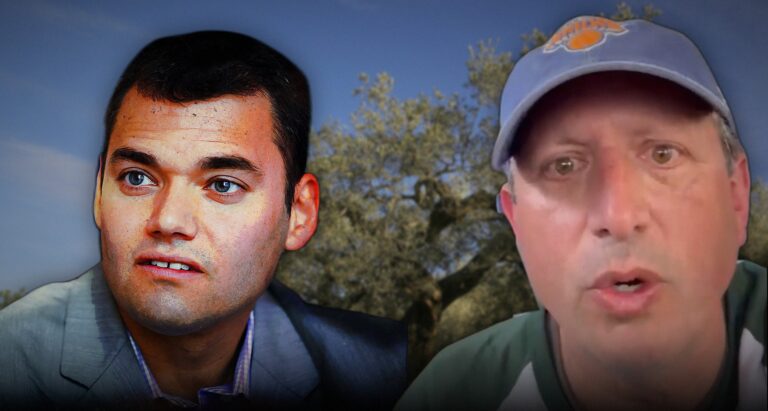
That was the argument Jonathan Harounoff made on The Honest Take. As he put it, “There is a massive, massive, massive gulf that exists between the 93 million people of Iran and the 47-year-old Islamic Republic.”
War, Diplomacy, and a Population That Sees the Difference
As a spokesperson for the Israeli mission at the UN, Harounoff has been watching the dichotomy play out from the inside, one in which the global body remains silent when it comes to internal Iranian affairs, but rushes to make condemnations when the state is attacked.
He pointed to the violence that unfolded in late 2025 and early 2026, when mass protests were met with brutal crackdowns. “We saw tens of thousands of Iranians slaughtered inside Iran. That wasn’t being discussed at all at the United Nations.”
In contrast, when the U.S. and Israel launched their joint operation against the Islamic Republic, the UN and its Secretary-General rushed to issue a condemnation. “Instead of praising a targeted strike to eliminate an immediate risk, there was condemnation.” He described the reaction as “distorted,” particularly given the scale of the threat posed by the regime.
Harounoff pointed to the fact that the Security Council met on a weekend to discuss, a highly unusual event demonstrating the urgency, whereas it took Secretary General Antonio Guterres two weeks to express “shock” at the reports of the massacre of Iranian protesters.
Why Change in Iran Is So Difficult
As military action escalated, Harounoff described a dynamic that is often counterintuitive to outside observers: many Iranians understood — and in some cases supported — efforts targeting the regime, even when those actions took place inside their own country.
“It was quite eye-opening… how supportive the vast majority of the Iranian people were,” he said, based on conversations with contacts and diaspora communities. That distinction, he argued, was frequently missed. “They recognize that it’s not really them or the country that is being attacked. It’s the Islamic Republic that is being targeted.”
Despite widespread dissatisfaction, Harounoff did not present regime change as inevitable. “It’s very hard to poll the extent to which people inside Iran are dissatisfied,” he said, even while referencing reports suggesting overwhelming opposition to the regime.
He outlined three conditions required for meaningful change: sustained internal protests, real international backing, and fractures within the regime itself. “When those three components come together, that’s really when you’re going to start to see change.”
Until then, repeated protest movements — from 1999 to the “Woman, Life, Freedom” uprising of 2022 — had failed to fully dislodge the system due to ongoing repression.
A Media Blind Spot
Harounoff was equally critical of media coverage, particularly during periods when events inside Iran intensified but received limited attention. “I was so disturbed by the complete absence… of news coverage surrounding Iran before the operation.”
He pointed to a period of widespread unrest and government repression that coincided with minimal international reporting. “There was not only a blackout in Iran, but there was also a news coverage blackout in the world.”
Even when coverage did appear, he argued, it often overstated how close the regime was to collapse — creating a false sense that outside intervention was unnecessary. “It can create a sense of complacency… why do they need to get involved if the regime is already finished?”
A Global Threat Beyond the Region
He framed the reluctance to go to war with the regime as the result of years of failed alternatives. “There were attempts at diplomacy, but the Islamic Republic wasn’t there to negotiate in good faith. It was there to stall.” In his view, the regime used negotiations to buy time while continuing to expand its military capabilities and global operations.
He cited incidents and plots across multiple countries, including attacks and assassination attempts in Europe and the United States. “The problem has unfortunately arrived at our shores as well.” This, he argued, underscored that the Iranian regime’s activities were not confined to the Middle East but represented a wider international threat.
Ceasefire Is Not Peace
As discussions turned to potential de-escalation, Harounoff drew a clear distinction between temporary calm and lasting resolution. “A ceasefire is certainly different to lasting peace.”
He pointed to the fundamental issue underlying the conflict: the regime’s refusal to recognize Israel. “How can it have peace with a place that it doesn’t even recognize?”
In his view, any pause in fighting would likely be used by the regime to regroup and continue its long-term strategy.
The UN and the Limits of International Response
Harounoff’s experience at the UN has also highlighted what he considers a disconnect between institutional priorities and reality on the ground.
When his book on Iranian women’s protests was submitted to the UN bookstore, it was rejected. “They said it doesn’t align with UN global priorities.”
For Harounoff, the decision reflected a broader pattern. Even as the UN maintained committees focused on human rights and women’s issues, he said critical developments in Iran were often ignored or delayed in receiving attention.
For him, the future of Iran ultimately depended on its people — not external actors — but that future would require sustained attention and support. “The desire of the Iranian people hasn’t wavered at all.”
Found this video interesting? Follow the HonestReporting page on Facebook to catch more videos, and read articles debunking news bias and smears, as well as others explaining Israel’s history, politics, and international affairs. Click here to learn more!
© Divuach Ne’eman R”A, 2025