Key Takeaways:
- The Palestinian Journalists’ Syndicate listed Muhammad Nabil al-Zaq as a photographer for Al-Quds Today. Palestinian Islamic Jihad’s armed wing identified the same man as a platoon commander and a Northern Region Central Office official.
- The Guardian and The Washington Post included al-Zaq among journalists and media workers killed in Gaza. The Committee to Protect Journalists later removed him after new research established that he had engaged in combat.
- PIJ’s own footage places professional camera work, Military Media insignia, firearms training, armed formations and controlled propaganda production inside one institutional biography.
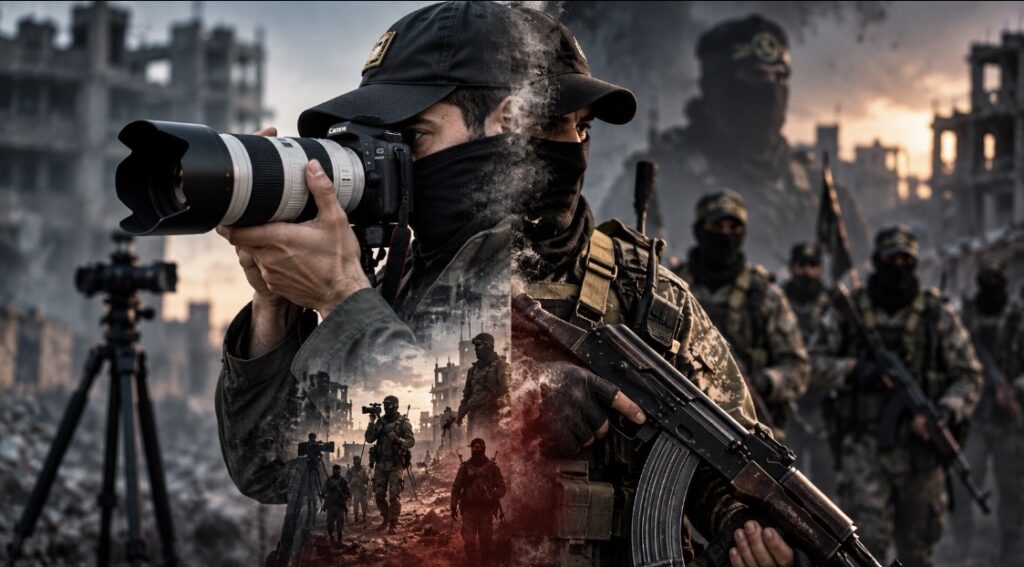
The camera appears first as familiar professional equipment: a Canon body, a white telephoto zoom and a substantial tripod with a fluid style head. Muhammad Nabil al-Zaq adjusts the camera and works through the viewfinder with the practiced movements of someone who knows the equipment.
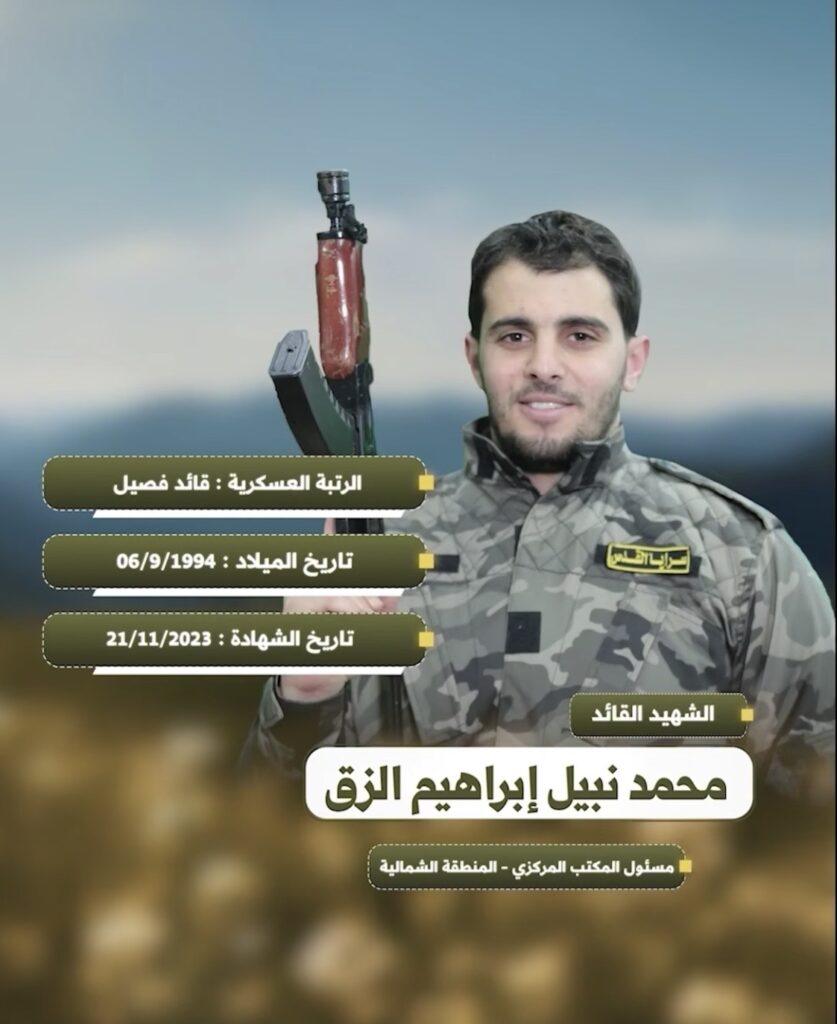
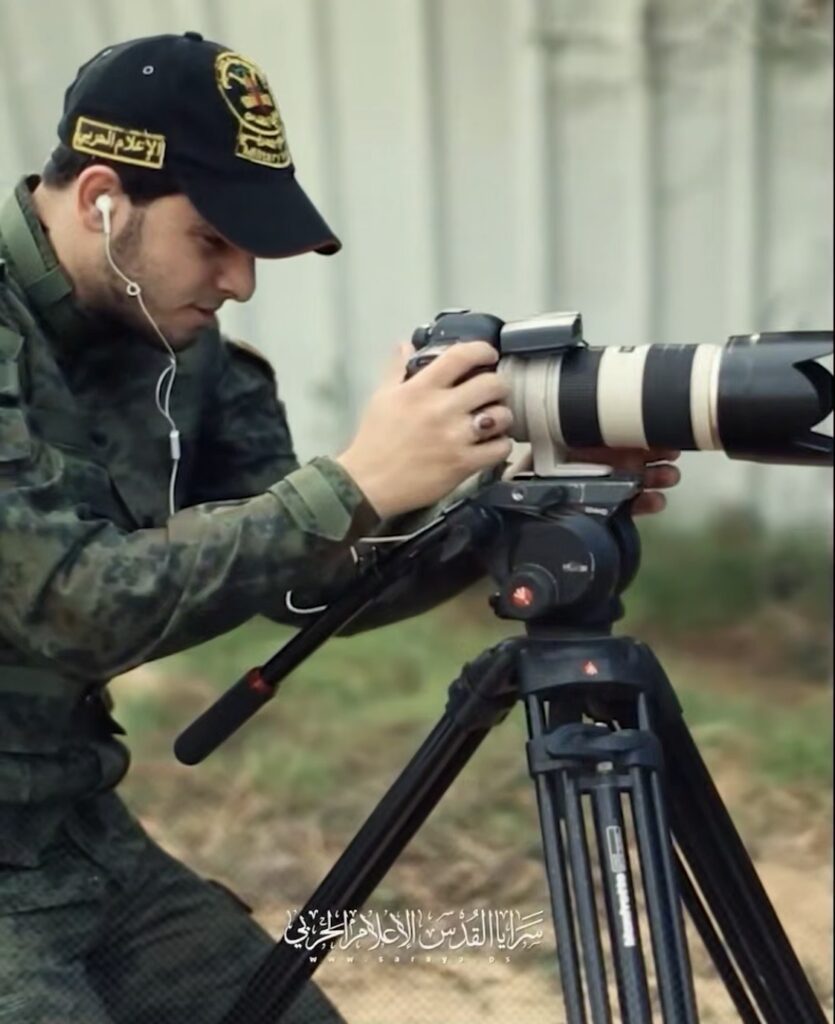
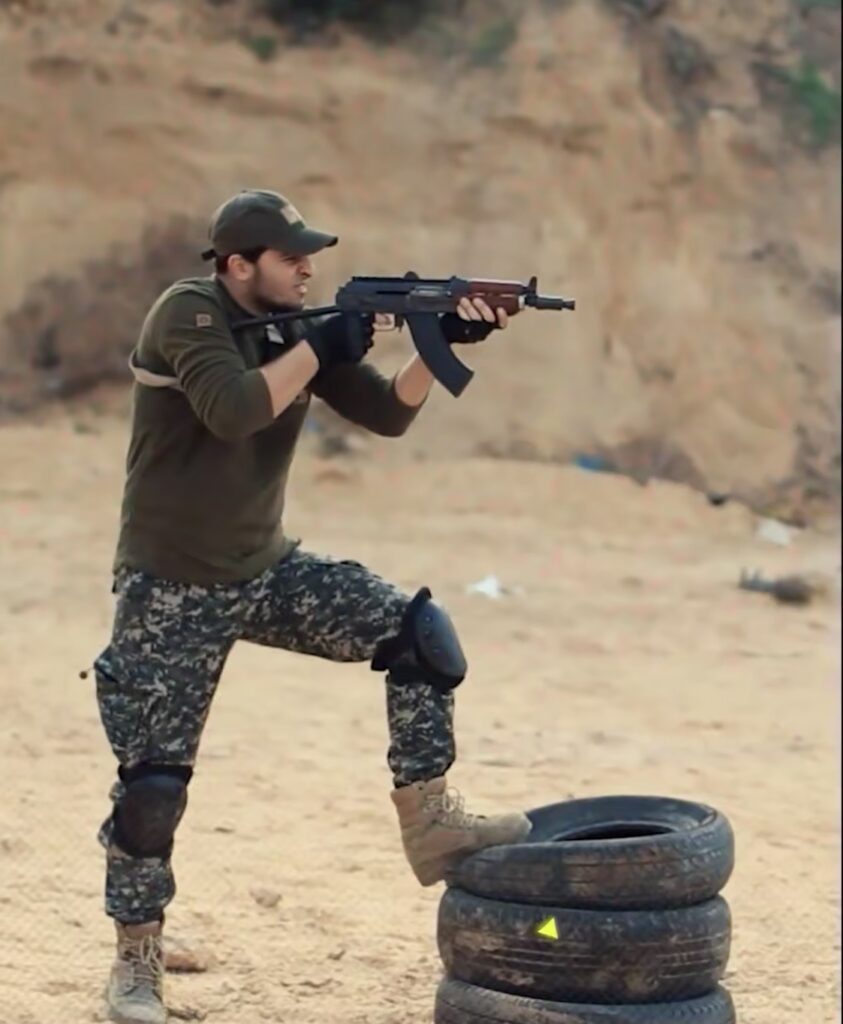
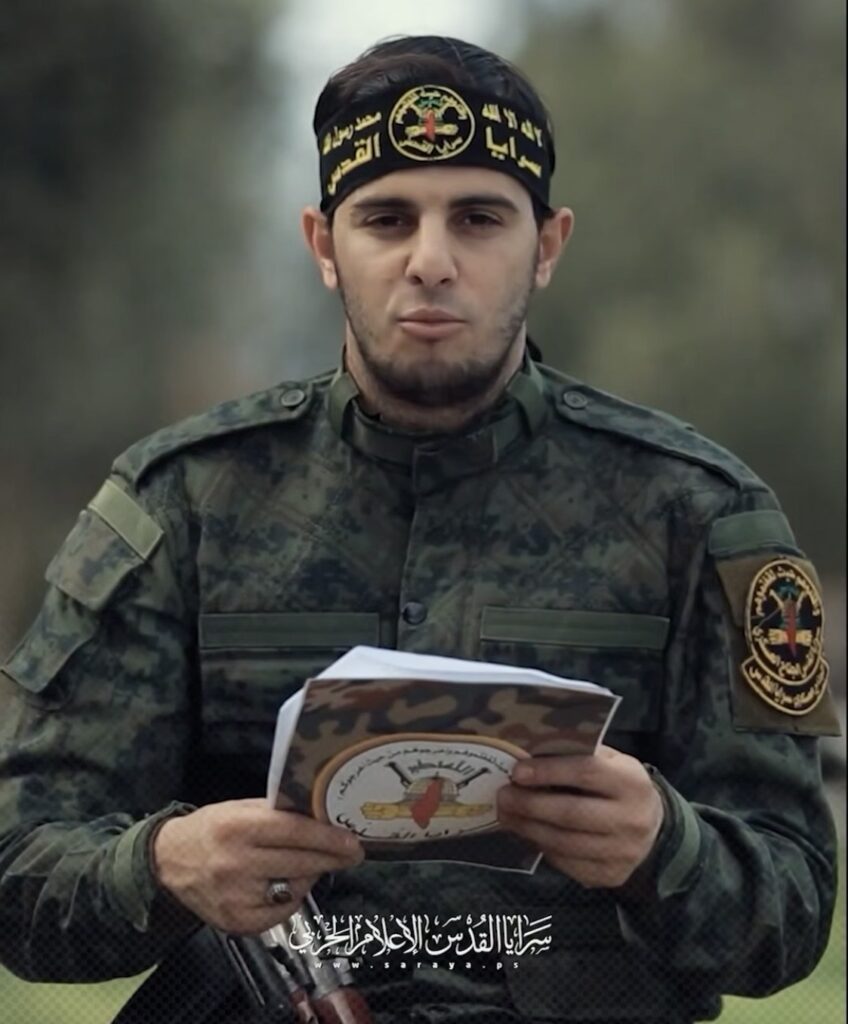
Then the film cuts to rifle training. Al-Zaq moves through an earthen training ground carrying an assault rifle. He practices with a handgun. He appears in armed formations and wears insignia identifying Palestinian Islamic Jihad’s Military Media operation.
The sequence is not documentation of allegations assembled by Israel or an interpretation imposed by a hostile editor. It comes from Roots of Victory, a memorial videos series produced by the Al-Quds Brigades, the armed wing of Palestinian Islamic Jihad. PIJ edited the camera, the rifle, the uniform and the military formation into a single account of one man’s service.
It is difficult to imagine a clearer illustration of how meaningless the conventional separation between “journalist” and military operative can become inside Gaza’s armed groups. He serves as a case study for how the PIJ’s media apparatus is inextricably integrated in both its military structure, but also its propaganda strategy.
The Photographer the News Knew
Al-Zaq’s media work was real. That is precisely what makes his case important.
A Palestinian Journalists’ Syndicate report lists the full name Muhammad Nabil al-Zaq, aged 29, as a photographer for Al-Quds Today. Other Palestinian and international records described him as a journalist or the channel’s social media manager. When he was killed in November 2023, Shams News reported that Al-Quds Today had mourned him as a colleague.
Two prewar Palestinian news posts also carry the shorter credit “Photography: Muhammad al-Zaq.” One shows the Ramadan moon above Gaza. The other shows Israeli reconnaissance aircraft over the territory. The abbreviated credits cannot yet be tied conclusively to Muhammad Nabil Ibrahim al-Zaq, but the name, location, period and publishing network make them credible leads.
No attributable work by al-Zaq was located in searches of Reuters, AFP, Getty Images, The Associated Press or Anadolu. His appearance in mainstream coverage came not as the creator of a published photograph, but as a name in the expanding record of journalists said to have been killed in Gaza.
The Washington Post included Mohamed Nabil al-Zaq in an interactive article titled “The journalists killed in Gaza and what they tried to show the world.” The Guardian’s interactive on “the deadly toll on journalists” still lists him simply as “Journalist.”
That Guardian page states that it was last modified on September 25, 2025. Almost exactly a year later, the Committee to Protect Journalists announced the results of a comprehensive review in which it removed 22 people previously included in its database. CPJ’s updated casualty record places al-Zaq among those removed after new research established engagement in combat. His individual CPJ entry is now marked “Removed”.
The correction does not mean al-Zaq never worked in media. The evidence shows that he did. It means that “journalist” was an incomplete description of a man whose other role was not incidental to the story.
What PIJ Chose to Show
The opening card of PIJ’s film identifies al-Zaq by his full name. It gives his military rank as platoon commander and describes him as the official responsible for the Central Office in the Northern Region. The precise function of that office remains unclear, so it should not be casually inflated into command of PIJ’s entire regional media apparatus.
Al-Zaq is shown handling rifles and a pistol, moving through structured military training and standing among masked, armed members of the Al-Quds Brigades. Elsewhere he wears a cap and uniform patch marked “Military Media” while operating professional camera equipment. The film repeatedly moves between those activities without suggesting any contradiction between them.
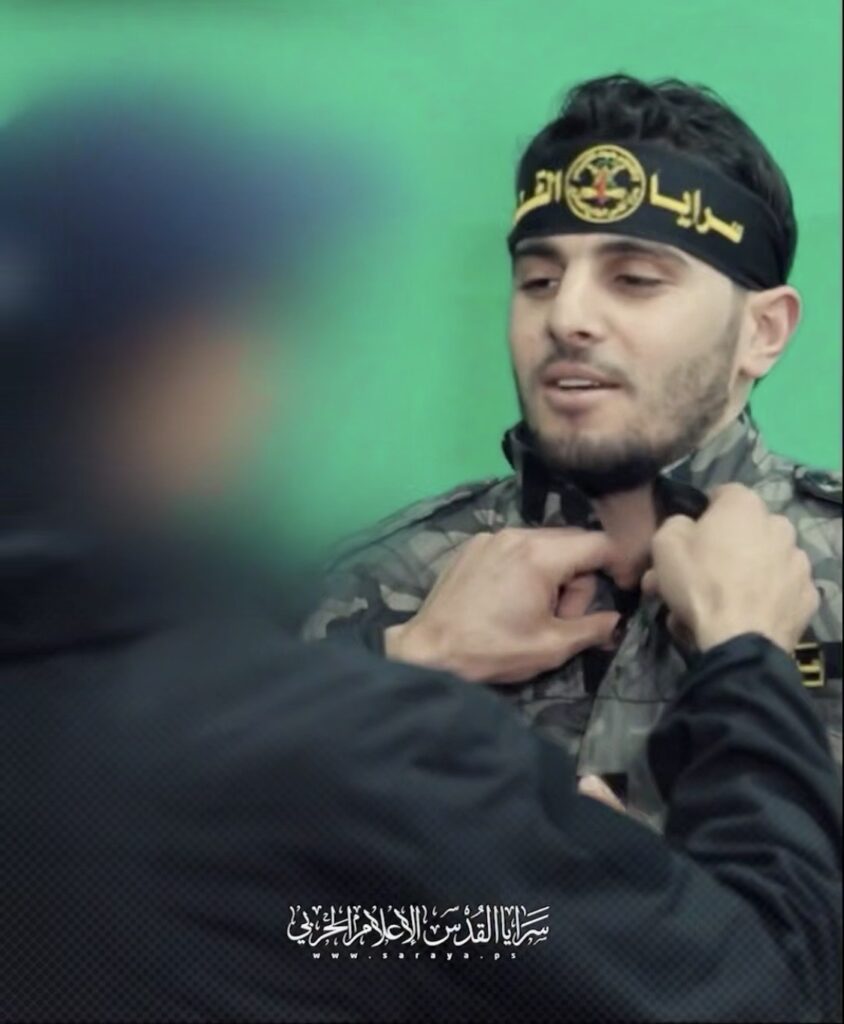
It also exposes the production process itself. During one sequence, al-Zaq stands before a green screen while another man adjusts his uniform and fits or checks a microphone. A prepared testament is being staged and recorded. Wardrobe, sound, lighting, framing and military messaging are parts of a controlled production workflow.
Near the end, al-Zaq identifies himself as “a son of Islamic Jihad and a son of the Al-Quds Brigades.” This is not a condolence notice that might express sympathy or political affinity. It is his own declaration, preserved inside the armed wing’s official tribute to him.
The IDF Press File on al-Zaq separately identifies him as a military guard and department commander in PIJ’s Gaza Brigade. That Israeli assessment provides additional context, but the central case does not depend upon it. PIJ’s own film supplies the name, rank, imagery and declaration.
The Newsroom Inside the Military Structure
Al-Zaq does not appear in isolation. The people around his camera help reveal the system in which it operated.
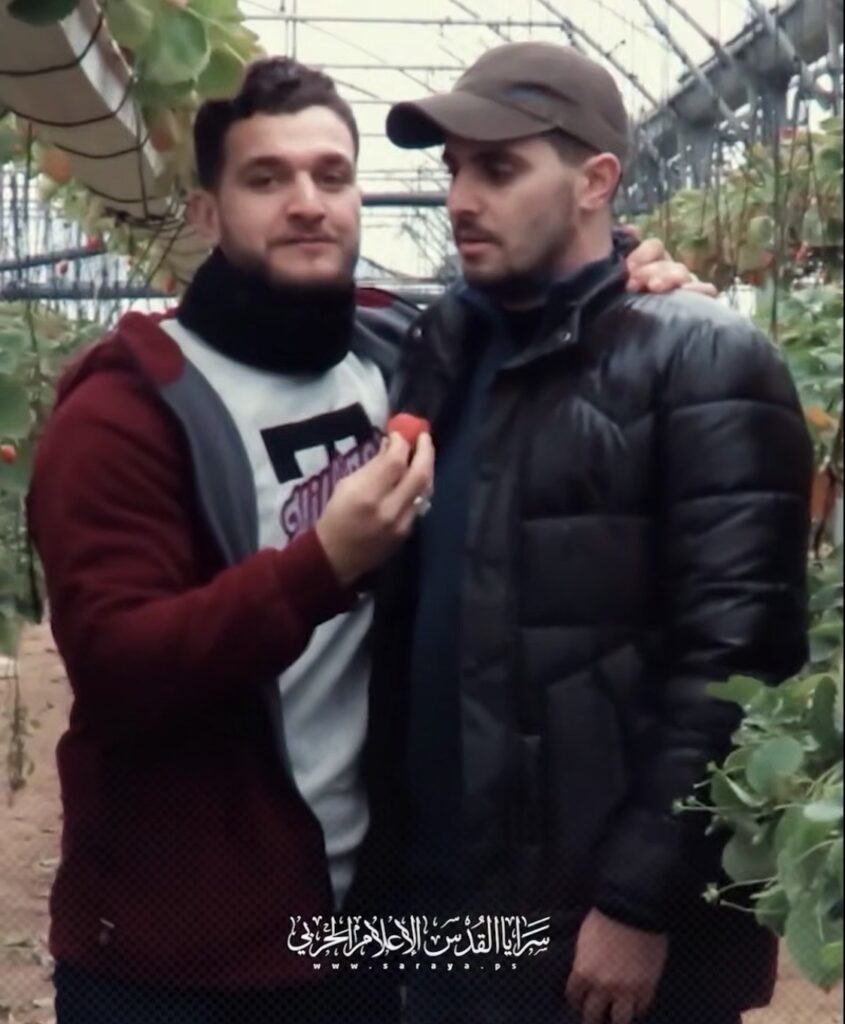
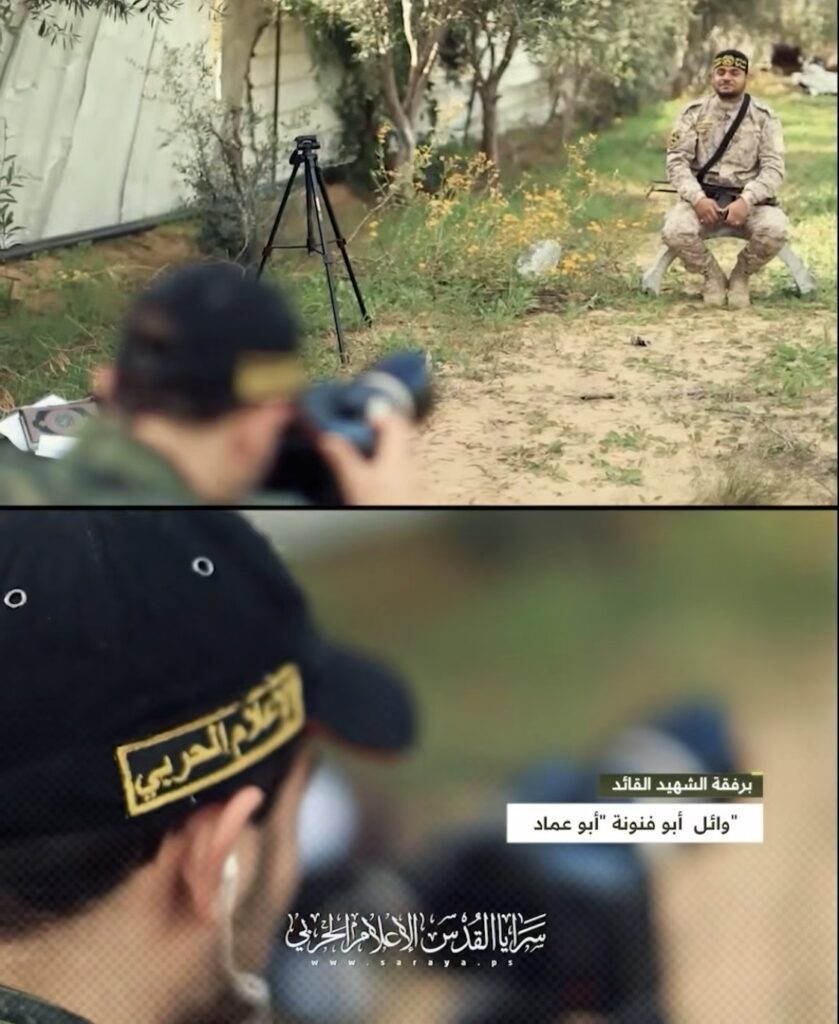
In footage published by HonestReporting, al-Zaq is seen photographing Wael Rajab Abu Fanouna, the director general of Al-Quds Today. Abu Fanouna was therefore not only the senior figure at the channel that employed al-Zaq. According to Israel’s account of his position, he was also the first deputy commander of PIJ’s combat information operation. PIJ later included him among senior Al-Quds Brigades members killed during the war.
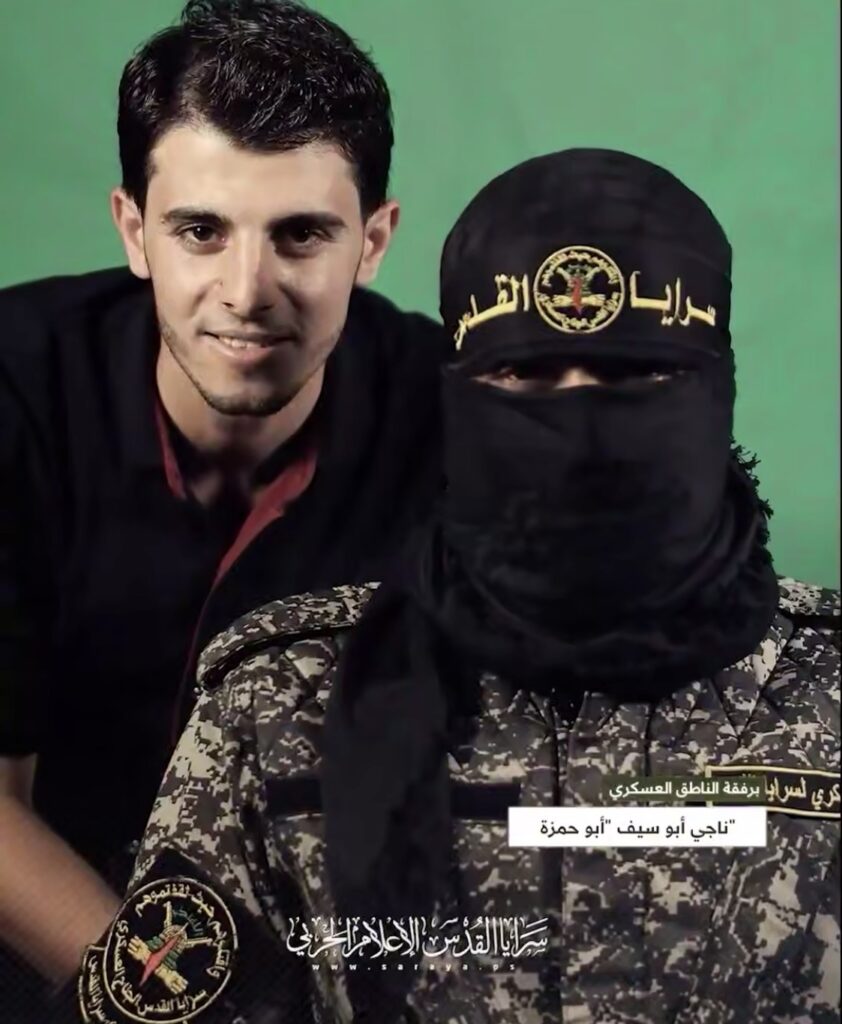
The same footage later shows al-Zaq moving beside the masked Al-Quds Brigades spokesman Abu Hamza. His positioning appears consistent with an escort or security function, although the images alone cannot establish a formal assignment.
Together, the sequences map an internal chain. An Al-Quds Today photographer was also a PIJ platoon commander. The head of Al-Quds Today was identified as a senior figure in PIJ’s information apparatus. The armed wing’s spokesman moved through the same controlled visual environment. Cameras, commanders, security and distribution were not operating in separate professional worlds.
The issue is not whether a man genuinely knew how to use a camera. Al-Zaq plainly did. The question is who commissioned the images he created, who controlled the access, what operation surrounded its production ,and what information was withheld when the resulting material entered the news stream.
International picture desks see what reaches them. A caption may say photographer. A casualty list may say journalist. A channel may describe a colleague. None of those labels reveals the armed formation outside the frame, the military rank absent from the biography or the production structure that determined what could be photographed in the first place.
A System, Not an Exception
Al-Zaq’s case is not the first time an armed group’s own memorial material has exposed this overlap.
HonestReporting previously documented how Nihad Khalil Mohammed Abd al-Nabi moved from publicly recorded photography work during the 2018 Gaza border riots into Hamas’ Military Media Unit. In that case, Qassam material presented professional Canon equipment alongside military training and described the camera operator as an instrument of jihad whose images carried the organization’s message to the world.
Al-Zaq provides the equivalent institutional picture from Palestinian Islamic Jihad, but with unusually complete documentation. His public media employment, professional equipment, military rank, firearms training, Military Media insignia, and proximity to senior PIJ information figures all appear within the same record.
This is not evidence that every Palestinian journalist is an operative, or that access to an armed group establishes membership. It is evidence that Palestinian armed organizations have built media functions into their military structures and have placed trained image makers inside them. Treating every person on a journalist casualty list as an independent observer erases the very distinctions that responsible journalism is supposed to establish.
The images in PIJ’s film restore what the casualty lists removed. Al-Zaq was a photographer. He was also a commander. His camera work and his military service were not competing explanations of the same man. They were parts of the same career.
PIJ brought the camera, the commander, the spokesman, and the message into the same operation. Western coverage pulled them apart. And the audience for the resulting information war was always the reader.
Liked this article? Follow HonestReporting on Twitter, Facebook, Instagram and TikTok to see even more posts and videos debunking news bias and smears, as well as other content explaining what’s really going on in Israel and the region. Get updates direct to your phone. Join our WhatsApp and Telegram channels!
© Divuach Ne’eman R”A, 2025