Key Takeaways:
- Access shapes coverage. The stark contrast between the extensive photography of Ayatollah Ali Khamenei’s funeral and the lack of comparable imagery during Iran’s January crackdown shows how access—not just journalistic skill—determines what the world is able to see.
- Remote verification has limits. Satellite imagery, geolocated videos and open-source investigations are valuable tools, but they cannot fully replace independent journalists on the ground documenting events firsthand.
- Control over access influences the narrative. In tightly controlled states, governments do not need to manipulate every image. By determining which events receive comprehensive independent coverage and which do not, they can significantly shape the international understanding of events.
For several days in July, Iran became one of the world’s easiest places to photograph.
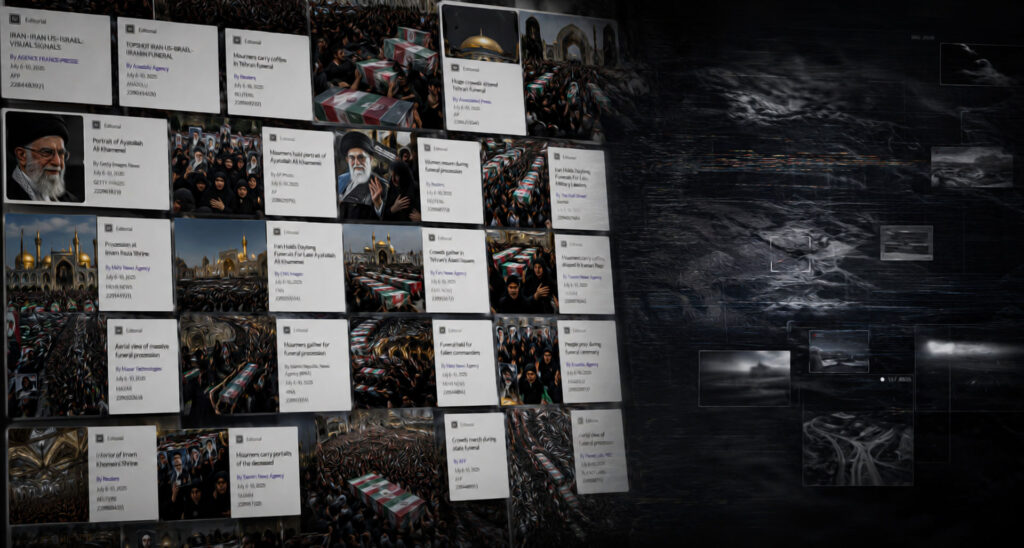
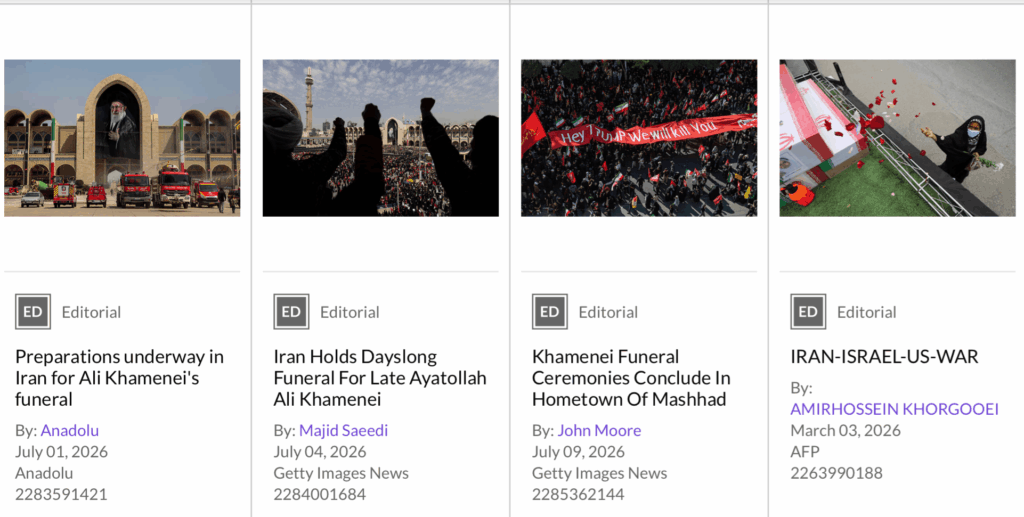
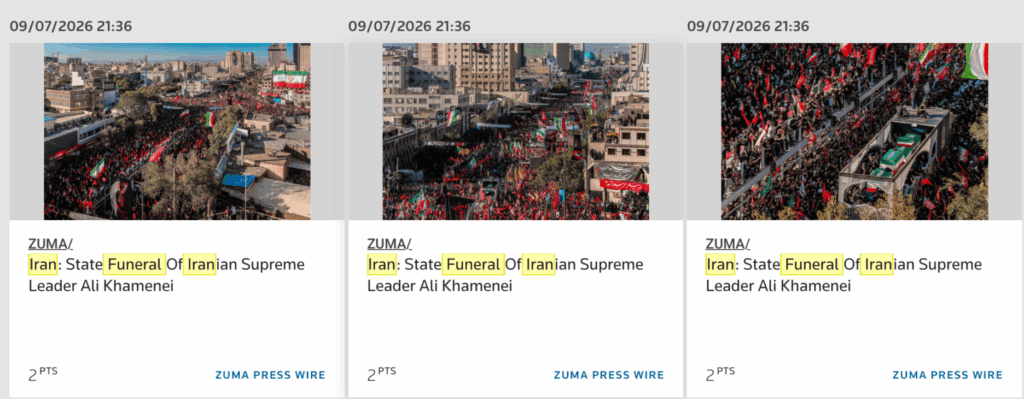
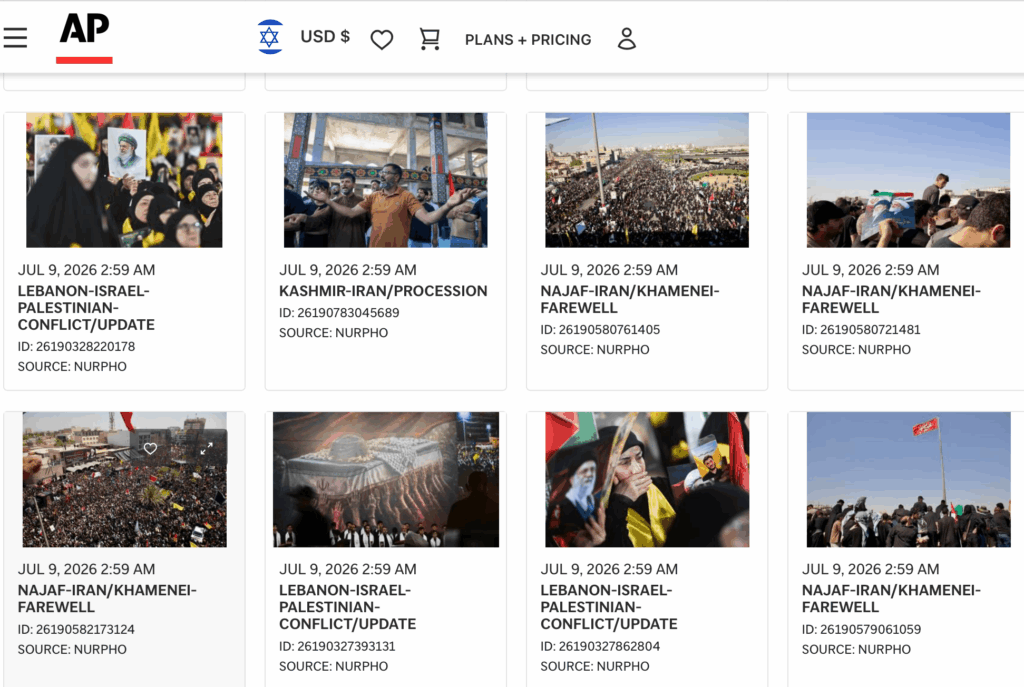
International news agencies documented every stage of Ayatollah Ali Khamenei’s funeral. AFP, Getty Images, Reuters, Anadolu and other organizations produced sweeping aerial images of crowds, intimate portraits of mourners, photographs of the coffin, military displays and banners threatening the United States and Israel. Their photographers worked from streets, rooftops and elevated vantage points across multiple cities in Iran and Iraq.
The result was one of the most comprehensive visual records to emerge from Iran in recent years.
It also raises an obvious question.
What changed?
Not the cameras.
Not the photographers.
Not the news agencies.
The only variable was access.
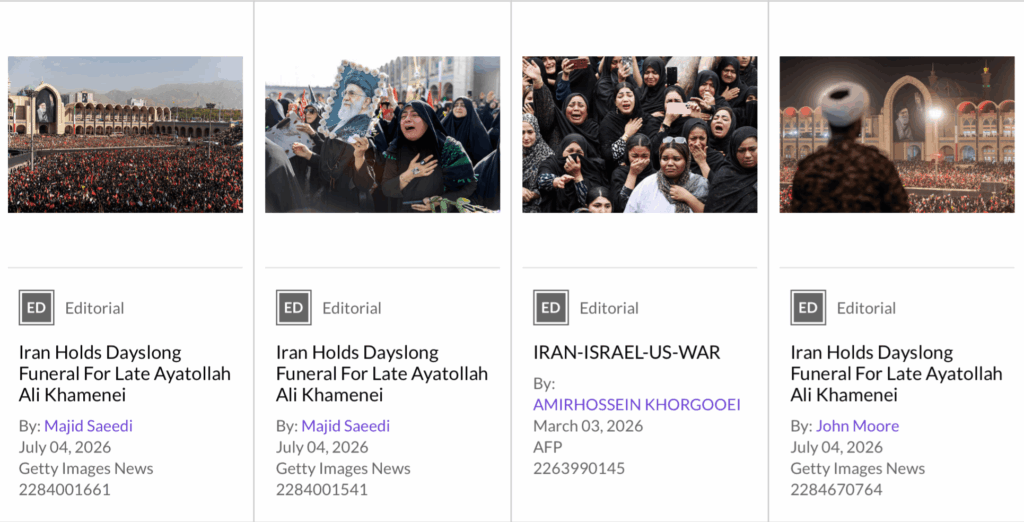
A Different Iran
Just months earlier, during Iran’s January 2026 crackdown on civilians, international audiences saw a very different picture.
There was no comparable body of independent wire-service photography documenting the killings, detention facilities, hospitals or grieving families. The world did not see multiple photographers moving freely through the unfolding events, capturing them from every angle.
Instead, international news organizations relied largely on material that emerged through Iran’s tightly controlled information environment: state-issued footage, government-approved photographs, social media videos and imagery whose production conditions could not always be independently verified.
The same pattern appeared during reporting on the alleged strike on a girls’ school in Minab. As HonestReporting noted at the time, casualty claims spread rapidly through international media before independent journalists had reached the scene. Comprehensive wire-service photography of the aftermath simply did not exist during the crucial early stages of reporting.
The stories continued.
The independent visual witnesses did not.
Reconstructing Events from Afar
In the absence of direct access, news organizations turned to remote verification.
BBC Verify, CNN, Reuters and others examined satellite imagery, geolocated videos and analyzed damage patterns to reconstruct events from outside Iran. Reuters distributed drone footage supplied by Iran’s Press Center, while other imagery entered the international news system through organizations operating within Iran’s restricted media environment.
These techniques are valuable. They can establish where an event occurred and whether visible damage is consistent with reported claims.
But they also have clear limits.
They cannot independently identify victims, verify casualty figures or reveal what lies beyond the material selected for public release.
The contrast with Khamenei’s funeral could hardly have been greater.
There was no need to reconstruct events from satellites because photographers were already inside the story.
Why Access Matters
Photojournalism is about far more than cameras or technical expertise.
It depends on access.
Without it, photographers cannot independently test official narratives, document what authorities might prefer to conceal or capture the unscripted moments that often become history’s defining images.
The funeral demonstrated what international agencies are capable of producing when those restrictions are relaxed.
Photographers followed the procession through multiple cities, captured the scale of the crowds from above and documented intimate moments among mourners. They also recorded the ideological messaging surrounding the event.
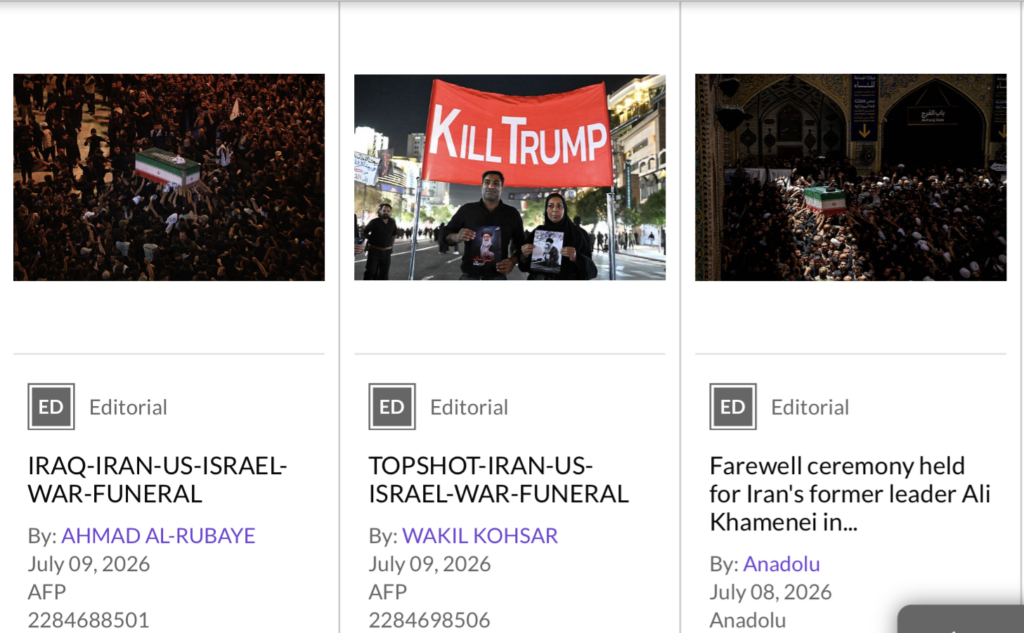
Among AFP’s images were mourners standing beneath banners reading “Kill Trump” and “Hey Trump, We Will Kill You.” Those photographs accurately documented the atmosphere surrounding the funeral while simultaneously projecting Iran’s political messaging to a global audience through some of the world’s largest news agencies.
The visual record extended beyond mourning.
It also communicated power, defiance and ideology.
Two Different Information Environments
The comparison highlights two very different ways Iran entered the international news cycle.
During the January crackdown and the reporting surrounding Minab, journalists largely reconstructed events from afar using satellite imagery, verified social media videos and material distributed through state-linked channels because independent access was absent.
At Khamenei’s funeral, independent photographers became the primary witnesses. International agencies no longer needed to piece together events remotely because they were able to document them directly.
The difference was not photographic skill.
Nor was it editorial interest.
It was access.
That distinction is easy to overlook once compelling images begin appearing across newspapers, television broadcasts and news websites around the world.
Yet it fundamentally shapes what can be photographed, what can be independently verified and, ultimately, how international audiences understand events inside closed societies.
The Questions the Photographs Cannot Answer
Every photograph from Khamenei’s funeral may faithfully depict what stood before the camera.
The crowds were real.
The procession took place.
The banners existed.
The mourners filled the streets.
That is not the issue.
The more significant question is why one politically important event generated extensive independent photographic coverage while other equally significant events left international journalists relying on satellite imagery, official footage and fragments of material released from inside the country.
The funeral images demonstrate what international photographers can produce when they are allowed to work.
Their earlier absence demonstrates something equally important.
Governments do not necessarily need to manipulate photographs if they can influence which events are photographed comprehensively and which are not.
In tightly controlled states, access is not merely a logistical consideration.
It is part of the information system itself.
The cameras showed the world what they were permitted to see.
The more revealing story may be what they were unable to photograph only months before.
Liked this article? Follow HonestReporting on Twitter, Facebook, Instagram and TikTok to see even more posts and videos debunking news bias and smears, as well as other content explaining what’s really going on in Israel and the region. Get updates direct to your phone. Join our WhatsApp and Telegram channels!
© Divuach Ne’eman R”A, 2025