Key Takeaways:
• A widely shared magazine cover used a single frame to present an interaction as abuse, before viewers had access to the full sequence.
• Video and audio from the same scene show an ongoing, noisy confrontation, not a one-sided encounter.
• The issue is not whether the image is real, but whether a single moment can carry the meaning imposed on it.
A single image can define a story before the story has even been told.
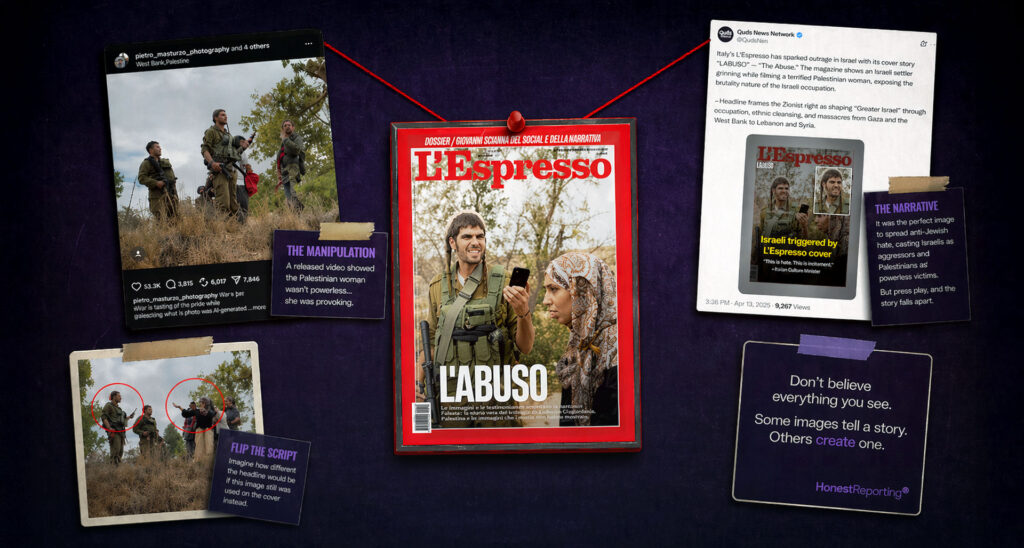
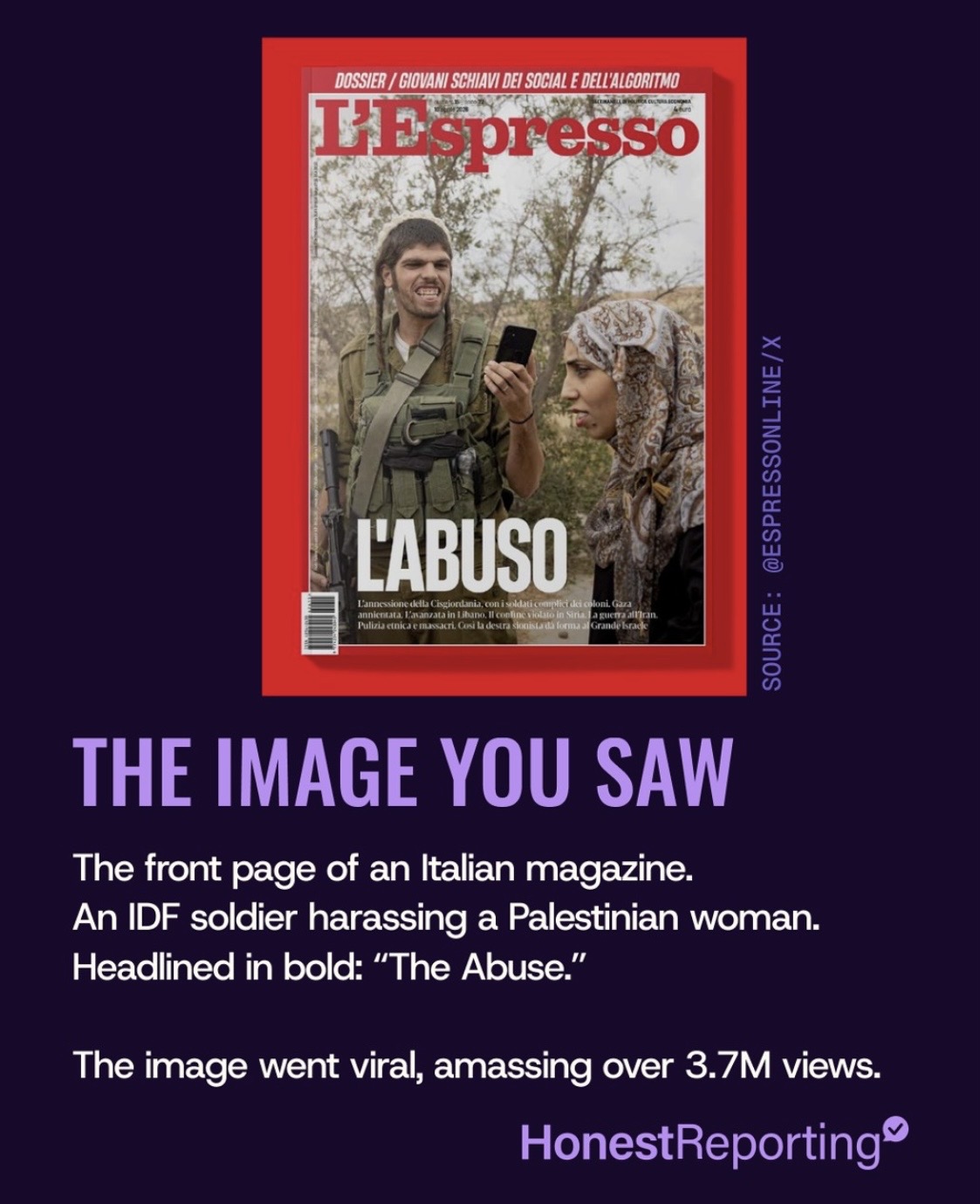
That is what happened when Italian magazine L’Espresso published a cover showing an Israeli soldier facing a Palestinian woman under the headline “L’Abuso” (“The Abuse”). The image spread rapidly across social media, accumulating millions of views within hours and quickly settling into a familiar narrative frame: aggressor and victim, power and vulnerability, accusation and judgment.
The photograph appeared to speak for itself. In reality, it was speaking for something else.
The Image
The cover presents a tightly framed moment. The soldier’s expression, caught mid-movement, can read as aggressive. The woman, positioned in the foreground, appears exposed and on the receiving end of that aggression. The headline completes the interpretation before the viewer has time to question it.
This is how powerful images work at their most effective. They do not invite analysis. They close it.
But what the cover offers is not the full scene. It is a selection.
The Sequence
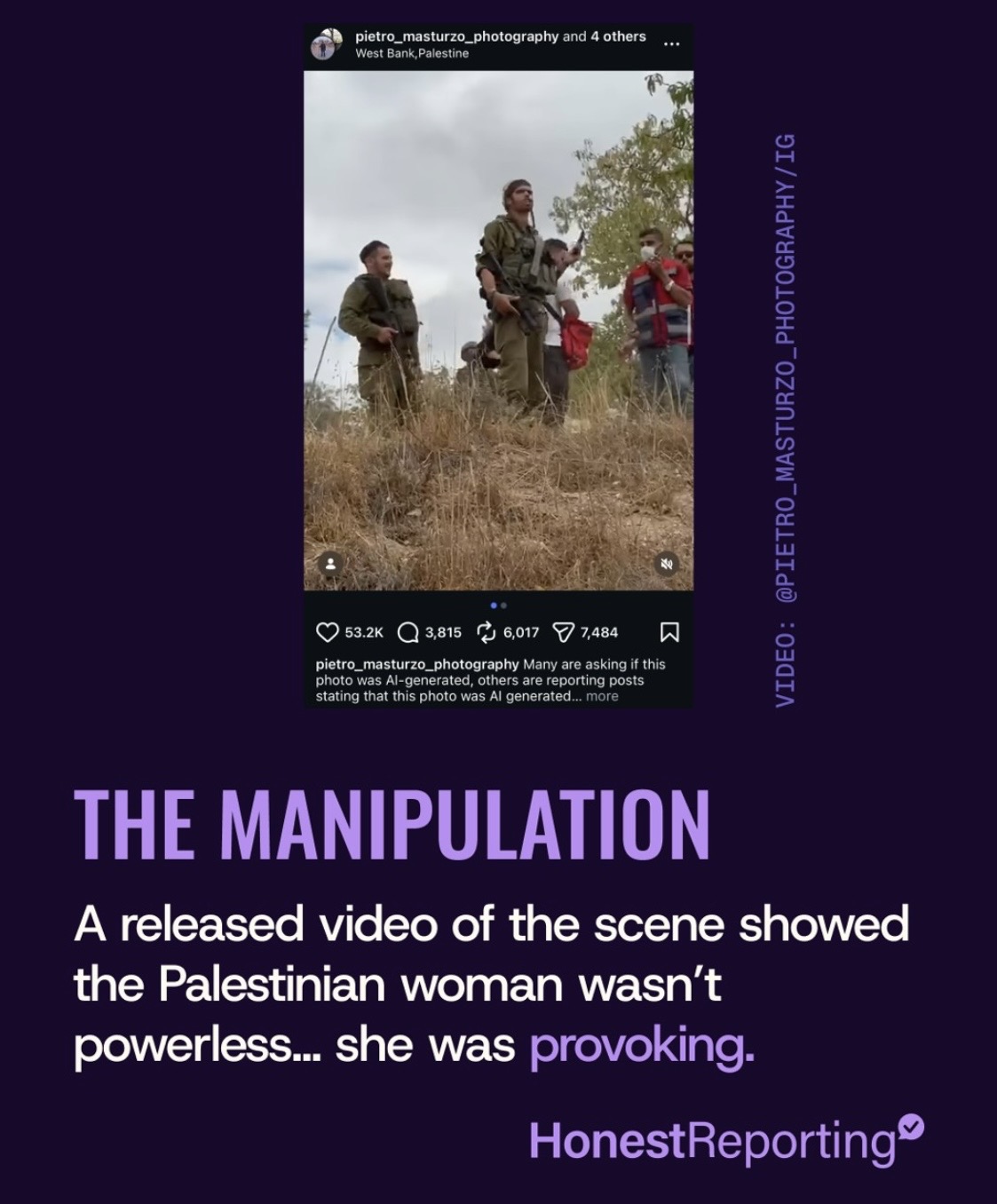
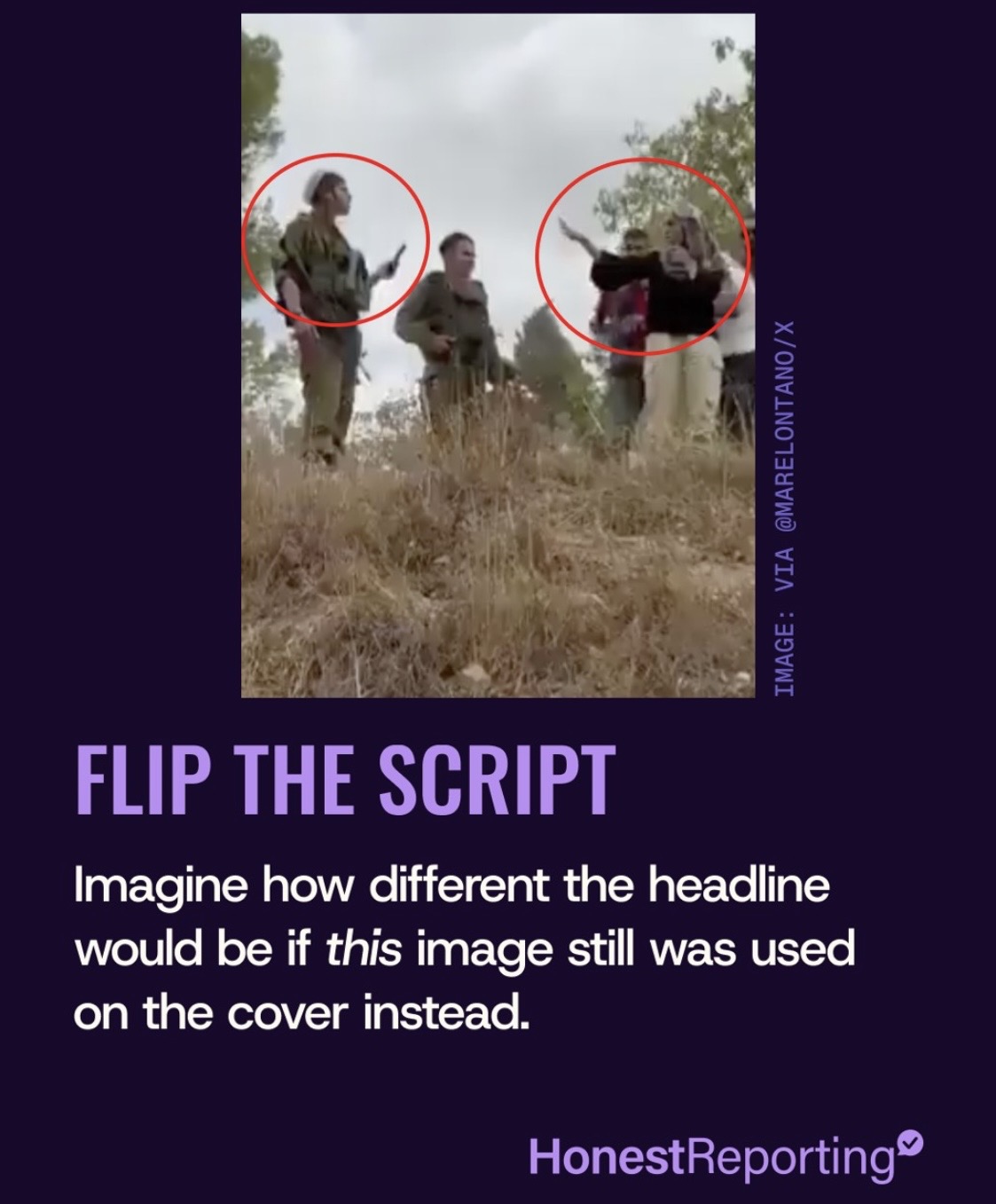
The same moment exists within a longer piece of video, recorded during a confrontation linked to an olive harvest activity involving activists, Palestinian residents, and Israeli security personnel.
Seen in sequence, the interaction does not begin with the still image and does not end with it. It unfolds over time. Multiple individuals are present. Movement is continuous. Voices overlap.
The woman on the cover is not isolated. The soldier is not acting in a vacuum. The scene is dynamic, not fixed. More than one person is speaking at once. Movement is constant. The moment is not isolated.
And that changes how the moment is understood.
The Sound
What the cover does not show is the sound.
In the footage, several voices can be heard directed at the soldiers. “Get out of our land,” one calls out. “Film everything,” says another. The exchange is loud, sustained, and collective.
The soldiers’ responses are comparatively brief. They identify the area as a closed military zone. They ask not to be touched. At one point, a soldier says, “Enough already.”
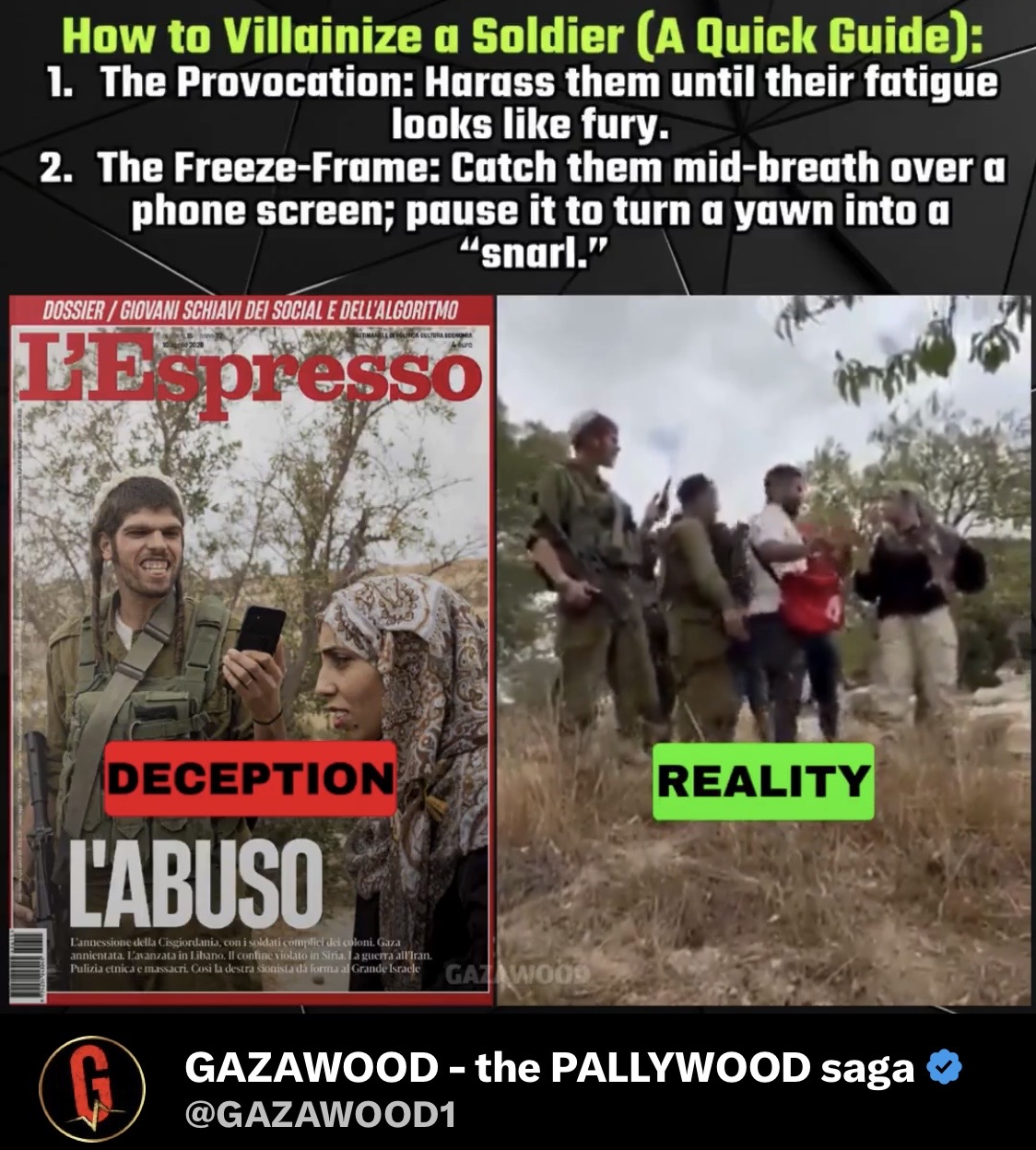
That moment is key. It is the same moment that appears on the cover. Frozen in a single frame, it reads as a snarl. In sequence, and with sound, it reads differently. Less as a standalone act, more as part of an ongoing confrontation.
The Construction
None of this means the image is false. It means it is incomplete.
A photograph always selects. It removes what comes before and what follows. In most cases, that is understood. In this case, the selection carries the full weight of a conclusion.
The headline does the rest.
By the time the image reaches the reader, the interpretation has already been assigned. The frame becomes the evidence. The moment becomes the message.
And the surrounding context, visual and audible, disappears.
The Amplification
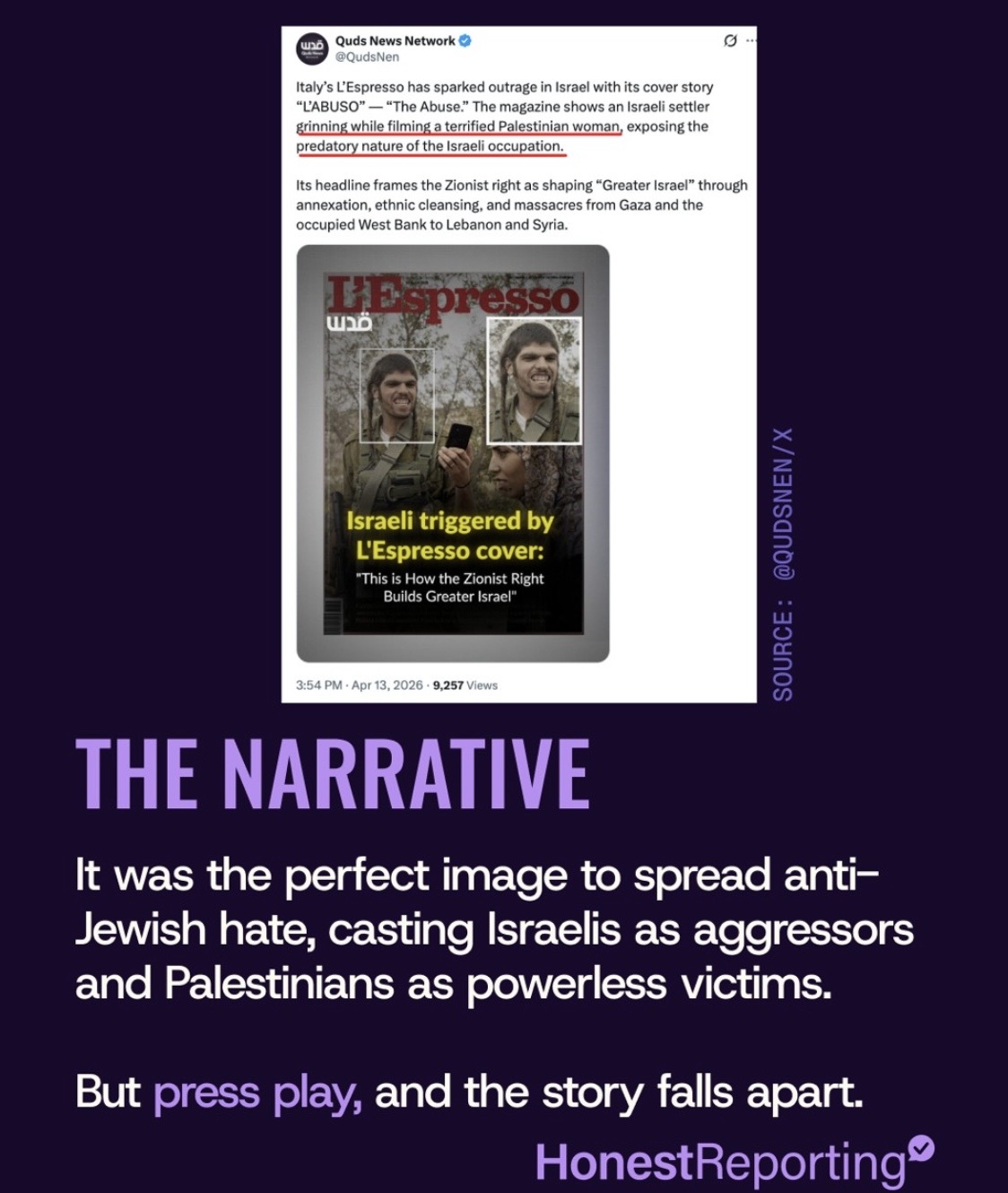
Once published, the image moved quickly beyond the magazine itself. Social media accounts reproduced it with added commentary, extending the meaning from a single encounter to broader claims about power, control, and intent.
The pattern is familiar. A striking image establishes the emotional baseline. The caption or headline directs interpretation. Distribution does the rest.
By then, the image is no longer a moment. It is a conclusion.
The Gap Between Reality and Representation
The core issue is not whether the photograph is real. It is.
The issue is whether the meaning attached to it can be sustained once the full sequence is seen and heard.
A still image captures a fraction of a second. A confrontation unfolds over minutes. The difference between those two is where interpretation lives.
Remove the sequence, and the image appears definitive. Restore it, and the certainty begins to loosen.
Ethical Boundary
What this analysis does not do is excuse misconduct, wherever it occurs. Confrontations of this kind can and do happen, and when behavior crosses a line, it should be examined on its own terms. The issue here is different. It is how such moments are presented, selected, and framed. Encounters like this are often filmed, amplified, and reduced to a single defining image. In this case, one frame was elevated to represent not just an individual interaction, but a broader claim about conduct and intent. That shift matters. Because once a single image is used to stand in for a wider reality, it can extend beyond the moment itself, shaping perceptions not only of those involved, but of institutions and communities far removed from the scene.
Conclusion
Images do not lie, but they do not tell the whole story either.
The L’Espresso cover demonstrates how a single frame can shape perception before context has a chance to catch up. The photograph is real. The moment happened. But the meaning assigned to it depends on what is left out.
For editors, that distinction matters. For readers, it should.
Because in modern conflict coverage, the difference between documenting reality and defining it may be nothing more than a single frame.
Liked this article? Follow HonestReporting on Twitter, Facebook, Instagram and TikTok to see even more posts and videos debunking news bias and smears, as well as other content explaining what’s really going on in Israel and the region. Get updates direct to your phone. Join our WhatsApp and Telegram channels!
© Divuach Ne’eman R”A, 2025